
Loading ...


Udawalawe National Park, one of Sri Lanka’s premier wildlife sanctuaries, offers some of the most breathtaking opportunities for wildlife photography. Spanning 30,821 hectares of dry-zone forest, wetlands, and grasslands, Udawalawe is home to an array of remarkable wildlife, including Asian elephants, leopards, crocodiles, and over 200 bird species. The park’s varied landscapes and abundant wildlife make it an ideal location for photographers looking to capture stunning shots of nature in its raw beauty.
Whether you’re a professional wildlife photographer or an amateur with a keen eye, Udawalawe provides numerous opportunities to photograph rare moments of wildlife behavior, dramatic landscapes, and vivid natural settings. In this guide, we’ll explore the best practices, tips, and techniques for wildlife photography in Udawalawe National Park to help you get the most out of your visit.


0
+
Safari Experiences That Keep Tourists Coming Back
Udawalawe is renowned for its large elephant population, but the park is home to much more than just elephants. You’ll also find a variety of animals such as:
Leopards, often spotted in the park’s more remote areas.
Crocodiles, sunbathing along riverbanks.
Wild boars, water buffalo, and mongoose darting through the underbrush.
An impressive variety of bird species, from the Sri Lanka Junglefowl to the White-bellied Sea Eagle.
Reptiles like monitor lizards and geckos, which add an interesting dimension to the park’s wildlife scene.
This diversity of species means that no matter the time of year, there’s always something new to capture with your camera.
The landscapes within Udawalawe National Park offer dramatic backdrops for wildlife photography:
Udawalawe Reservoir provides a tranquil setting, often dotted with wildlife like elephants and water buffalo coming to drink.
Open grasslands are perfect for capturing wide-angle shots of herds of elephants and other grazing animals.
Forest areas and rivers add depth to your images, providing variety in both scenery and subject matter.
The park’s mix of environments allows photographers to explore different textures, lighting, and perspectives throughout their shoot.
Unlike many other wildlife parks, Udawalawe offers relatively open landscapes, which means you can easily spot and photograph animals from a distance without dense vegetation obstructing your view. The park’s jeep safari system allows for close but non-invasive access to wildlife, which is ideal for capturing natural behavior and intimate moments in nature.


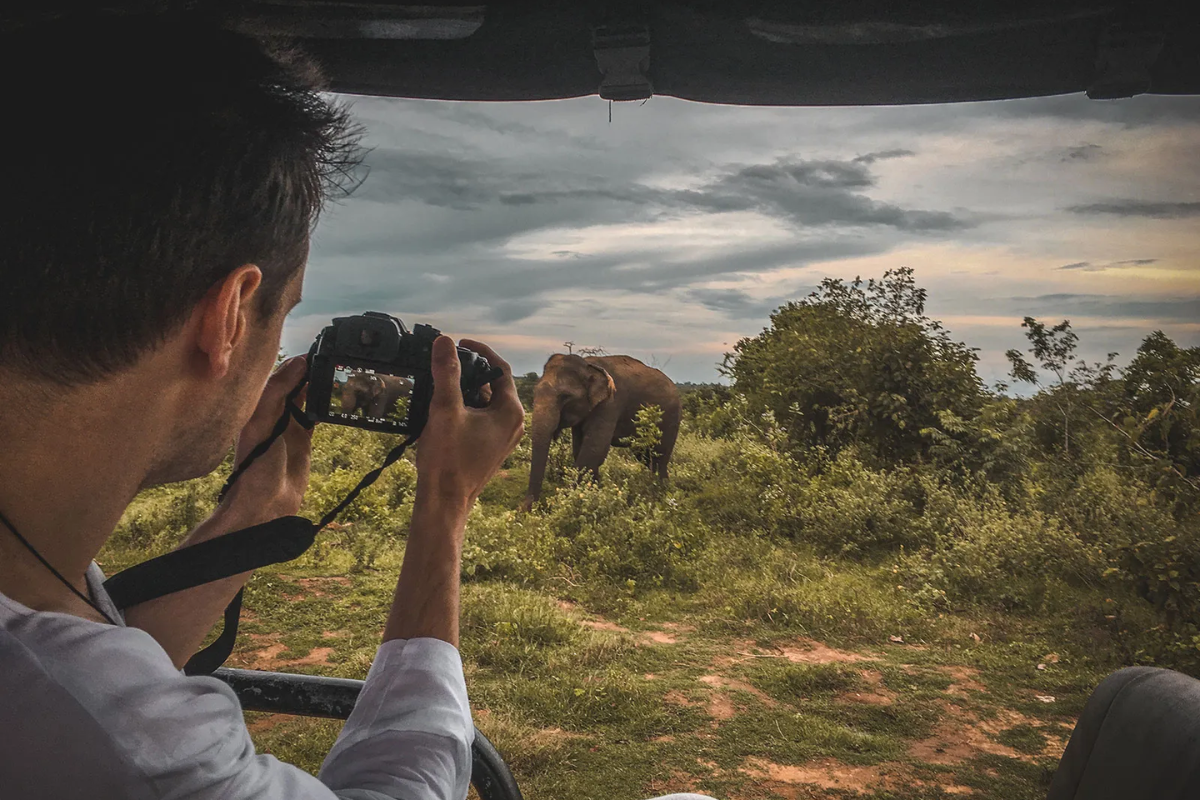
Timing is everything when it comes to wildlife photography. To capture animals at their most active, plan your safari at:
Early mornings (around sunrise): The cooler temperatures make animals, especially elephants, more active in the morning hours. The soft light at dawn can also add a beautiful glow to your photographs.
Late afternoons (around sunset): Similar to mornings, the late afternoon light, or golden hour, creates stunning lighting conditions for wildlife shots.
Midday: While this time can be less productive for wildlife, it’s still worth exploring shaded areas and watching for birds or other creatures near the water.
To get the best results from your wildlife photography in Udawalawe, the right equipment is essential:
Telephoto lenses: A long lens (at least 200mm to 600mm) will allow you to capture detailed close-up shots of animals without disturbing them.
Camera with fast autofocus: This is especially important for capturing fast-moving animals like leopards, birds of prey, or elephants on the move.
Tripod or monopod: While not always necessary on a safari jeep, a tripod or monopod can stabilize shots, especially when photographing from a stationary position.
Wide-angle lens: For capturing scenic landscapes or herds of elephants, a wide-angle lens will help you showcase the vastness of the park.
Good composition can elevate your wildlife photographs. Here are some tips:
Rule of Thirds: Use the rule of thirds to place your subject off-center for a more dynamic composition. This is especially useful when capturing large animals like elephants or herds in motion.
Natural Lighting: Utilize the natural lighting to your advantage. During the golden hours, the soft light enhances textures and creates warm tones, perfect for both portraits and environmental shots.
Capture Action Shots: Be ready for those thrilling moments when animals engage in natural behaviors, such as elephants interacting with each other or a bird catching prey.
Wildlife photography requires a lot of patience. Animals in Udawalawe are often free-roaming, so you’ll need to be prepared for the fact that the animals might not always appear right away. Spend time observing the behavior of your subjects, and wait for the right moment. Animals may move unpredictably, and the best shots often come when you least expect them.
In Udawalawe, ethical wildlife photography is vital. Always respect the animals’ space and avoid disturbing them for the sake of a shot. Stay within the safety guidelines provided by the park rangers, and never get too close to animals, particularly elephants, which can be unpredictable. The goal should always be to capture authentic images of wildlife without causing distress to the animals.
The Udawalawe Reservoir is one of the best places for capturing both landscapes and wildlife. You can photograph elephants wading through the shallow waters or drinking, especially during the dry season. The reservoir also attracts a variety of birds, including herons and kingfishers, making it a great spot for bird photography.
The park’s open grasslands are where most elephant sightings occur, making it the perfect place for wide-angle shots of herds in the wild. The sweeping views of the plains with elephants grazing or herds moving across the landscape are some of the most iconic photographs of Udawalawe.
Udawalawe’s dry zone forest areas offer excellent opportunities to photograph more elusive animals, such as leopards and civets. The dappled light through the trees adds a magical quality to any images of wildlife that can be found in these shaded areas.
Elephants and other animals often gather around the park’s waterholes, making these prime locations for action shots. Early mornings and late afternoons are perfect for capturing dramatic moments of animals drinking, bathing, or interacting with one another.
Udawalawe National Park spans 30,821 hectares and is home to elephants, water birds, and rich native wildlife in Sri Lanka.
Subscribe for the latest Udawalawe safari news, tips, and exclusive offers.
© 2025 Udawalawa Wild Safari. All rights reserved. | Powered by DILA