Chapter 1: The Bountiful Breadbasket of the Walawe Basin
While global travelers rightly flock to Udawalawe to witness wild elephants roaming across arid savanna grasslands, few realize that the surrounding valleys of the Walawe river basin form one of Sri Lanka’s richest agricultural breadbaskets. Thanks to the life-giving waters of the massive Udawalawe and Chandrika reservoirs and rich alluvial soils washed down from the central highlands, this sunny tropical valley produces a staggering abundance of organic tropical fruits, spices, heirloom grains, and fresh vegetables.
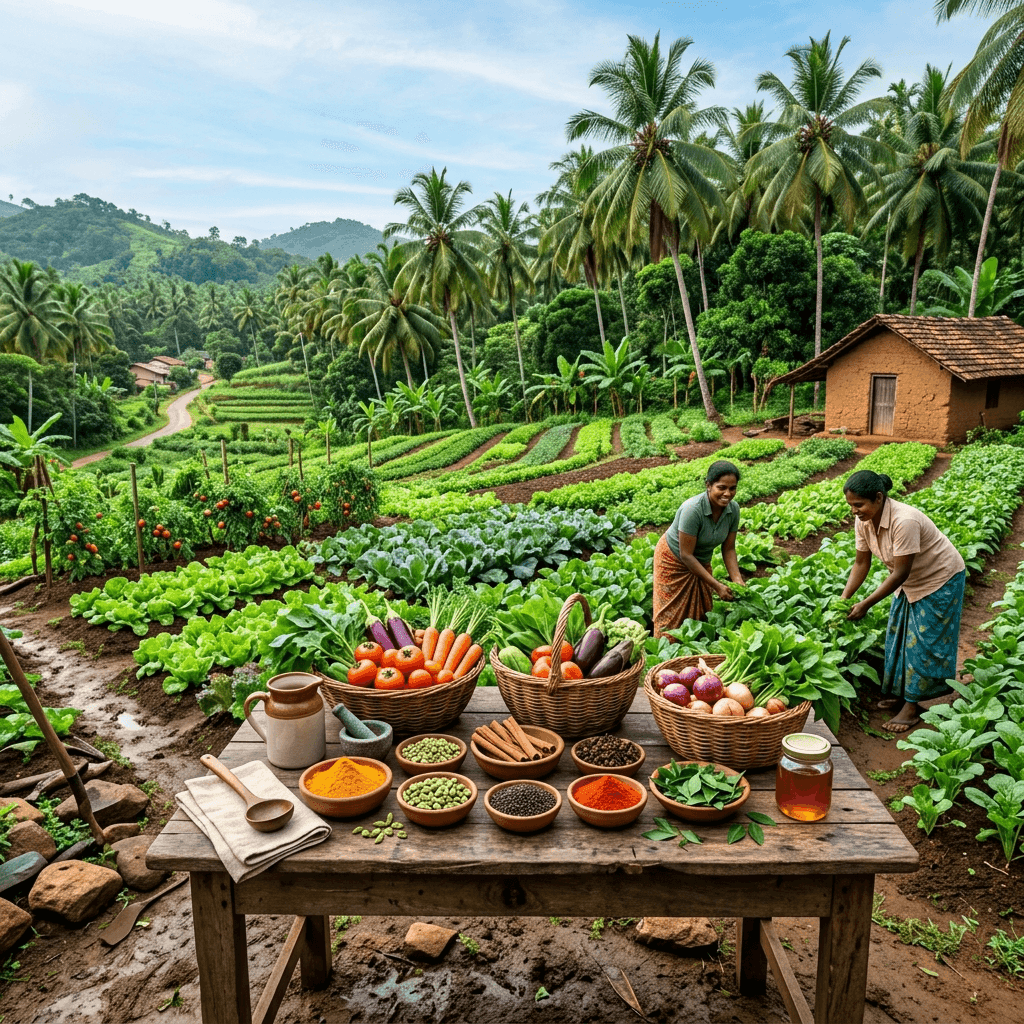
An agricultural and culinary farm tour in Udawalawe offers an invigorating, sensory-rich journey into the living heart of regenerative farming and ancestral gastronomy. Walking through lush, multi-canopied organic permaculture farms, you do not simply observe food from a distance; you crush fragrant cinnamon leaves between your palms, pluck sun-warmed ripe papayas and pineapples straight from the stem, taste the fiery snap of fresh green peppercorns, and discover the ancestral culinary wisdom that transforms simple garden harvests into some of the most vibrant, complex, and health-giving cuisine on Earth.
For food lovers, organic gardeners, traveling families, and wellness seekers, stepping onto a working farm in Udawalawe provides a profound reconnection with the earth, celebrating the timeless relationship between human cultivation, ecological balance, and culinary delight.
Chapter 2: The Multi-Canopy Permaculture Garden (*Kandyan Forest Garden*)
Unlike modern Western monoculture farms characterized by endless single-crop fields reliant on chemical fertilizers and pesticides, traditional Sri Lankan agriculture operates on the ancient *Kandyan Forest Garden* model—one of the world's most sophisticated and productive polycultural permaculture systems.
As you stroll through the shaded estate paths, your agronomist guide explains how four distinct vertical layers of vegetation coexist in symbiotic ecological harmony:
| Canopy Layer | Representative Farm Crops | Ecological & Agronomic Function |
|---|---|---|
| Upper Overstory Canopy (15 – 25m) | Coconut palms, Jackfruit (*Kos*), Breadfruit (*Del*), Areca nut | Provides high windbreak protection, intercepts harsh midday solar glare, and yields calorie-dense staple fruits. |
| Sub-Canopy & Mid-Story (5 – 12m) | Ceylon True Cinnamon (*Kurundu*), Cloves, Nutmeg, Banana varieties | Captures filtered sunlight, moderates ambient microclimate humidity, and produces high-value commercial spices. |
| Vertical Climbers & Vines (3 – 8m) | Black Pepper (*Gammiris*), Betel leaf, Passion fruit | Climbs living support trees (Gliricidia), utilizing vertical space without competing for ground soil area. |
| Understory Ground Cover (0 – 2m) | Ginger, Turmeric (*Kaha*), Lemongrass, Gotukola, Sweet Sweet potatoes | Living green mulch that prevents soil erosion, retains ground moisture, and produces medicinal subterranean rhizomes. |
This multi-tiered system produces continuous year-round harvests, requires zero chemical inputs, traps vast quantities of atmospheric carbon, and creates a thriving micro-habitat for beneficial pollinating bees, birds, and soil micro-organisms.
Chapter 3: The King of Spices: Ceylon True Cinnamon & Black Pepper
Sri Lanka has been celebrated for millennia as the spice capital of the ancient world, drawing Arab dhows, Chinese junks, and European sailing armadas in search of its legendary botanical treasures. During the farm tour, you delve into the intricate artisanal harvesting of Sri Lanka's two most famous spices:
The Art of Ceylon Cinnamon Peeling (*Kurundu*)
Sri Lanka produces over eighty percent of the world's supply of *True Cinnamon* (*Cinnamomum verum*), celebrated globally for its delicate, sweet, citrus-floral aroma and ultra-low coumarin content, making it safe for daily culinary and medicinal use (unlike toxic cassia bark). You visit an open-air cinnamon curing shed where third-generation master peelers demonstrate their incredible manual dexterity.
The artisan cuts mature cinnamon stems, scrapes away the coarse outer bark with a curved brass knife, and gently rubs the stem with a polished brass rod to loosen the delicate inner bark. With surgical precision, paper-thin ribbons of golden inner bark are peeled away and layered together by hand into concentric rolls known as "quills." As these quills dry naturally in the shaded curing loft, they curl into the familiar golden-brown cinnamon sticks. Guests are invited to try their hand at the scraping rod and inhale the intoxicating, sweet aroma of freshly peeled cinnamon bark.
The Black Gold: Vine Pepper (*Gammiris*)
You then wander into the pepper groves, where vigorous dark-green pepper vines (*Piper nigrum*) clamber up living support trees. You learn the secret behind pepper colors: green, black, and white pepper all originate from the very same berry! Green berries are harvested young for fresh curries; berries left to ripen into deep red and sun-dried on woven bamboo mats turn into wrinkled black peppercorns; while fully ripe berries soaked in spring water to remove the outer fruit husk yield delicate white peppercorns.
Chapter 4: Tropical Fruit Orchards: From Tree to Tongue
No agricultural tour in Udawalawe is complete without an immersive fruit-tasting safari through the estate's sprawling organic orchards. The valley's hot sunny days and abundant irrigation water produce fruits of extraordinary natural sweetness and intense flavor:
- The Versatile Jackfruit (*Artocarpus heterophyllus*): Revered in Sri Lanka as the national "Rice Tree" (*Bath Gaha*). You learn about its three distinct culinary stages: *Polos* (young green baby jackfruit cooked into a savory, meaty curry), *Kos* (mature firm flesh boiled and eaten with freshly scraped coconut as a staple carbohydrate), and *Waraka* (fully ripe honey-sweet golden bulbs bursting with tropical aroma).
- Banana Biodiversity: While Western supermarkets stock only single bland Cavendish bananas, Sri Lanka boasts over twenty distinct indigenous banana varieties. You will taste sweet *Seeni Kehel* (sugar bananas), creamy red *Rath Kehel*, fragrant *Kolikuttu*, and zesty *Ambul Kehel* (sour bananas), each offering unique textures and flavor profiles.
- Sun-Ripened Papayas & Pineapples: Sliced fresh before your eyes, sweet red-fleshed papayas drizzled with wild lime juice and golden Mauritius pineapples dusted with a pinch of sea salt and black pepper provide an explosion of tropical refreshment.
- The Miraculous King Coconut (*Thambili*): Plucked fresh from the palm by a nimble harvester who climbs twenty feet using a simple rope loop, the top of the bright orange nut is sliced open with a single machete stroke, offering cool, pure isotonic water loaded with potassium and natural enzymes.
Chapter 5: Heritage Red Rice: The Hydraulic Legacy
At the edge of the fruit orchards lie the emerald-green paddy fields (*kumburu*). Sri Lanka possesses an extraordinary botanical heritage of over two thousand indigenous heritage rice varieties cultivated for millennia under the guidance of royal irrigation engineers.
Your guide explains the nutritional and medicinal superiority of ancient unpolished heritage grains such as *Suwandel* (renowned for its fragrant floral aroma), *Kalu Heenati* (a dark purple-black rice prized in Ayurveda for boosting human immunity), and *Kuruluthuda* (a slender red grain rich in natural dietary fiber and low glycemic carbohydrates). You observe the ancient water-management sluices that divert canal water onto the fields and watch farmers demonstrate traditional threshing and winnowing using woven palm trays (*kulla*).
Chapter 6: Hands-On Organic Farming Workshop
For guests who love getting their hands in the soil, the tour includes a delightful hands-on agricultural component. Guided by warm village farmhands, you can participate in seasonal farm chores:
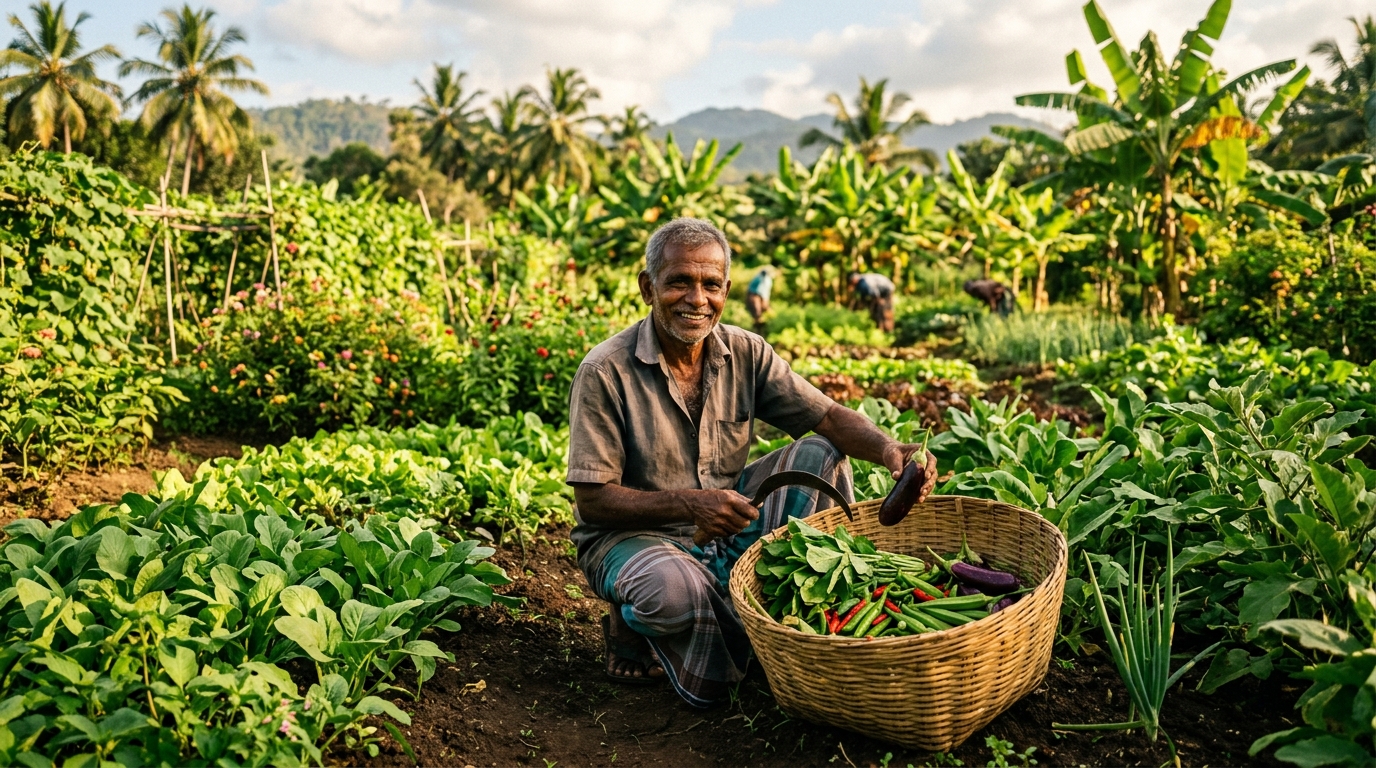
- Harvesting Fresh Produce: Plucking crisp snake gourds, long green beans, okra, fiery red chilies, and fragrant curry leaves directly into your woven harvesting basket.
- Composting & Natural Fertilizers: Learn how organic farmers produce nutrient-rich bio-fertilizers using decayed cow manure, neem leaves, wood ash, and fermented plant teas to enrich soil microbiology without synthetic chemicals.
- Seed Saving & Propagation: Discover traditional seed-saving techniques where heirloom seeds are preserved inside dried gourds coated with wood ash to ensure genetic diversity for future planting seasons.
Chapter 7: The Farm-to-Table Culinary Workshop
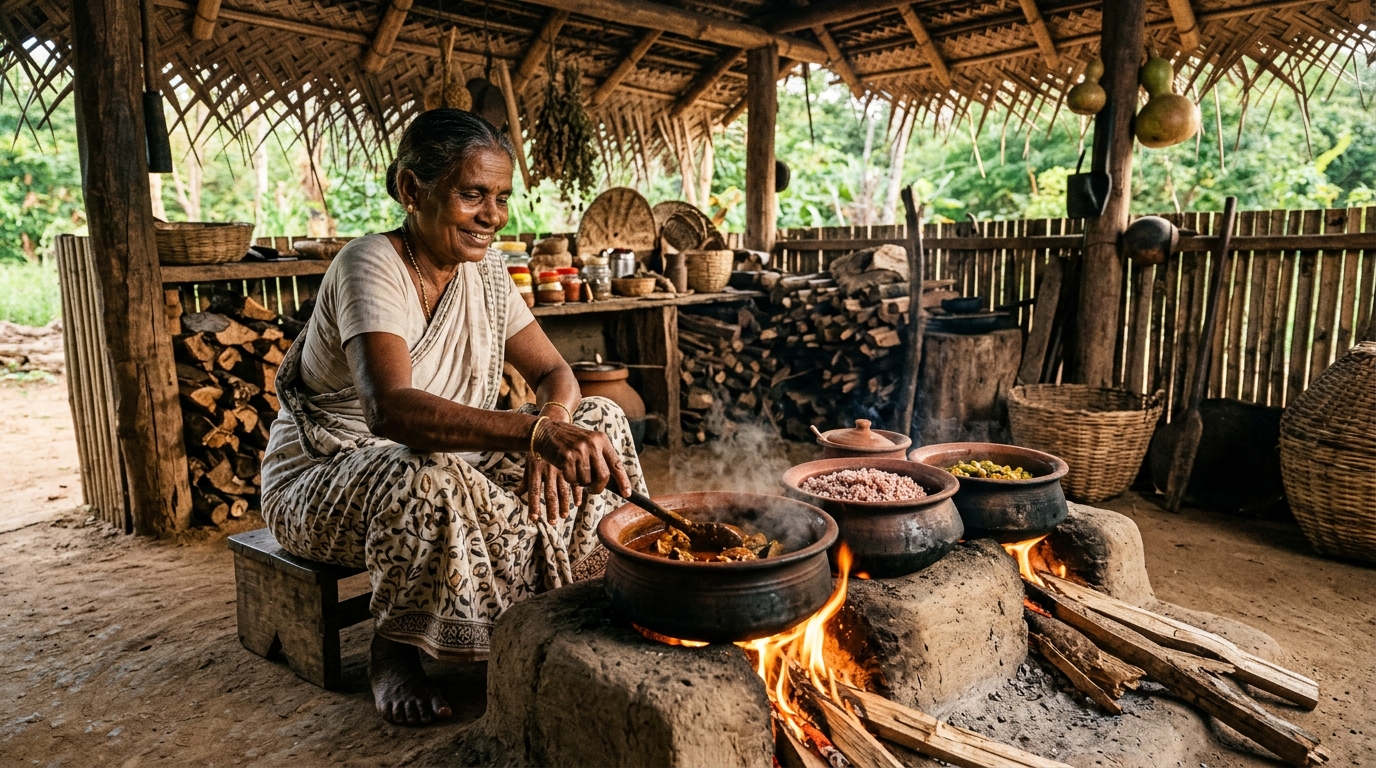
After harvesting your fresh farm bounty, you transition from field to kitchen at the farm’s breezy open-air culinary pavilion. Here, the estate’s traditional cooks guide you through an interactive, step-by-step cooking masterclass using wood-fired clay stoves and ancestral culinary tools.
You will learn to:
- Scrape fresh coconut meat on a traditional wooden bench fitted with a curved serrated blade (*hiramanaya*), and squeeze the flesh with water to produce thick coconut cream and thin coconut milk.
- Grind roasted chili, coriander, cumin, and black pepper on a heavy granite grinding slab (*miris gala*), feeling the fragrant oils release beneath your hands.
- Cook an aromatic organic farm curry inside an unglazed clay pot (*chattiya*), learning the precise art of "tempering" (*theldamma*) mustard seeds, shallots, and fresh curry leaves in hot oil to create an explosive aromatic foundation.
Chapter 8: The Grand Organic Farm Feast
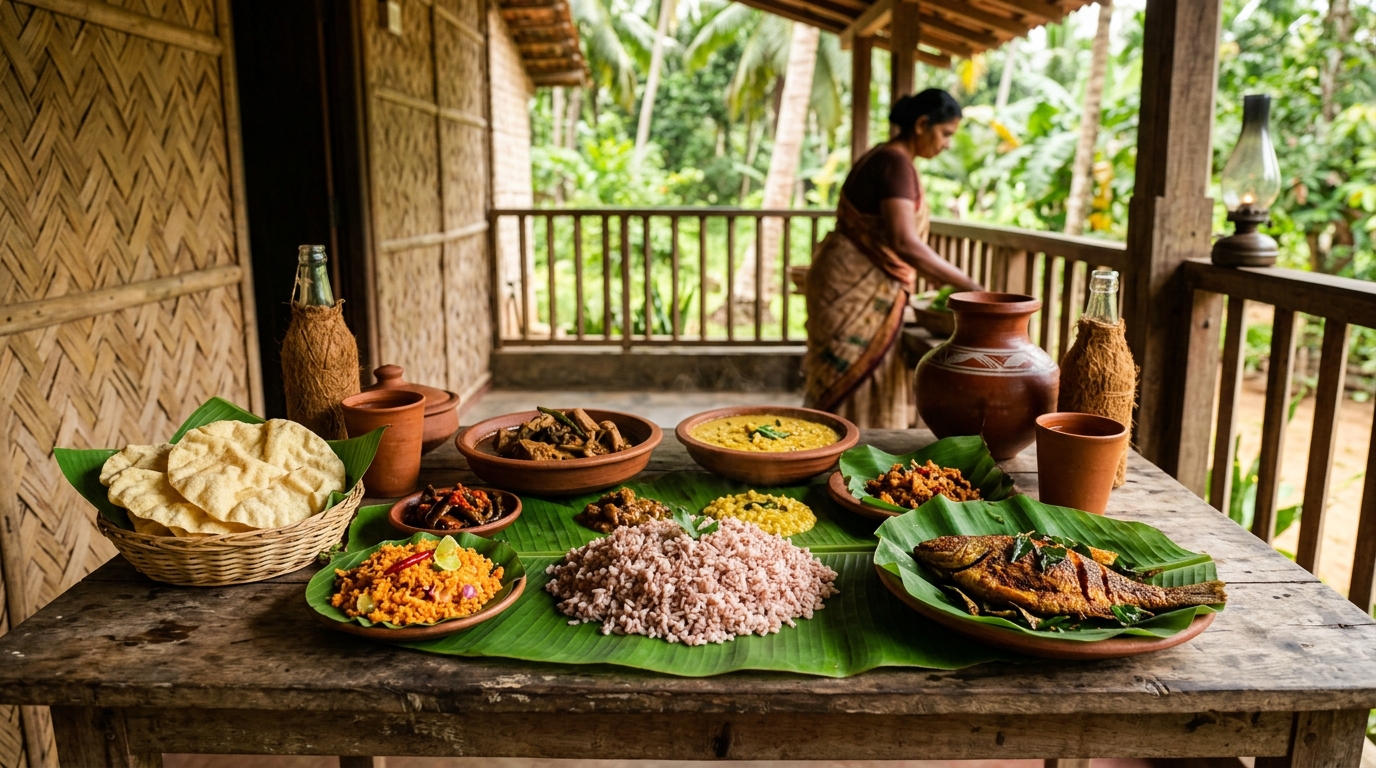
The culinary journey culminates in a lavish farm-to-table banquet served under the shade of a thatched dining pavilion overlooking the green paddy fields. Served on fresh green banana leaves, your meal features the dishes you harvested and helped prepare, alongside regional delicacies:
| Featured Farm Dish | Key Farm Ingredients | Gastronomic Profile |
|---|---|---|
| Steamed Heritage Red Rice | Unpolished estate-grown organic grain | Nutty, hearty, nutrient-rich carbohydrate base. |
| Clay-Pot Baby Jackfruit Curry (*Polos*) | Tender jackfruit, roasted spices, goraka | Deeply savory, tender, slow-simmered vegetarian centerpiece. |
| Tempered Banana Blossom (*Kehel Muwa*) | Finely sliced purple banana flower, onions, chili | Crisp, slightly astringent, savory delicacy rich in iron. |
| Fresh Farm Herb Sambol (*Gotukola*) | Fresh Asiatic pennywort, coconut, shallots, lime | Crunchy, vibrant, refreshing raw salad packed with chlorophyll. |
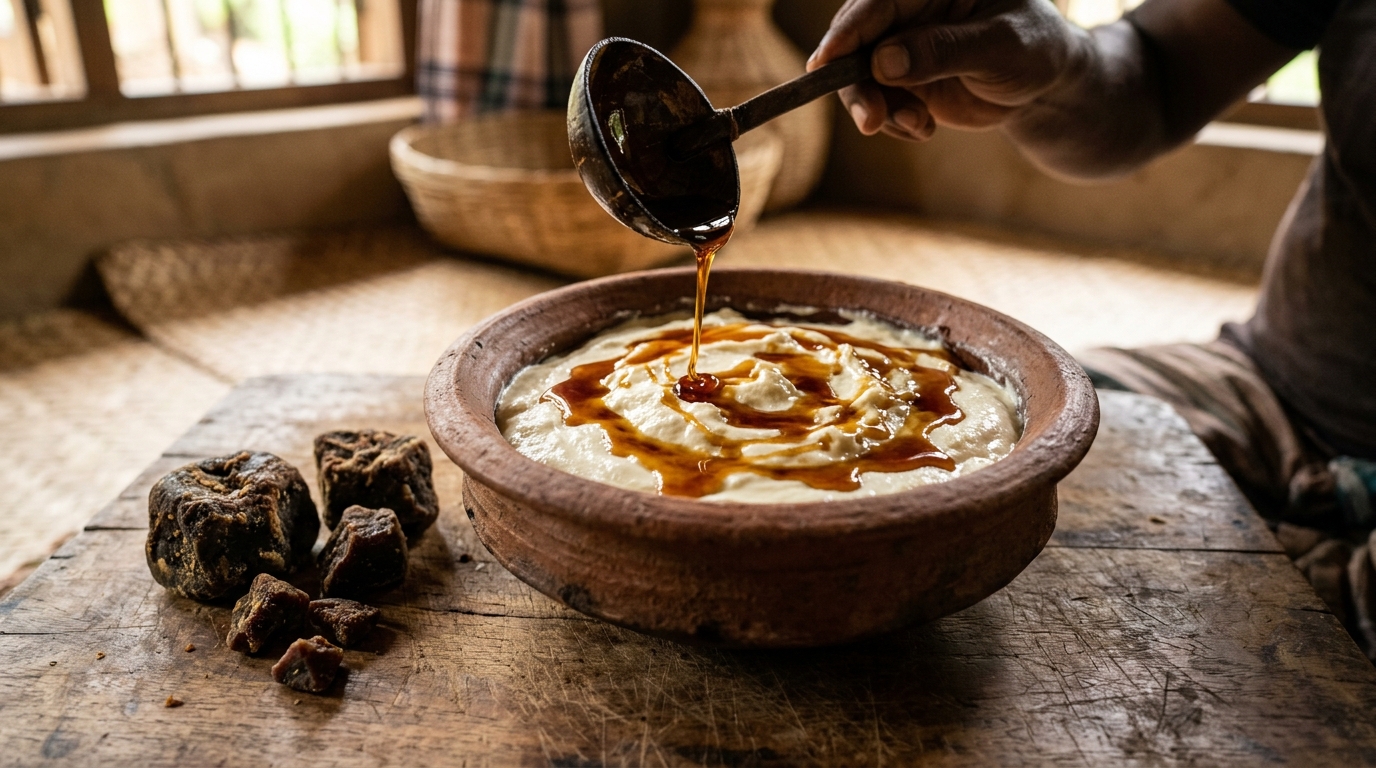
| Artisanal Buffalo Curd & Treacle | Fresh local curd, pure wild kithul syrup | Creamy, smoky-sweet natural dessert perfection. |
Chapter 9: The Home Apothecary: Medicinal Garden Walk
Before concluding your farm journey, you explore the estate's dedicated Ayurvedic herbal sanctuary (*Osu Uyana*). Sri Lanka's indigenous medical tradition, *Desheeya Chikitsa*, relies on hundreds of wild herbs and roots to maintain holistic wellness.
You will examine *Aloe Vera* used for soothing burns and digestive health; *Kaffir Lime* used in purifying herbal baths; *Neem* celebrated for its powerful antiseptic properties; and *Akarakara* used to stimulate vitality. Sipping a freshly brewed cup of herbal coriander and ginger tea (*Kottamalli*) while listening to your guide explain ancient wellness philosophies provides a deeply restorative conclusion to your agricultural journey.
Chapter 10: Practical Planning, Booking & Farm Etiquette
To make the most of your farm tour experience, keep these practical tips in mind:
- Tour Scheduling: Tours operate twice daily: morning (8:30 AM – 11:30 AM, concluding with lunch) and afternoon (3:30 PM – 6:30 PM, concluding with twilight refreshments). Morning sessions are highly recommended for fruit harvesting.
- Apparel: Wear comfortable, breathable cotton clothing and sturdy walking shoes or walking sandals. A hat and sunglasses are essential.
- Farm Purchases: Bring local cash currency (LKR) to purchase freshly harvested spices, vacuum-sealed cinnamon quills, organic pepper, and artisanal kithul treacle directly from the farm cooperative at fair-trade prices.
- Photography: The vibrant colors of tropical produce, spice sheds, and clay pot cooking provide extraordinary photography opportunities. Bring your camera or smartphone with plenty of battery life.
Chapter 11: The Ancient Irrigation Canal Ecosystem & Farmer Water Rights (*Diya Bheduma*)
Agriculture in the dry zone of Sri Lanka is entirely impossible without water management. Along the perimeter of your farm tour, you will trace the ancient network of distribution canals (*Ela*) that channel water from the massive reservoir headworks directly into village farmland. For centuries, water distribution has been governed by an ingenious customary legal system known as *Diya Bheduma* (Water Sharing).
Under the supervision of the elected village irrigation elder (*Vel Vidane*), canal sluices are opened on strictly allocated timetables, ensuring that every farmer—whether owning a large plot near the main feeder canal or a modest half-acre at the distant tail-end—receives an equitable volume of water to nourish their crops. This ancient cooperative governance has prevented water conflicts for over two thousand years and serves as a global model of participatory resource management.
Chapter 12: Wild Kithul Palm Tapping: The High-Canopy Harvest
One of the most thrilling botanical spectacles on our farm estates is observing the traditional tapping of the wild Fishtail Palm (*Caryota urens*, locally known as *Kithul*). Celebrated across Sri Lanka as the source of pure, unrefined natural treacle and solid jaggery blocks, the kithul palm produces massive cascading inflorescences that can weigh over fifty kilograms.
Skilled village tappers ascend twenty meters into the high canopy using bamboo ladders. The tapper makes precise surgical incisions into the base of the flower bud, applying a secret paste of herbal leaves, pepper, and ash to stimulate sap secretion. A terracotta clay collecting pot is suspended beneath the cut, gathering the clear, sweet sap drop by drop over twelve hours. Boiled down over slow-burning wood fires in large copper cauldrons, the sap transforms into thick, smoky-sweet golden kithul treacle. Witnessing this perilous high-altitude harvest and tasting the hot syrup straight from the pan is an unforgettable highlight of the tour.
Chapter 13: Domestic Water Buffalo Husbandry & Natural Dairy
Domestic water buffalo (*Bubalus bubalis*) are the gentle giants of southern Sri Lankan farming estates. Unlike commercial dairy cows that require grain feeds and climate-controlled barns, water buffalo thrive in the warm tropical dry zone, grazing on wild grasses and cooling themselves in muddy wallows (*kimbul amuna*) during the heat of midday.
During the tour, you visit the farm's buffalo dairy paddock to observe morning milking. Buffalo milk is extraordinarily rich, possessing double the butterfat and protein content of bovine milk. Because the animals feed exclusively on organic pastures, the milk is rich in conjugated linoleic acid (CLA), calcium, and natural vitamins. You can try your hand at milking a gentle buffalo cow alongside the herdsman and learn how this rich milk is transferred to terracotta pots to produce iconic curd without artificial stabilizers.
Chapter 14: The Seasonal Agronomic Calendar
The farming calendar in Udawalawe is governed by the two primary agricultural seasons of Sri Lanka:
- The Maha Season (October to February): Fueled by the northeast monsoon, this is the primary agricultural cycle. The entire valley is transformed into a shimmering carpet of emerald-green paddy fields. Chena farms burst with sweet corn, gourds, and pumpkins, and farm paths are delightfully lush and green.
- The Yala Season (May to September): The drier, sun-drenched season dependent on reservoir irrigation. This is the peak harvest season for sweet tropical fruits: mangoes, papayas, watermelons, and ripe jackfruit reach peak sugar content under the brilliant dry-zone sun.
Chapter 15: Ethical Agronomy & The Regenerative Future
Our agricultural partner estates are committed to demonstrating that profitable farming and ecological biodiversity can exist in total harmony. By eliminating synthetic pesticides, establishing living wildlife corridors along farm boundaries, and paying fair-trade wages to local farmers and harvesters, these farms serve as vibrant models for regenerative agriculture across Asia.
Chapter 16: Traditional Treacle Boiled Confections & Village Sweets
In addition to fresh tropical fruit and savory curries, a visit to an organic farm estate in Udawalawe introduces you to the ancient confectionery art of Sri Lankan rural celebrations. When wild kithul treacle is harvested in abundance, village households prepare extraordinary heritage confections using only unrefined palm sap, rice flour, and coconut milk.
You can observe the preparation of *Halapa*—a wholesome country sweet made from kurakkan (finger millet flour), sweet kithul treacle, and scraped coconut. The thick dough is wrapped neatly inside fresh *Kenda* leaves (*Macaranga peltata*) and steamed in earthenware pots. The leaf imparts a distinctive herbal aroma and prevents sticking. Savoring warm halapa alongside a hot cup of black tea sweetened with a piece of hard jaggery (*hakuru*) provides an authentic taste of ancient village teatime.
Chapter 17: Natural Biological Pest Control in Permaculture
One of the most inspiring lessons from our organic farm tours is understanding how local farmers manage pests without a single drop of synthetic chemical pesticide. In the tropical heat of the dry zone, synthetic sprays often destroy beneficial predators, leading to worse pest outbreaks over time. Our farmers rely instead on ancient botanical preparations and companion planting:
- Neem Leaf Extract (*Kohomba Diya*): Fresh leaves of the Indian Neem tree (*Azadirachta indica*) are crushed and soaked in water with garlic and hot chili peppers. Sprayed on crops, this bitter, aromatic liquid acts as a potent natural insect repellent without harming bees or birds.
- Marigolds (*Das Pethiya*): Bright orange marigolds are planted generously around the perimeters of vegetable plots. Their root exudates naturally suppress soil nematodes, while their vibrant flowers attract beneficial pollinating hoverflies and ladybugs.
- Gliricidia Living Fences: Known locally as *Watta Sevana*, these fast-growing nitrogen-fixing trees serve as living fence posts, green manure sources, and natural physical barriers against windblown weed seeds.
Chapter 18: The Sacred Traditional Granary (*Bissa*)
In the courtyard of traditional farming homesteads stands the *Bissa*—a monumental, dome-shaped traditional outdoor grain silo raised on granite foundation stones. Constructed with a woven bamboo skeleton plastered thickly with termite clay and cow-dung wash, the *Bissa* is covered with a conical thatch roof of illuk grass.
Elevated fifty centimeters off the ground on polished granite boulders to prevent rodents and moisture from entering, the *Bissa* maintains a constant cool internal temperature and stable humidity. Heirloom paddy rice stored inside a well-maintained *Bissa* can remain viable, dry, and insect-free for up to three years without chemical fumigation. Standing beside these ancient granaries, visitors gain immense respect for the sophisticated, organic food-security systems engineered by ancestral Sri Lankan farmers.
Chapter 19: Organic Farm Wildlife & Birdlife
Because our partner farms operate without toxic chemicals and maintain dense, multi-story tree canopies, they function as thriving wildlife sanctuaries. While walking along farm avenues, visitors are surrounded by a dazzling array of friendly wildlife:
Flocks of iridescent green bee-eaters swoop from gliricidia fences to snatch flying insects; palm squirrels chatter playfully among coconut fronds; giant wood spiders spin enormous golden webs between pepper vines; and gentle land monitors (*talagoya*) forage through fallen leaf mulch for snails. In the early morning, spotted deer frequently graze along the farm boundary hedges, and peacocks display their iridescent plumage on open threshing floors (*kamatha*).
Chapter 20: Farm Visit Etiquette & Responsible Tourism
Visiting a working organic farm is a privileged cultural encounter. To ensure a harmonious and respectful experience:
- Respect the Plants: Harvest fruits, herbs, and spices only under the direct supervision of your guide to avoid damaging delicate vine runners or immature fruit buds.
- Footwear Considerations: Farm paths consist of natural soil, grass, and occasional damp patches near irrigation canals. Comfortable walking shoes or strap-on walking sandals with good grip are ideal.
- Support Farm Cooperatives: Purchasing your organic spices, kithul treacle, and artisan goods directly from the farm shop ensures that 100% of the proceeds directly support the farming families who cultivate the land.
- Photography Etiquette: Always greet farm workers with a warm smile and ask permission before photographing individuals working in the fields or processing spices.
Every step through the organic groves of Udawalawe deepens your appreciation for the interconnectedness of soil, seed, sun, and human hands. Connecting with the soil, harvesting food with your own hands, and savoring fresh farm-to-table cuisine in Udawalawe is a heartfelt celebration of the generosity of nature and the enduring warmth of Sri Lankan rural culture.








.png)