Chapter 1: The Subterranean Wonder of Sabaragamuwa
While Sri Lanka is internationally renowned for its mist-shrouded mountain peaks, sun-drenched golden beaches, and teeming wildlife savannahs, deep beneath the verdant tea and pepper hills of Sabaragamuwa lies a hidden, subterranean realm that belongs to another world entirely: Wavulpane Prehistoric Cave. Known in the native Sinhala language as *Wavul Pane*—literally translating to the "Abode of Bats"—this monumental crystalline limestone cavern is one of the most enigmatic, geologically extraordinary, and biologically thrilling adventure destinations on the entire island.
Hidden in an isolated valley near Kolonne, roughly thirty-five kilometers northwest of Udawalawe National Park, Wavulpane is not a sanitized tourist cavern illuminated by colored LED pathways and concrete handrails. Instead, it remains an authentic, wild speleological frontier where intrepid explorers must descend into absolute subterranean darkness, wade through rushing underground mountain streams, navigate massive stalagmites and stalactites formed over millions of years, and witness the awe-inspiring spectacle of more than a quarter-million bats roosting within cavernous vaults towering thirty meters overhead.
For adventure travelers and nature enthusiasts seeking an adrenaline-infused expedition that starkly contrasts with the open savanna of a standard wildlife safari, venturing into the subterranean depths of Wavulpane offers an unforgettable descent into geological deep-time, paleontology, and the mystery of the Earth’s hidden heart.
Chapter 2: Geological Origins: 500 Million Years of Deep Time
To understand the geological singularity of Wavulpane, one must look back into Earth's deepest history. Most of Sri Lanka’s landmass consists of ancient Precambrian high-grade metamorphic crystalline rocks belonging to the Highland Complex—granulites, gneisses, and quartzites that rarely form extensive cave systems. Wavulpane, however, is a rare geological anomaly: a massive, isolated lens of calc-silicate granulite and pure crystalline marble (limestone) surrounded by impervious crystalline bedrock.
Over hundreds of millions of years, acidic carbonic rainwater filtering downward through mountain fissures slowly dissolved the soluble calcium carbonate, carving out vast underground voids, subterranean drainage tunnels, and monumental karst chambers. Geologists estimate the parent rock formations of Wavulpane date back between 500 million and 700 million years, placing them among the oldest fossiliferous rock structures in South Asia.
| Geological Feature | Dimensions & Characteristics | Scientific Significance |
|---|---|---|
| Total Cave Length | Approximately 450 to 500 meters of walkable subterranean passage | One of the longest accessible natural karst caverns in Sri Lanka. |
| Vertical Ceiling Height | Vaulted domes reaching 25 to 35 meters in the central cathedral chamber | Massive thermal buffer allowing stable micro-climates for bat nursery colonies. |
| Underground Stream Flow | Continuous subterranean mountain stream feeding the Hulanda Oya | Perennial hydrology that continues to dissolve limestone and shape active speleothems. |
| Internal Subterranean Waterfall | Spectacular 10-meter vertical drop inside complete subterranean darkness | The only documented internal subterranean waterfall in Sri Lanka. |
| Fossilized Marine Deposits | Preserved coral molds, gastropods, and bivalve impressions in cave walls | Evidence of ancient prehistoric marine incursions and tectonic uplifting. |
As water saturated with calcium bicarbonate drips continuously from the cavern ceilings, it deposits microscopic crystals of calcite, creating breathtaking speleothems: slender stalactites hanging like frozen stone icicles, monumental stalagmites rising from the guano-covered floor, and shimmering flowstone curtains that sparkle like diamond dust under the beam of your headlamp.
Chapter 3: The Living Cavern: The Colony of 250,000 Bats
Beyond its geological grandeur, Wavulpane is a biological marvel of continental significance. The cavern complex serves as the permanent home to Sri Lanka’s largest documented bat roost, harboring an estimated population exceeding 250,000 individuals across multiple distinct species.
As you step into the vaulted central cathedral chamber, the sheer acoustic and sensory impact is overwhelming. The air hums with a high-pitched, vibrating sonic frequency composed of millions of ultrasonic echolocation clicks and territorial chittering. Looking upward with your torch beam reveals the cave ceiling entirely carpeted by a shifting, undulating sea of dark, furry bodies, hanging upside down by their curved claws.
Key Bat Species Inhabiting Wavulpane
- Schneider’s Leaf-nosed Bat (*Hipposideros speoris*): The most numerous species in the cave. Named for the intricate fleshy leaf-like structure on its nose that focuses ultrasonic echolocation pulses, this agile insectivore hunts beetles, moths, and mosquitoes with pinpoint acoustic accuracy.
- Lesser Large-footed Bat (*Myotis hasseltii*): A specialized trawling bat equipped with exceptionally long, curved hind claws. It skims centimeters above the surface of the subterranean stream to snatch aquatic insects and small freshwater fish.
- Egyptian Rousette & Fruit Bats (*Rousettus aegyptianus*): Large frugivorous bats that roost in the twilight zones near cave entrances, feeding on wild figs and forest berries before returning to rest in the sheltered cavern.
The ecological role of this massive bat colony is colossal. Each night, these hundreds of thousands of bats consume several metric tons of agricultural pests and nocturnal insects across a fifty-kilometer foraging radius, acting as natural biological protectors of the rice, corn, and vegetable crops cultivated by farmers in the surrounding valleys.
Chapter 4: The Thunder in the Dark: The Subterranean Waterfall
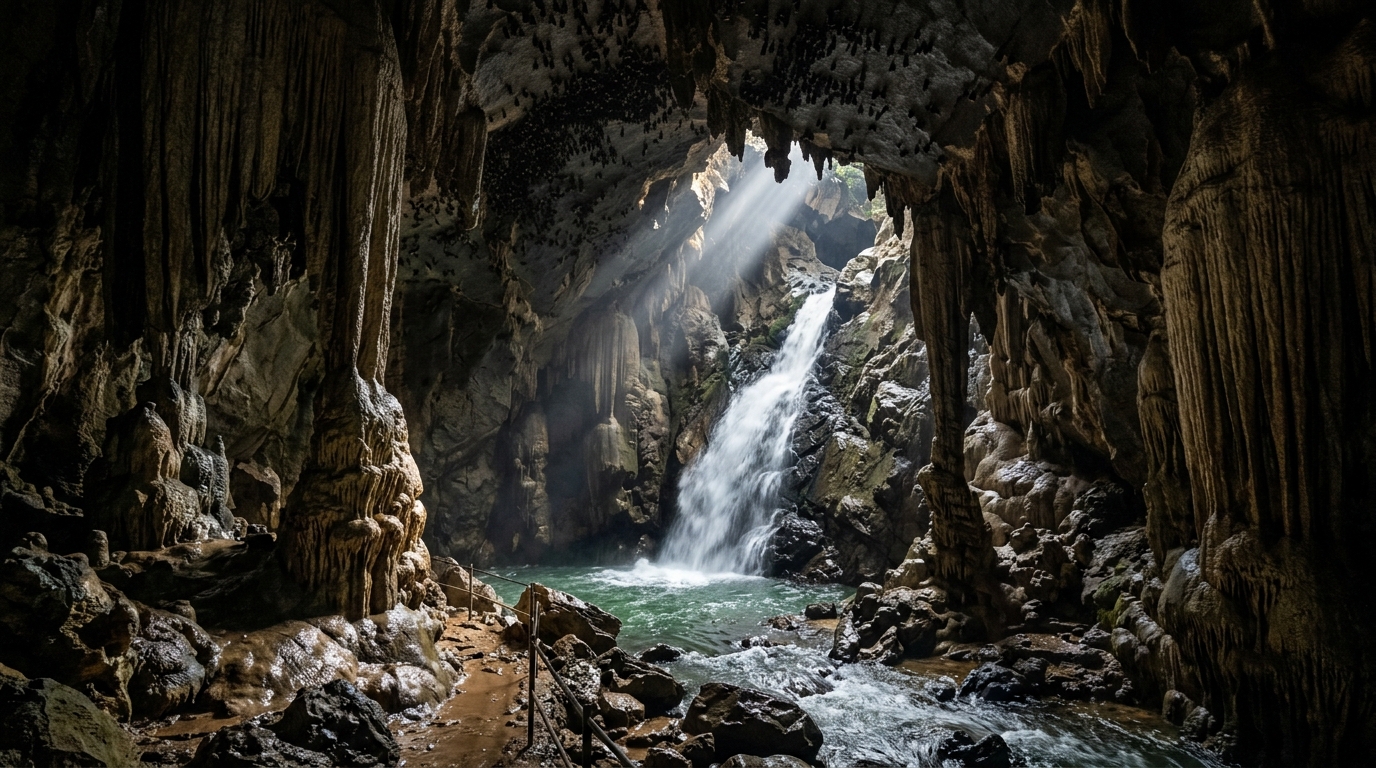
The undisputed crown jewel of Wavulpane Cave is its roaring subterranean waterfall. Located approximately two hundred meters deep inside the cavern’s winding labyrinth, the underground mountain stream—having entered through a sinkhole on the opposite side of the mountain—reaches a massive vertical limestone fault line.
Here, in absolute pitch-black darkness, the stream plunges ten meters over a slick limestone precipice into a swirling, emerald-green plunge pool below. The acoustic roar of the cascading water reverberates thunderously off the stone walls, creating a mist of fine cool spray that fills the chamber. Standing at the foot of an internal waterfall deep inside the bedrock of the Earth, illuminated only by the concentrated beams of your headlamps, is a surreal, awe-inspiring experience that few adventures on the planet can match.
Chapter 5: Prehistoric Relics & Paleontological Fossils
Wavulpane is a treasure trove for paleontology. Embedded within the crystalline limestone walls and fallen ceiling blocks are ancient fossilized impressions of marine organisms, corals, and prehistoric mollusks dating back hundreds of millions of years, testifying to an epoch when this entire landmass was submerged beneath an ancient prehistoric ocean.
Furthermore, archaeological excavations in nearby cave rock shelters have unearthed evidence of prehistoric human habitation belonging to the Balangoda Man (*Homo sapiens balangodensis*), dating back over 30,000 years. Ancient hunter-gatherers utilized the cave entrances for shelter, toolmaking, and harvesting bat guano and edible swiftlet nests, leaving behind stone microliths and carved bone implements that bridge the human story with geological deep-time.
Chapter 6: The Cavern Ecosystem: Cave Crickets, Spiders & Guano Ecology
The biological food web inside Wavulpane is entirely independent of sunlight, powered instead by a vast, perpetual organic energy source: bat guano (feces). Over centuries, millions of bats have deposited deep layers of nitrogen-rich guano across the cavern floor, supporting a thriving community of specialized cave-dwelling troglobites and troglophiles:
| Cavern Organism | Ecological Niche | Specialized Adaptation |
|---|---|---|
| Giant Cave Crickets (*Rhaphidophoridae*) | Scavengers feeding on organic guano deposits | Elongated antennae up to three times body length to navigate in total darkness. |
| Blind Cave Spiders & Amblypygids | Apex predators of the cave floor | Pincer-like pedipalps used to capture crickets; reduced or absent eyes. |
| Cave Leeches & Freshwater Crabs | Aquatic detritivores in subterranean stream | Pale, translucent pigmentation adapted to subterranean aquatic life. |
| Guano Mites & Tenebrionid Beetles | Primary decomposers recycling bat droppings | Immense colonies that process tons of organic material into mineral fertilizer. |
Observing this unique ecosystem reveals the extraordinary ingenuity of life, thriving in a world devoid of photosynthesis, powered solely by the nocturnal foraging of aerial mammals.
Chapter 7: Step-by-Step Spelunking Expedition Itinerary
A guided spelunking tour through Wavulpane is a thrilling multi-hour expedition requiring preparation, stamina, and adventurous spirit:
- 8:00 AM – Departure from Udawalawe: Board a private 4x4 vehicle or air-conditioned van for the scenic 35-kilometer drive through the Kolonne valley, winding past terraced tea gardens and lush rubber plantations.
- 9:15 AM – Basecamp Briefing & Gear Fitting: Arrive at the rural trailhead. Meet your certified local speleological guides. Fit protective helmets, test high-lumen waterproof LED headlamps, strap on non-slip water boots, and secure personal items in dry bags.
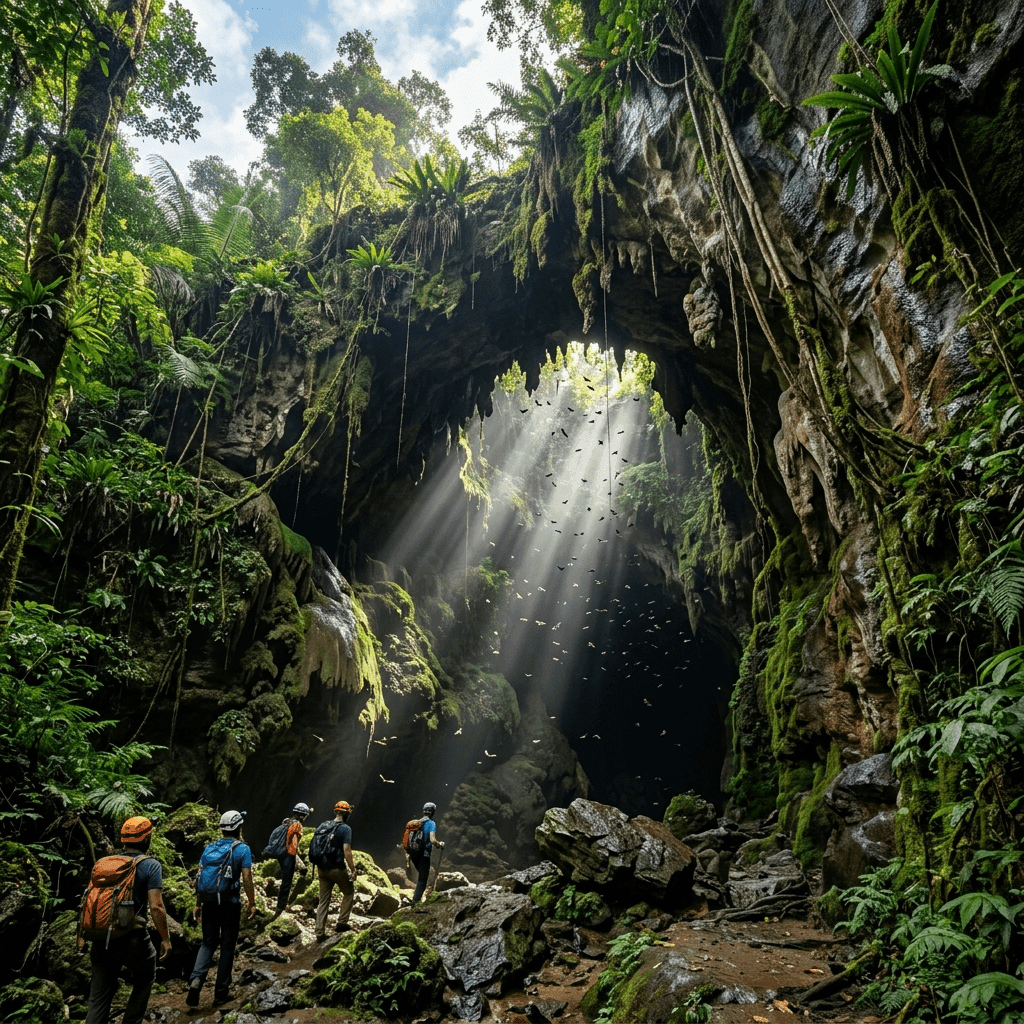
- 9:45 AM – Descent into the Sinkhole: Hike down a steep, forested canyon trail fringed with wild giant ferns to the cavern’s southern entrance portal, where the mountain stream disappears into the earth.
- 10:15 AM – Navigating the Main Chamber: Step into the cool subterranean twilight. Wade through knee-deep water along the gravel stream bed, marveling at towering stalactites and the chittering colonies of bats overhead.
- 11:00 AM – The Subterranean Waterfall: Reach the roaring central cavern. Pause on safe granite boulders to admire the subterranean waterfall, examine fossilized marine shells in the limestone walls, and experience a moment of "Total Sensory Deprivation" as all headlamps are briefly extinguished to experience pure, primeval darkness.
- 11:45 AM – Northern Exit Portal & Forest Ascent: Follow the stream passage to the cave’s northern exit opening into a sunlit jungle ravine. Climb the forested ridge trail back to the basecamp.
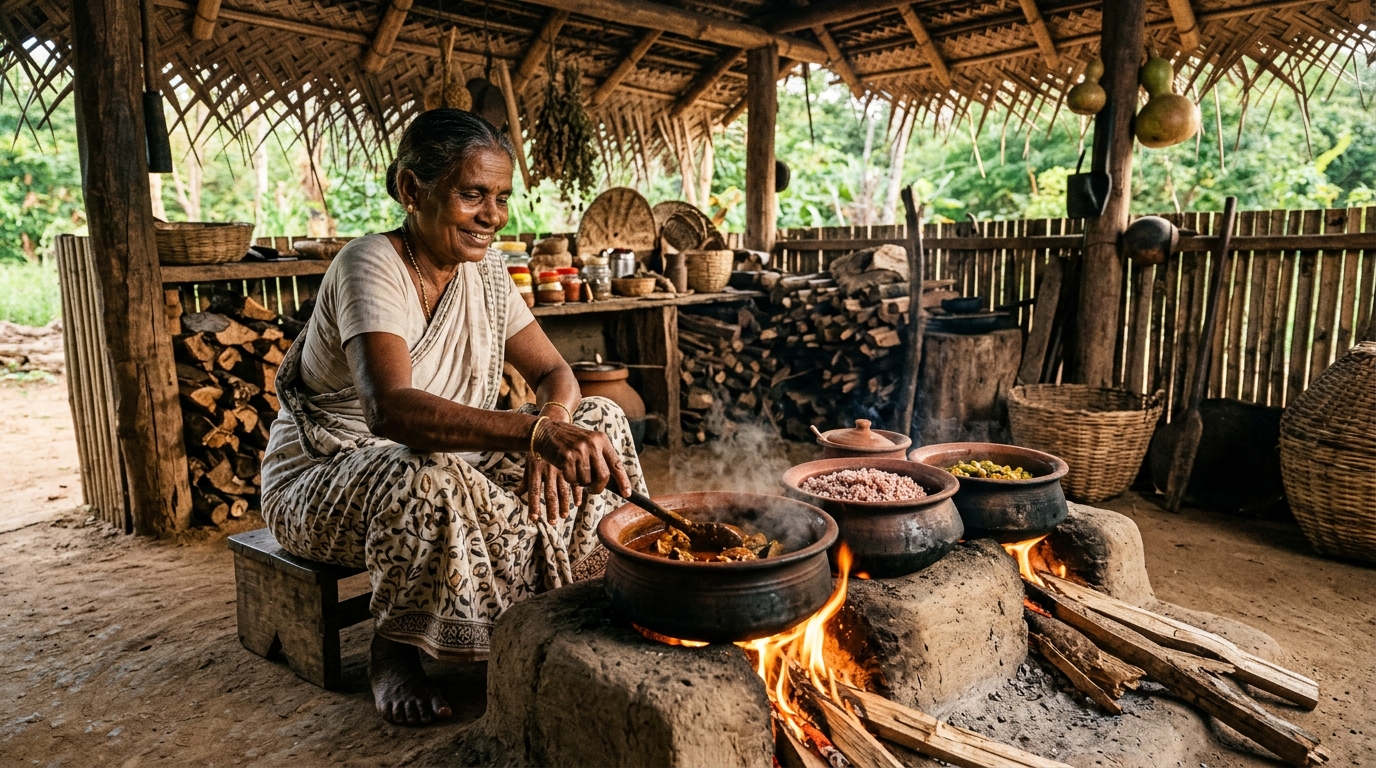
- 12:30 PM – Refreshment & Farmer’s Lunch: Wash off the cave mud under refreshing natural spring showers and savor an authentic rural rice and curry lunch served by a local village family.
- 2:00 PM – Return to Udawalawe: Arrive back at your hotel or safari lodge in time to relax before the evening.
Chapter 8: The Great Twilight Bat Exodus
For travelers who prefer not to enter the dark depths of the cavern, Wavulpane offers an equally spectacular above-ground natural phenomenon: the Great Twilight Bat Emergence. Every evening between 5:30 PM and 6:15 PM, as the tropical sun dips below the Kolonne mountain ridges, the entire colony awakens to begin its nightly insect hunt.
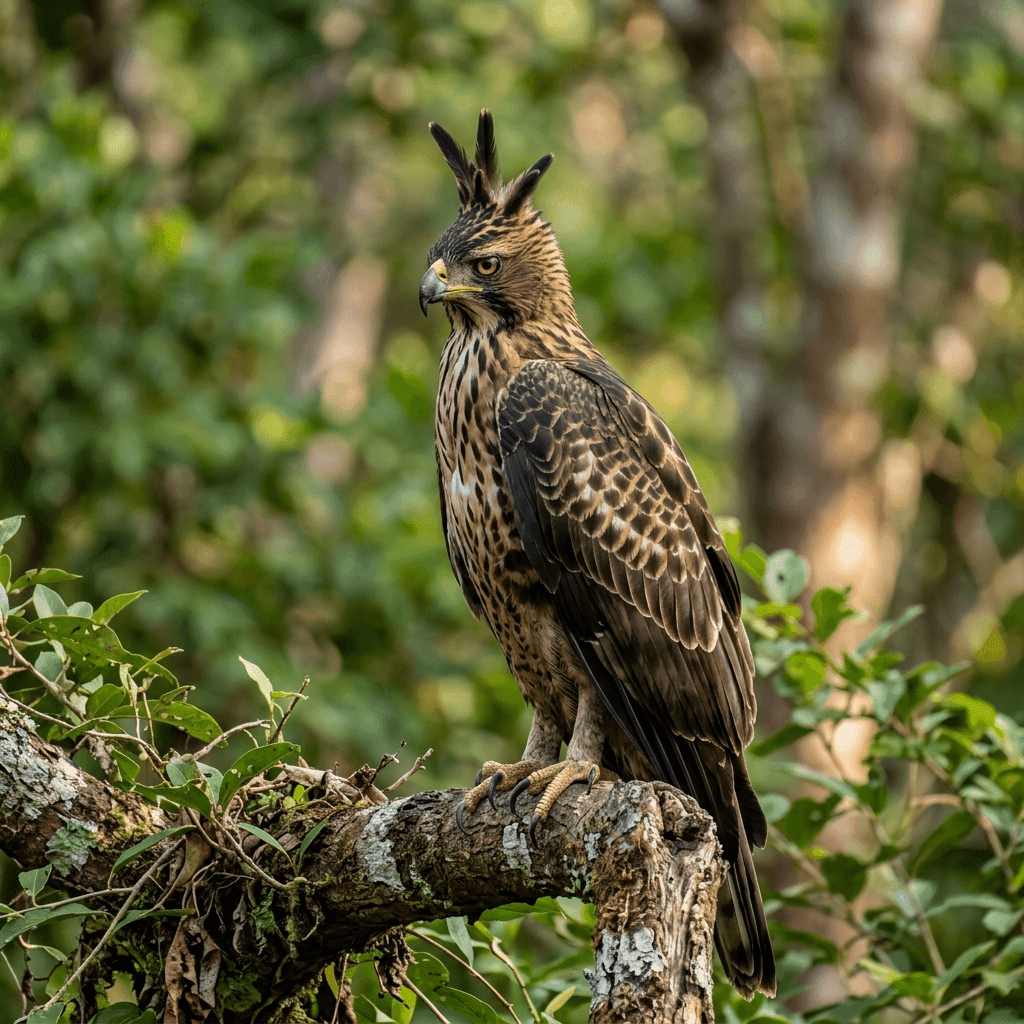
Standing outside the main entrance portal, you first hear a rising, thunderous roar from the depths of the cave. Suddenly, a swirling vortex of bats begins spiraling upward from the mouth of the cavern, forming a dense, living funnel that pours into the twilight sky. Like a swirling plume of black smoke, the massive swarm branches out in all directions over the forest canopy. Birds of prey, including Bat Hawks and Crested Serpent Eagles, frequently circle the entrance, making daring dives into the bat swarm in a dramatic display of raw nature.
Chapter 9: Essential Safety Protocols & Equipment Guidelines
Because Wavulpane is a wild, unmanaged natural cave, safety protocols must be adhered to without compromise:
- Head Protection: A certified climbing or caving helmet is mandatory to protect against low-hanging jagged limestone spurs, stalactites, and accidental slips.
- Reliable Lighting: Every explorer must carry a primary hands-free LED headlamp (minimum 300 lumens) and a secondary backup flashlight with fresh batteries.
- Waterproof Footwear: Sturdy closed-toe hiking shoes, amphibious trail runners, or water boots with aggressive rubber lug soles are essential for traction on slippery, wet limestone rocks and muddy guano beds.
- Respiratory Protection: While the cave is naturally ventilated by through-flowing streams, sensitive travelers should wear an N95 mask or a damp bandana to protect against airborne guano dust and ammonia vapor.
- Monsoon Awareness: Never enter the cave during heavy, unseasonal flash-flood warnings when mountain streams can rise unpredictably within minutes.
Chapter 10: Preserving Wavulpane: Conservation & Eco-Ethics
Wavulpane is a delicate, irreplaceable ecological sanctuary that faces growing threats from unregulated tourism, vandalism of ancient speleothems, and disturbance to sensitive bat nursery roosts. Responsible visitors must uphold strict cave conservation ethics:
- Never Touch Speleothems: The oils and acids on human skin permanently halt the mineral growth of active stalactites and discolour ancient formations.
- Maintain Silence: Keep voices hushed and avoid shining concentrated flashlight beams directly into the eyes of roosting nursing mother bats.
- Leave No Trace: Bring all waste, battery packaging, and organic matter back out of the cave. Never leave trash or food scraps inside.
- Support Local Guides: Employing certified local village speleological guides ensures that tourism revenue incentivizes the local community to protect the cave against illegal guano mining or limestone quarrying.
Chapter 11: The Kolonne Foothills & The Scenic Journey
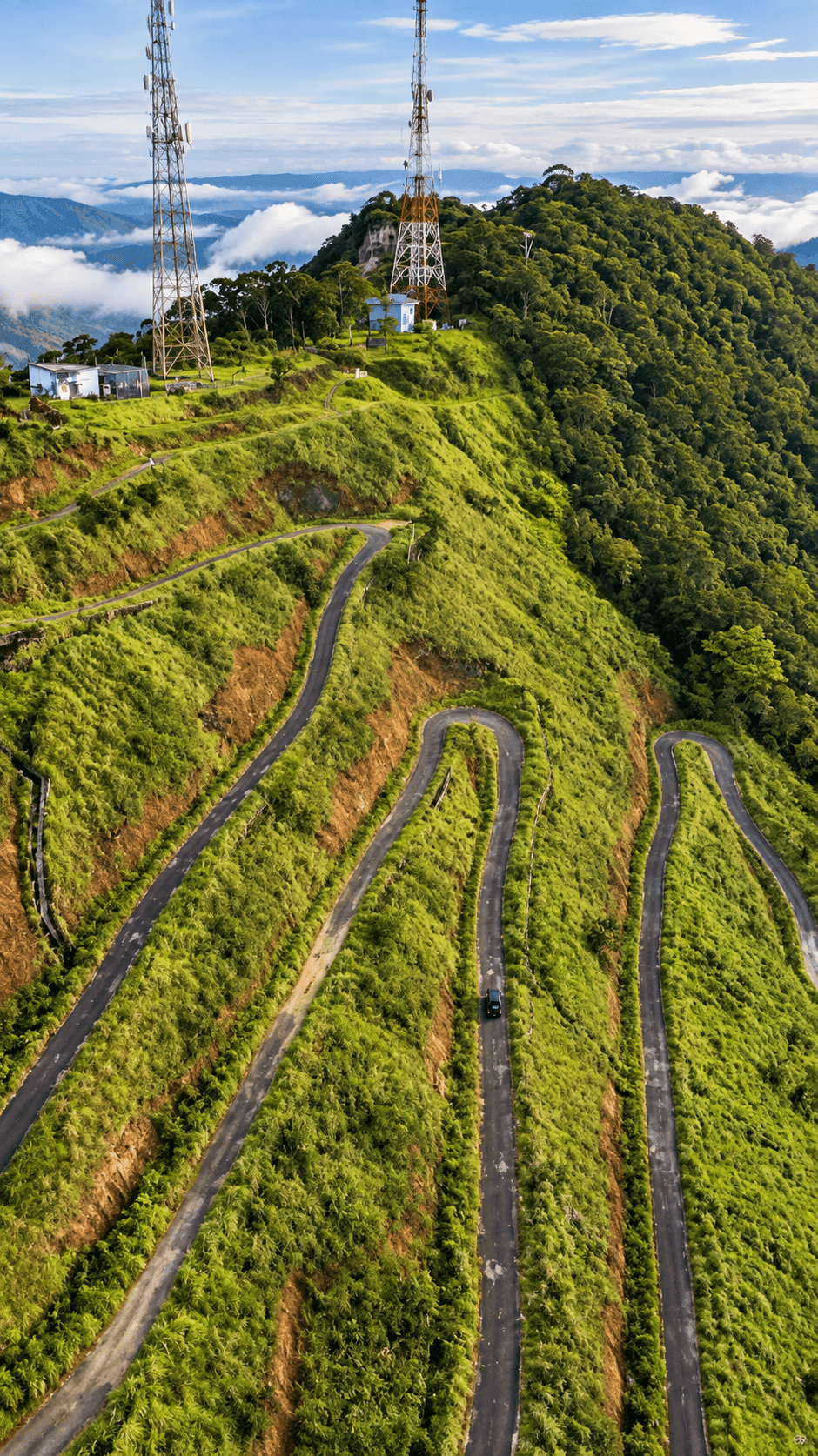
The adventure to Wavulpane begins long before you set foot inside the cavern. The thirty-five-kilometer overland journey from Udawalawe to Kolonne is an exquisite transition from the arid, sun-baked lowlands to the cool, mist-kissed intermediate foothills of the Rakwana mountain range. Traveling along winding rural roads, you watch the landscape transform before your eyes: dry thorny scrub gives way to lush, emerald-green terraced paddy fields, sprawling rubber smallholdings, fragrant black-pepper vines wrapping around living shade trees, and finally, the undulating carpet of low-country Ceylon tea plantations.
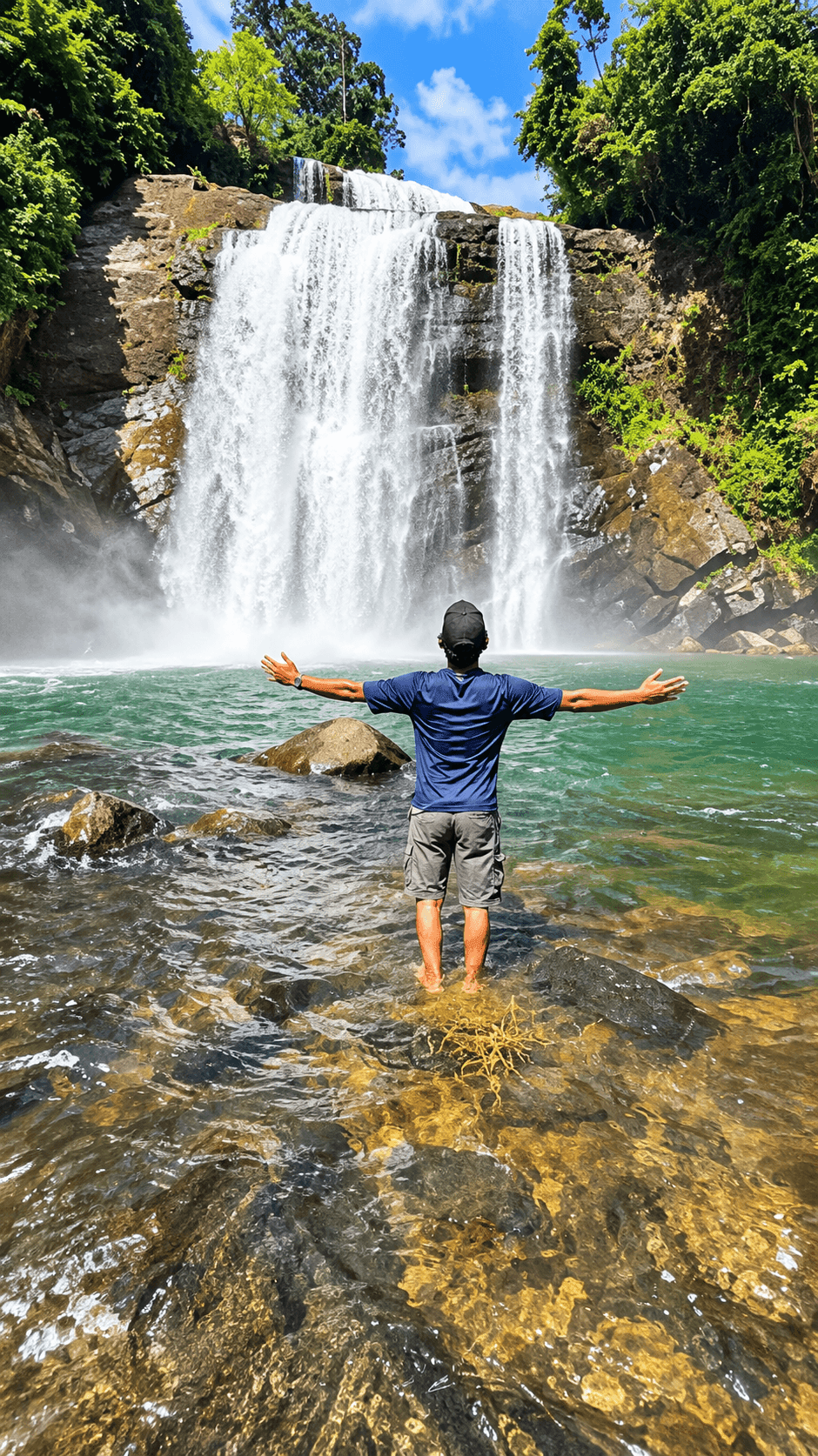
Along the route, your 4x4 vehicle climbs through quiet mountain passes where roadside waterfalls tumble into granite gorges. You can pause at a rustic roadside boutique for a hot glass of freshly brewed ginger tea sweetened with artisanal jaggery while gazing across the valley toward the towering silhouette of the Sinharaja rainforest reserve in the far distance. This scenic prelude sets a tranquil, anticipatory stage for the dramatic subterranean exploration that awaits.
Chapter 12: Speleological Science & Karst Chemistry
To truly appreciate the breathtaking stone formations inside Wavulpane, one must understand the fascinating chemical processes that create karst topography. The cavern’s parent rock is a dense calc-silicate marble formed under extreme heat and pressure during the Precambrian era. Over millions of years, atmospheric rainwater absorbs carbon dioxide from the air and decaying jungle humus, transforming into a weak carbonic acid (H₂CO₃).
As this slightly acidic water percolates through microscopic vertical fissures in the limestone bedrock, it slowly dissolves the solid calcium carbonate (CaCO₃) into soluble calcium bicarbonate (Ca(HCO₃)₂). When a dripping water droplet emerges onto the cave ceiling and comes into contact with the cavern air, carbon dioxide escapes, causing the calcium carbonate to precipitate out of solution as microscopic calcite crystals. Over centuries, these microscopic mineral deposits accumulate at a glacial rate of barely one centimeter every century, growing into magnificent stalactites (*slender hanging cones*), massive stalagmites (*broad floor mounds*), and translucent bacon-rind draperies that ring like stone bells when tapped gently by guides.
Chapter 13: The Physics of Bat Echolocation & Nocturnal Sonar
Navigating through pitch-black subterranean chambers without crashing into jagged rock walls requires one of nature’s most sophisticated sensory systems: ultrasonic echolocation. The hundred thousand Schneider's Leaf-nosed Bats that inhabit Wavulpane do not rely on vision; instead, they "see" their three-dimensional environment through sound.
Through their specialized, leaf-shaped fleshy noses, the bats emit high-frequency acoustic pulses ranging between 80 kHz and 130 kHz—frequencies far beyond the range of human hearing (which tops out at 20 kHz). As these sound waves bounce off rock faces, stalactites, and flying mosquitoes, the bat's sensitive outer ears detect the returning echoes with microsecond precision, calculating the target's distance, flight speed, trajectory, and even the texture of the insect's wings. Witnessing thousands of these creatures fly past your face in complete darkness without a single collision is a humbling demonstration of biological engineering.
Chapter 14: Underground Cave Photography Masterclass
Photographing inside a wild, unlit cavern like Wavulpane is one of the most challenging yet rewarding disciplines in travel photography. Conventional camera flashes produce harsh, flat images filled with glare and floating dust particles. To capture the true primeval atmosphere of the cavern, specialized techniques are required:
- Off-Camera Lighting: Use portable, high-lumen waterproof LED video lights positioned behind stalagmites or to the side of the subterranean waterfall to create dramatic side-lighting and silhouetted rock textures.
- Long Exposure Techniques: Mount your camera on a sturdy tripod in shallow gravel pools. Using a shutter speed of 10 to 20 seconds at ISO 800, use a high-powered beam flashlight to "light-paint" the soaring ceiling vaults and dripping mineral flowstones during the exposure.
- Waterproof Lens Protection: The constant spray from the internal waterfall and high humidity can cause lens fogging. Keep your camera inside a sealed dry bag with desiccant silica gel packs until ready to shoot, and use microfiber lens cloths to wipe away water droplets immediately.
Chapter 15: Ancient Legends, Royal Hiding Places & Folk Myth
Like many natural wonders in Sri Lanka, Wavulpane is steeped in rich historical myth and folklore. According to local village legends, the subterranean cavern once served as an emergency military refuge for King Walagamba (Vattagamani Abhaya) in the first century BCE, during his fourteen-year exile while evading South Indian invaders.
Folk tales whisper of secret underground escape tunnels (*Surangana*) that allegedly connected Wavulpane to the ancient cave temples of Sankapala and the royal fortress of Kuragala miles away. While modern speleological surveys have dispelled the existence of artificial subterranean passages spanning entire mountain ranges, local villagers still revere the cave as a sacred natural sanctuary protected by forest spirits (*Bahirawaya*), ensuring that visitors approach the cavern with profound humility and respect.
Chapter 16: Complete Caving Packing & Equipment Checklist
To ensure a safe, comfortable, and triumphant spelunking expedition, adhere to this comprehensive equipment checklist:
- Apparel: Lightweight, quick-drying synthetic athletic shirt and long pants (to protect skin from abrasive limestone surfaces); seamless synthetic socks; avoid heavy cotton or denim which absorbs water and chills the body.
- Footwear: Closed-toe water shoes, amphibious trail running shoes, or rubber boots with aggressive non-slip lugged outsoles for traction on wet boulders and mud.
- Illumination: Waterproof hands-free LED headlamp (minimum 300 lumens) plus a secondary handheld backup torch with fresh spare batteries.
- Dry Protection: A 15-liter or 20-liter heavy-duty waterproof dry bag to safeguard your phone, camera, and spare dry clothes.
- Post-Caving Essentials: A full change of clean, dry clothes, a towel, and slip-on sandals waiting in the tour vehicle for after your refreshing river wash.
Chapter 17: Community Homestays & Supporting Local Guides
To experience the full magic of the Kolonne valley, many travelers choose to spend an overnight stay in a traditional village homestay near Wavulpane. The local agrarian community is renowned for its generous hospitality, offering clean, rustic rooms overlooking terraced rice paddies, accompanied by home-cooked meals featuring freshly harvested mountain vegetables, river fish, and freshly tapped kithul treacle.
By engaging certified village guides from the local Speleological Cooperative, your expedition directly finances cave conservation patrols, path maintenance, and environmental education programs in local schools. This community partnership ensures that the ancient caverns of Wavulpane remain protected from commercial exploitation while providing sustainable livelihoods for rural families. Whether you spend hours admiring fossilized shells or tracking the evening flight of bats across the sunset sky, you become part of a living conservation effort that honors Sri Lanka's subterranean wonder.
Descending into the prehistoric depths of Wavulpane Cave is a transformative adventure that expands your understanding of wild Sri Lanka, leaving you with an enduring sense of humility and wonder before the ancient, unseen forces of the Earth.




.png)