Chapter 1: The Soul of Sri Lanka Lies in the Village Hearth
To truly understand the culture, soul, and heartbeat of Sri Lanka, one must bypass the sterile stainless-steel kitchens of luxury international hotels and step into the warm, smoke-scented embrace of an authentic village kitchen (*Kussiya*). In the rural hamlets surrounding Udawalawe, cooking is not a chore or an industrialized process; it is a sacred communal art form, an expression of profound maternal love, and a daily celebration of the earth’s generosity.
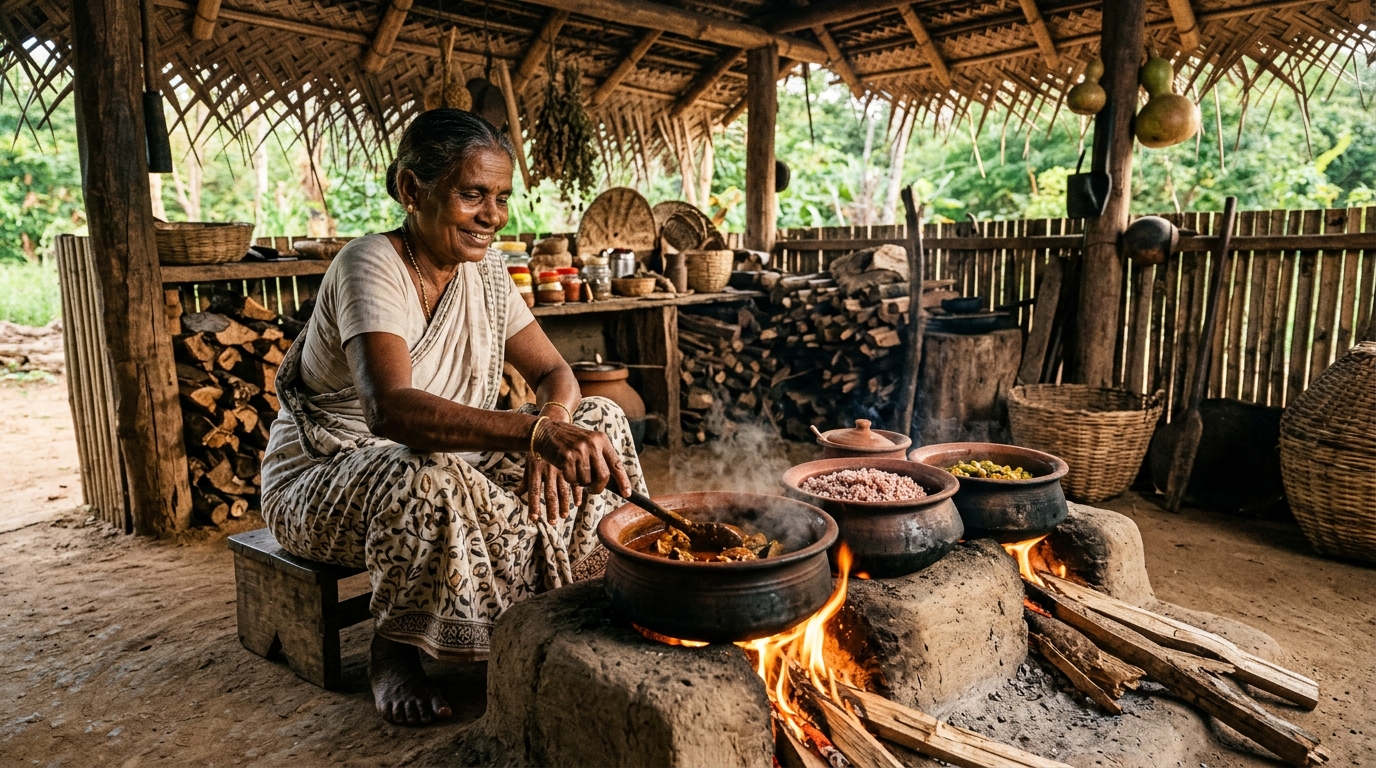
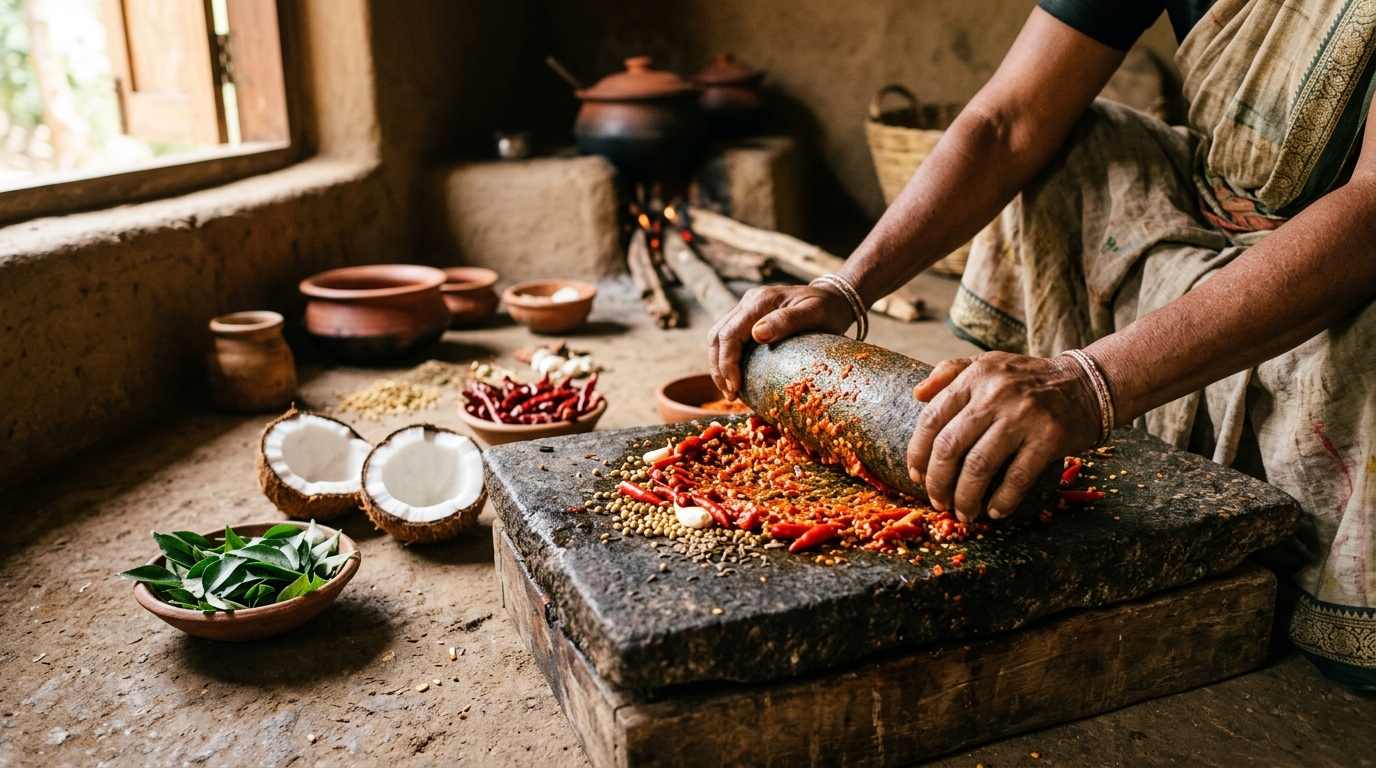
Here, meals are not cooked on electric induction hobs or gas burners. Instead, they are slow-simmered over the crackling embers of an open wood-fired hearth (*Dara Lipa*), inside porous earthenware clay pots (*Chatti*) that have absorbed the aromas of hundreds of curries before them. Spices are not shaken from stale supermarket jars; they are harvested fresh from surrounding gardens and ground into silky, vibrant pastes on heavy granite grinding slabs (*Miris Gala*). Coconut milk is not poured from cardboard cartons; it is scraped fresh from sweet white coconuts and squeezed by hand.
Participating in a traditional community cooking workshop in Udawalawe is an extraordinary, sensory-rich rite of passage. Guided by warm, laughing village grandmothers (*Ammas*) whose hands hold decades of intuitive culinary mastery, you do not simply learn recipes; you step into a living culinary heritage that will transform the way you perceive food, flavor, and community forever.
Chapter 2: The Sacred Trinity of the Village Kitchen
Stepping into a traditional thatched wattle-and-daub kitchen pavilion, you are introduced to the three indispensable manual implements that form the foundation of Sri Lankan culinary heritage:
| Kitchen Implement | Traditional Material | Culinary Technique & Significance |
|---|---|---|
| The Wood Hearth (*Dara Lipa*) | Three hand-molded terracotta clay hearthstones | Fueled by dried coconut husks and hardwood branches; provides high radiant heat and subtle smoky infusion. |
| The Grinding Slab (*Miris Gala*) | Flat granite base stone and cylindrical rolling pestle | Crushes whole spices, shallots, garlic, and chilies into silky pastes, releasing essential volatile oils without heat friction. |
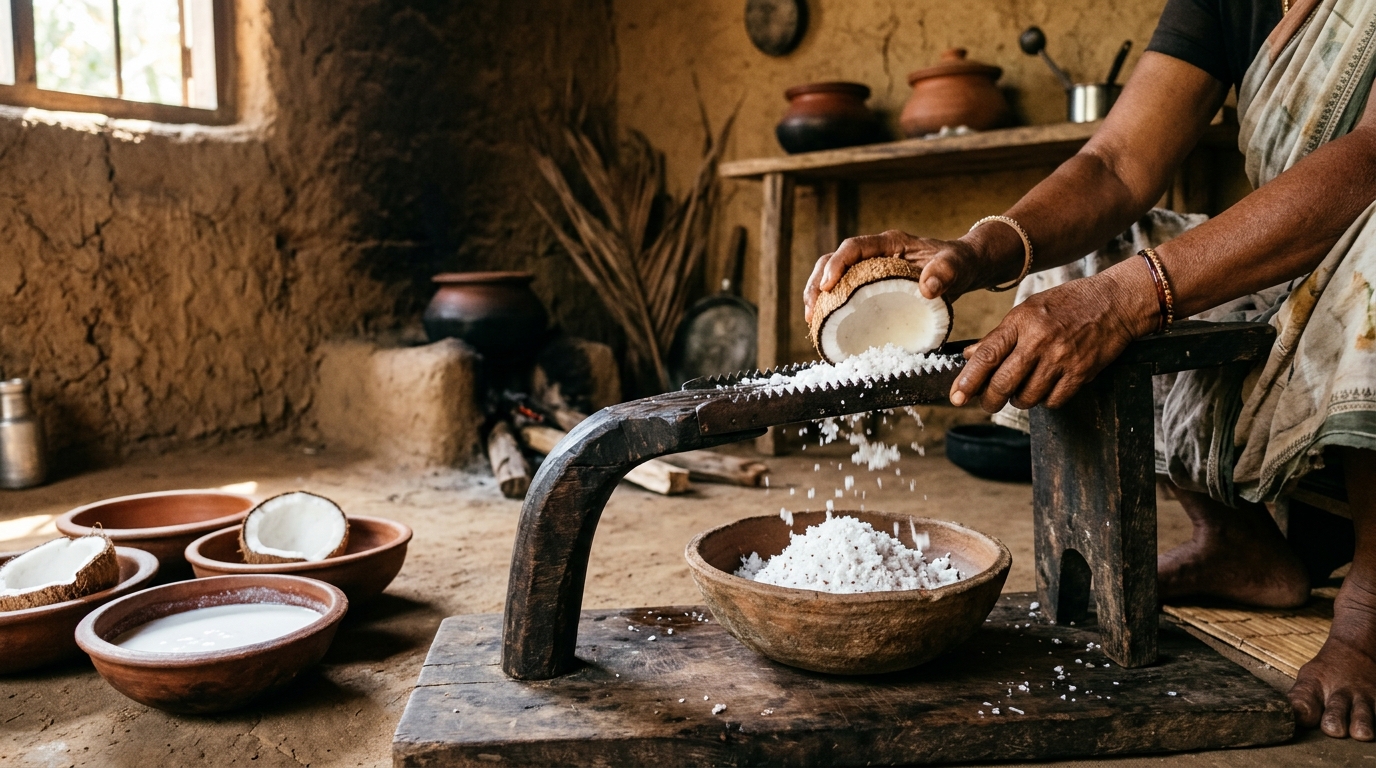
| The Coconut Scraper (*Hiramanaya*) | Carved wooden low bench fitted with a serrated steel rosette | The cook sits on the wooden bench, rotating the coconut half against the teeth to produce snow-white fluffy coconut shavings. |
| The Mortar & Pestle (*Wangediya & Molaha*) | Carved solid hardwood or heavy stone cylinder | Used with rhythmic vertical pounding to crush cardamom, cloves, cinnamon bark, and pound rice into fine flour. |
| Earthenware Pots (*Metee Chatti*) | Unglazed, kiln-fired alluvial clay from local riverbeds | Naturally porous; breathes during cooking, neutralizing acidity and locking in moisture for unmatched curry depth. |
Chapter 3: The Magic of Earthenware Clay Pot Cooking
Modern culinary science has increasingly validated what Sri Lankan village cooks have known intuitively for millennia: cooking in natural earthenware clay pots produces vastly superior nutritional, textural, and flavor outcomes compared to metal cookware.
Clay is a natural, alkaline material that interacts chemically with the acidic components of Sri Lankan curries—such as sun-dried *goraka* (Garcinia), tamarind, lime juice, and tomatoes—naturally neutralizing excess acidity and producing a remarkably mellow, balanced, and rounded flavor. Furthermore, the microscopic pores in unglazed clay absorb and retain moisture, creating an enclosed convection environment where food simmers gently in its own juices with minimal oil. Because clay conducts heat slowly and evenly, delicate spices never burn, and tough fibrous ingredients like baby jackfruit or wild tubers break down into velvety tenderness over hours of gentle simmering.
Chapter 4: Decoding the Sri Lankan Spice Cabinet
Central to your hands-on culinary masterclass is understanding the profound distinction between raw, unroasted spices (*Amu Thuna Paha*) and dark, roasted curry powders (*Badapu Thuna Paha*):
- Raw Curry Powder (*Amu Thuna Paha*): A fragrant, aromatic blend of whole coriander seeds, cumin, sweet fennel seeds, cardamom, and cinnamon, ground raw without roasting. Used predominantly for light vegetable curries, dhal, and coconut milk broths (*Kiri Hodi*), preserving fresh, herbaceous floral notes.
- Roasted Curry Powder (*Badapu Thuna Paha*): Whole coriander, cumin, fennel, black mustard seeds, fenugreek, and dry red chilies are slowly dry-roasted in a hot clay pot until they turn dark chocolate brown, smoking with intense aroma. The roasted spices are ground hot on the granite slab, creating the rich, smoky, deeply complex backbone for dark meat, fish, and rich jackfruit curries.
- The Holy Aromatics: Fresh curry leaves (*Karapincha*), pandan leaves (*Rampe*), lemongrass (*Sera*), fresh ginger, crushed garlic, and sliced purple shallots, fried in hot oil during the initial "tempering" (*theldamma*) to release a fragrant explosion that perfumes the entire village.
- The Souring Agents: Sun-dried *Goraka* (Gamboge), soaked in warm water and crushed into a black paste, providing a signature smoky, fruity tartness that acts as a natural digestive and antibacterial preservative.
Chapter 5: The Signature Recipes You Will Master
Under the loving, patient guidance of the village cooks, you roll up your sleeves to prepare an elaborate six-course traditional banquet from scratch:
1. Polos Ambula (Slow-Simmered Young Baby Jackfruit Curry)
The undisputed masterpiece of Sri Lankan plant-based gastronomy. Green, immature jackfruit is peeled, sliced into tender chunks, and layered inside a seasoned clay pot with dark roasted curry powder, goraka paste, pounded garlic, ginger, and thick coconut milk. Slow-simmered over low wood embers for three hours, the jackfruit absorbs the smoky, tangy spices, taking on a texture and rich savory depth that rivals the finest braised beef.
2. Village Parippu (Creamy Coconut Dhal Curry)
Orange split lentils simmered with turmeric, sliced green chilies, onions, and curry leaves in thin coconut milk until soft, then finished with rich, freshly squeezed coconut cream and a fragrant tempering of crackling mustard seeds, dried red chilies, and curry leaves fried in coconut oil.
3. Hand-Pounded Pol Sambol (Fiery Coconut Relish)
Freshly scraped coconut pounded on the granite *miris gala* with whole sun-dried red chilies, red shallots, sea salt, black pepper, and freshly squeezed lime juice. Watching the white coconut transform into a fiery, sunset-orange mountain of zesty, smoky flavor beneath your hands is pure culinary joy.
4. Gotukola Sambol (Asiatic Pennywort Herb Salad)
Finely shredded fresh green pennywort leaves tossed with freshly scraped coconut, thinly sliced shallots, green chilies, sea salt, and a splash of lime juice—a crisp, refreshing raw antidote to rich curries that cleanses the palate and invigorates the senses.
5. Seeni Sambol (Caramelized Spicy Onion Relish)
Thinly sliced red onions slow-cooked with cinnamon, cardamom, cloves, tamarind juice, and a touch of wild kithul jaggery until dark, jammy, sweet, and fiery—the ultimate condiment to accompany traditional hoppers and roti.
Chapter 6: The Art of Coconut Milk Extraction
In traditional Sri Lankan village cooking, coconut is not merely an ingredient; it is life itself. You will learn the time-honored two-stage extraction process that forms the foundation of every authentic sauce:
Sitting on the low wooden *hiramanaya* bench, you scrape the coconut into fine, snow-white flakes. Adding a small splash of warm water, you vigorously knead the grated coconut with your hands to express the concentrated oils, squeezing it through your fingers to yield the precious *Mithiri Kiri* (First Extract / Thick Coconut Cream). A second addition of warm water yields *Diya Kiri* (Second Extract / Thin Coconut Milk). Master cooks know precisely when to use the thin milk to gently cook vegetables through, adding the thick cream only at the very final stage to preserve its rich, sweet, velvety emulsification without curdling.
Chapter 7: Communal Dining on Fresh Lotus Leaves
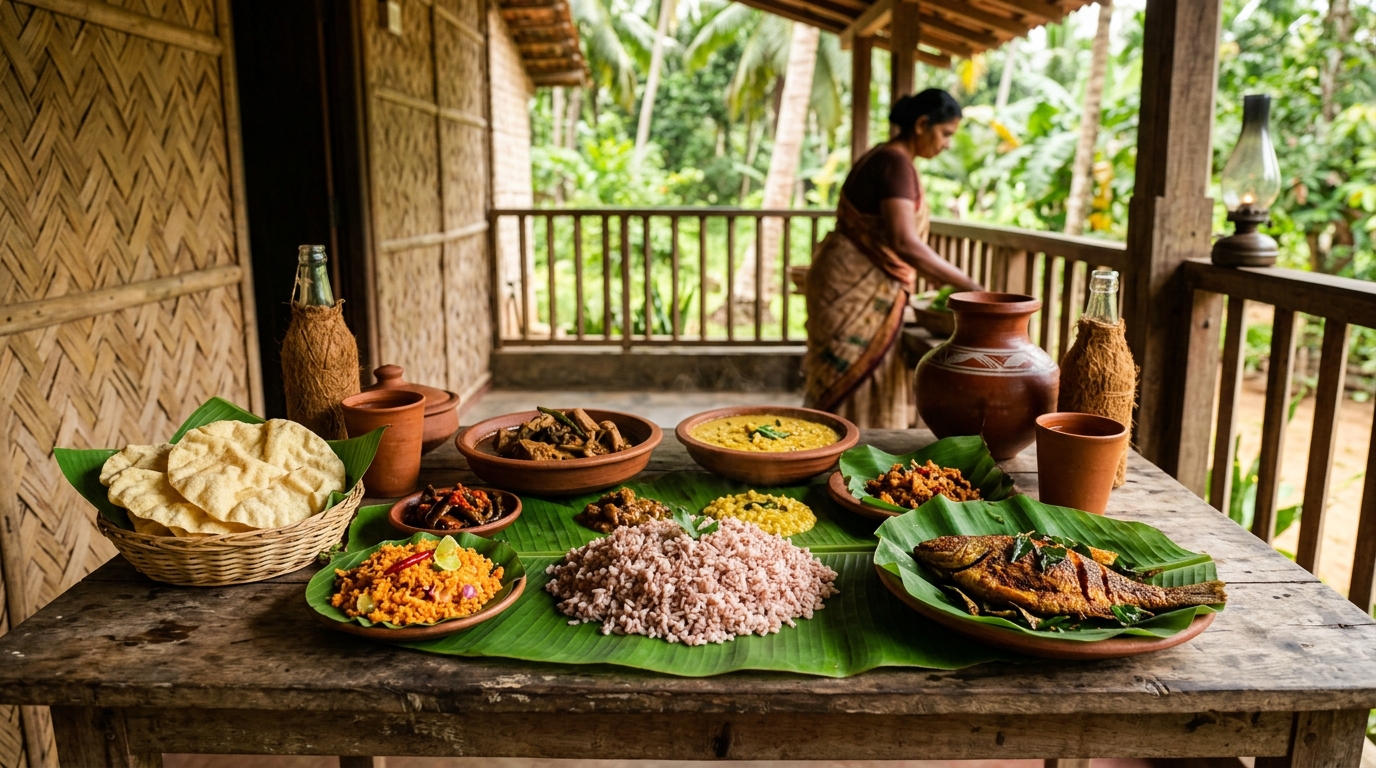
Cooking is only half the experience; the true magic unfolds when the entire community gathers to feast. In keeping with ancient Sri Lankan hospitality, the meal is served family-style on freshly harvested, washed green lotus leaves (*Nelum Kole*).
You sit on woven palm mats in the shaded kitchen pavilion alongside your fellow travelers and the village hosts. Following local tradition, you eat with your right hand, using your fingertips to deftly mix steaming red rice with the various curries, sambols, and crunchy papadam. Eating with your hands provides an intimate, tactile connection to the food—feeling the temperature, texture, and aroma before it reaches your palate elevates the dining experience into a multi-sensory celebration of pure joy.
Chapter 8: Traditional Sweet Finale: Buffalo Curd & Jaggery
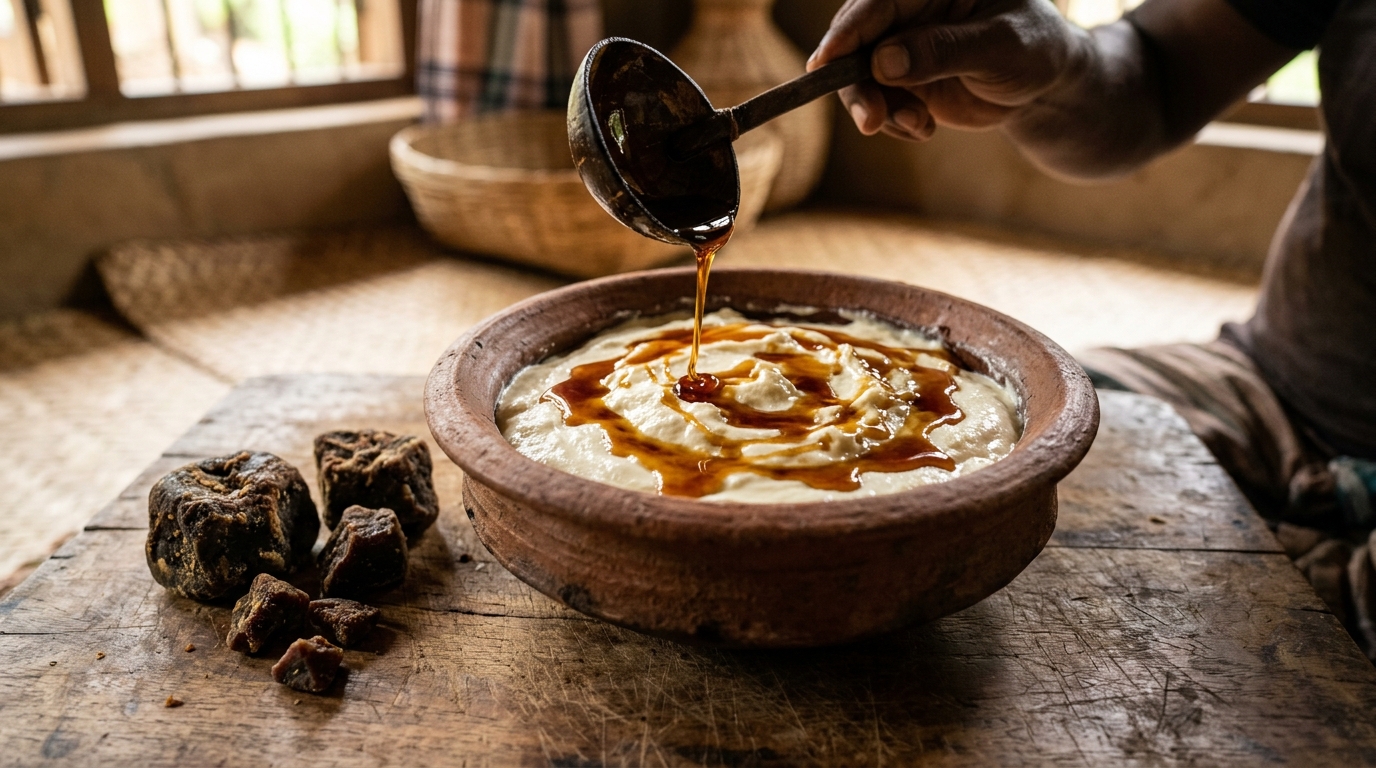
No Sri Lankan feast is complete without the iconic dessert pairing: freshly set water buffalo curd (*Meekiri*) served in terracotta dishes, drizzled with thick, warm, smoky-sweet golden kithul treacle. Paired with steaming cups of ginger-infused Ceylon black tea or sweet jaggery chunks (*Hakuru*), it provides a sweet, digestive finale that leaves everyone glowing with contentment.
Chapter 9: Take-Home Heritage Cookbook & Masterclass Certification
To ensure that the flavors of Udawalawe continue to delight your dinner table long after your return home, every participant receives a personalized Heritage Recipe Booklet detailing:
- Precise metric and imperial measurements for all recipes mastered during the class.
- Instructions on how to season, care for, and clean unglazed clay pots at home.
- Clever international ingredient substitutions (e.g., using tamarind or amchur if goraka is unavailable abroad).
- A souvenir package of hand-ground roasted curry powder, whole cinnamon quills, and wild pepper harvested directly from the village estate.
Chapter 10: Preserving Intangible Culinary Heritage & Community Welfare
In an era where fast food, processed ingredients, and industrialized dining threaten to erase ancient culinary traditions, our community cooking classes serve as an essential bulwark for cultural preservation. By participating in this workshop, you directly provide dignified, well-compensated livelihoods to rural village women, transforming their home kitchens into celebrated cultural sanctuaries.
Chapter 11: The Ayurvedic Six Tastes (*Shad Rasa*) in Sinhala Cooking
In authentic Sri Lankan home cooking, every meal is designed not merely for pleasure, but as preventative medicine. Traditional village cooks unconsciously adhere to the ancient Ayurvedic doctrine of the *Shad Rasa* (The Six Fundamental Tastes): Sweet (*Madhura*), Sour (*Amla*), Salty (*Lavana*), Pungent (*Katu*), Bitter (*Tikta*), and Astringent (*Kashaya*).
According to Ayurvedic science, a meal that incorporates all six tastes creates complete nutritional and psychological satiety, prevents overeating, and harmonizes the three physiological bio-energies (*Doshas*—Vata, Pitta, and Kapha):
| Ayurvedic Taste | Key Village Ingredients | Therapeutic & Physiological Benefit |
|---|---|---|
| Sweet (*Madhura*) | Pure coconut milk, fresh red rice, wild kithul treacle | Builds tissue vitality (Ojas), cools internal body heat, provides sustained energy. |
| Sour (*Amla*) | Sun-dried goraka (Garcinia), wild lime, fresh tamarind | Stimulates digestive enzymes (Agni), enhances nutrient absorption, breaks down proteins. |
| Salty (*Lavana*) | Natural unrefined sea salt from Hambantota salt pans | Maintains electrolyte hydration in tropical heat, enhances natural flavor compounds. |
| Pungent (*Katu*) | Black peppercorns, dried red chilies, fresh ginger | Clears respiratory passages, boosts metabolic circulation, prevents gas and bloating. |
| Bitter (*Tikta*) | Bitter gourd (*Karawila*), fenugreek seeds, neem leaves | Purifies blood, detoxifies liver function, balances blood sugar levels naturally. |
| Astringent (*Kashaya*) | Gotukola, banana flower (*Kehel Muwa*), fresh turmeric | Tones mucosal linings, accelerates cellular wound healing, reduces inflammation. |
When you finish your lotus-leaf meal, you do not feel heavy, bloated, or lethargic; instead, you feel light, clear-headed, and deeply nourished, experiencing firsthand the holistic genius of ancient Sri Lankan food philosophy.
Chapter 12: Foraged Wild Greens (*Mallum*) & Tree Leaves
A fascinating revelation during the workshop is learning that Sri Lanka’s greatest superfoods are not cultivated crops, but wild greens foraged from hedgerows and forest edges. Your hosts will demonstrate the preparation of traditional *Mallum*—finely chopped leafy greens tossed with fresh coconut, shallots, green chilies, and lime, gently warmed in a clay pot for barely sixty seconds to preserve live enzymes and crisp color.
You will cook with *Mukunuwenna* (renowned for enhancing eye health), *Kankun* (water spinach rich in dietary iron), *Murunga* (Moringa leaves, hailed globally as an antioxidant miracle tree), and *Kathurumurunga* (Sesbania grandiflora), whose delicate edible white blossoms are prized for soothing gastric ulcers. Tossing these freshly foraged leaves over warm embers connects you directly to the wild foraging wisdom of ancestral generations.
Chapter 13: Ancient Food Preservation & Clay Storage
In rural tropical environments where electric refrigeration was historically nonexistent, village communities developed brilliant, natural food-preservation technologies that remain active today:
- Goraka & Salt Curing (*Jaadi*): Fish and meats are layered with sun-dried Garcinia gummi-gutta paste and coarse sea salt inside sealed clay urns, creating a stable, lactic acid cured delicacy that keeps without refrigeration for months while developing intense umami depth.
- Smokehouse Lofts (*Duma*): Suspended directly above the wood-burning hearth is a multi-tier woven bamboo platform (*Duma*). The rising, dry woodsmoke constantly preserves seeds, dried chili pods, terracotta-cured jackfruit seeds (*Kos Ata*), and smoked fish, deterring weevils and fungal molds naturally.
- Sand & Ash Storage: Tubers, yams, and whole ginger rhizomes are buried inside mounds of clean dry river sand or wood ash beneath shaded house eaves, remaining fresh, crisp, and ready to cook for up to half a year.
Chapter 14: Festive Sweet Treats of the Sinhala New Year
If you visit during festive seasons or opt for our extended confectionery module, you delve into the sweet heritage of the Sinhala New Year (*Avurudda*). You will learn to fry golden *Konda Kevum* (deep-fried oil cakes shaped with an artistic central mound using a coconut-leaf skewer in smoking oil), press lace-like *Kokis* (crispy rice-flour rosettes molded using decorative brass irons), and stir creamy *Aluwa* (cardamom-scented rice flour fudge studded with roasted cashews).
Chapter 15: Step-by-Step Cooking Class Timetable
A standard community cooking immersion is designed as an unhurried, celebratory 3.5-hour experience:
- 9:00 AM – Welcome & Herbal Infusion: Greet your host village family with traditional *"Ayubowan"*; enjoy hot coriander-ginger herbal tea served in polished coconut-shell cups with kithul jaggery.
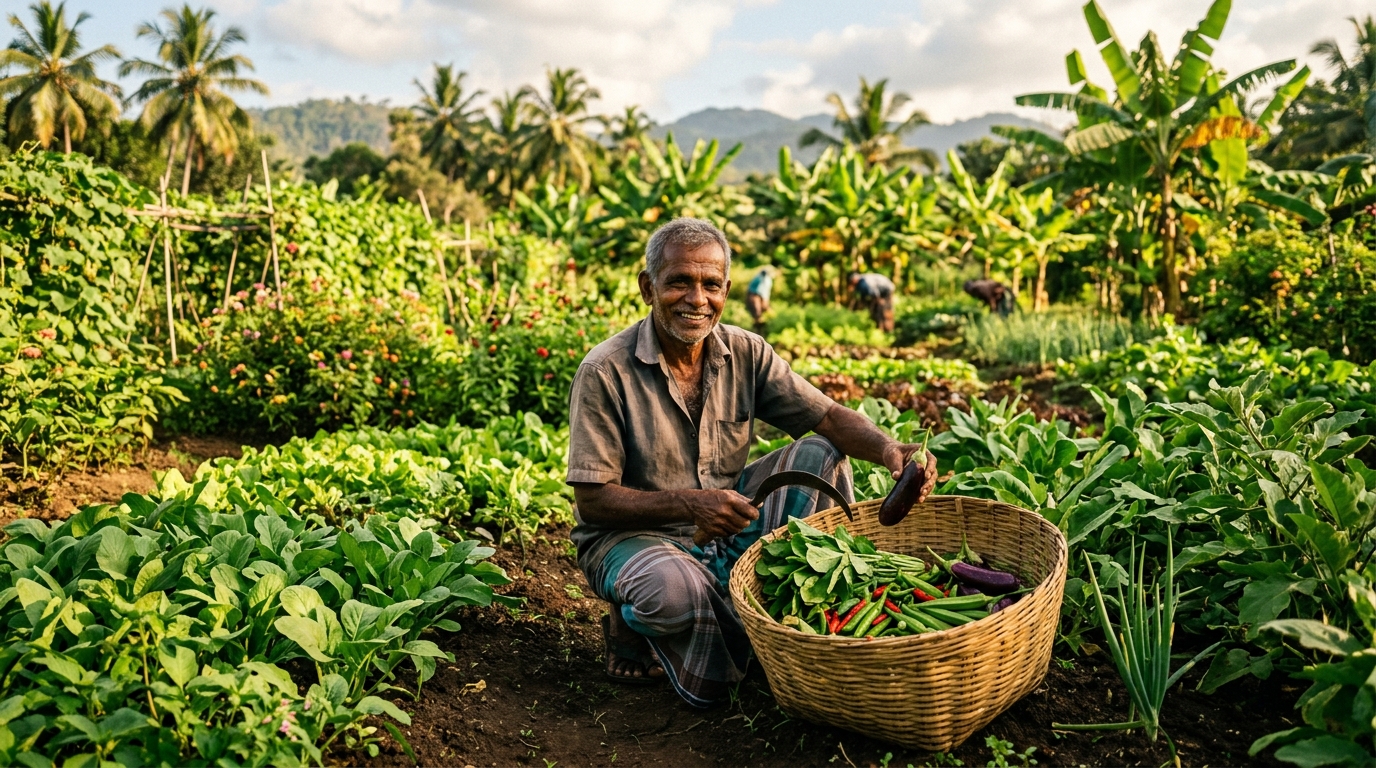
- 9:20 AM – Kitchen Garden Foraging: Walk through the home garden with your basket, plucking fresh curry leaves, lemongrass stalks, green chilies, and fresh vegetables for your lunch.
- 9:45 AM – Manual Implements Masterclass: Scrape fresh coconuts on the *hiramanaya*; hand-grind spices on the stone *miris gala*; extract thick and thin coconut milk.
- 10:30 AM – Hearthside Cooking: Light the clay hearthstones; temper fragrant aromatics in coconut oil; simmer baby jackfruit, dhal, and seasonal vegetables in clay pots over open flames.
- 11:45 AM – Hand-Pounding Sambols & Rice Steaming: Pound fiery pol sambol and assemble crisp gotukola salad; harvest fresh green lotus leaves from the local pond.
- 12:15 PM – The Grand Lotus-Leaf Feast: Gather around the dining mats to savor your culinary creations with your hands, accompanied by crispy papadam and fresh country rice.
- 1:00 PM – Curd, Jaggery & Recipe Book Presentation: Enjoy sweet buffalo curd and kithul treacle; receive your souvenir recipe book and freshly ground village spice gifts.
Chapter 16: The Art of Wood Smoke Infusion (*Dara Dumin Suwanda*)
One of the profound secrets that distinguishes village clay-pot cooking from modern urban stoves is the subtle, artisanal role of wood smoke. In a traditional hearth (*dara lipa*), firewood is not chosen at random; different wild woods impart distinct aromatic qualities to the food.
Village cooks favor seasoned branches of *Tamarind* (Siyambala), *Cinnamon* (Kurundu), and dry coconut shells (*pol katu*). Coconut shells burn with a clean, intense, virtually smokeless blue flame ideal for rapid searing and boiling, while slow-burning tamarind hardwood provides steady glowing embers that gently simmer curries for hours without scorching. The trace natural phenols in the woodsmoke circulate through the porous unglazed clay lids, lending authentic Sri Lankan curries their signature rustic, earthy fragrance that no modern gas or electric kitchen can ever duplicate.
Chapter 17: Rustic Village Flatbreads: Pol Roti & Lavariya
In addition to heritage red rice, the community cooking workshop teaches you to master classic village street foods and teatime flatbreads:
The Iconic Coconut Flatbread (*Pol Roti*)
You will knead a hearty dough using stone-ground wheat or millet flour, freshly grated coconut, finely diced red shallots, green chilies, and sea salt. Flattened by hand into rustic circles on banana leaves, the roti are dry-baked directly on a seasoned clay griddle (*thachchiya*) over open coals until charred with golden-brown spots. Served piping hot with spicy caramelized onion relish (*seeni sambol*) or fiery *lunu miris*, it is the ultimate comfort food.
Sweet Coconut Stuffed Rolls (*Lavariya*)
For teatime, you will prepare *Lavariya*—delicate string-hopper noodle parcels stuffed with *Pani Pol* (grated fresh coconut slow-caramelized in hot wild kithul treacle with crushed green cardamom pods and cinnamon). The filled parcels are folded into delicate packages and lightly steamed, melting into sweet, fragrant bliss with every bite.
Chapter 18: Caring for Earthenware Clay Cookware at Home
A highlight of the workshop is learning how to care for traditional clay cookware so you can recreate authentic Sri Lankan curries in your home kitchen anywhere in the world. Village cooks share their time-tested seasoning secrets:
- Initial Water Soaking: Submerge new, unglazed clay pots in clean fresh water for at least 24 hours to allow the porous clay to hydrate and prevent thermal shock when placed over heat.
- Oil & Turmeric Curing: Rub the interior and exterior of the pot with a mixture of coconut oil and turmeric powder. Heat the pot gently over low flame with sliced onions and rice water until the oil is absorbed, sealing the pores and creating a naturally non-stick patina.
- Gentle Cleaning: Never use harsh chemical dish soaps or metal scouring pads on clay pots, as the porous clay will absorb soap chemicals. Instead, clean using hot water, a natural coir coconut-husk brush, and baking soda or wood ash.
Chapter 19: Etiquette of Sri Lankan Village Hospitality
In Sinhala culture, sharing food is considered the highest virtue (*Dana*). When you enter a village home, you are greeted with unconditional warmth and hospitality. The host matriarch will repeatedly encourage you to take second and third helpings of rice and curries (*"Thawa bath tikak ganna"*), as an empty plate is seen as a sign that the host has not provided enough.
Accepting extra servings with a grateful smile and joining in the collective laughter around the dining mats honors your hosts and cements lifelong cross-cultural friendships. Food bridges every divide, creating a space of shared human celebration and mutual gratitude.
Chapter 20: Frequently Asked Questions & Home Cooking Adaptations
Our cooking guides address common questions from international travelers:
- Can I cook these recipes in stainless steel or enamel pots at home? Yes! While clay pots impart unique minerals and smoke aromas, using heavy-bottomed cast iron Dutch ovens or ceramic cookware at home produces delicious results when following our authentic spice-tempering ratios.
- How do I adjust spice levels for children or sensitive stomachs? You can easily reduce or omit red chili powder while retaining flavor depth by emphasizing raw cumin, coriander, turmeric, cardamom, and creamy coconut milk.
- Where can I find ingredients outside Sri Lanka? Most Asian and South Asian grocery stores internationally carry curry leaves, frozen grated coconut, pandan leaves, and whole spices. In our recipe booklet, we provide practical global substitutions for specialty items like goraka and kithul treacle.
Stepping into the village kitchen, sharing laughter across language barriers, and cooking side-by-side with master local cooks is an unforgettable human experience. It nourishes not only the body, but the soul—reminding us all that food is the universal language of love, connection, and human belonging.








.png)