Chapter 1: The Ornithological Stature of Udawalawe National Park
While the Asian elephant rightfully commands global fame as the charismatic megafaunal ambassador of Udawalawe National Park, the reserve harbors an equally staggering avian treasure trove that places it among the premier birdwatching destinations in the tropical world. Designated as an official Important Bird Area (IBA) by BirdLife International, Udawalawe spans an extraordinary ecological crossroads where the southern arid dry zone, rich riverine gallery forests, seasonal floodplains, and the vast freshwater expanse of the 3,400-hectare Udawalawe Reservoir seamlessly converge. This rich mosaic of micro-ecosystems sustains over 184 recorded bird species, encompassing rare endemics, majestic apex raptors, colorful dry-zone forest dwellers, and thousands of international migratory waterfowl that journey thousands of miles along the Central Asian Flyway to overwinter in this tropical sanctuary.
For birders, ornithologists, and passionate naturalists, birdwatching in Udawalawe offers an unmatched visual advantage compared to the rainforests of Sinharaja or Kitulgala. In dense wet-zone rainforests, locating birds requires straining upward through a multi-tiered canopy eighty feet overhead, where fleeting glimpses of foliage-gleaners are often obscured by rain, shadows, and dense mist. In Udawalawe, the open savanna grassland, scattered acacia scrub, and dead tree snags emergent from the reservoir create a wide, open-air amphitheater. Perched raptors, feeding bee-eaters, strutting storks, and displaying peafowl are easily observed and photographed at eye-level or against clear skies, offering unobstructed views of intricate plumage, hunting techniques, and social breeding behaviors.
Whether you are an experienced life-lister seeking elusive regional endemics or an enthusiastic traveler enchanted by the vibrant flash of a kingfisher's iridescent turquoise wings, an avian safari in Udawalawe delivers non-stop sensory wonder. From the moment the dawn chorus erupts at 5:45 AM until the final nightjar begins its rhythmic call at dusk, the park pulsates with avian vitality.
Chapter 2: Sri Lankan Endemics & Regional Dry-Zone Specialties
Sri Lanka boasts an extraordinary degree of avian endemism, with thirty-four bird species found nowhere else on planet Earth. While many of these endemics inhabit the southwestern wet zone, Udawalawe is home to several highly prized endemic species and localized dry-zone specialties that can be readily observed on a morning or full-day safari:
1. The Sri Lanka Junglefowl (Gallus lafayettii)
Sri Lanka’s national bird is an omnipresent, flamboyant resident of Udawalawe. Male junglefowl are breathtakingly colorful: vibrant golden-orange neck hackles, a fiery red comb adorned with an electric yellow central medallion, iridescent dark blue wing coverts, and sweeping black sickle tail feathers. In the early morning, males proudly patrol the edges of the jeep tracks, scratching vigorously through the leaf litter for fallen seeds, termites, and succulent beetles while issuing their piercing, two-syllable territorial challenge: *"chok-choyik!"* Females, by contrast, sport mottled camouflage plumage of warm earthy brown and buff, allowing them to nest securely on the ground amidst dry grass.
2. The Sri Lanka Grey Hornbill (Ocyceros gingalensis)
This endemic hornbill inhabits mature forest tracts and riverine gallery corridors along the Walawe River. Measuring approximately 45 centimeters in length with a distinctive curved bill (creamy-white in males with black bases; black with a cream stripe in females), these social birds travel in noisy pairs or small family parties. Listen for their unmistakable vocalizations—a series of harsh, cackling laughing calls that echo through the forest canopy. They feed heavily on wild figs (Ficus species) and large insects, playing an indispensable ecological role as primary seed dispersers for the reserve’s ancient canopy trees.
3. The Sri Lanka Green Pigeon (Treron pompadora)
Often seen feeding in fruiting fig and banyan trees along the central tracks, this exquisite endemic columbid displays pastel lime-green plumage, bright maroon mantle feathers in males, and delicate yellow wing bars. Highly gregarious and agile, they clamber upside down through branches like small parrots to feed on ripe berries, their soft, melodic whistles floating down through the warm morning air.
4. The Brown-capped Babbler (Pellorneum fuscocapillus)
A secretive, ground-dwelling endemic that inhabits dense undergrowth and thorn scrub. While challenging to spot due to its skulking habits, its melodious, ringing three-note whistle—frequently transcribed as *"to-meet-you!"*—is an iconic auditory staple of Udawalawe's riverbank thickets.
Chapter 3: Apex Raptors & Birds of Prey of the Plains
Udawalawe is universally revered among birders as the raptor capital of Sri Lanka. The expansive savanna grasslands and abundant populations of rodents, calotes lizards, snakes, and freshwater fish support an exceptional density of predatory raptors:
1. The Crested Serpent Eagle (Spilornis cheela)
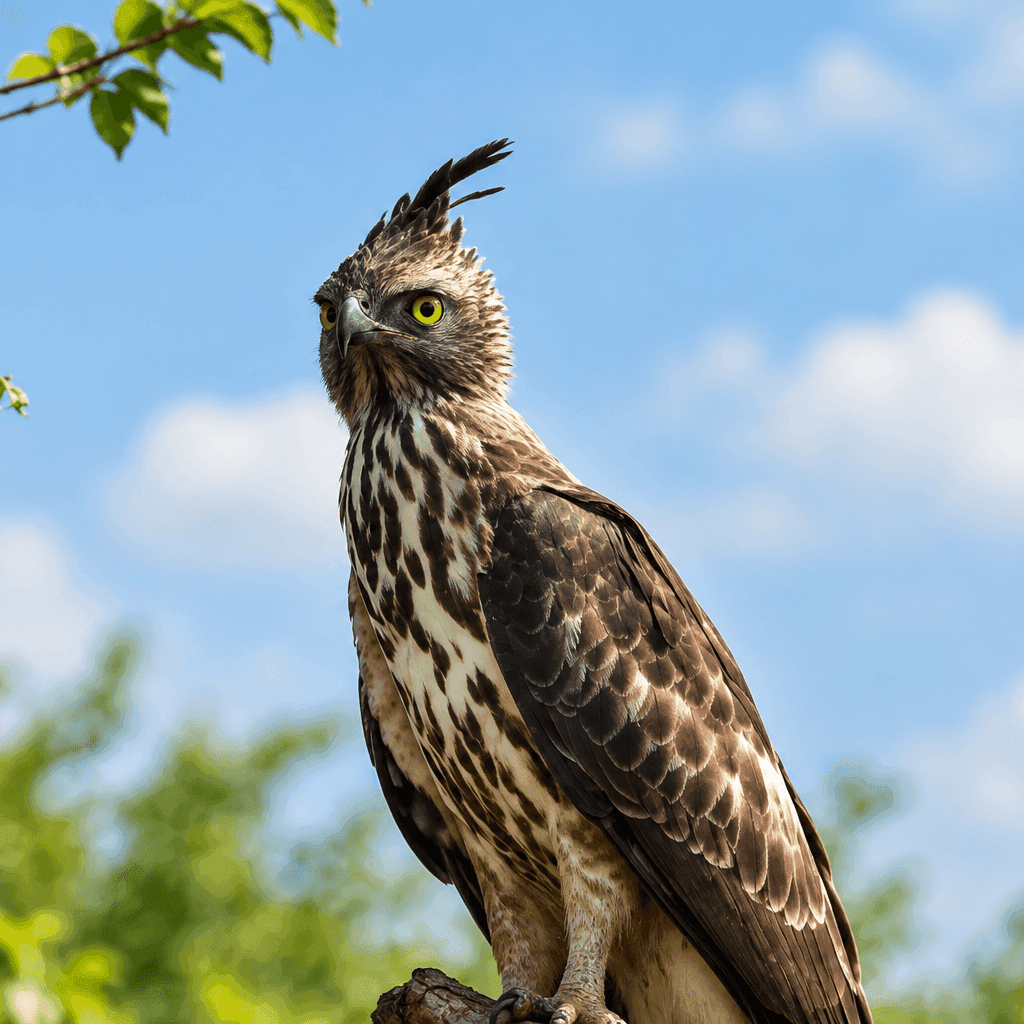
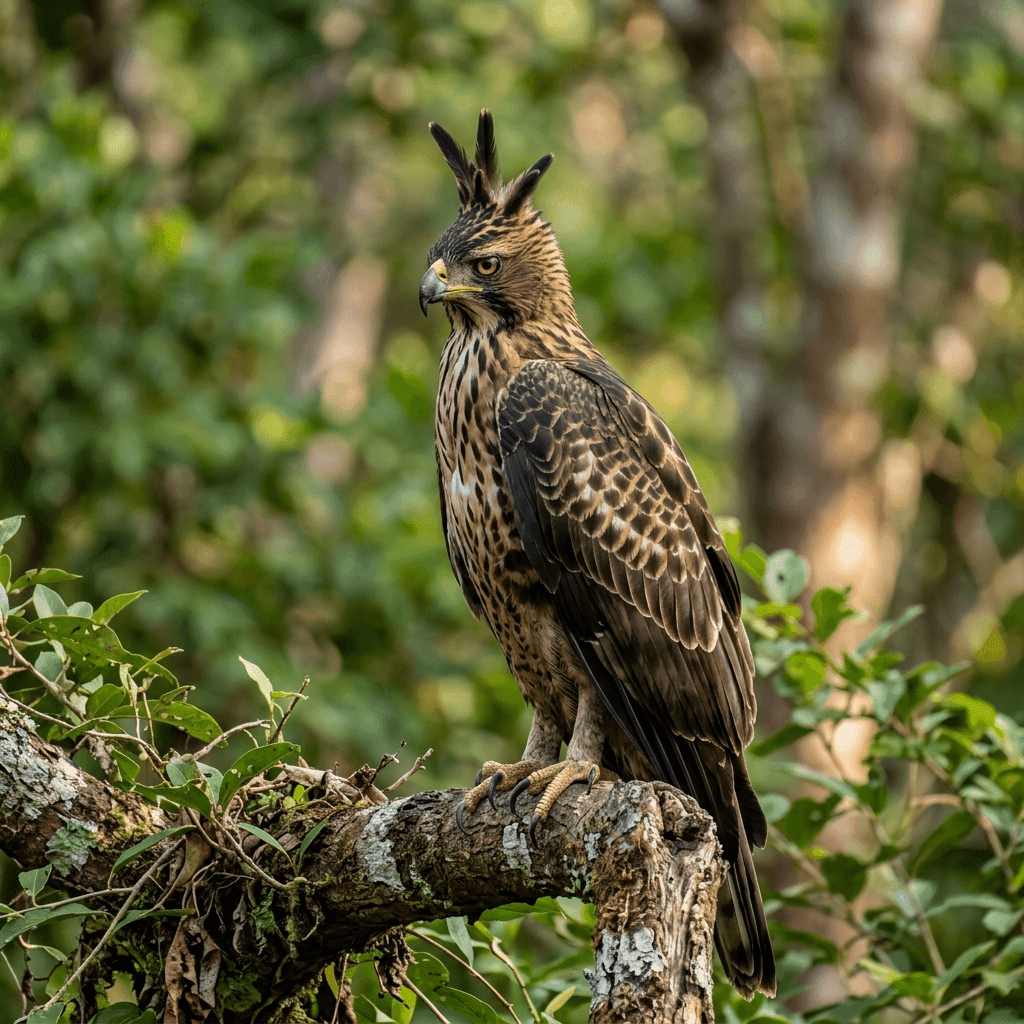
The undisputed sentinel of the park. With its powerful hooked bill, piercing sulfur-yellow irises, and striking black crest speckled with white dots, the Crested Serpent Eagle perches conspicuously on exposed dead branches overlooking open grasslands. As specialized serpent-hunters, they possess heavily armored, scaly legs that protect against venomous snake bites. Watching a serpent eagle swoop down to seize a garden lizard or venomous viper with lightning precision, crush the reptile’s skull with its talons, and swallow it whole is an awe-inspiring safari spectacle.
2. The Changeable Hawk-Eagle (Nisaetus cirrhatus)
A formidable, highly adaptable apex predator recognizable by its long, upright erectile crest and heavily streaked white breast. Changeable Hawk-Eagles hunt from high perches, executing explosive ambush dives to capture Indian peafowl chicks, junglefowl, Indian hares, and juvenile monitor lizards. They occur in multiple color morphs, ranging from pale barred individuals to a rare, dramatic melanistic (pure charcoal-black) morph.
3. The White-bellied Sea Eagle (Haliaeetus leucogaster)
With a colossal wingspan exceeding two meters and stark, snow-white head and underparts contrasting with slate-grey wings, the White-bellied Sea Eagle is the undisputed master of the Udawalawe Reservoir. Pairs mate for life and construct colossal stick nests in ancient Kumbuk trees along the shoreline. In the morning light, they ride rising thermal currents in effortless aerial spirals, periodically executing breathtaking, high-speed dives down to the reservoir surface to snatch large fish with their curved black talons.
4. The Grey-headed Fish Eagle (Haliaeetus ichthyaetus)
A globally near-threatened riverine specialist that perches quietly on overhanging branches along secluded water channels. Possessing an ash-grey head, brown mantle, and pure white belly and tail with a distinctive black terminal band, it drops vertically into the water with immense force to capture catfish and snakeheads, carrying struggling prey to nearby branches with its rough, spiny footpads.
Chapter 4: Wetland Waterfowl & The Great Winter Migration
The vast freshwater expanse of the Udawalawe Reservoir, coupled with seasonal wetlands and marshes, transforms the park into a critical aquatic staging ground. Between October and April, the resident bird populations are joined by tens of thousands of migratory birds escaping the harsh freezing winters of Siberia, Central Asia, and the Himalayas:
1. Painted Storks (Mycteria leucocephala) & Asian Openbills (Anastomus oscitans)
Flocks of hundreds of Painted Storks line the shallows, their heavy yellow bills slightly submerged in the water as they sweep their heads from side to side in a tactile hunting technique known as "grope-feeding." Their delicate, rose-pink tertial plumes and yellow faces make them one of the most photogenic wetland species in Asia. Alongside them, Asian Openbills forage for freshwater snails (Pila globosa), utilizing their uniquely curved bills—which feature a permanent gap between the upper and lower mandibles—as a specialized lever to pry open snail shells.
2. The Spot-billed Pelican (Pelecanus philippensis)
With wingspans reaching 2.5 meters, these magnificent, globally near-threatened waterfowl cruise the reservoir surface like naval galleons. They engage in coordinated cooperative hunting: small squadrons of pelicans form a horseshoe formation, paddling forward in unison and beating their wings against the water to herd shoals of tilapia into shallow coves before scooping them up in their massive, expandable throat pouches.
3. The Blue-tailed Bee-eater (Merops philippinus)
One of the most dazzling winter migrants. Arriving in late September from breeding grounds in northern Asia, these slender, aerodynamic birds feature bronze crowns, emerald backs, turquoise rumps, and vibrant yellow-and-chestnut throats. They perch in social rows on dead twigs, darting into the air in breathtaking acrobatic loops to snap dragonflies and bees from the sky, beating the insects against their perch to remove stingers before swallowing.
Chapter 5: Prime Birding Zones & Micro-Habitats in the Park
To maximize your bird list, coordinate with your driver to explore these targeted birding micro-habitats across the reserve:
1. The Reservoir Spillway & Shallow Mudflats
The premier sector for wading birds, migratory plovers, sandpipers, and herons. Here, water levels recede throughout the dry season, exposing rich organic mud packed with aquatic worms, crustaceans, and small fry. Observe Black-winged Stilts (Himantopus himantopus) striding on impossibly long pink legs, Eurasian Spoonbills sweeping their spatulate bills through the silt, and flocks of Glossy Ibises probing the mud.
2. The Riparian Kumbuk Forest Corridor (Walawe River)
The dense riverine fringe provides shelter for shade-loving forest species. Here you will find the magnificent Stork-billed Kingfisher (Pelargopsis capensis)—Sri Lanka’s largest kingfisher, armed with a massive scarlet bill—as well as the Asian Paradise Flycatcher (Terpsiphone paradisi), whose adult males sport trailing, thirty-centimeter white ribbon-like tail streamers that float behind them like silk as they flutter through the dark canopy.
3. The Dry Savanna Grasslands (Veheragolla Plains)
The open grasslands are home to terrestrial specialists. Look for Indian Peafowl displaying their iridescent eye-spotted tail trains, Barred Buttonquails (Turnix suscitator) scurrying between grass clumps, Ashy-crowned Sparrow-Larks, and flocks of Scaly-breasted Munias feeding on grass seeds.
4. The Teak Plantation and Secondary Canopy
In the north-central sectors where historic teak stands flourish, birdwatchers can observe cavity-nesting species. Multiple species of woodpeckers thrive here, including the Black-rumped Flameback (Dinopium benghalense) and the Yellow-crowned Woodpecker (Leiopicus mahrattensis). You will also observe Indian Rollers (Coracias benghalensis) flashing brilliant electric-blue flight feathers as they dive from exposed fence posts to capture grasshoppers.
Chapter 6: Field Equipment, Optics & Essential Field Guides
Elevate your birding safari with the proper optical tools and identification resources:
| Optical / Field Tool | Recommended Model / Spec | Field Application in Udawalawe |
|---|---|---|
| Primary Binoculars | 8x42 or 10x42 Roof Prism (Nikon Monarch, Vortex, Zeiss) | Optimal balance of wide field of view, brightness, and magnification for jeep birding |
| Field Spotting Scope | 20-60x angled scope with vehicle window mount | Crucial for scanning distant reservoir mudflats and identifying distant waders |
| Official Field Guide | Birds of Sri Lanka (Helm Field Guides by Deepal Warakagoda) | The definitive ornithological reference with detailed distribution maps and plumage variations |
| Audio Identifier App | Merlin Bird ID (Cornell Lab of Ornithology - Sri Lanka pack) | Real-time acoustic analysis of complex forest calls and rapid confirmation of cryptic species |
| Lens for Bird Photography | 400mm to 600mm focal length lens (e.g., 200-600mm f/5.6-6.3) | Essential for isolating small songbirds, kingfishers, and raptors at safe distances |
Chapter 7: Comprehensive Bird Checklist of Udawalawe National Park
Ornithologists visiting Udawalawe can track their sightings against this comprehensive taxonomy of prominent resident and migratory avian families documented in the reserve:
- Family Phasianidae (Pheasants & Partridges): Sri Lanka Junglefowl (Gallus lafayettii), Indian Peafowl (Pavo cristatus), Barred Buttonquail (Turnix suscitator).
- Family Anatidae (Ducks & Geese): Lesser Whistling-Duck (Dendrocygna javanica), Cotton Pygmy-Goose (Nettapus coromandelianus), Garganey (Spatula querquedula - winter migrant).
- Family Ciconiidae (Storks): Painted Stork (Mycteria leucocephala), Asian Openbill (Anastomus oscitans), Woolly-necked Stork (Ciconia episcopus), Black-necked Stork (Ephippiorhynchus asiaticus - rare resident).
- Family Threskiornithidae (Ibises & Spoonbills): Black-headed Ibis (Threskiornis melanocephalus), Glossy Ibis (Plegadis falcinellus), Eurasian Spoonbill (Platalea leucorodia).
- Family Ardeidae (Herons & Egrets): Grey Heron (Ardea cinerea), Purple Heron (Ardea purpurea), Great Egret (Ardea alba), Intermediate Egret (Ardea intermedia), Little Egret (Egretta garzetta), Cattle Egret (Bubulcus ibis), Indian Pond-Heron (Ardeola grayii), Black-crowned Night-Heron (Nycticorax nycticorax).
- Family Pelecanidae (Pelicans): Spot-billed Pelican (Pelecanus philippensis).
- Family Phalacrocoracidae (Cormorants): Little Cormorant (Microcarbo niger), Indian Cormorant (Phalacrocorax fuscicollis), Great Cormorant (Phalacrocorax carbo).
- Family Anhingidae (Darters): Oriental Darter (Anhinga melanogaster).
- Family Accipitridae (Eagles, Harriers & Hawks): Crested Serpent Eagle (Spilornis cheela), Changeable Hawk-Eagle (Nisaetus cirrhatus), White-bellied Sea Eagle (Haliaeetus leucogaster), Grey-headed Fish Eagle (Haliaeetus ichthyaetus), Black-winged Kite (Elanus caeruleus), Brahminy Kite (Haliastur indus), Shikra (Accipiter badius), Western Marsh Harrier (Circus aeruginosus - winter migrant).
- Family Charadriidae (Plovers & Lapwings): Red-wattled Lapwing (Vanellus indicus), Yellow-wattled Lapwing (Vanellus malabaricus), Pacific Golden Plover (Pluvialis fulva - migrant), Little Ringed Plover (Charadrius dubius).
- Family Jacanidae (Jacanas): Pheasant-tailed Jacana (Hydrophasianus chirurgus).
- Family Scolopacidae (Sandpipers & Snipes): Common Sandpiper (Actitis hypoleucos), Wood Sandpiper (Tringa glareola), Common Greenshank (Tringa nebularia), Marsh Sandpiper (Tringa stagnatilis).
- Family Alcedinidae (Kingfishers): Common Kingfisher (Alcedo atthis), Pied Kingfisher (Ceryle rudis), White-throated Kingfisher (Halcyon smyrnensis), Stork-billed Kingfisher (Pelargopsis capensis).
- Family Meropidae (Bee-eaters): Green Bee-eater (Merops orientalis), Blue-tailed Bee-eater (Merops philippinus - migrant), Chestnut-headed Bee-eater (Merops leschenaulti).
- Family Coraciidae (Rollers): Indian Roller (Coracias benghalensis).
- Family Bucerotidae (Hornbills): Sri Lanka Grey Hornbill (Ocyceros gingalensis), Malabar Pied Hornbill (Anthracoceros coronatus).
- Family Picidae (Woodpeckers): Black-rumped Flameback (Dinopium benghalense), Yellow-crowned Woodpecker (Leiopicus mahrattensis).
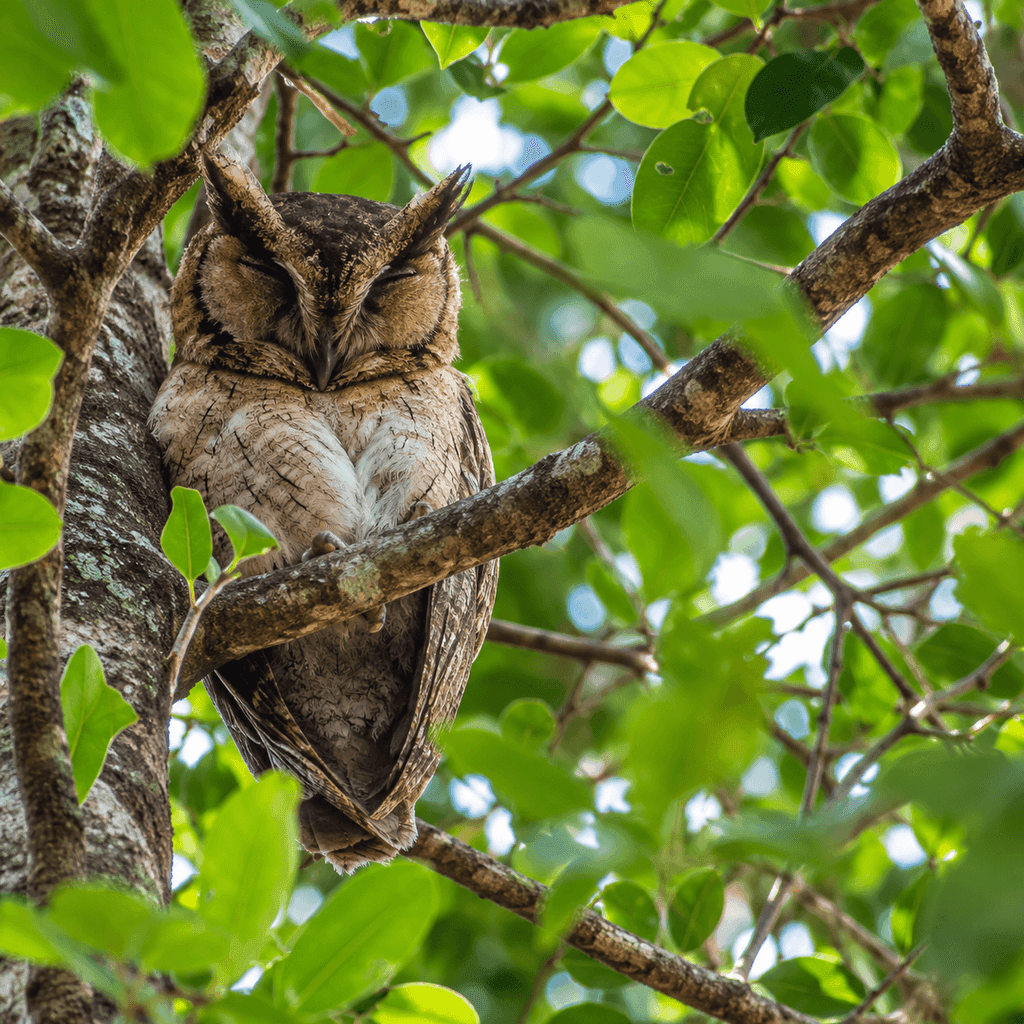
- Family Strigidae (Owls): Brown Fish Owl (Ketupa zeylonensis), Jungle Owlet (Glaucidium radiatum), Barn Owl (Tyto alba).
- Family Monarchidae (Monarch Flycatchers): Asian Paradise Flycatcher (Terpsiphone paradisi), Black-naped Monarch (Hypothymis azurea).
Chapter 8: Acoustic Identification & The Science of Bird Song
Becoming an accomplished birdwatcher in Udawalawe requires attuning your ears to the sonic frequencies of the bush. In dense riverine thickets, you will hear ten birds for every one you visually spot. Learn to recognize these distinctive sound signatures:
1. The Indian Peafowl Alarm Call: A sharp, brassy, explosive honk—*"may-AWE! may-AWE!"*—frequently accompanied by rapid wing-flapping into low branches. This is the universal alarm bell of the dry zone, alerting deer, monkeys, and safari drivers to the presence of an active predator, such as a moving leopard or large rock python.
2. The Red-wattled Lapwing Sentinel Call: Known affectionately across Sri Lanka as the "Did-he-do-it" bird, this restless plover patrols open plains and reservoir margins. Whenever a jeep, jackal, or human approaches, it takes flight with frenetic, sharp shrieks: *"did-he-do-it? pity-to-do-it!"* It is impossible to sneak up on anything in Udawalawe when lapwings are on patrol.
3. The Asian Paradise Flycatcher Song: A delicate, flute-like series of liquid ascending whistles followed by a crisp, snapping chatter as the bird pursues flying termites and moths through the riverbank gloom. Spotting the dazzling white adult male with its fluttering tail ribbons after tracking this ethereal call is an unforgettable birding triumph.
Chapter 9: Ethical Bird Watching & Photography Protocol
Avian wildlife is extraordinarily sensitive to human disturbance, particularly during courtship displays, territorial defense, and active nesting periods. Ethical birders in Udawalawe adhere strictly to international conservation standards:
1. Absolute Prohibition of Audio Playback (Pcalling): Playing recorded bird songs or calls through smartphone speakers to lure shy or territorial birds into the open is strictly banned. Audio playback artificially triggers extreme territorial stress, forces breeding birds to abandon nests, and exposes hidden songbirds to waiting raptors.
2. Protecting Active Nest Sites: If you discover an active raptor nest, hornbill tree cavity, or stork colony, maintain a minimum distance of thirty meters. Never linger beside an active nest for more than five minutes, as parent birds will not return with food for hungry chicks while an engine is running or humans are staring.
3. Zero Disturbance of Roosting Flocks: Never encourage or allow your driver to drive aggressively toward feeding flocks of pelicans, storks, or waders to force them into flight for "action flight shots." Forcing birds to expend precious energy reserves in flight during the heat of the day can lead to heat exhaustion and starvation, especially for migratory waders that have traversed thousands of ocean miles.
Chapter 10: Frequently Asked Questions (FAQ)
Q1: Can I see hornbills and kingfishers on every safari?
Yes. Sri Lanka Grey Hornbills and three species of kingfishers (White-throated, Common, and Pied) are common daily sightings along river corridors and reservoir bays. The massive Stork-billed Kingfisher is also regularly seen perched over quiet irrigation canals.
Q2: How many bird species can I expect to log on a single morning safari?
An attentive birder accompanied by a knowledgeable driver-naturalist can easily identify between 45 and 65 distinct avian species during a four-hour morning safari, and over 80 to 95 species on a full-day expedition during the peak winter migratory months (December to February).
Q3: What time of day is best for bird watching in Udawalawe?
The early morning shift (6:00 AM to 9:00 AM) is unequivocally the premier window. Bird activity peaks as dawn breaks, insects activate, and morning thermals begin lifting raptors into the sky. A secondary birding peak occurs between 4:00 PM and 5:45 PM as birds return to communal wetland roosts.
Q4: Are specialized birding guides available at the park?
Yes. When booking your private safari through professional safari services, you can specifically request an expert ornithological driver-naturalist who carries high-end binoculars, understands bird calls, and knows the precise micro-habitats of rare species.
Q5: Is Udawalawe better for birding than Bundala National Park?
Bundala National Park (located 60 km south) is a designated Ramsar wetland famous specifically for coastal lagoons and wintering shorebirds (such as Greater Flamingos). However, Udawalawe offers a richer combination of large mammals (elephants, buffalo, deer) alongside world-class raptors, forest birds, and wetland waterfowl. For a complete wildlife experience, Udawalawe is vastly more comprehensive.
Q6: What is the rarest bird to spot in Udawalawe?
Among the rarest resident sightings is the magnificent Black-necked Stork (Ephippiorhynchus asiaticus). With fewer than fifty breeding individuals remaining across the entirety of Sri Lanka, observing a solitary Black-necked Stork wading through the deep marshlands of Mau Ara is considered an extraordinary ornithological jackpot.
Q7: Can I do a bird-watching walking tour inside the national park?
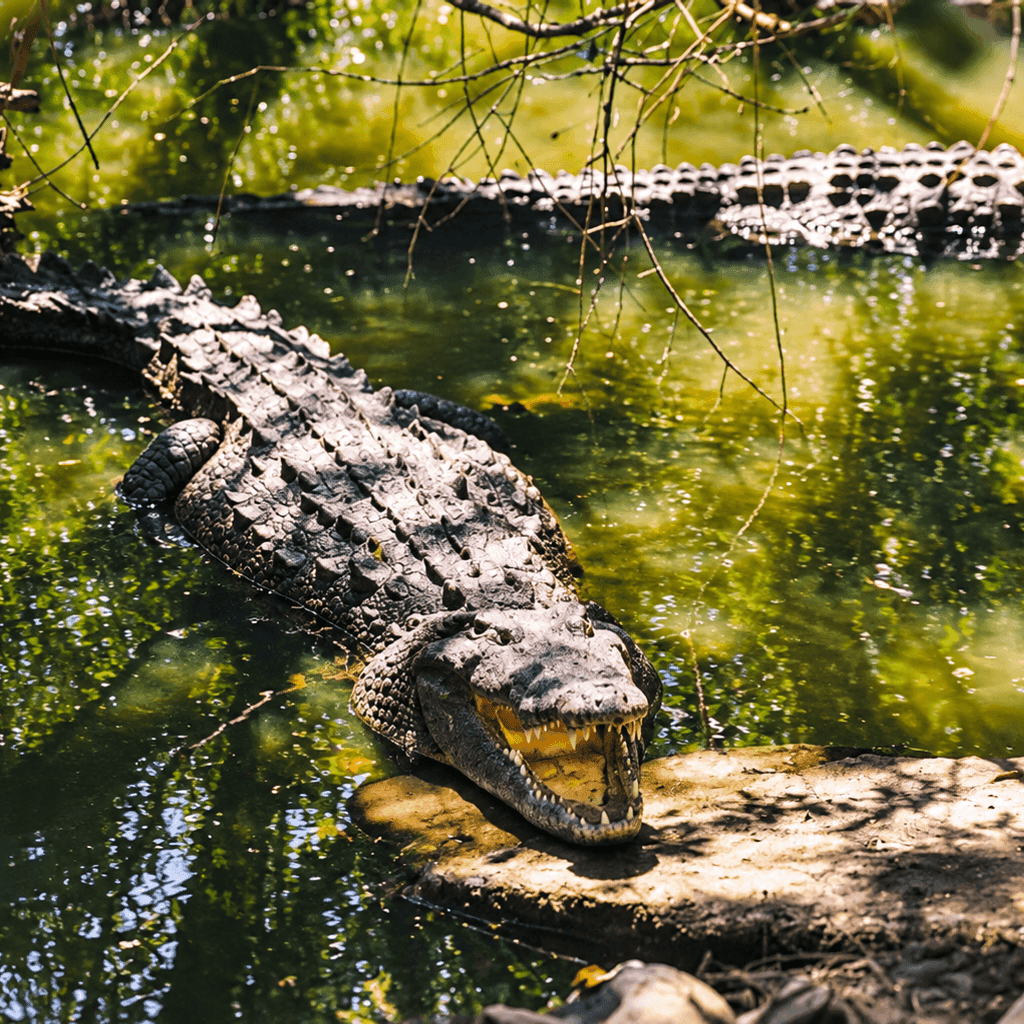
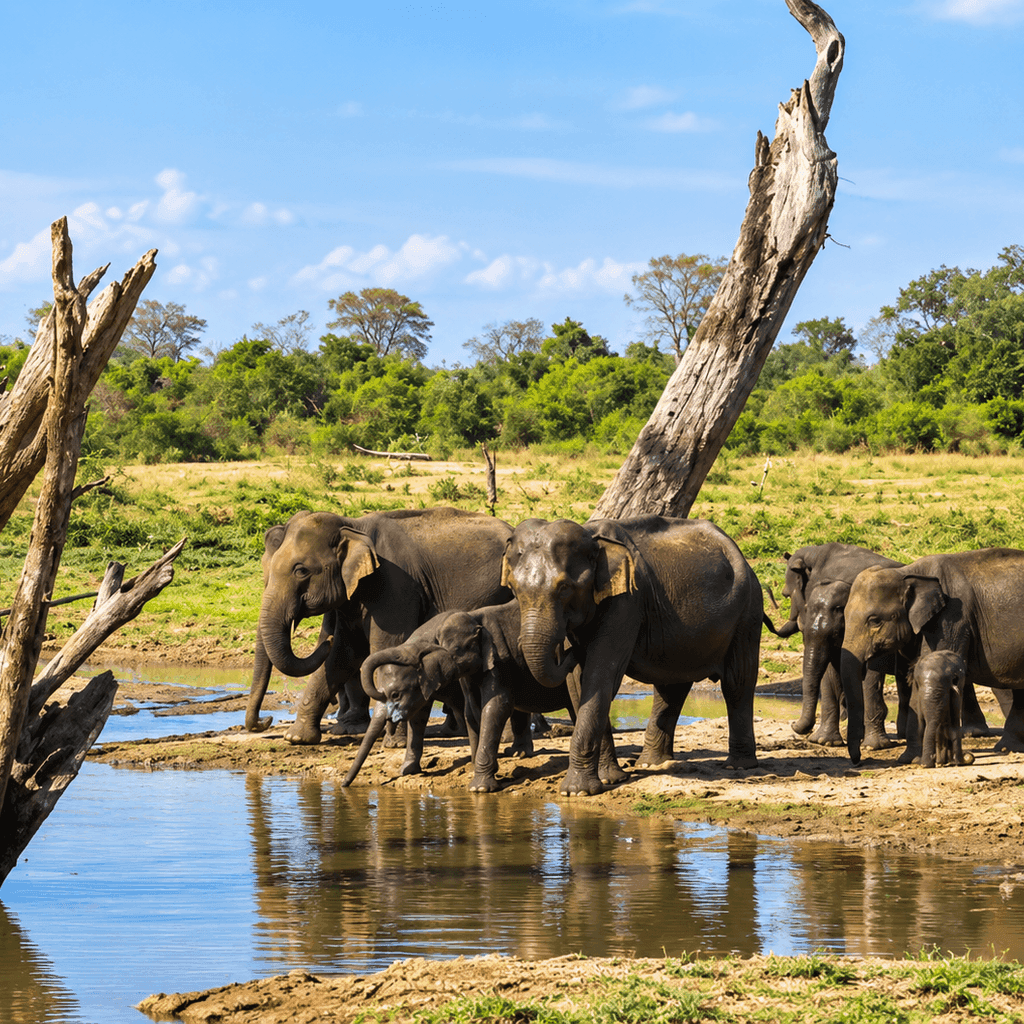
No. Walking tours are strictly prohibited inside the boundaries of Udawalawe National Park for visitor safety due to the high density of wild elephant herds and mugger crocodiles. However, highly rewarding guided birding walks can be conducted along the riverbank corridors and village farmlands immediately outside the park perimeter.
Q8: Do I need a telephoto lens to photograph birds in Udawalawe?
Yes. Because safari vehicles must remain on designated vehicle tracks, small passerines, bee-eaters, and raptors often perch between twenty and fifty meters from the vehicle. A telephoto focal length of at least 300mm to 400mm (or 600mm for small songbirds) is essential to capture crisp, detailed bird portraits.
Q9: Which month brings the highest concentration of migratory waterfowl?
January is the absolute peak month. By January, all migratory waterfowl and shorebirds along the Central Asian Flyway have established stable wintering territories on the reservoir, joining resident storks, pelicans, and cormorants in massive feeding aggregations.
Q10: Are binoculars provided by the safari operator?
Professional safari companies typically provide one pair of quality binoculars onboard the jeep for guest use. However, if you are an avid birdwatcher, carrying your own personal pair of 8x42 or 10x42 binoculars guarantees uninterrupted observation throughout the entire four-hour tour.




.png)