Chapter 1: A Sanctuary of Hope – The Mission of Ath Athuru Sevana
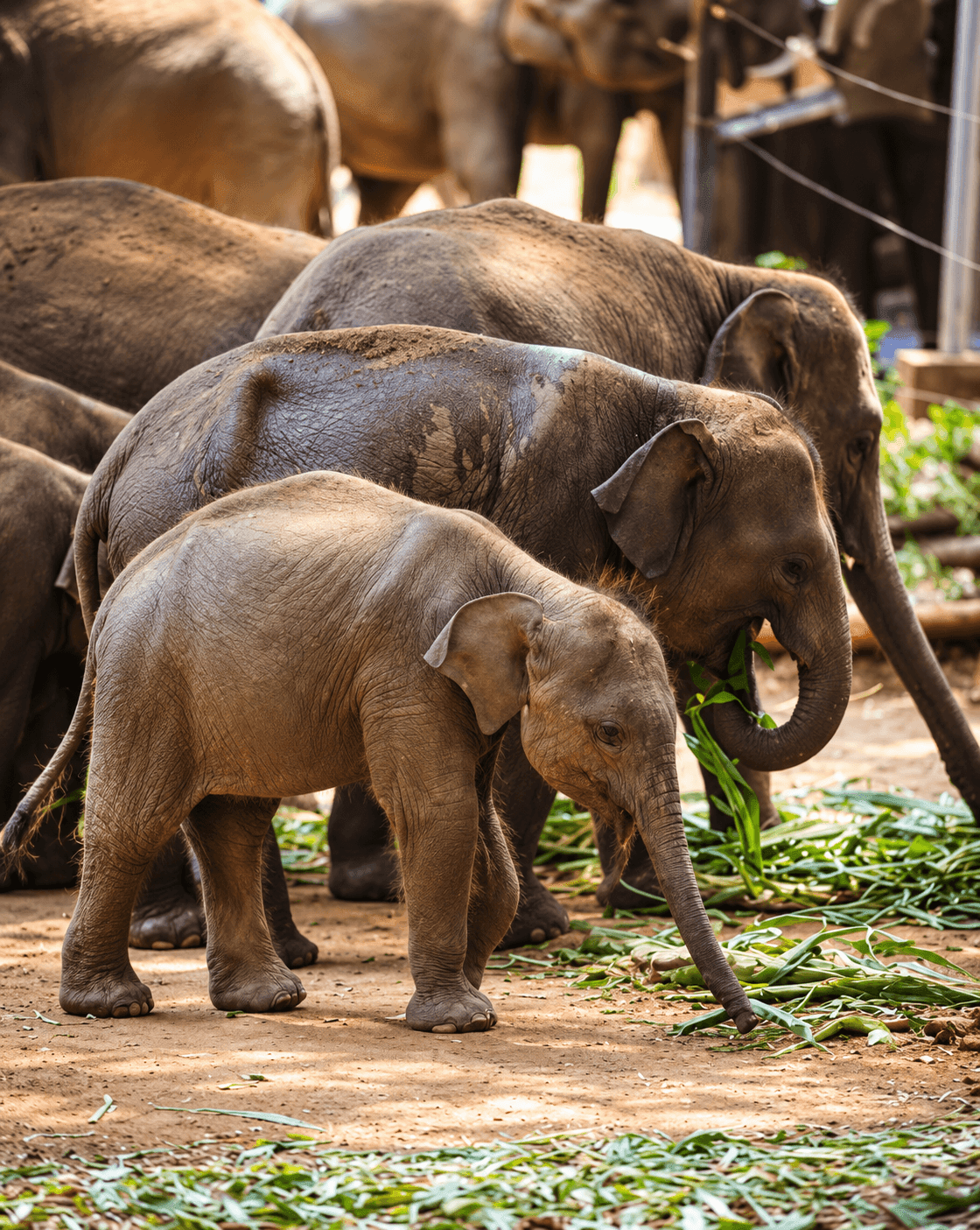
Just five kilometers from the entrance gate of Udawalawe National Park, along the edge of the reservoir buffer zone, lies one of the most heartwarming, ethically respected wildlife rehabilitation facilities in the world: the Elephant Transit Home (*Ath Athuru Sevana*). Established in 1995 by the Sri Lanka Department of Wildlife Conservation (DWC) under the visionary leadership of veterinarian Dr. Nandana Atapattu and supported by the international Born Free Foundation, the Elephant Transit Home has a singular, uncompromising mission: to rescue orphaned, injured, and abandoned wild elephant calves, nurse them to robust health, and successfully release them back into the wild.
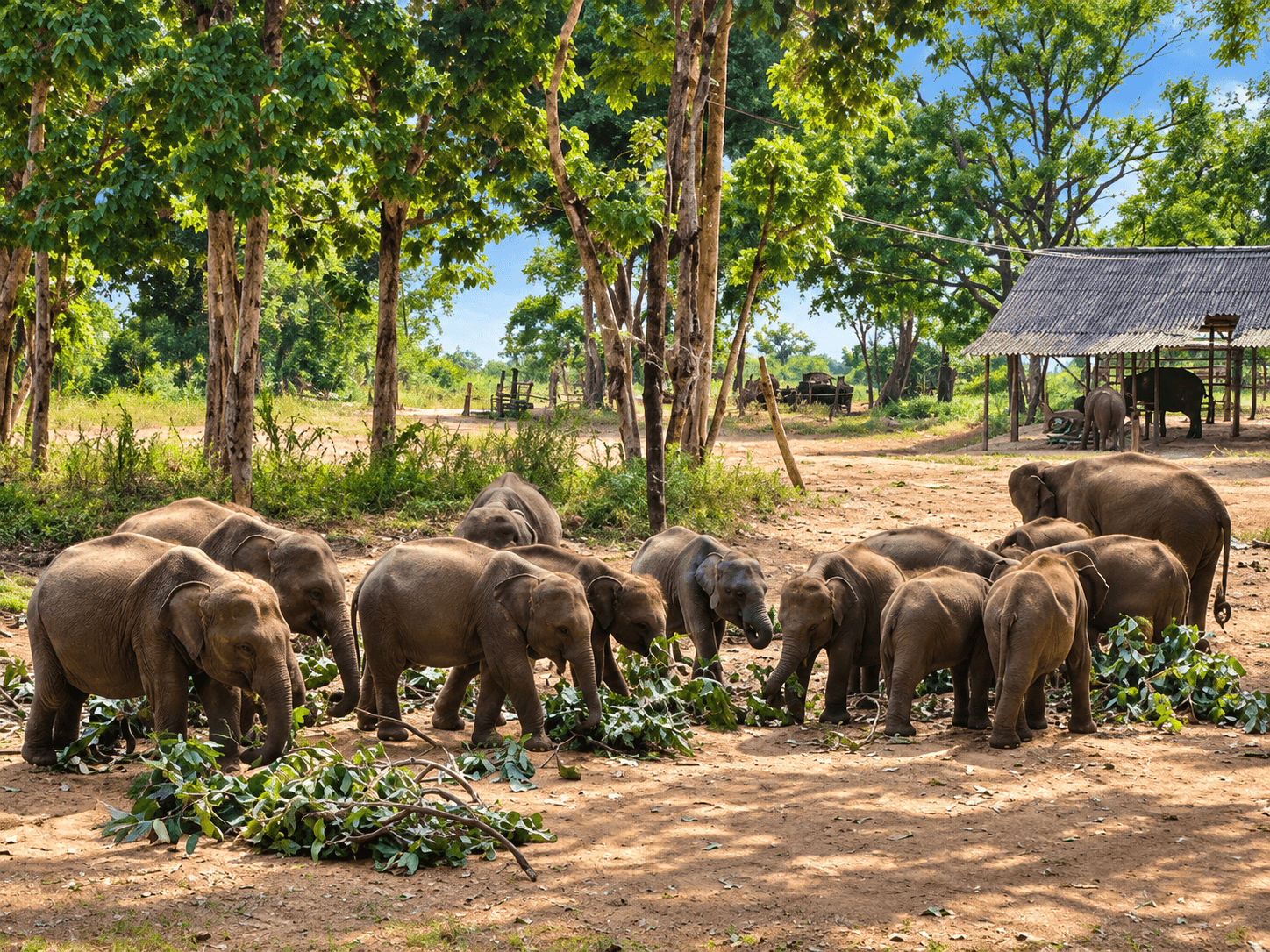
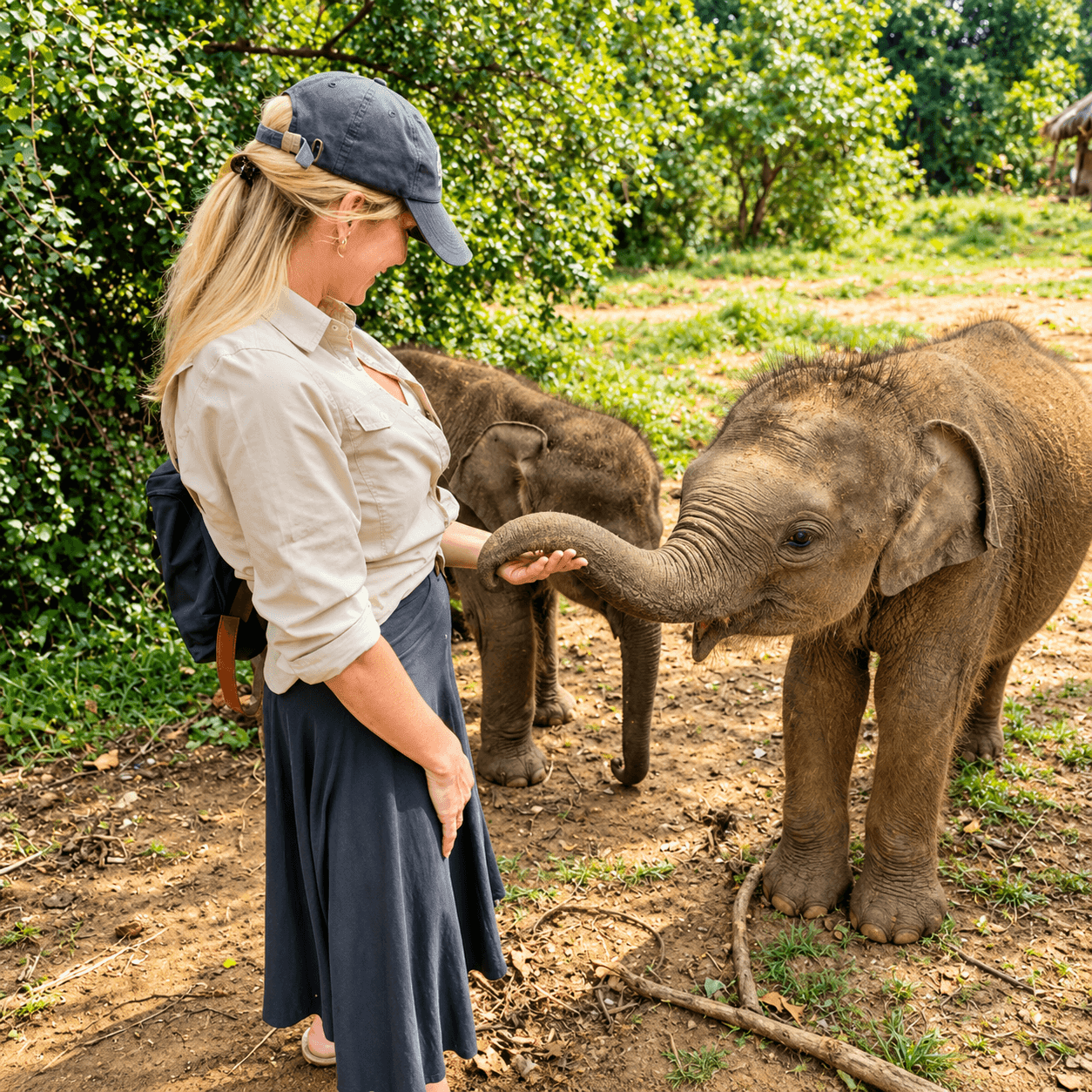
For visitors traveling through southern Sri Lanka, a stopover at the Elephant Transit Home is an emotionally profound experience. Unlike conventional commercial elephant attractions across Asia that exploit captive pachyderms for elephant rides, circus performances, or unnatural tourist bathing sessions, the ETH operates on strict principles of ethical non-interference. There is no touching, no petting, no riding, and no human socialization. Instead, from a shaded viewing platform, visitors have the extraordinary privilege of watching thirty to forty boisterous, playful baby elephants stampede joyfully into the feeding enclosure to gulp down warm milk formula before bounding back into the safety of the surrounding jungle.
Over the past three decades, the Elephant Transit Home has rewritten the global textbook on large-mammal rewilding. More than five hundred orphaned calves have passed through its protective gates, with over two hundred and fifty successfully rehabilitated, fitted with satellite tracking collars, and released into the vast wilderness of Udawalawe National Park. Today, many of these former orphans are fully integrated into wild matriarchal breeding herds, raising their own wild-born calves under the open skies of Sri Lanka—the ultimate triumph of compassionate conservation.
Chapter 2: The Tragedy of Orphanhood – Human-Elephant Conflict
To understand the vital necessity of the Elephant Transit Home, one must confront the painful ecological realities of modern Sri Lanka. Sri Lanka supports the highest density of wild Asian elephants (Elephas maximus maximus) of any country in the world, with an estimated population between 6,000 and 7,500 individuals sharing an island of just 65,000 square kilometers with twenty-two million people.
As human settlements, highway corridors, and commercial agriculture expand into ancient elephant migration corridors, Human-Elephant Conflict (HEC) has intensified dramatically. Wild elephant calves become orphaned through tragic, preventable human-induced circumstances:
- Unprotected Agricultural Wells: Deep, un-walled concrete irrigation wells excavated by farmers in rural dry-zone clearings act as lethal pitfall traps. Inquisitive calves stumbling into these ten-foot pits at night cannot climb out, and herds are often forced to abandon them after frantic, failed rescue attempts.
- Illegal Wire Snares: Poachers setting illegal wire snares to catch wild boar and deer inadvertently snare young elephants around their lower legs. The wire cuts deep into flesh and bone, causing crippling infections that prevent the calf from keeping pace with its traveling herd.
- Electrocution & Hakka Patas: Unregulated illegal high-voltage farm electric fences and horrific concealed explosive baits (*Hakka Patas*—improvised explosives hidden inside pumpkins or melons) kill lactating mother elephants, leaving unweaned nursing calves defenseless in the forest.
- Separation During Flash Floods: Seasonal monsoonal torrents sweeping across overflowing rivers occasionally sweep small calves downstream, separating them permanently from their mothers.
When the Department of Wildlife Conservation receives emergency distress calls from rural villagers, specialized wildlife rescue units rush to the scene. Calves are stabilized with IV fluids, wrapped in warm blankets, and rushed by emergency wildlife ambulances to the intensive care medical clinic at the Elephant Transit Home in Udawalawe.
Chapter 3: The Science of Calf Nutrition & Milk Formula Protocols
Raising an orphaned baby elephant is an extraordinary veterinary challenge. In the wild, an elephant calf nurses exclusively on its mother’s milk for the first two years of life, continuing to supplement its diet with milk until age four or five. Elephant maternal milk is uniquely complex: it contains nearly double the protein and fat content of cow's milk, but virtually none of the complex bovine sugars that can trigger fatal diarrhea in infant elephants.
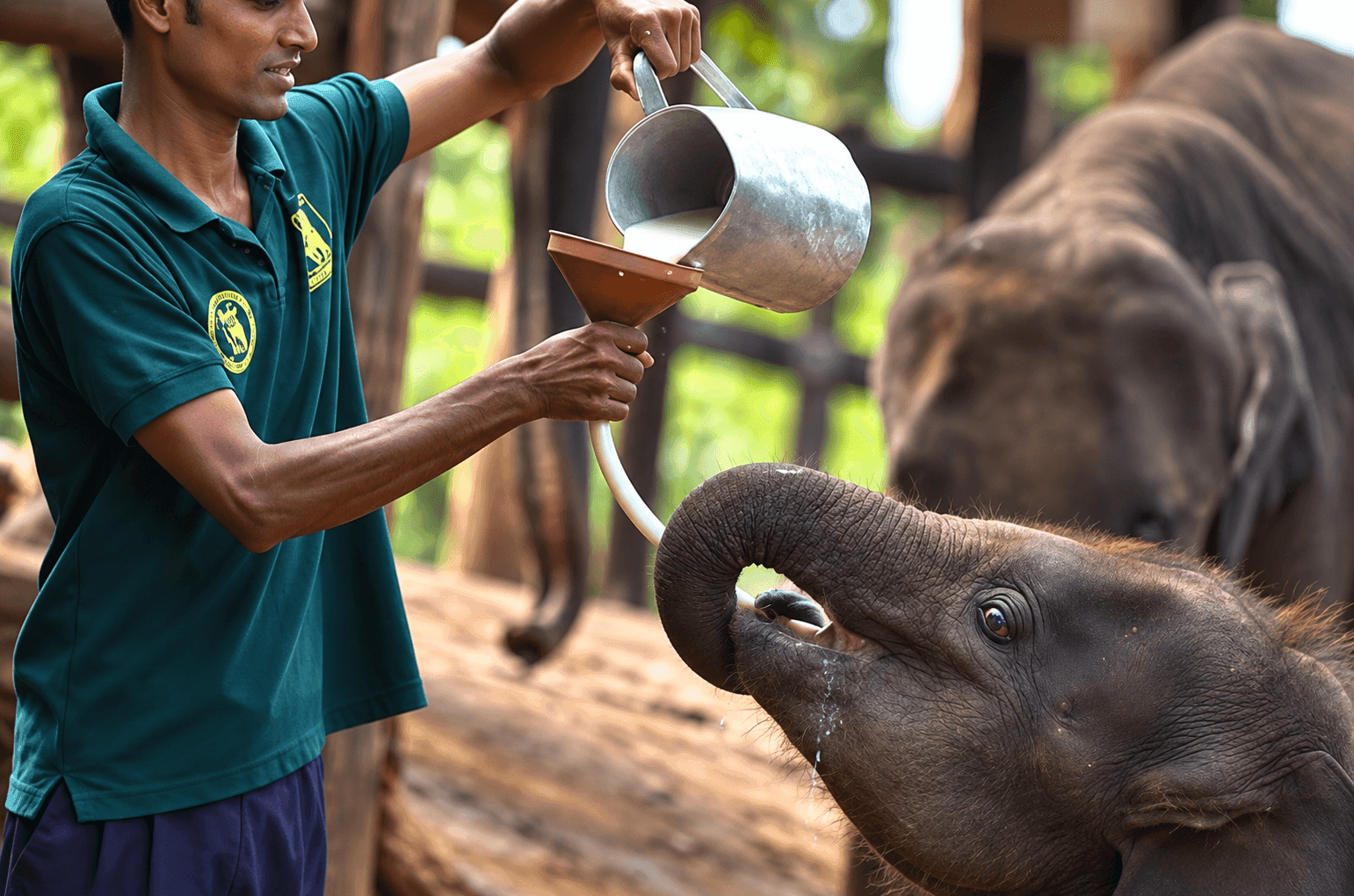
After years of meticulous clinical trials, the veterinary team at the ETH perfected a specialized milk formulation based on human infant milk powder (predominantly Lactogen or Anchor full-cream formula) enriched with multi-vitamins, calcium carbonate, digestive probiotics, and electrolyte solutions. Calves under one year of age consume up to twenty to twenty-five liters of warm milk daily, administered across four feeding sessions spaced precisely three hours apart:
| Feeding Session Time | Dietary Volume | Behavioral Highlight |
|---|---|---|
| 9:00 AM – Morning Session | 5 to 7 Liters per calf | Eager rush from forest; high-energy sparring and playful head-butting |
| 12:00 PM – Midday Session | 5 to 7 Liters per calf | Warmest window; calves frequently head directly to mud wallows after drinking |
| 3:00 PM – Afternoon Session | 5 to 7 Liters per calf | Peak tourist observation session; active social grooming and dust-bathing |
| 6:00 PM – Twilight Session | 5 to 7 Liters per calf | Calves settle into sheltered forest paddocks for quiet overnight browsing |
Watching the feeding session is a heart-melting spectacle. As the gates open, the calves come charging down the sandy pathway in a boisterous, flapping-eared stampede. Each calf knows its designated keeper and feeding stall. Within seconds, hungry calves wrap their miniature trunks affectionately around the giant feeding bottles, draining two liters of warm milk in less than fifteen seconds with audible slurps of pure joy!
Chapter 4: The Strict Non-Contact Policy & Wild Psychology
The philosophical foundation that distinguishes the Elephant Transit Home from all other elephant centers in Asia is its unyielding commitment to wild animal psychology. The fundamental goal of the ETH is not to create friendly pets for tourists, but to nurture wild elephants capable of surviving without human assistance in a predator-rich jungle.
If baby elephants are allowed to be touched, caressed, or bathed by human tourists, they undergo a dangerous psychological process known as "imprinting" or human habituation. A human-habituated elephant loses its natural, healthy fear of human beings. When released into the wild as a four-ton adult, a habituated elephant will naturally wander toward human villages in search of food or companionship, inevitably leading to catastrophic conflict with frightened villagers.
To prevent this, the ETH enforces rigorous protocols:
- Elevated Viewing Deck: Visitors observe the feeding sessions exclusively from a covered wooden viewing platform positioned fifty meters away from the feeding pens, ensuring zero physical contact.
- Minimal Keeper Interaction: Keepers wear neutral uniforms, avoid excessive vocalization or petting, and interact with calves only for the few minutes required to administer milk and veterinary care.
- Unrestricted Herd Socialization: Calves spend twenty-two hours of every day living as a cohesive social herd in the open scrub forest, learning essential elephant communication, trunk wrestling, submissive postures, and social hierarchies from one another rather than from humans.
Chapter 5: The Rewilding Journey – From Bottle to Wilderness
The transition from a dependent orphaned calf to a fully autonomous wild elephant is a carefully structured, multi-year developmental journey overseen by resident wildlife biologists:
1. Phase 1: Intensive Care & Nursery (Ages 0 to 2)
During their first two years, calves are entirely milk-dependent. They spend their days exploring the safe, fenced nursery paddocks, learning to use their clumsy trunks to pluck blades of grass, throw dust over their backs to protect their sensitive skin from sunburn, and navigate shallow streams.
2. Phase 2: Foraging & Fodder Transition (Ages 2 to 4)
As their molar teeth develop, the young elephants transition to a mixed diet. Keepers provide truckloads of wild fodder harvested from surrounding forests, including Guinea grass (Megathyrsus maximus), leaves of the Sacred Bo tree, jackfruit branches, and wild banana stems. The calves spend hours stripping nutritious outer bark with their tusks and learning to chew fibrous vegetation.
3. Phase 3: Weaning & Pre-Release Cohort Formation (Ages 4 to 5)
Around four to five years of age, milk rations are gradually reduced until the calves are fully weaned. Calves naturally coalesce into tight-knit social groups (*cohorts*) of five to eight individuals. They establish strong bonds of mutual protection, sleeping together in tight circles and foraging cooperatively. This social bonding is crucial: releasing a solitary elephant into the wild is perilous, but releasing a bonded cohort ensures they protect one another from predators and navigate new terrain as a unified unit.
4. Phase 4: Soft-Release & Radio-Telemetry Monitoring
When a cohort is deemed ready, the DWC conducts a "soft-release." The elephants are fitted with satellite GPS collars and VHF radio transmitters around their necks. The gate connecting the transit facility to the vast 30,821-hectare expanse of Udawalawe National Park is opened, allowing the youngsters to wander freely into the wild savanna under their own volition.
Chapter 6: Post-Release Success & Second-Generation Wild Births
The true measure of any wildlife reintroduction program is not merely whether released animals survive, but whether they successfully reproduce in the wild. In this regard, the Elephant Transit Home has achieved historic, unprecedented success.
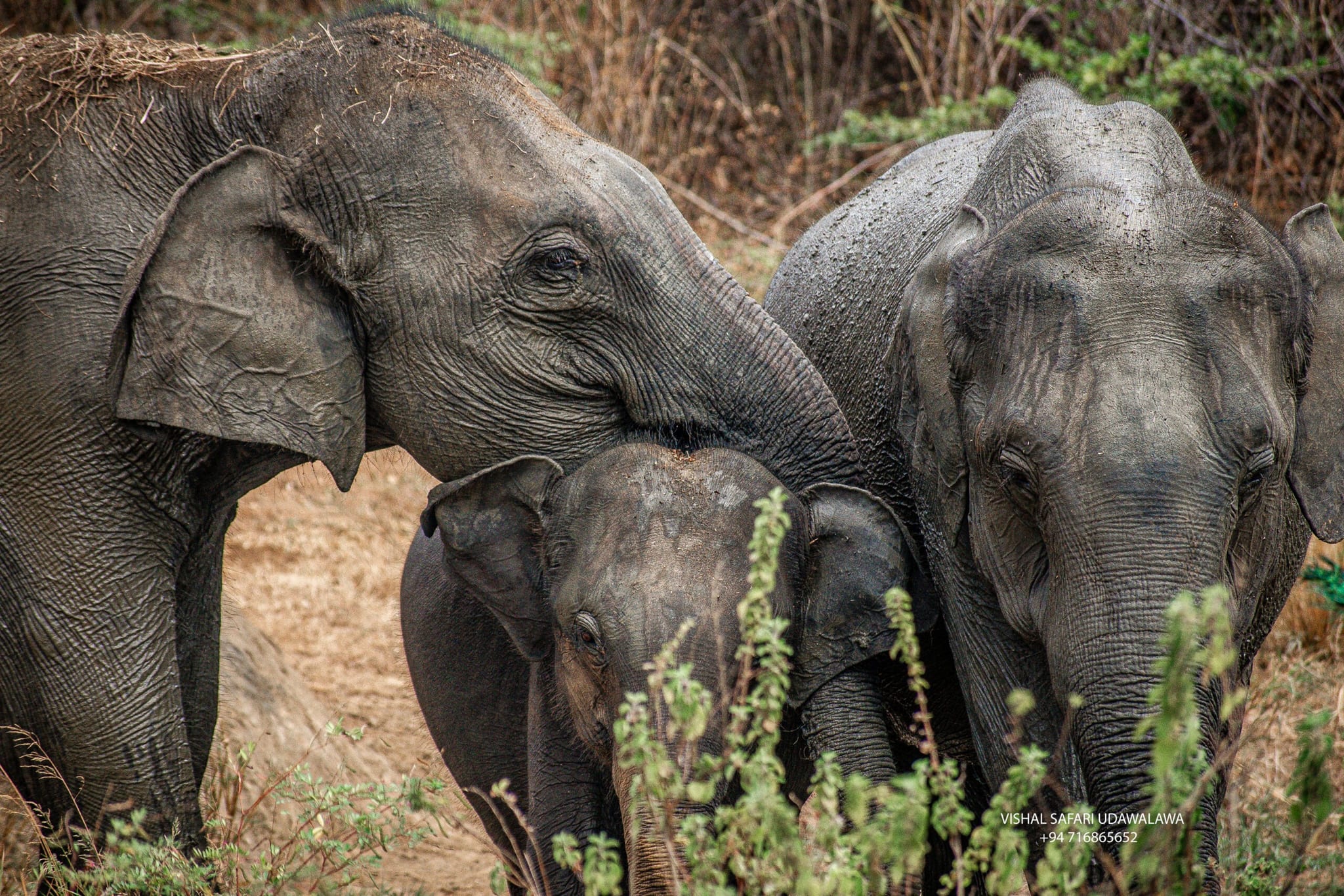
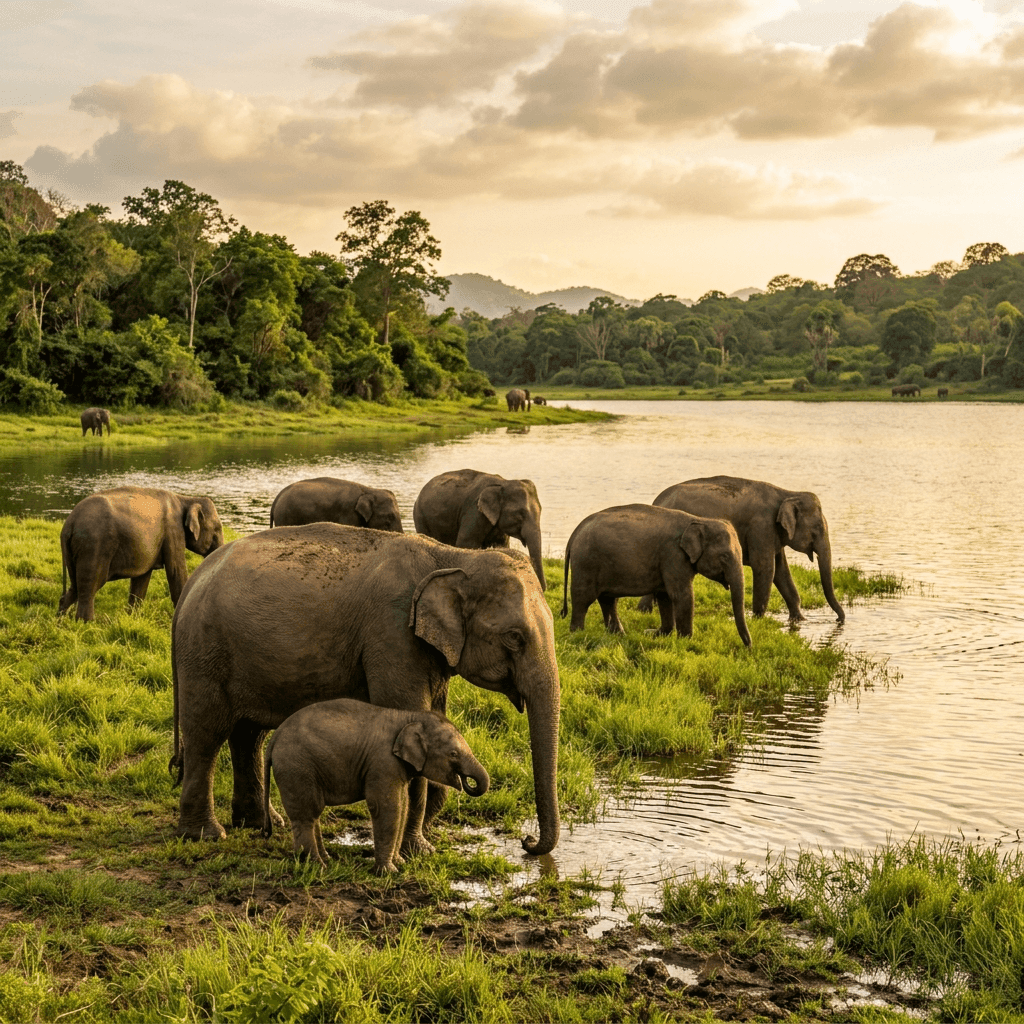
Long-term field monitoring utilizing satellite collars and ground tracking teams has revealed remarkable post-release behaviors. Released cohorts typically spend several months exploring the reservoir margins, gradually interacting with wild herds. Over time, wild matriarchs—the experienced older females who lead wild family groups—frequently adopt released female orphans, welcoming them into their maternal family units.
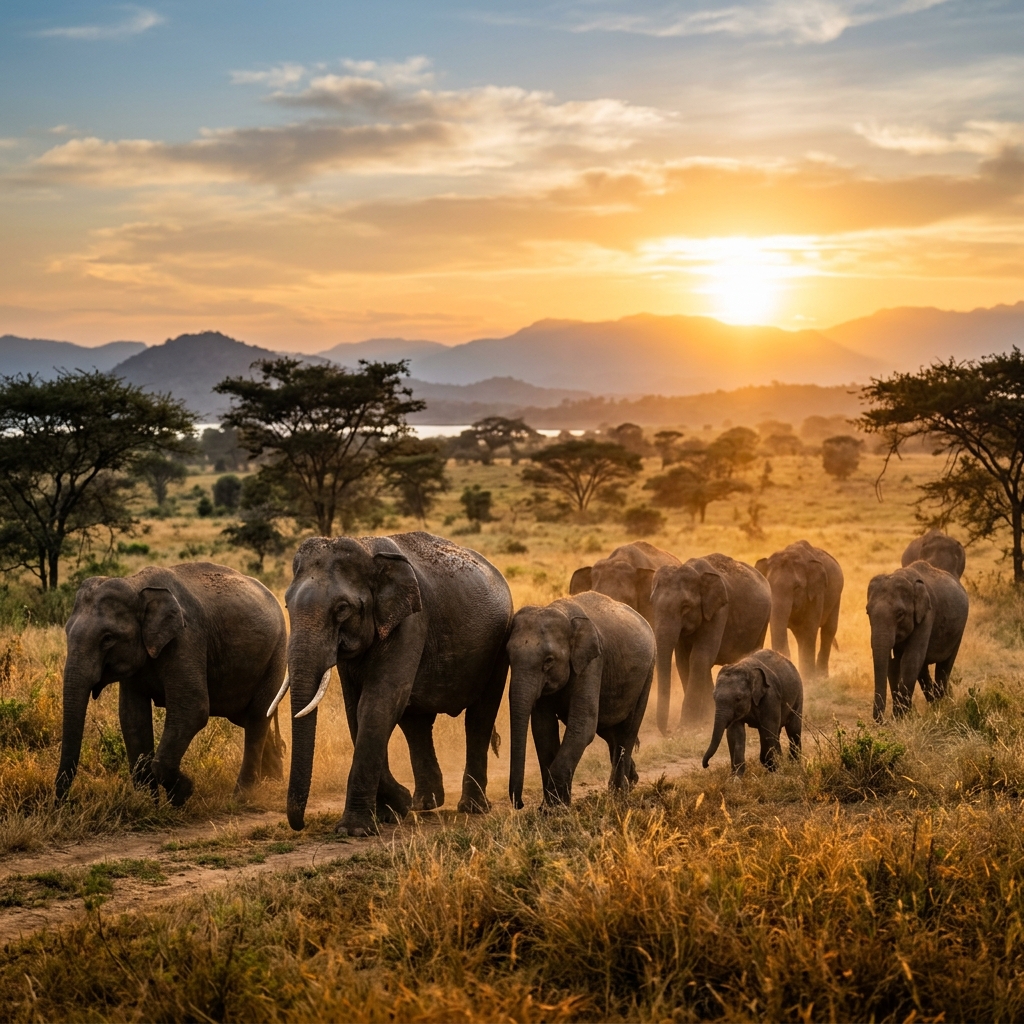
To date, field researchers have documented over twenty former ETH orphan females giving birth to healthy, wild-born calves in Udawalawe National Park! Watching a wild matriarchal herd traverse the savanna led by a proud mother who was once a helpless, shivering orphan drinking from a plastic bottle at the Transit Home is the ultimate testament to the dedication of Sri Lanka’s wildlife conservationists.
Chapter 7: Practical Visitor Logistics, Schedule & Ticket Guidelines
Plan your visit to the Elephant Transit Home with this essential visitor checklist:
| Logistical Element | Field Detail | Visitor Recommendation |
|---|---|---|
| Location & Driving Time | B427 Highway, Udawalawe; 5 km from main park gate | Easily accessible by car, tuk-tuk, or taxi; 8 minutes from most safari hotels |
| Daily Feeding Sessions | 9:00 AM, 12:00 PM, 3:00 PM, and 6:00 PM (Every 3 hours) | Arrive 20 minutes prior to session start to purchase tickets and claim viewing spots |
| Feeding Duration | Approximately 20 to 25 minutes of active milk feeding | Followed by 20 minutes of calf mud-play, browsing, and educational museum visit |
| Admission Fees | LKR 500 (Local adult) / LKR 2,000 – 3,000 (~$7–$10 USD Foreign) | 100% of admission ticket revenue directly funds calf milk formula and medical care |
| Visitor Amenities | Covered viewing platform, educational museum, souvenir shop, restrooms | Platform is fully wheelchair accessible with shaded seating benches |
Chapter 8: Photography Tips from the Raised Viewing Deck
Capturing stunning photographs of the feeding session from the public viewing deck requires thoughtful preparation:
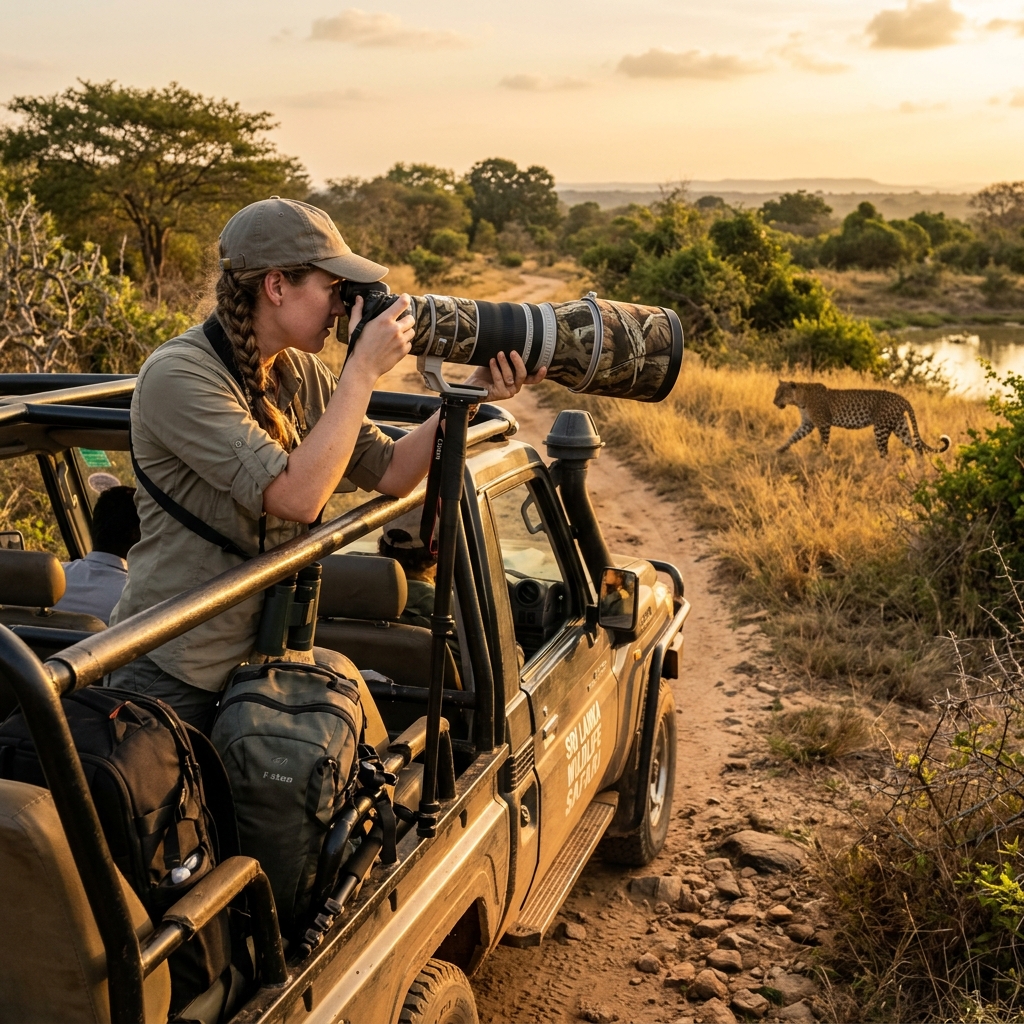
- Telephoto Zoom Lens (70-200mm or 100-400mm): Because the viewing deck is situated approximately 40 to 50 meters from the feeding troughs, a telephoto zoom lens is essential for capturing close-up facial portraits, milk-covered trunks, and expressive eyes.
- Fast Shutter Speed (1/1000s or faster): The calves move with explosive, excited speed when running toward the bottles. Set your camera to shutter priority or manual mode with high burst shooting (continuous high) to capture running action without motion blur.
- Eye-Level Composition: Position your camera along the lower railing of the viewing deck to achieve the lowest possible shooting angle, creating a more intimate perspective than looking straight down from the top railing.
- Capture the Post-Feeding Mud Play: Don't leave the platform immediately when the milk bottles are empty! The most endearing, heartwarming photographs occur five minutes later, when calves gather around the water trough and mud pit to roll, spray dust, and play with each other.
Chapter 9: The Educational Museum & Foster Parent Adoption Scheme
Adjacent to the viewing platform is the Elephant Transit Home Information Centre and Educational Museum. The museum features detailed skeletons of Asian elephants, interactive displays explaining elephant communication through seismic foot rumbles (*infrasound*), comparative maps of historical elephant migration ranges, and heartbreaking exhibits showcasing wire snares confiscated by wildlife rangers.
For visitors who wish to make a lasting, personal contribution to elephant conservation, the facility offers the acclaimed **Foster Parent Program** in partnership with the Born Free Foundation. Through this scheme, individuals, families, and schools can "adopt" an orphaned calf by providing a financial sponsorship that covers their daily milk formula and medical treatments. In return, foster parents receive an official adoption certificate, biographical profile of the calf, and periodic photographic updates detailing the young elephant's rehabilitation progress right up to their triumphant release into the wild.
Chapter 10: Harmonious Safari & Transit Home Day Itinerary
Pairing a safari inside Udawalawe National Park with a visit to the Elephant Transit Home creates the ultimate comprehensive elephant experience:
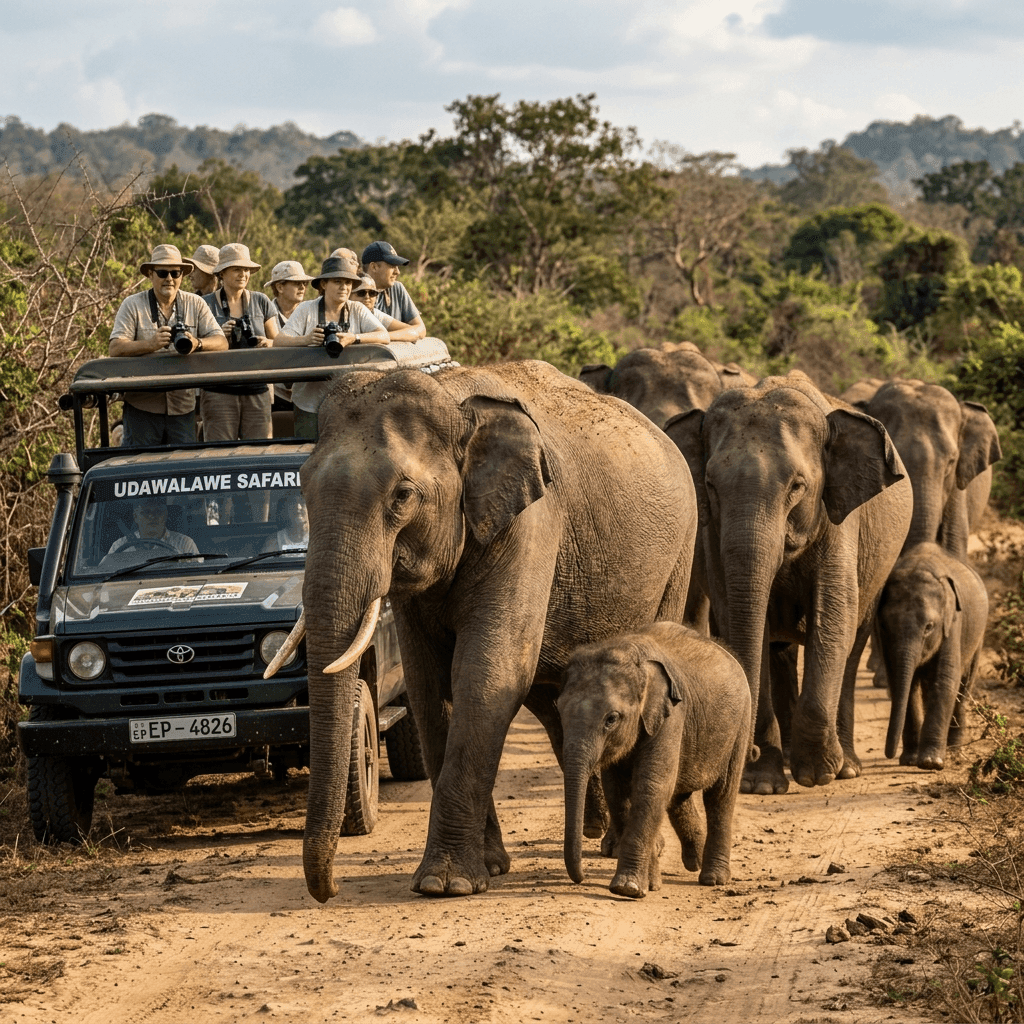
- 5:30 AM to 9:30 AM – Dawn Safari in Udawalawe National Park: Observe wild matriarchal herds, giant tuskers, and birdlife in their natural habitat across the morning plains.
- 9:30 AM to 11:30 AM – Hotel Brunch, Pool Dip & Rest: Return to your safari resort for a delicious breakfast and rest during the hottest part of the morning.
- 11:40 AM to 12:45 PM – Midday Milk Feeding at Elephant Transit Home: Arrive at the ETH to watch the boisterous 12:00 PM milk feeding session and explore the conservation museum.
- 1:00 PM to 2:30 PM – Authentic Village Lunch: Enjoy a traditional Sri Lankan rice and curry lunch at a local restaurant bordering the reservoir.
- 3:00 PM to 6:00 PM – Afternoon Safari in Udawalawe National Park: Embark on an evening game drive, watching for released ETH alumni elephants roaming the savanna as the golden hour sun sets behind the mountains.
- 7:30 PM – Starlit Safari Dinner: Conclude an unforgettable day celebrating Sri Lanka’s majestic wild pachyderms.
Chapter 11: Community Conservation Initiatives & Solar Electric Fences
The long-term survival of rehabilitated elephants depends fundamentally upon fostering peaceful coexistence between rural human farming communities and wild herds. Alongside its rehabilitation work, the Department of Wildlife Conservation collaborates with local villages surrounding Udawalawe to implement progressive human-elephant conflict mitigation strategies:
Foremost among these is the revolutionary "Village-Based Solar Electric Fence" model pioneered by the Centre for Conservation and Research (CCR). Unlike traditional government boundary fences erected along arbitrary administrative forest borders that wild elephants routinely broke through to access water, village fences are installed directly around permanent farming settlements and paddy fields with full community participation. Farmers maintain the low-voltage solar electric pulse wires themselves, keeping agricultural crops 100% safe while leaving hundreds of thousands of hectares of natural forest corridors completely open for wild and rehabilitated elephants to roam without conflict.
Chapter 12: Behavioral Ecology of Elephant Play & Social Hierarchy
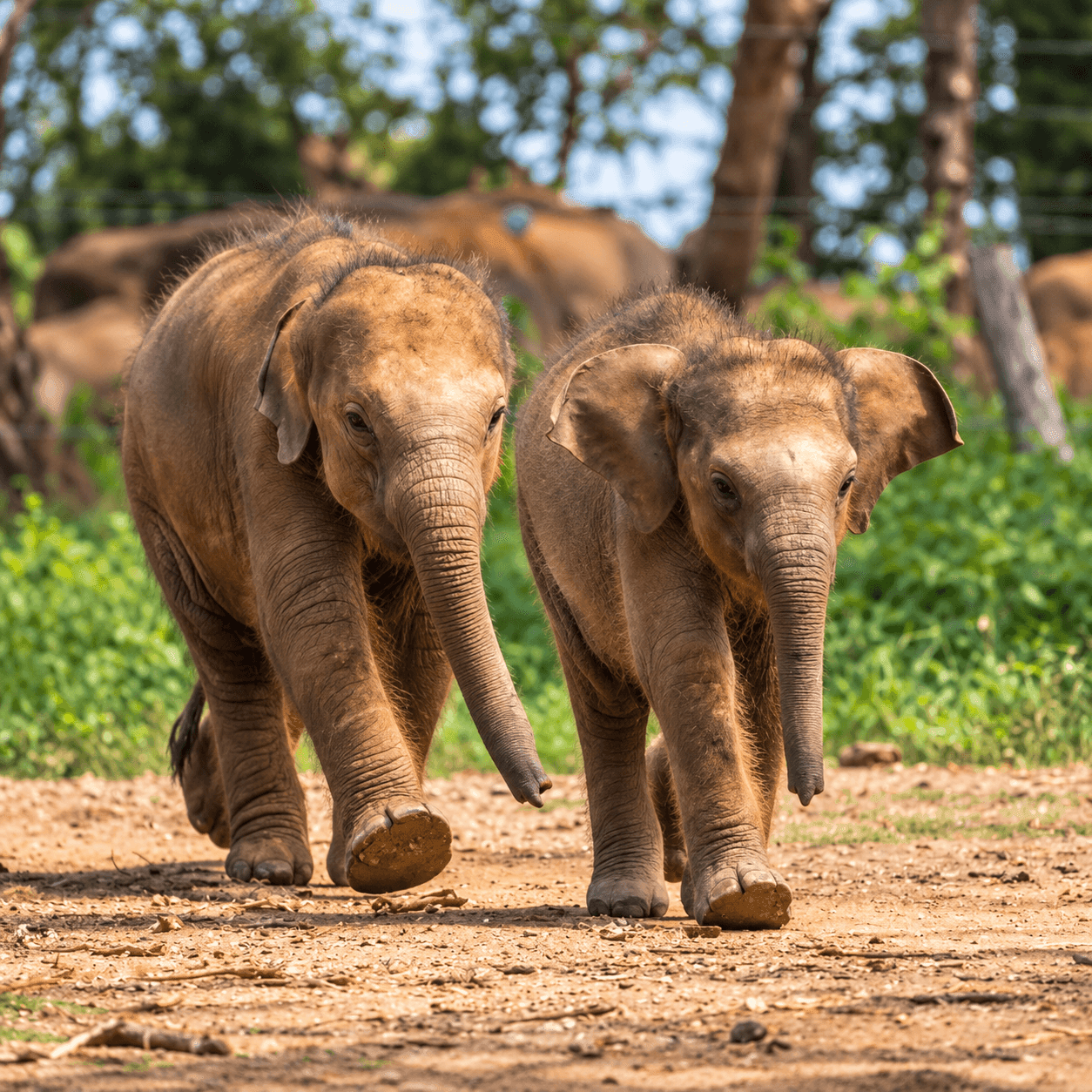
One of the most fascinating aspects of observing the orphaned calves at the Elephant Transit Home is witnessing the emergence of innate social dynamics and juvenile play behaviors. Play is not merely frivolous entertainment for young elephants; it is an essential developmental mechanism through which calves build muscle strength, fine-tune motor coordination of their complex trunks, and learn nuanced social etiquette.
During the afternoon hours in the scrub paddocks, calves engage in spirited bouts of trunk wrestling (*Ali Poraya*). Two calves will intertwine their trunks, pushing forehead to forehead in tests of gentle strength. Through these mock sparring matches, youngsters learn how to gauge physical power and accept subordinate or dominant roles without resorting to real aggression. Playful mock charges—where a tiny calf spreads its oversized ears, raises its tail straight up like a flagpole, and trumpets indignantly at an innocent egret—draw delighted laughter from visitors on the viewing platform while representing crucial developmental practice for adult life in the wild savanna.
Chapter 13: Frequently Asked Questions (FAQ)
Q1: What are the milk feeding times at the Elephant Transit Home?
Feeding sessions occur every three hours daily at 9:00 AM, 12:00 PM, 3:00 PM, and 6:00 PM. Visitors should arrive roughly 20 minutes before each session to secure a prime viewing spot on the platform.
Q2: Can visitors touch, ride, or bottle-feed the baby elephants?
No, absolutely not. The Elephant Transit Home enforces a strict non-contact ethical policy. Visitors observe feeding exclusively from an elevated viewing platform to prevent calves from becoming habituated to human interaction.
Q3: How far is the Elephant Transit Home from Udawalawe National Park entrance?
The ETH is located directly along the main B427 road in Udawalawe, approximately 5 kilometers (less than a 10-minute drive) from the main park entrance gate.
Q4: How long does a visit to the Elephant Transit Home take?
A standard visit lasts approximately 45 to 60 minutes, which includes watching the 20-minute feeding session, exploring the educational museum, and browsing the conservation information center.
Q5: What happens to the baby elephants between feeding sessions?
Between milk feedings, the calves roam freely within the surrounding 200-hectare scrub forest buffer zone, socializing, taking mud baths, and learning to forage on wild grasses and tree bark under the watchful care of wildlife rangers.
Q6: At what age are the young elephants released back into the wild?
Calves are gradually weaned off milk formula around 4 to 5 years of age. Once they demonstrate physical robustness and strong wild foraging instincts, they are fitted with tracking collars and released in small social cohorts into Udawalawe National Park.
Q7: What is the admission ticket fee for the Elephant Transit Home?
Admission tickets cost LKR 500 for local adults (LKR 250 for local children) and approximately LKR 2,000 to 3,000 (roughly $7 to $10 USD) for foreign visitors. All proceeds directly fund milk formula, medical supplies, and facility maintenance.
Q8: Why do baby elephants become orphaned in Sri Lanka?
Orphaned calves are typically victims of Human-Elephant Conflict (HEC)—falling into unprotected agricultural irrigation wells, getting trapped in illegal wire snares, losing mothers to electrocution or retaliatory shooting, or getting separated during flash floods.
Q9: Can we support the Elephant Transit Home through foster adoption?
Yes! The DWC and Born Free Foundation offer a wonderful 'Foster Parent' adoption scheme where donors can sponsor the milk and medical care of a specific orphaned calf, receiving personalized updates on their growth and wild release.
Q10: How does ETH differ from Pinnawala Elephant Orphanage?
Pinnawala operates primarily as a permanent captive sanctuary where elephants remain in captivity for life with close tourist interaction. In stark contrast, ETH is an active wild rehabilitation center where human contact is minimized to guarantee successful return to the wild.
.png)