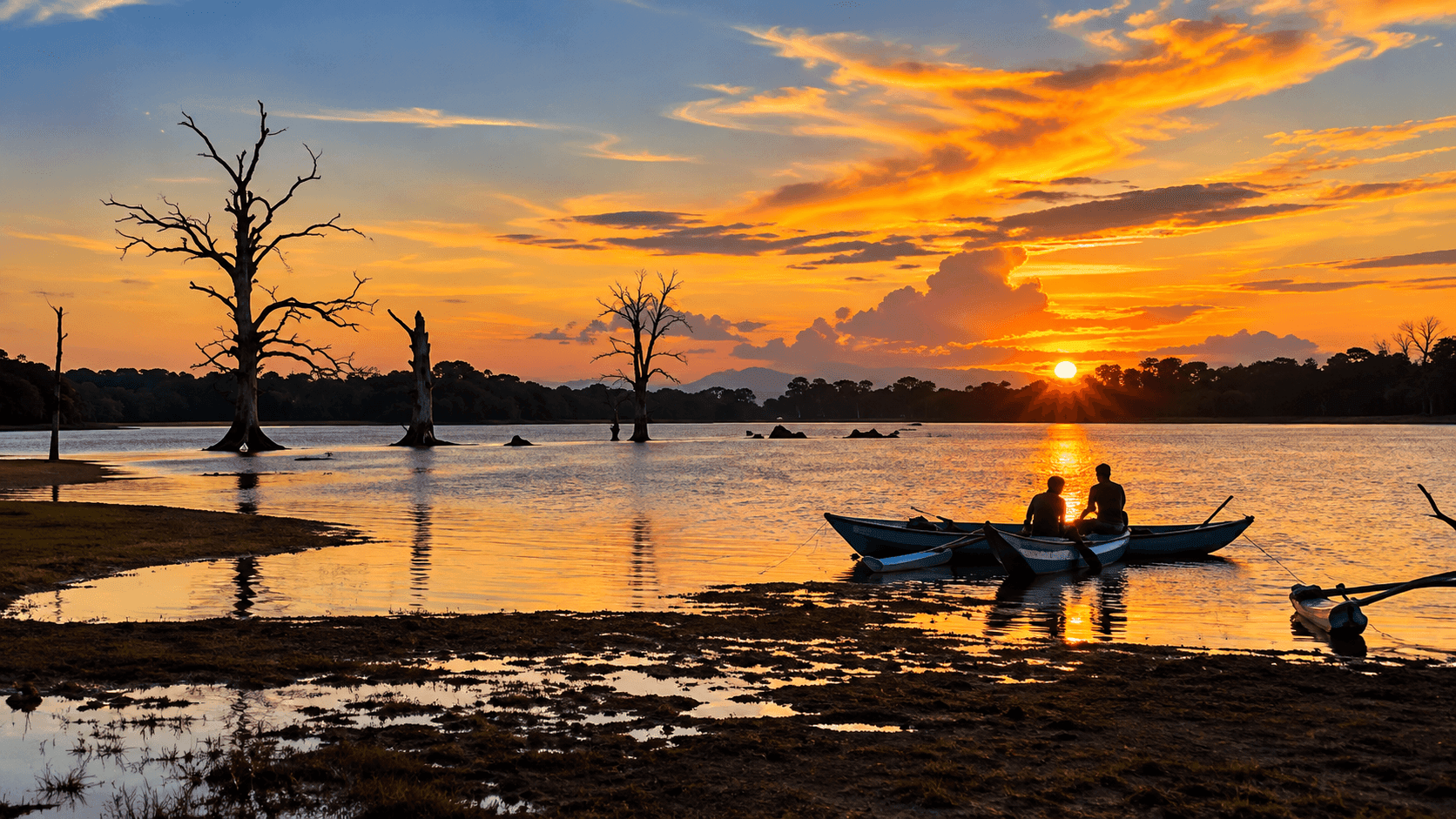
Chapter 1: The Serene Awakening of Hambegamuwa Wewa
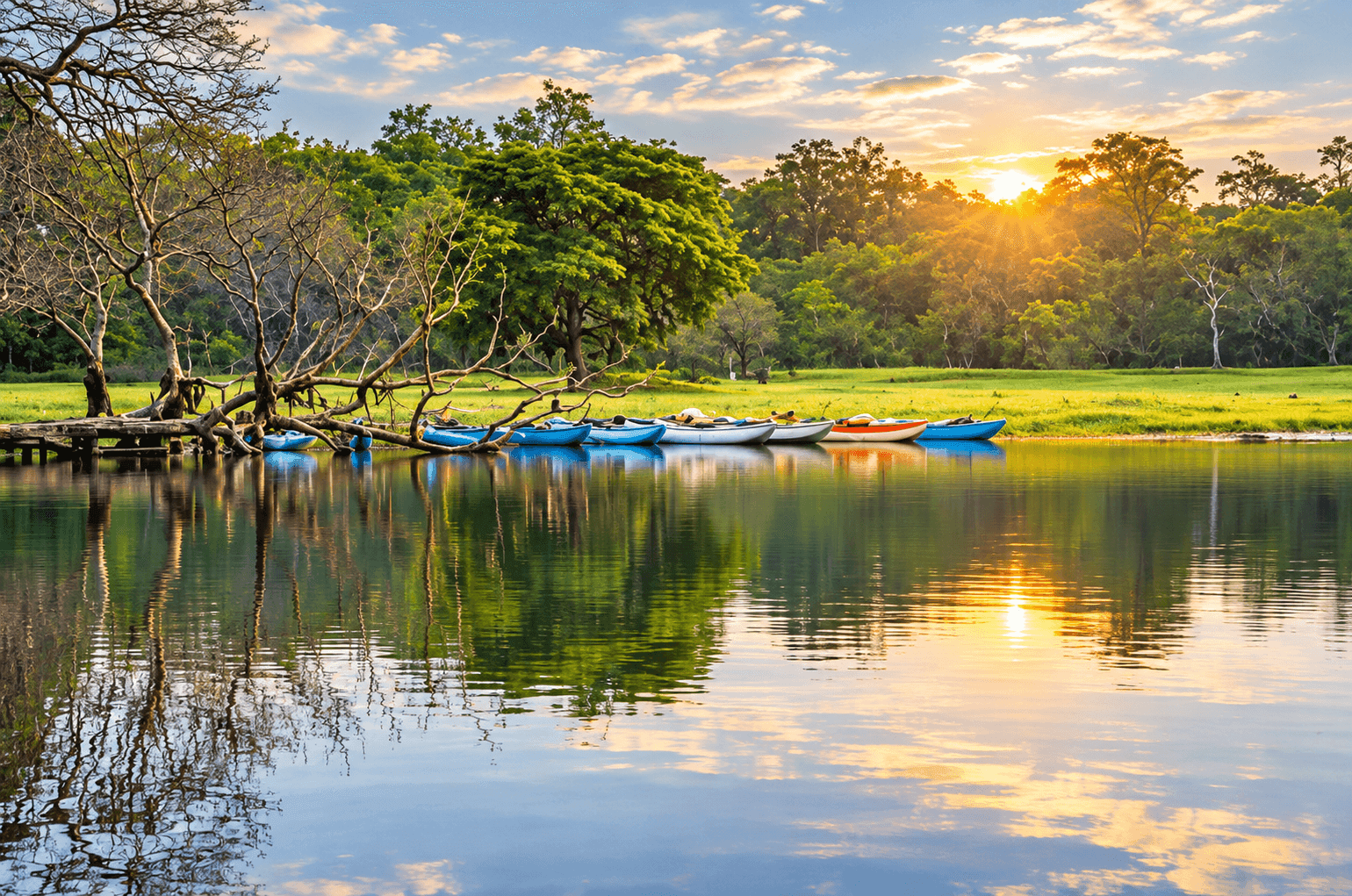
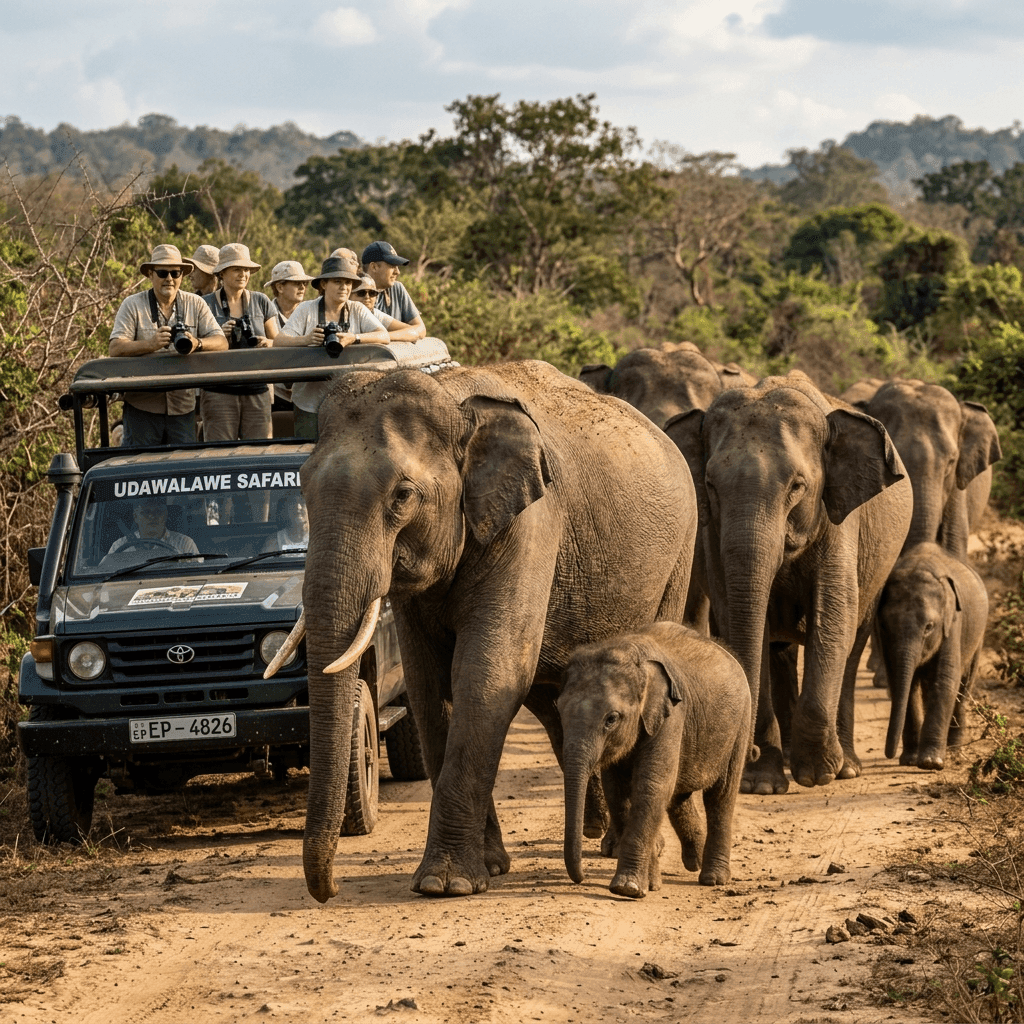
While Udawalawe National Park delivers adrenaline-charged overland jeep safaris through rugged savanna tracks, a vastly different, deeply meditative wilderness experience awaits just twenty-five kilometers to the northeast at Hambegamuwa Lake (*Hambegamuwa Wewa*). Here, far removed from safari vehicle routes and tour bus itineraries, lies one of the most picturesque, ancient man-made freshwater reservoirs in southern Sri Lanka. Spanning several hundred hectares of placid, mirror-like water framed by water lily fields, submerged dead tree skeletons, and the distant blue peaks of the central highlands, Hambegamuwa is a sanctuary of profound acoustic silence, rustic village charm, and untouched ecological beauty.
Arriving at the lakeside bund at 5:45 AM, the world is hushed in pre-dawn stillness. A veil of soft white morning mist floats suspended across the glassy surface of the water, parted only by the quiet wake of a local fisherman gliding silently in his traditional wooden outrigger canoe (*oruwa*). As the eastern horizon ignites in vibrant pastel shades of peach, coral, and burnished gold, the acoustic landscape awakens: the liquid bubbling calls of Pheasant-tailed Jacanas, the deep honks of Asian Openbills, and the resonant trumpeting of wild elephants grazing along the distant, uninhabited forested shorelines. For travelers seeking an intimate connection with nature, sunrise canoeing on Hambegamuwa Lake offers an unforgettable poetic escape.
Beyond its visual splendor, Hambegamuwa is a living monument to the genius of ancient Sri Lankan hydraulic civilization. For over two millennia, the engineering mastery of Sinhalese kings transformed the dry zone through the construction of interconnected cascade reservoirs (*wewas*) that captured seasonal monsoon rains, fed complex subterranean aquifers, and sustained thriving agrarian communities in harmony with wild beasts. Today, Hambegamuwa remains an active communal lifeline where sustainable artisanal fishing, organic chena agriculture, and eco-tourism coexist in balanced equilibrium.
Chapter 2: The Hydraulic Heritage of Ancient Sinhalese Reservoir Engineering
To glide across the waters of Hambegamuwa is to journey across an engineering marvel with roots stretching deep into antiquity. Historical chronicles and stone inscriptions in the southern kingdom of Ruhuna indicate that the initial bund of Hambegamuwa was constructed during the reign of early monarchs between the 2nd Century BC and the 5th Century AD, intended as a key reservoir in the Walawe river basin irrigation network.
Ancient Sinhalese engineers (*Wewa Karuwo*) developed an extraordinarily sophisticated hydrological science that puzzled British colonial surveyors centuries later. Unlike modern concrete dams that frequently suffer catastrophic siltation and structural failure, ancient earthen tanks utilized curved, flexible earthen embankments that absorbed seismic shifts and heavy hydrostatic pressure. The engineers perfected the *Bisokotuwa* (cistern sluice)—the world's first pressure-reducing valve chamber—which regulated the outward velocity of water through underground stone culverts, preventing bank erosion and distributing measured irrigation currents to thousands of acres of downstream paddy fields.
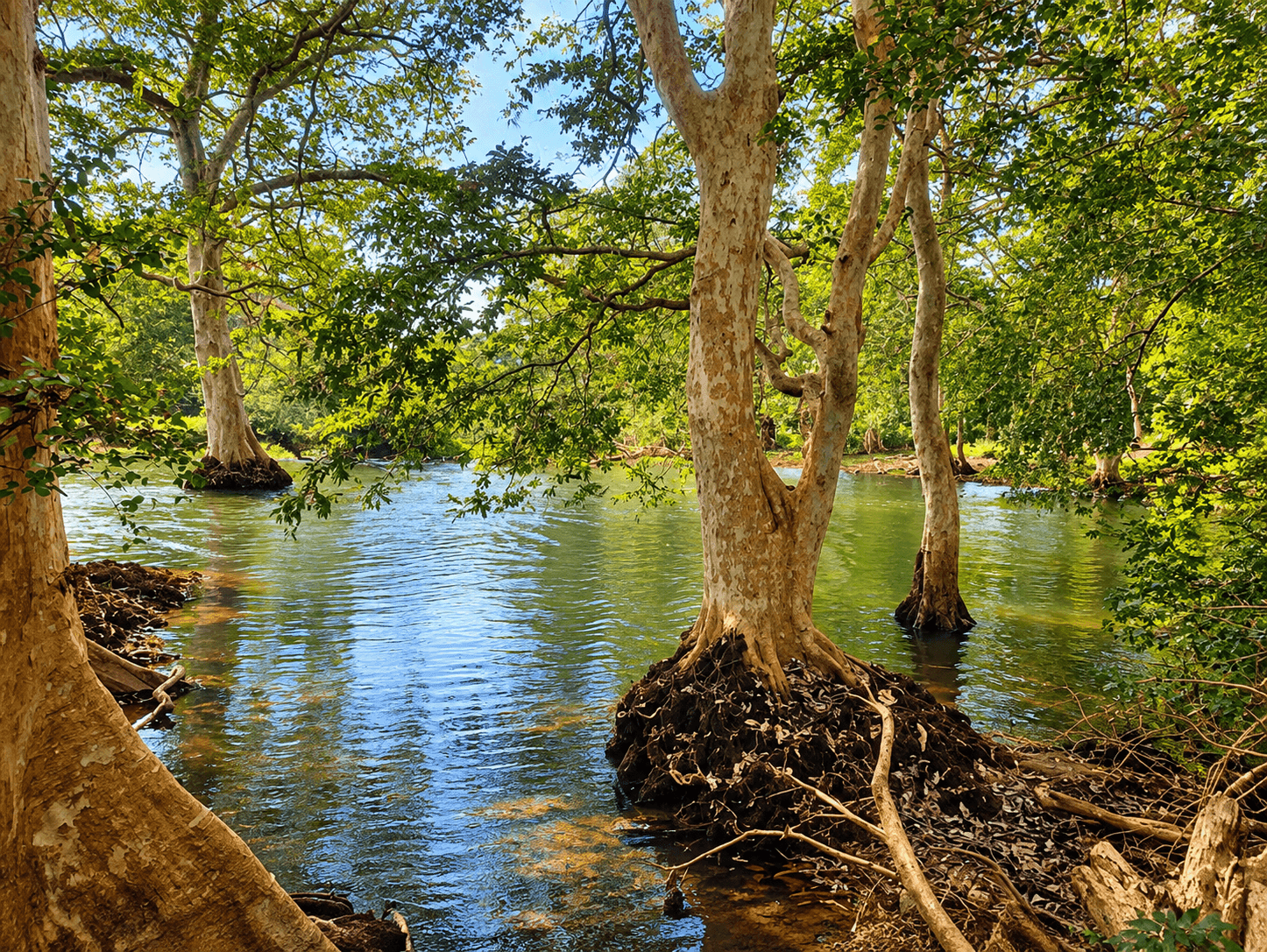
Remarkably, these reservoirs were designed not only for human agriculture but with deliberate ecological forethought. The upper, shallow reaches of the reservoir were intentionally left forested and marshy—a zone termed the *Wana Wewa*—designed specifically to capture silt, provide grazing grounds for wild elephants and buffalo, and prevent wildlife from encroaching onto downstream human settlements. This ancient land-use wisdom explains why, even today, wild elephant herds naturally frequent the tranquil northern and eastern margins of Hambegamuwa Lake without conflict.
Chapter 3: Limnology & The Aquatic Ecosystem of Hambegamuwa
The freshwater limnology of Hambegamuwa Lake supports a delicate and highly productive trophic pyramid. Fed by seasonal streams draining the foothills of Monaragala and Ratnapura, the lake undergoes dramatic hydrological cycles. During the northeast monsoon (October to January), the reservoir fills to capacity, submerging marginal grasslands and triggering massive nutrient releases from decomposed organic matter. As sunlight penetrates the shallow, warm water column, dense blooms of phytoplankton and zooplankton form the basis of a flourishing aquatic food web.
Key indigenous and naturalized fish species include the Green Etroplus (Etroplus suratensis), Spotted Etroplus (Etroplus maculatus), Giant Danio (Devario malabaricus), Snakehead Murrel (Channa striata), and Nile Tilapia (Oreochromis niloticus). These abundant fish populations sustain not only artisanal village fisheries but hundreds of piscivorous apex predators, including breeding colonies of Spot-billed Pelicans, Little Cormorants, Grey Herons, and Mugger Crocodiles. Floating macrophyte mats—predominantly White Lotus (Nymphaea pubescens), Blue Water Lily (Nymphaea nouchali), and Water Hyacinth—create shelter zones where juvenile fry escape predation while oxygenating the water column.
Chapter 4: The Traditional Outrigger Canoe (*Oruwa*) Expedition
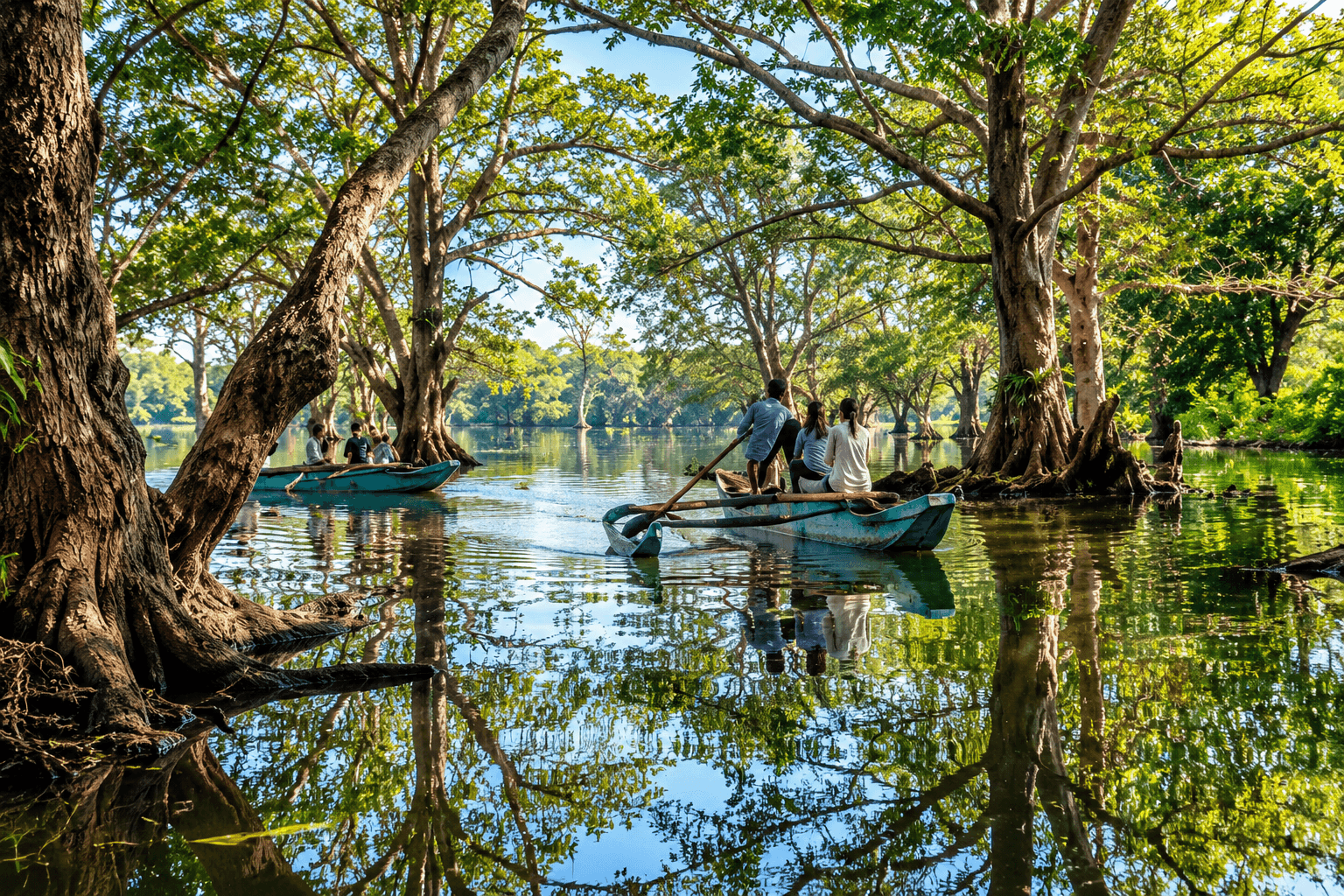
The definitive way to explore Hambegamuwa is aboard a traditional handcrafted wooden outrigger canoe (*oruwa*), piloted by an experienced local fisherman whose family has navigated these waters for generations:
1. Craft Anatomy & Hydrodynamic Stability
The traditional *oruwa* is an engineering masterpiece of indigenous boat design. Carved from the hollowed-out trunk of a giant hardwood tree (such as Jackfruit, Mara, or Wild Mango) and reinforced with raised gunwales lashed together with coir fiber, the main hull is paired with a solid wooden counterweight float (outrigger) secured by arched wooden booms (*kolapuwa*). This outrigger architecture provides exceptional hydrodynamic stability; even in choppy winds or when passengers shift their weight to photograph a perched eagle, the craft remains virtually untippable.
2. The Art of Traditional Boatbuilding in Sabaragamuwa
Crafting a seaworthy *oruwa* is an endangered indigenous craft passed down through oral apprentice traditions. A mature timber trunk is carefully selected and seasoned in shaded mud pits for several months to eliminate internal tension before carving. Master boatbuilders hollow the hull using specialized hand adzes (*vaaya*), calibrating the hull thickness by hand-feel to precisely two inches. The outer seams are sealed with a traditional caulking compound concocted from natural beeswax, crushed resin from the *Hal* tree (Vateria copallifera), and coconut oil. This ancient organic sealant remains waterproof and elastic for decades under harsh tropical sun and freshwater immersion.
3. Silent Gliding Through Water Lily Gardens
Unlike diesel-powered motorboats that shatter wilderness silence with obnoxious engine roar and noxious exhaust fumes, the wooden canoe moves with whispered grace. Your boatman utilizes a single, heart-shaped wooden paddle (*kaduwa*), slicing into the water with rhythmic, silent strokes. Gliding noiselessly through vast floating carpets of pink lotus (Nelumbo nucifera) and blue water lilies (Nymphaea nouchali—Sri Lanka’s national flower), you approach within arm's reach of waterfowl, resting turtles, and drinking wildlife without causing the slightest alarm.
4. Navigating the Drowned Forest
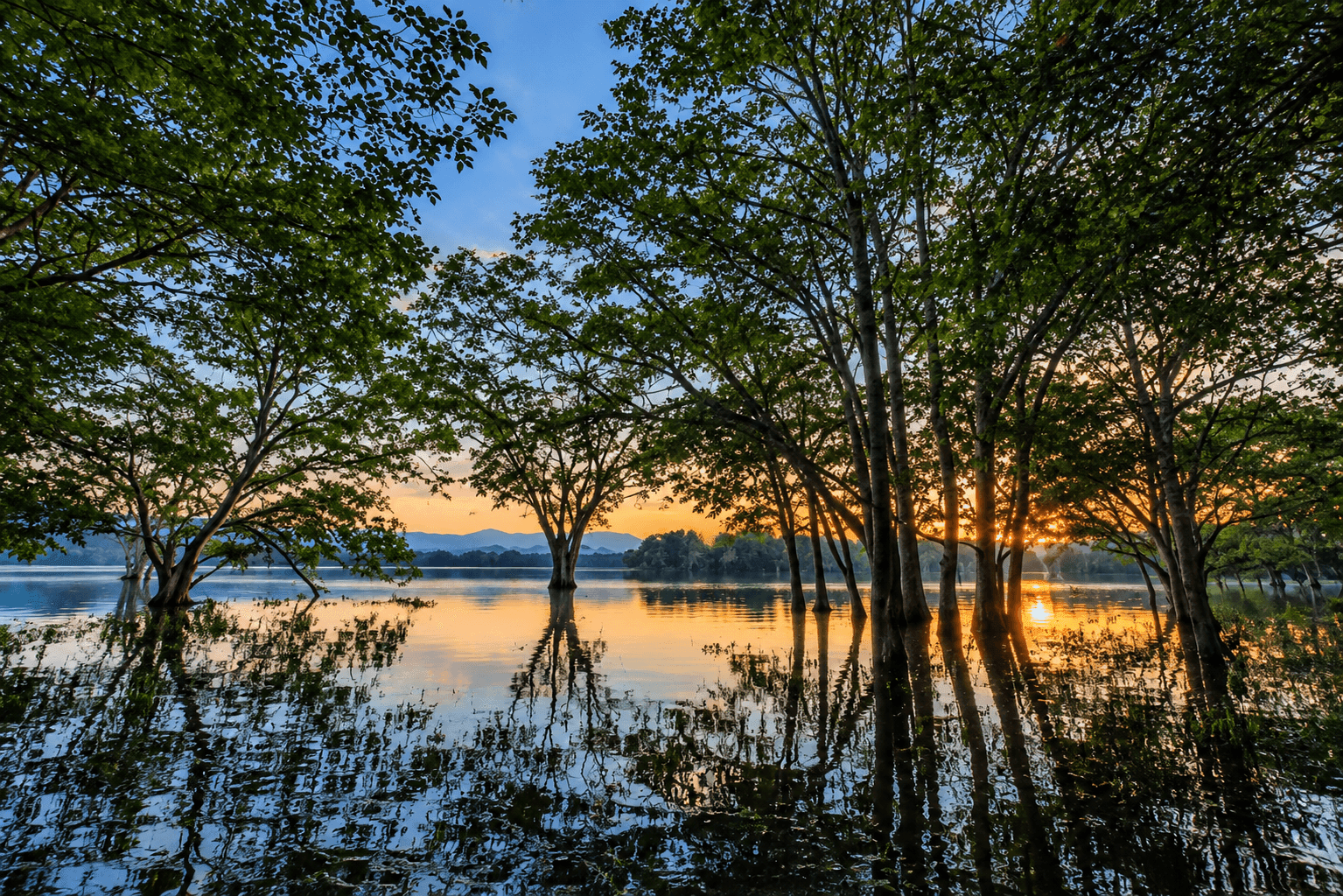
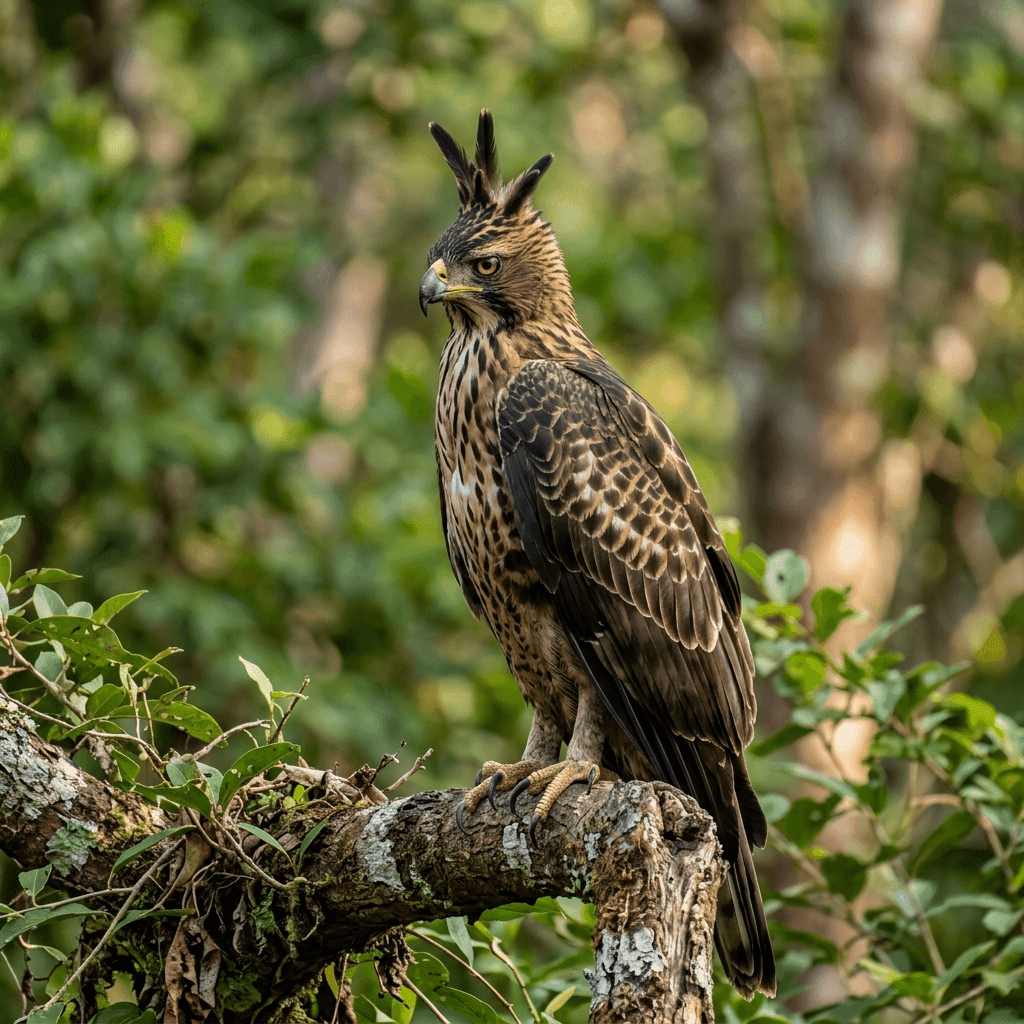
As you penetrate the central bays of the lake, the canoe weaves through an ethereal "drowned forest" of ancient tree skeletons rising like petrified statues from the water. These weathered snags provide prime perches for apex raptors. You can glide directly beneath a colossal dead tree to photograph a White-bellied Sea Eagle or a pair of Oriental Darters drying their outstretched wings in the early morning sunlight just twenty feet above your head.
Chapter 5: Avian Splendor of the Wetland Sanctuary
Hambegamuwa Lake is an extraordinary birdwatching paradise where wetland waterfowl, dry-zone forest birds, and migratory visitors congregate in spectacular numbers:
1. The Pheasant-tailed Jacana (Hydrophasianus chirurgus)
Known locally as the "Lotus Bird" or *Vil-Kukulana*, this is the undisputed monarch of the water lily pads. Possessing impossibly elongated, spindly toes that distribute its light body weight across floating lily leaves, the jacana walks across the water surface with effortless grace. In breeding plumage, it sports a dazzling white head and wings, deep chocolate body, bright golden-yellow neck patch, and an elegant, arched black tail resembling that of a pheasant. Listen for its strange, cat-like mewing calls as pairs defend floating territories.
2. The Spot-billed Pelican (Pelecanus philippensis)
Small flotillas of these colossal waterfowl roost on submerged tree trunks in the center of the lake. Watch them take flight with slow, powerful wingbeats, their heavy pinkish-spotted bills tucked back against their shoulders as they circle in wide thermal loops before landing gracefully back onto the water with a gentle hiss of spray.
3. Kingfishers of the Lily Bays
Hambegamuwa hosts an extraordinary density of kingfishers. The Pied Kingfisher (Ceryle rudis) executes mesmerizing aerial maneuvers: hovering motionless thirty feet in the air like a tiny helicopter with wings beating in a blur, before folding its wings and diving vertically like an arrow into the water to seize small fish. Alongside them, brilliant Common Kingfishers and White-throated Kingfishers flash iridescent turquoise along the shoreline reeds.
4. Waders, Storks & Herons
Along the grassy shorelines and shallow mudflats, patient stalks by Black-headed Ibis, Painted Storks, Asian Openbills, and Purple Herons create endless photographic opportunities. Flocks of Whistling Ducks paddle in tight formations among the reeds, while Lesser Adjutant storks—towering, prehistoric-looking scavengers—survey the wetlands from dead branch lookouts.
Chapter 6: Shoreline Wild Elephant Encounters from the Water
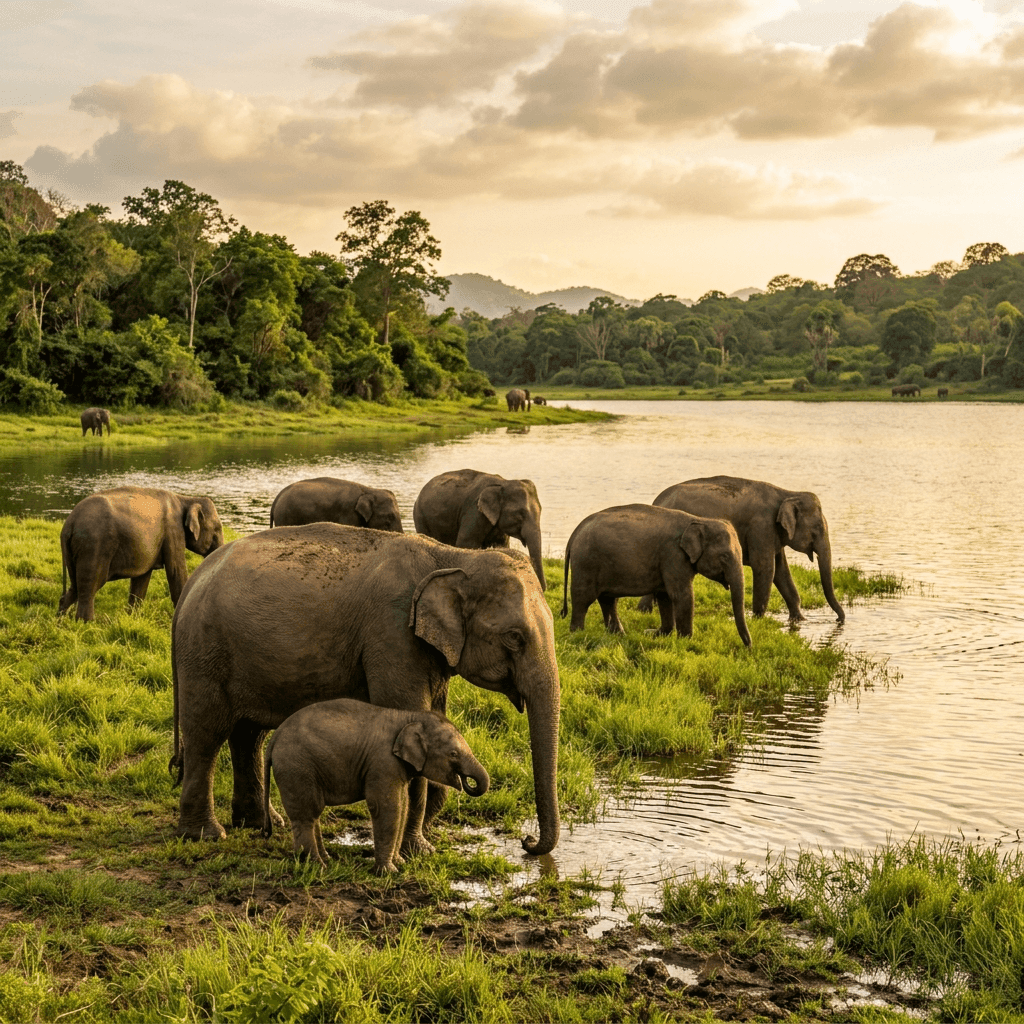
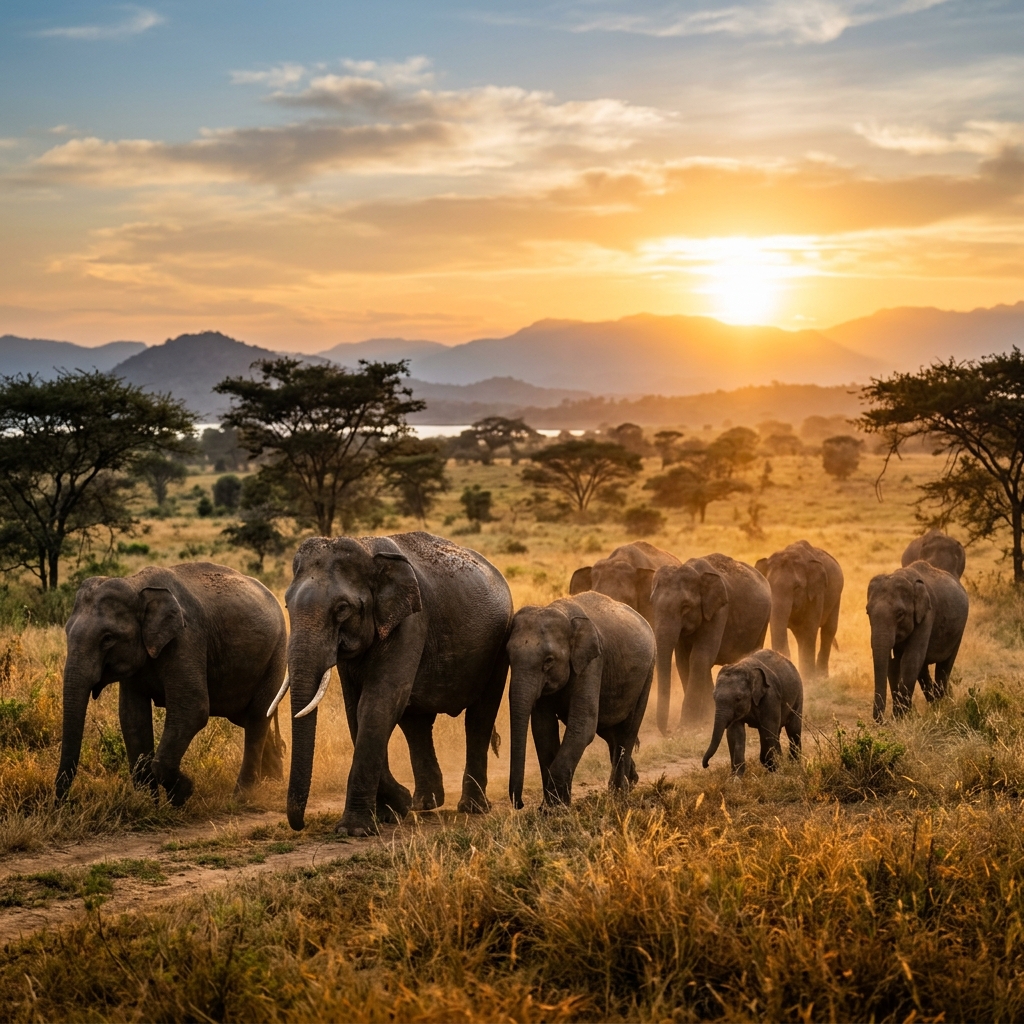
One of the supreme, heart-stopping thrills of canoeing on Hambegamuwa Lake is observing wild Asian elephants from the unique perspective of the water. The eastern boundaries of the lake connect directly with continuous forest corridors that link Udawalawe National Park with the Lunugamvehera wildlife basin.
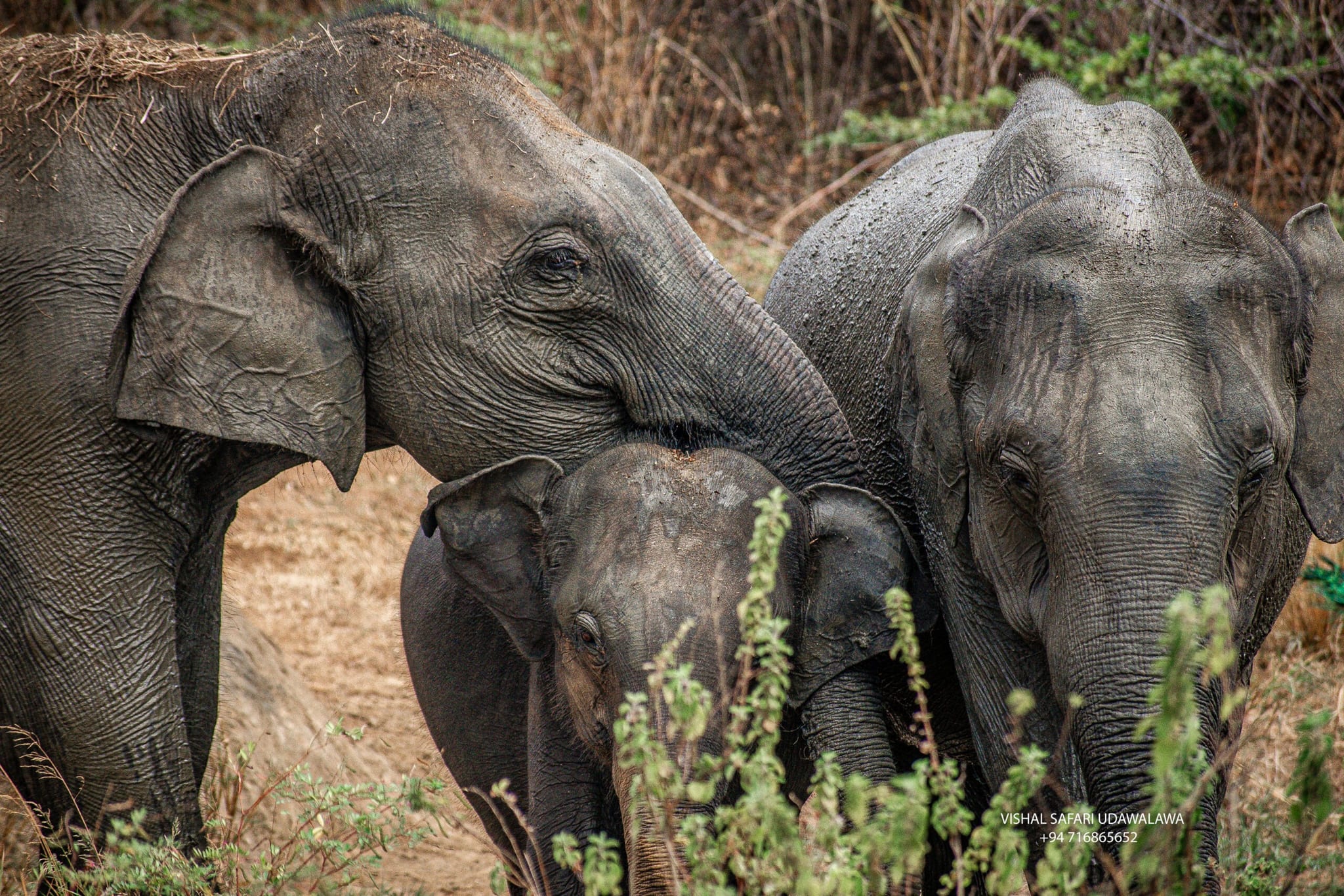
In the early morning between 6:00 AM and 7:30 AM, and again in the late afternoon between 4:30 PM and 6:00 PM, wild elephants routinely emerge from the dense scrub onto the grassy shores to drink and feed. Floating quietly fifty meters offshore in a stable canoe grants you an entirely different perspective than looking down from a high safari jeep. You are at water-level with the animals, observing them as they wade deep into the shallows, tearing up succulent water lily bulbs with their trunks, swirling them in the water to rinse off mud, and chewing them with audible satisfaction. Experienced boatmen maintain a safe, respectful distance from the shoreline, ensuring the elephants remain completely unbothered by your presence.
Chapter 7: Traditional Fishing Culture & Village Agro-Tourism
A visit to Hambegamuwa provides an authentic, enriching window into traditional rural Sri Lankan village life that commercial tourist circuits completely miss:
1. The Artisanal Fishermen (*Dheevara Samithiya*)
Fishing on Hambegamuwa Lake is strictly regulated by the local village cooperative to prevent overfishing and preserve water quality. Motorized boats are completely forbidden; only non-motorized wooden canoes and traditional hand-woven cast nets or stationary gill nets are permitted. As you canoe past local fishermen tending their nets, they will proudly display their morning catch of freshwater tilapia, snakehead (*Lula*), and freshwater shrimp, sharing stories of the lake’s changing seasons and water levels.
2. Traditional Chena Agriculture
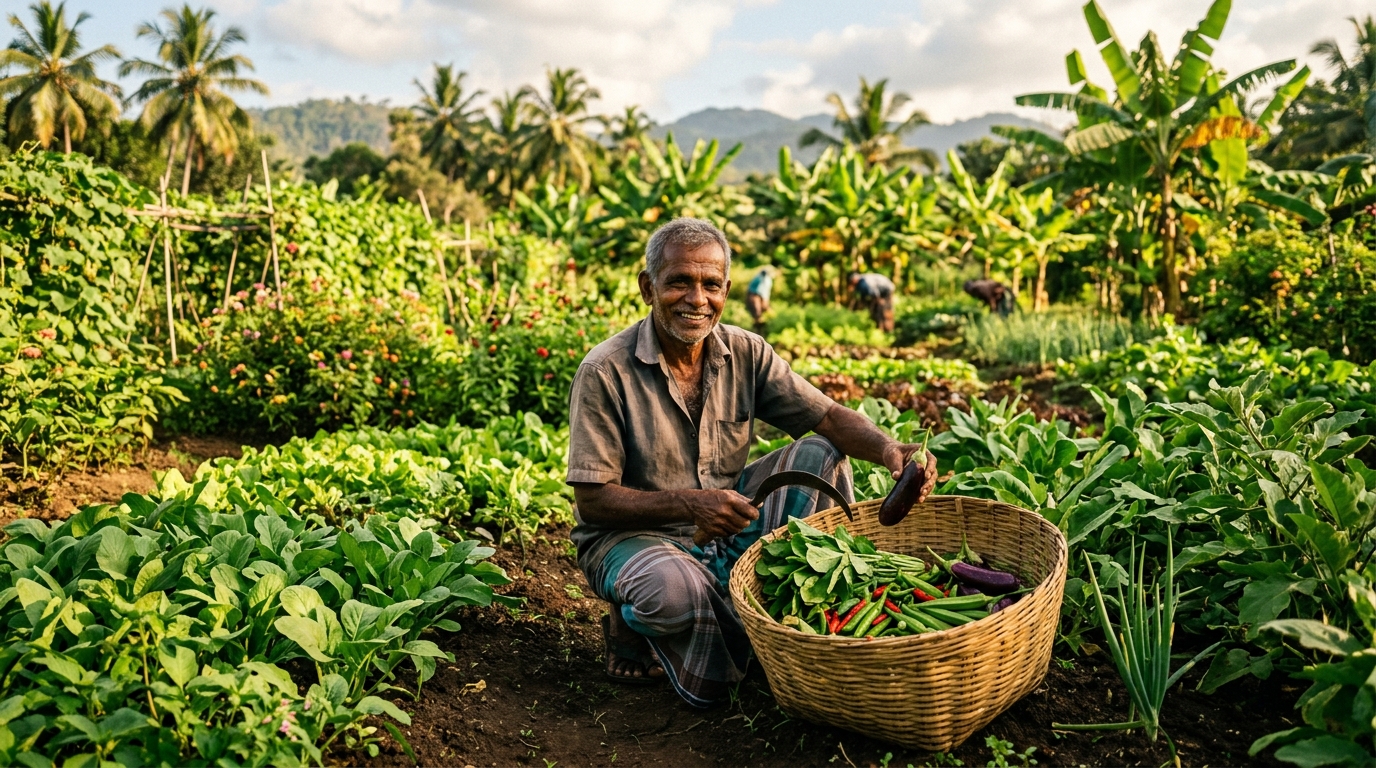
The surrounding dry-zone scrublands are cultivated by local families utilizing *chena* (traditional shifting rainfed agriculture). In small forest clearings, farmers grow organic crops of finger millet (*kurakkan*), corn, green gram, cowpeas, watermelons, and fiery red chilies. Visiting a local chena hut—often built on elevated wooden stilts (*Pela*) high in tree branches where farmers sleep at night to guard crops from hungry elephants—offers profound insight into the courage, resilience, and ingenuity of rural farmers living alongside wild giants.
3. Authentic Village Hospitality: Curd and Kithul Treacle
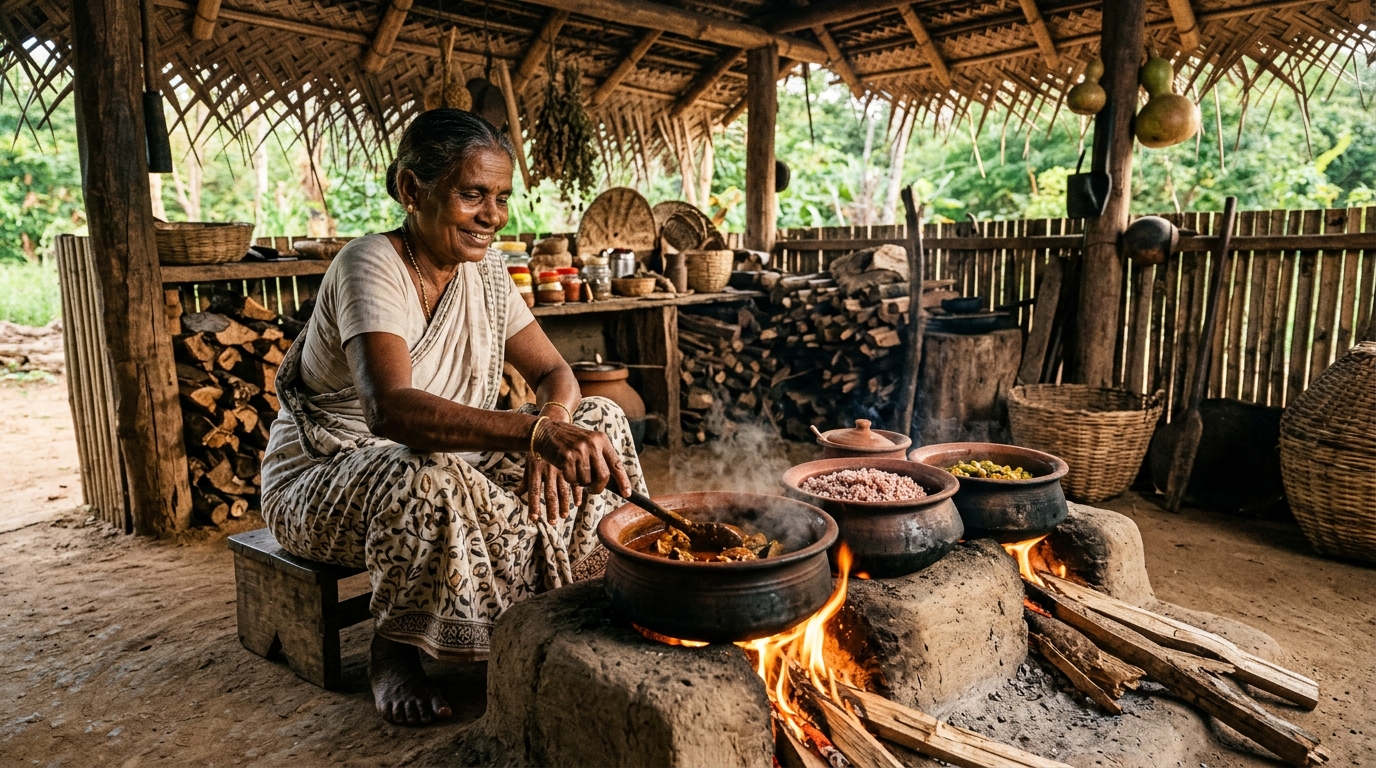
Following your morning canoe expedition, enjoy a traditional breakfast at a local lakeside family homestead. Feast on warm milk rice (*kiribath*) served with spicy onion-chili sambal (*lunu miris*), fresh herbal tea brewed from wild *Belimal* or *Ranawara* blossoms, and the regional culinary crown jewel: fresh, rich water buffalo curd (*meekiri*) set in terracotta clay pots, drenched in sweet, smoky golden kithul palm treacle (*pani*). It is an unforgettable culinary climax to a morning of wilderness serenity.
Chapter 8: Sunset vs. Sunrise Canoe Expeditions Compared
Both morning and evening present captivating reasons to visit Hambegamuwa Lake. Use this comparison table to decide which time slot best complements your itinerary:
| Factor | Sunrise Canoe Tour (5:45 AM – 8:00 AM) | Sunset Canoe Tour (4:15 PM – 6:30 PM) |
|---|---|---|
| Lighting & Atmosphere | Soft golden pastel tones; magical morning mist rising from water; glassy stillness | Dramatic amber and crimson sunset sky; warm backlighting on dead tree snags |
| Bird Activity | Maximum feeding activity; kingfishers diving; jacanas singing; raptors hunting | Flocks of herons and cormorants returning to communal roosts; flight silhouettes |
| Elephant Sightings | Excellent along the quiet eastern bays as herds conclude overnight grazing | Exceptional as herds emerge from shady scrub to bathe and drink before dusk |
| Water Surface | Completely flat, mirror-like reflections; minimal wind or chop | Gentle afternoon breeze calming as sunset approaches; warm water ripples |
| Safari Pairing | Pair with afternoon jeep safari in Udawalawe (3:00 PM – 6:00 PM) | Pair with morning sunrise jeep safari in Udawalawe (5:30 AM – 9:30 AM) |
Chapter 9: Community-Based Ecotourism & Conservation Impact
Participating in an outrigger canoe tour at Hambegamuwa is more than an idyllic sightseeing trip; it is a direct investment in community-based conservation. For decades, rural communities bordering national parks faced severe economic hardship stemming from human-elephant conflict (HEC), where roaming herds raided seasonal crop yields. By establishing the Hambegamuwa Eco-Tourism Guild, local fishermen and farmers have unlocked sustainable alternative livelihoods.
Every canoe tour fee directly compensates the boatman and contributes to a community fund that maintains the village solar electric elephant fence, purchases school supplies for rural children, and organizes periodic lake shoreline cleanup campaigns to remove discarded plastic and monofilament fishing line. When local communities directly benefit from living alongside wildlife and pristine wetlands, the incentive to protect and conserve these natural treasures becomes self-sustaining and permanent.
Chapter 10: Practical Travel Logistics, Timing & Safety Guidelines
Plan your Hambegamuwa canoe adventure with this essential field guidance:
| Logistical Element | Field Detail | Travel Tip |
|---|---|---|
| Driving Distance & Time | 25 km from Udawalawe town; 35 minutes via Thanamalwila road | Paved provincial road; easily accessible by car, van, or tuk-tuk |
| Optimal Departure Time | 5:15 AM hotel pickup to launch canoe by 5:50 AM dawn | Arriving at first light guarantees still water, low mist, and active birds |
| Canoeing Duration | 1.5 to 2.5 hours on the water | Can be extended upon request for serious birdwatchers and photographers |
| Safety Equipment | Certified international life jackets (PFDs) provided onboard | Mandatory wear for all passengers throughout the water transit |
| Footwear & Apparel | Slip-on sandals, comfortable shorts, light cotton shirt, sun hat | Expect to wade calf-deep in water when boarding the canoe from shore |
Chapter 11: Twilight Reflections, Nocturnal Wildlife & The Firefly Spectacle
While daylight expeditions on Hambegamuwa Lake are renowned for spectacular waterfowl and elephant sightings, the brief transition into twilight unlocks an entirely different ecological realm. As the last embers of sunset fade beneath the horizon around 6:30 PM, the diurnal birds retreat into dense reedbeds, and the nocturnal predators take over the wetland stage. Foremost among these twilight hunters is the formidable Brown Fish Owl (Ketupa zeylonensis). Perching low on thick horizontal branches overhanging deep water pools, this massive owl uses its acute binocular vision and unfeathered, razor-sharp talons to snatch sleeping tilapia and freshwater crabs directly from the water surface with virtually no splashing sound.
Simultaneously, the twilight air is filled with the silent, swooping silhouettes of Indian Flying Foxes (Pteropus giganteus)—one of the world's largest fruit bats, boasting a wingspan exceeding four feet. Hundreds of these majestic flyers stream out from their daytime roosting trees in ancient banyans bordering the lake, forming sweeping aerial rivers against the purple dusk sky as they fly toward mountain fruit orchards in the north. Down along the quiet, sheltered mangrove-like water margins, thousands of synchronous fireflies (family Lampyridae) begin their hypnotic bioluminescent courtship displays, flashing in coordinated green-gold pulses that illuminate the dark water lilies like floating constellations of living stars.
For visitors fortunate enough to linger on the lake bund as stars begin to pierce the velvet night sky, the acoustic ambiance transitions from bird calls to a rhythmic nocturnal symphony: the chiming metallic trills of tree frogs (Polypedates cruciger), the deep bass thrums of bullfrogs, and the distant, haunting churring call of Jerdon's Nightjar. Floating upon the dark water under an unpolluted Milky Way arching across the Sri Lankan wilderness is a transcendent, meditative closure to an adventurous day.
Chapter 12: Frequently Asked Questions (FAQ)
Q1: How far is Hambegamuwa Lake from Udawalawe National Park?
Hambegamuwa Lake is situated approximately 25 kilometers northeast of Udawalawe town, accessible via a smooth 35-minute drive through scenic rural countryside and chena farmlands.
Q2: Is canoeing on Hambegamuwa Lake safe?
Yes, exceptionally safe. Tours utilize stable traditional outrigger canoes (*oruwa*) operated by experienced local fishermen who know every bay and submerged tree. Certified life jackets are provided.
Q3: Can we see wild elephants at Hambegamuwa Lake?
Yes! Because the eastern shores border wildlife forest corridors, wild elephants frequently emerge in early mornings and late afternoons to drink, bathe, and feed on water lilies along quiet bays.
Q4: What types of birds are found around the lake?
The lake is an extraordinary wetland sanctuary hosting Spot-billed Pelicans, Oriental Darters, Pheasant-tailed Jacanas, Purple Swamphens, White-bellied Sea Eagles, and vibrant kingfishers.
Q5: Are there crocodiles in Hambegamuwa Lake?
Like virtually all large ancient freshwater reservoirs in Sri Lanka’s dry zone, Hambegamuwa supports a resident population of Mugger Crocodiles (Crocodylus palustris). However, they are fish-eating, timid creatures that immediately submerge and flee when boats approach. Local fishermen have bathed and navigated these waters safely for generations. Swimming in the lake is not recommended for tourists, but canoeing is entirely safe.
Q6: Do we need to book the canoe tour in advance?
Yes. Because traditional outrigger canoes are operated by local village fishermen who arrange life jackets and schedule their fishing routines around guest bookings, reserving your canoe tour 24 hours in advance through your safari operator or hotel is strongly advised.
Q7: Can children participate in the canoe tour?
Yes! Children of all ages love the gentle, calm gliding of the wooden outrigger canoe. Because the lake waters are placid with no rapids or sudden currents, it is a delightful, tranquil family adventure. Child-sized life jackets are provided.
Q8: What should I bring with me on the canoe?
Bring your camera with a zoom lens, binoculars, sunglasses, a sun hat, sunscreen, insect repellent, and a waterproof dry bag or plastic pouch to protect your phone and electronics while boarding and disembarking.
Q9: Can we combine Hambegamuwa canoeing with a safari in Udawalawe?
Yes! A popular and rewarding schedule is to enjoy a peaceful sunrise canoe tour on Hambegamuwa Lake from 6:00 AM to 8:30 AM, enjoy a traditional village breakfast, visit the Elephant Transit Home at 12:00 PM, and embark on an afternoon sunset safari inside Udawalawe National Park from 3:00 PM to 6:00 PM.
Q10: What is the cost of a private canoe tour on Hambegamuwa Lake?
A private guided canoe tour typically costs between LKR 6,000 and 10,000 (approximately $20 to $35 USD) for a private canoe carrying two to three passengers, including the experienced boatman, life jackets, and local community conservation contributions.

.png)