
Chapter 1: The Tranquil Haven of Katupila Lake
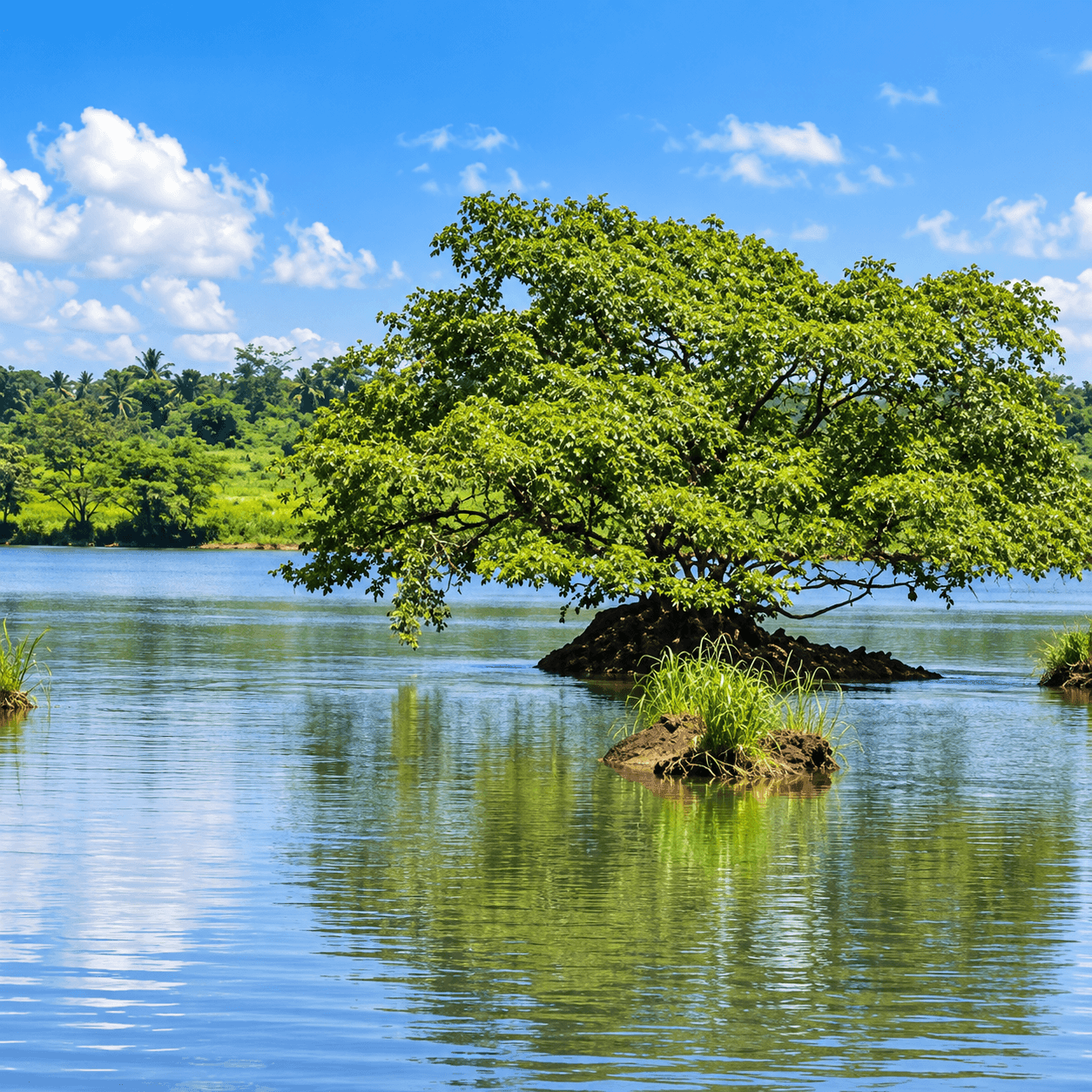
While the vast majority of wildlife enthusiasts visiting Udawalawe focus their attention exclusively on the famous elephant herds within the national park's fenced boundaries, true birdwatchers and discerning nature photographers know that some of southern Sri Lanka’s richest ecological treasures lie just beyond the tourist mainstream. Tucked away in the agrarian hinterlands southeast of Udawalawe, amidst rolling emerald paddy fields and quiet palmyra-studded rural lanes, lies Katupila Wewa (*Katupila Lake*). Spanning nearly two hundred hectares of placid open water, floating water lily gardens, and reed-fringed mudflats, Katupila Wewa is a paradise of untouched avian abundance and serene natural beauty.
Unlike the bustling jeep trails of the national park where diesel engines and vehicle convoys can occasionally disrupt quiet contemplation, Katupila Wewa remains completely free of commercial tourism infrastructure. Here, the only sounds are the rhythmic wingbeats of soaring raptors, the resonant honks of nesting Asian Openbills, and the gentle lapping of ripples against ancient earthen embankments. For travelers seeking an unhurried, intimate wildlife encounter, an early morning or golden-hour sunset excursion along the bund of Katupila Wewa provides a restorative breath of fresh air.
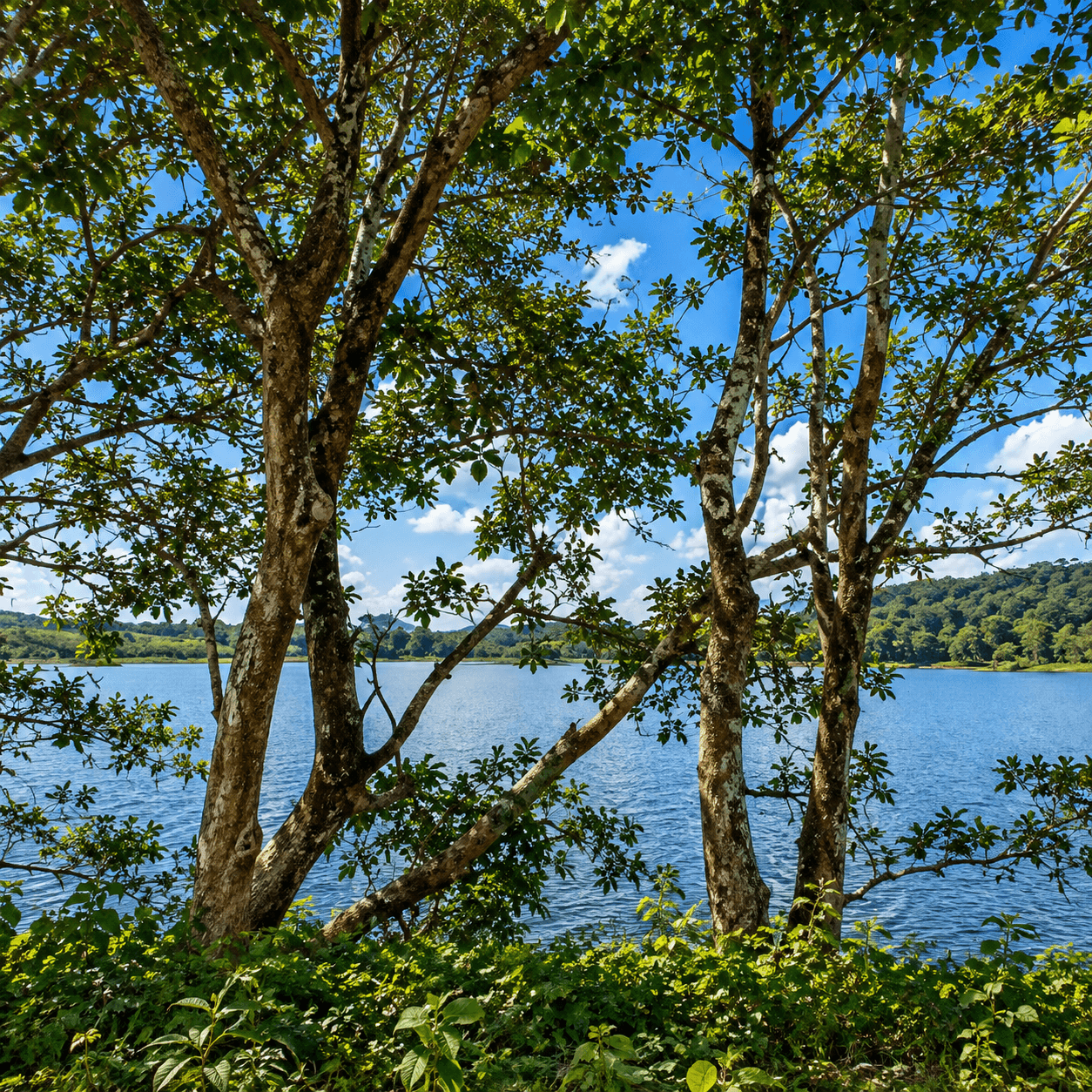
The reservoir functions as a vital wetland lifeline for hundreds of resident and migratory bird species, as well as an essential irrigation resource for dozens of surrounding farming hamlets. Walking along its shaded earthen bund beneath the cooling boughs of centuries-old kumbuk trees (Terminalia arjuna), visitors are treated to panoramic views of waterfowl foraging in crystal waters against the distant blue silhouettes of the Sabaragamuwa mountains.
Chapter 2: The Hydraulic Architecture of Ancient Cascade Reservoirs
Katupila Wewa is a shining example of the ancient Sinhalese cascade reservoir system (*Ellangawa*), recognized globally by the United Nations Food and Agriculture Organization (FAO) as a Globally Important Agricultural Heritage System (GIAHS). Constructed over a millennium ago during the zenith of the Ruhuna kingdom, the reservoir was engineered to capture seasonal monsoon rainfall draining from the upper southern hill slopes and store it for dry-zone paddy cultivation.
The construction of the reservoir reveals the extraordinary ecological wisdom of ancient Sri Lankan hydrological engineers. The massive curved earthen embankment (*Vekanda*) was built by compacting layers of impervious clay and gravel, creating a living dam that naturally flexes with shifting water pressure. An ancient stone spillway (*Vana*) regulates maximum water capacity during flash floods, allowing excess water to discharge safely into secondary downstream wetlands without breaching the main bund.
Crucially, the upper shallow perimeter of the lake was intentionally designed with wide wetland margins (*Kuluwewa*) carpeted with aquatic vegetation. These vegetated buffers filter out agricultural silt, absorb excess nitrates, and provide an expansive nursery zone for freshwater fingerlings, freshwater prawns, and water snails. This self-sustaining ecological architecture explains why Katupila Wewa continues to harbor such astounding densities of aquatic birds more than a thousand years after its original construction.
Chapter 3: The Avian Tapestry – Resident & Migratory Waterfowl
Katupila Wewa is an exceptional birdwatching sanctuary where ornithologists have recorded over 120 species of resident, endemic, and migratory birds. The diverse wetland habitats—ranging from deep open water and shallow lily beds to muddy shallows and dead snag trees—provide specialized ecological niches for a remarkable variety of avian families:
1. The Grand Storks & Ibises
Foremost among the wetland residents are the colossal waders. The Painted Stork (Mycteria leucocephala) is a perennial favorite with photographers, boasting a heavy yellow downcurved bill, delicate rose-pink tertial feathers, and striking black-and-white breast bands. Watch them forage cooperatively in shallow water, sweeping their half-open bills side to side through the water to snap shut instantly upon contacting small fish. Flocks of Asian Openbills (Anastomus oscitans)—possessing specialized gaped mandibles perfectly evolved for extracting freshwater apple snails (*Pila globosa*) from their shells—roost alongside elegant Black-headed Ibises (Threskiornis melanocephalus) probing the mudflats with sickle-shaped black bills.
2. The Spot-billed Pelican Flotillas
Katupila Wewa supports a thriving resident breeding population of the globally near-threatened Spot-billed Pelican (Pelecanus philippensis). In the early morning light, small flotillas of these magnificent waterfowl paddle in coordinated crescents across the open water, herding schools of tilapia into the shallows before scooping them up in their enormous expandable throat pouches (*gular pouches*). Their massive eight-foot wingspans make for breathtaking flight photography as they lift off gracefully into the morning breeze.
3. Apex Wetland Raptors
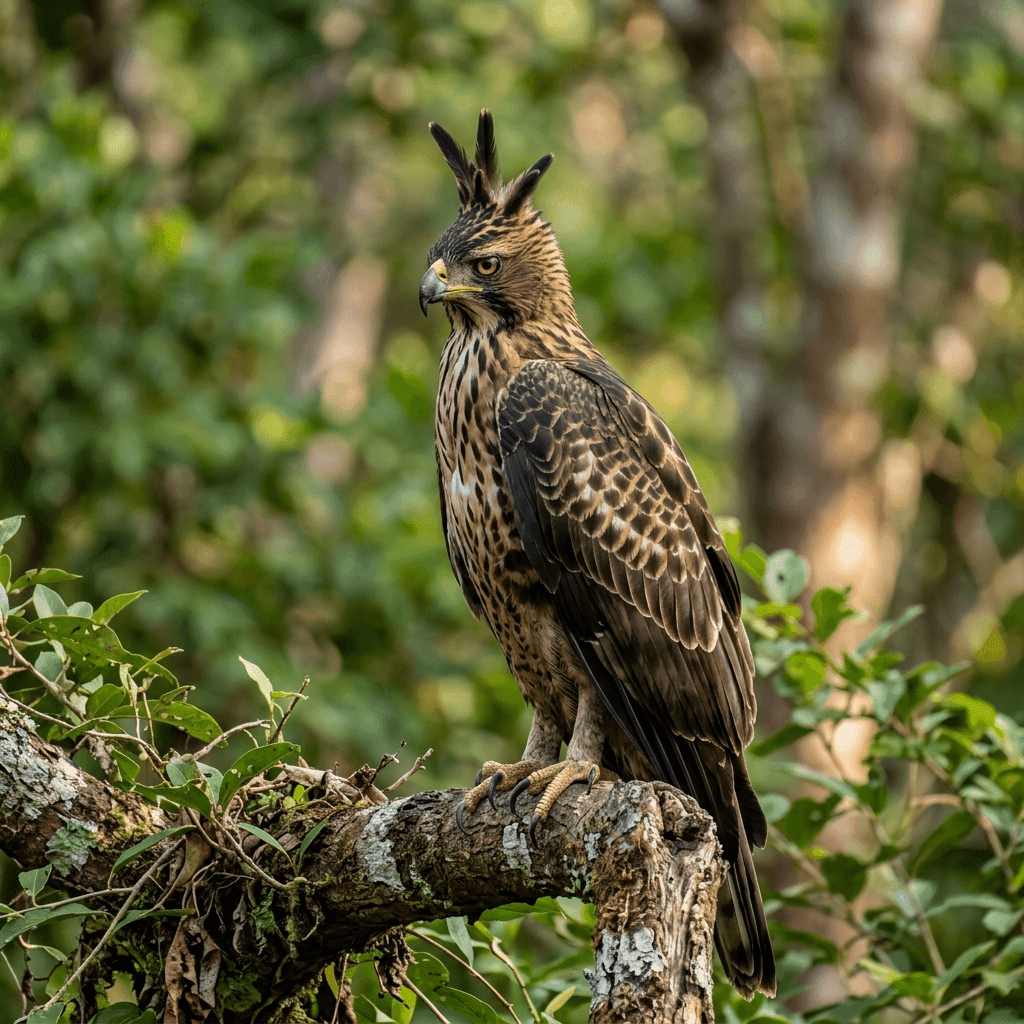
The abundance of fish attracts two of Sri Lanka’s most majestic birds of prey: the White-bellied Sea Eagle (Haliaeetus leucogaster) and the Grey-headed Fish Eagle (Haliaeetus ichthyaetus). Perched silently upon ancient dead tree trunks standing like petrified statues in the center of the lake, these apex raptors scan the water with piercing amber eyes. When a fish surfaces, they launch with thunderous wingbeats, diving in a steep, whistling glide to snatch fifteen-inch fish from the water with massive, curved talons before carrying their prey back to dead branch perches to feed.
4. The Jewel-Like Jacanas & Kingfishers
In the expansive floating water lily zones, the Pheasant-tailed Jacana (Hydrophasianus chirurgus) reigns supreme. Known locally as the *Vil-Kukulana*, this extraordinary bird walks effortlessly across floating lily pads on impossibly long toes. Alongside them, four distinct species of kingfishers patrol the reed beds: the hovering Pied Kingfisher, the dazzling common kingfisher, the robust White-throated Kingfisher, and the elusive Stork-billed Kingfisher with its massive crimson bill.
Chapter 4: Comprehensive Avian Checklist of Katupila Wewa
Use this field checklist during your birding expedition to record sightings across the lake's diverse micro-habitats:
| Species Common Name | Scientific Name | Preferred Habitat Zone | Seasonal Abundance |
|---|---|---|---|
| Spot-billed Pelican | Pelecanus philippensis | Deep open water & dead tree perches | Year-round resident breeding colonies |
| Painted Stork | Mycteria leucocephala | Shallow marsh edges & muddy bays | Common resident; peaks during dry season |
| Lesser Adjutant | Leptoptilos javanicus | Open grassy margins & dried mudflats | Uncommon resident; solitary foraging |
| Oriental Darter (Snakebird) | Anhinga melanogaster | Submerged snags & open water | Abundant resident; seen drying outspread wings |
| White-bellied Sea Eagle | Haliaeetus leucogaster | High canopy trees & thermal airspace | Resident territorial breeding pairs |
| Grey-headed Fish Eagle | Haliaeetus ichthyaetus | Dead tree perches overlooking deep channels | Resident; distinctive resonant wailing call |
| Pheasant-tailed Jacana | Hydrophasianus chirurgus | Floating water lily & lotus carpets | Abundant resident; spectacular breeding plumage |
| Purple Swamphen | Porphyrio poliocephalus | Dense reedbeds & tall bulrush stands | Common resident; feeds on tender reed roots |
| Wood Sandpiper | Tringa glareola | Mudflats & shallow shorelines | Abundant winter migrant (October – April) |
| Blue-tailed Bee-eater | Merops philippinus | Open branches & fence lines near water | Common winter migrant; spectacular aerial hawking |
Chapter 5: Seasonal Wetland Ecology & Northern Winter Migrations
The ecological rhythm of Katupila Wewa is dictated by the alternating rhythm of monsoonal rains and dry spells. The wetland reaches its absolute peak of avian diversity between November and March, when millions of migratory birds escaping the harsh freezing winters of northern Siberia, Central Asia, and the Himalayas arrive on the island along the Central Asian Flyway.
During these winter months, the mudflats and shallow sandbars of Katupila Wewa come alive with thousands of migratory waders: Common Sandpipers, Marsh Sandpipers, Pacific Golden Plovers, Little Ringed Plovers, and Little Stints probing the wet silt for chironomid larvae and aquatic worms. Flocks of migratory Garganey ducks (Spatula querquedula) paddle gracefully in secluded bays, while flocks of elegant Whiskered Terns (Chlidonias hybrida) hover over the water surface, dipping down to snatch floating insects.
Conversely, as the dry season peaks between July and September, the water level gradually recedes, exposing rich, nutrient-dense mudbanks. This natural drawdown concentrates fish and freshwater crustaceans into shrinking shallow pools, creating a veritable feeding feast that attracts massive congregations of hundreds of storks, herons, egrets, and pelicans from across the Sabaragamuwa province.
Chapter 6: Terrestrial Wildlife & Mammalian Encounters along the Bund
While Katupila Wewa is celebrated primarily as an ornithological haven, the surrounding forests and scrublands harbor a surprising wealth of terrestrial mammals and reptiles:
1. Wild Elephant Sightings
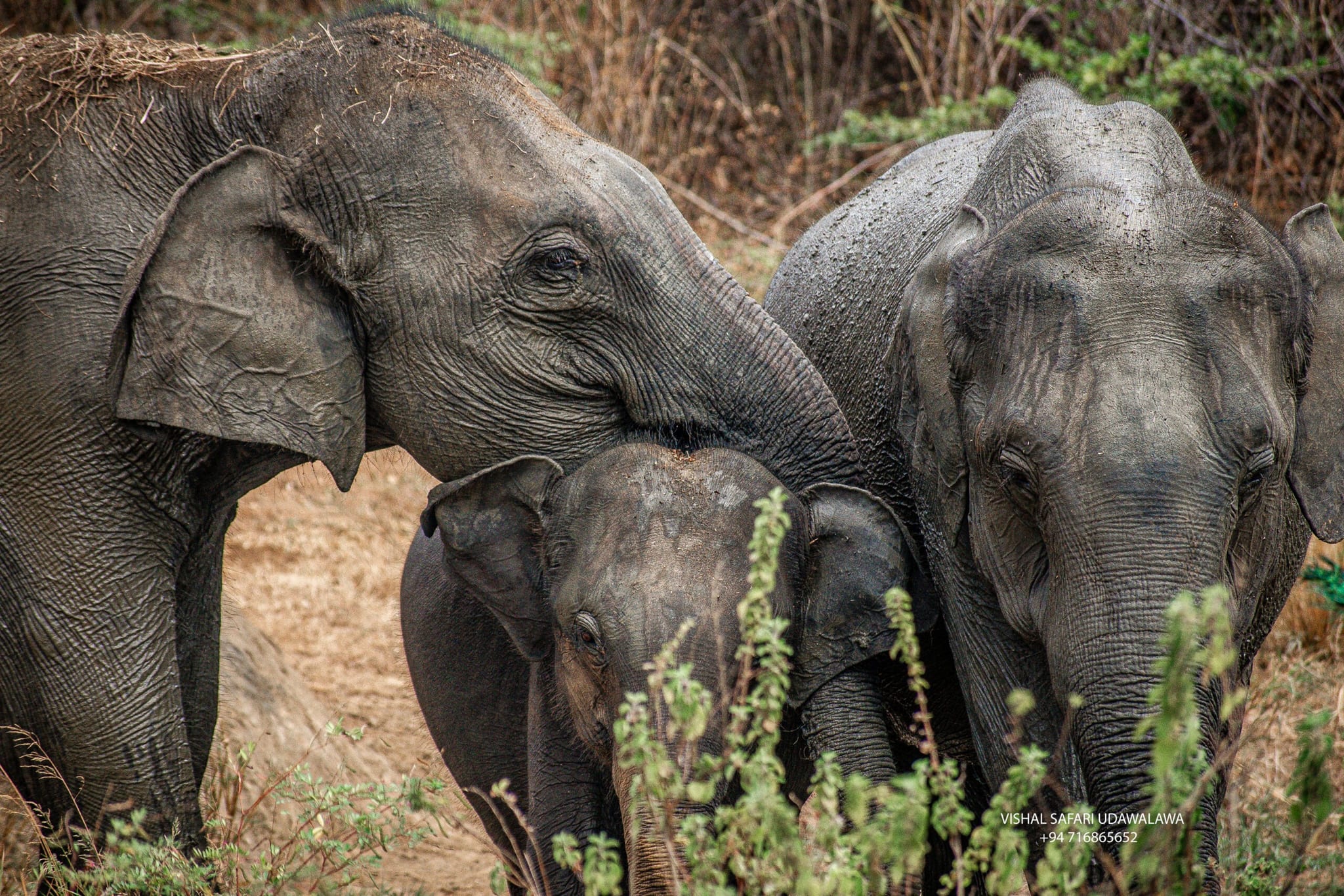
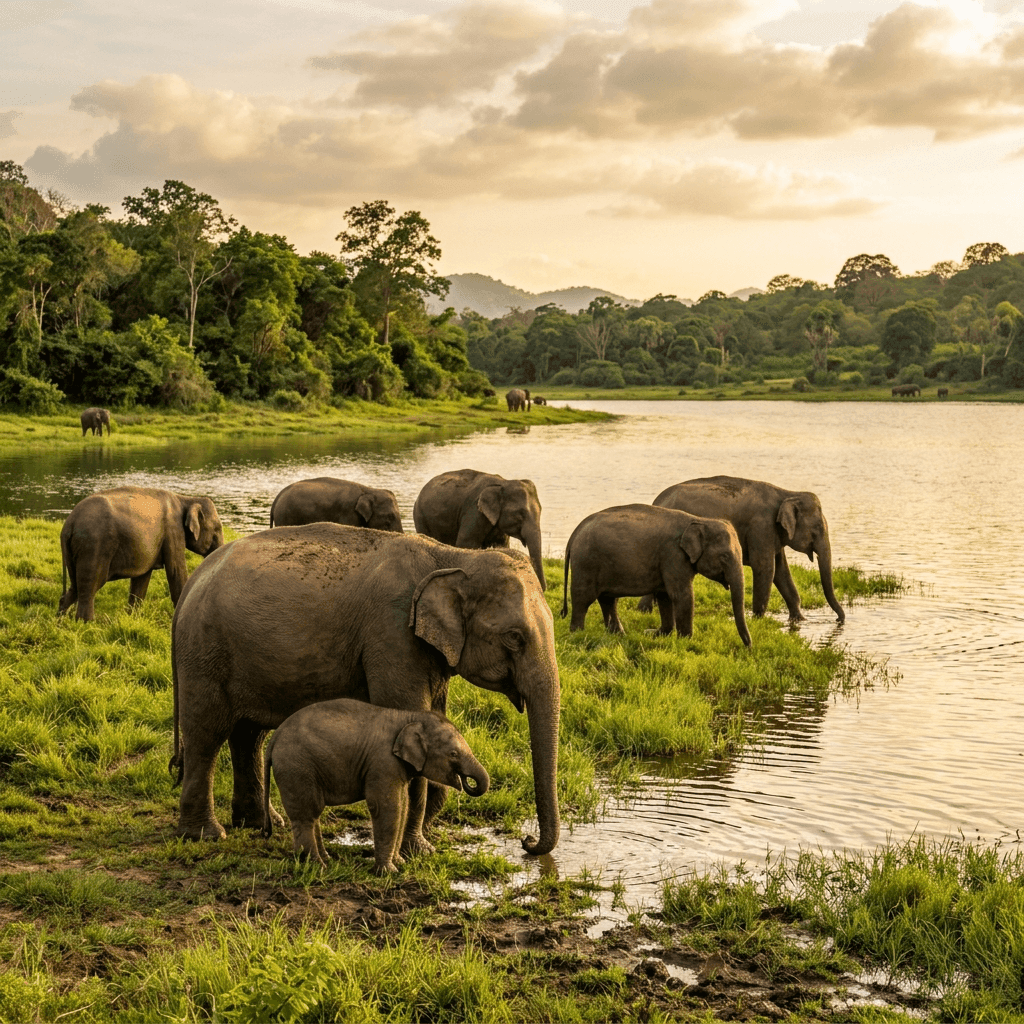
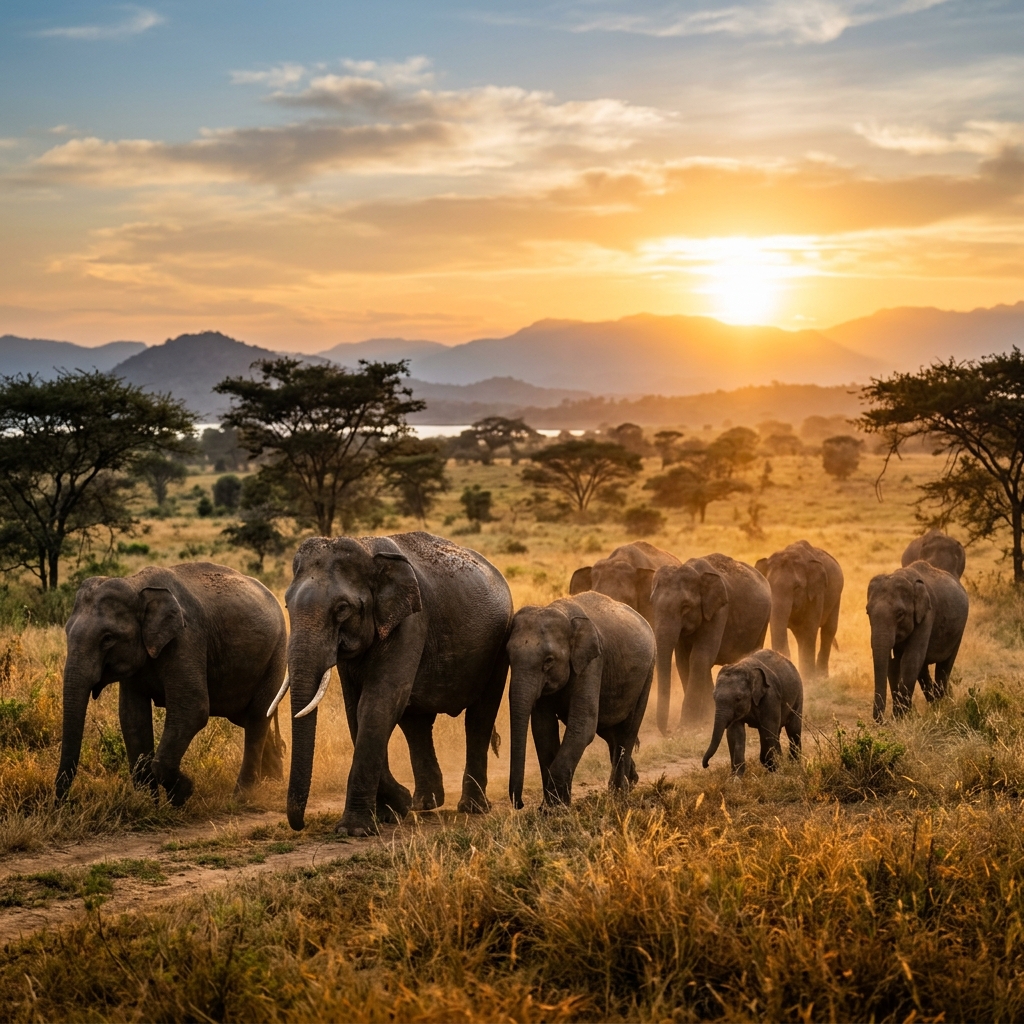
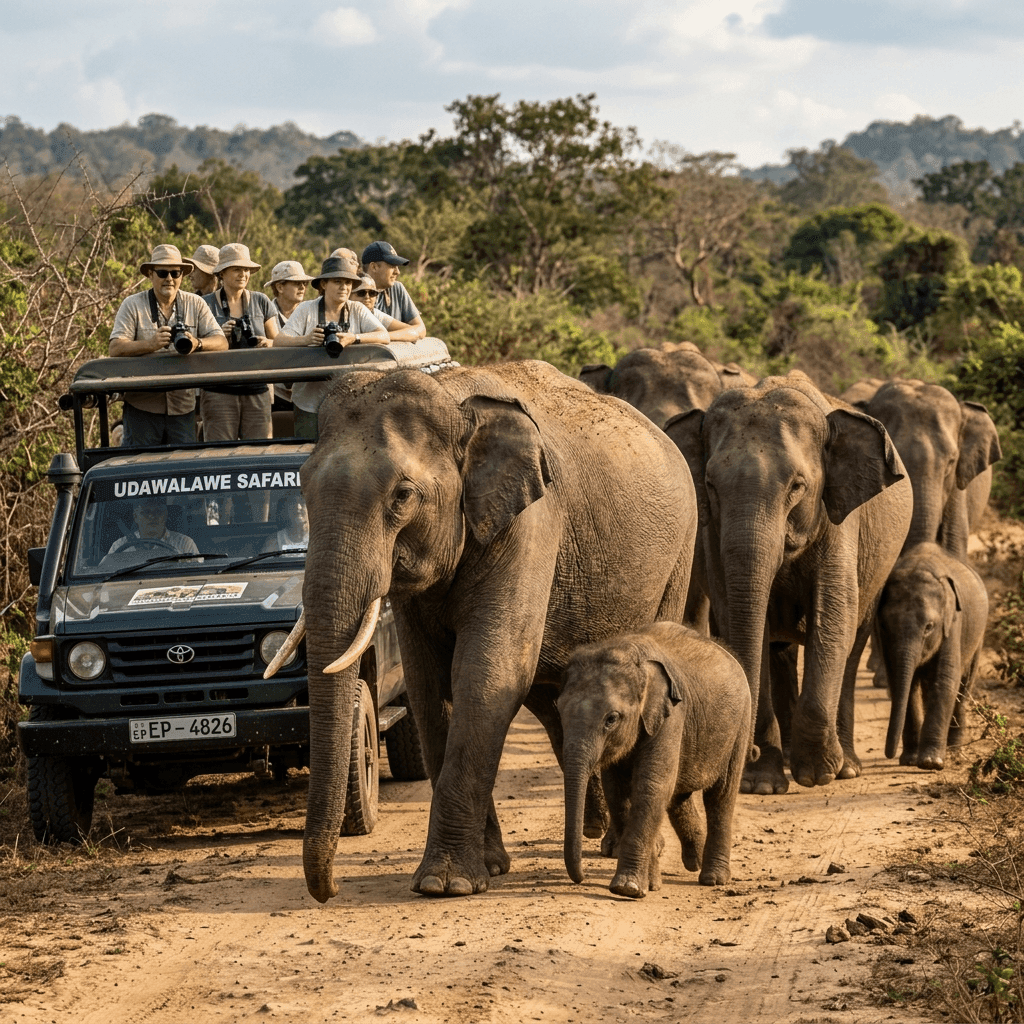
Because the eastern borders of the lake connect with contiguous scrub corridors linked to the greater Walawe river drainage, wild Asian elephants frequently venture down to the water margins. Unlike the habituated herds inside Udawalawe National Park, these elephants are shy and cautious, typically emerging in the quiet magic hour just before dusk (around 5:30 PM). Watching a wild tusker or a mother with a small calf bathe peacefully in the golden glow of the lake while egrets roost on their backs is an unforgettable sight.
2. Herpetological Wonders: Crocodiles & Water Monitors
The calm waters of Katupila Wewa support a healthy population of Mugger Crocodiles (Crocodylus palustris). During the sunny mid-morning hours, large crocodiles can frequently be seen hauling themselves out onto grassy sandbars and submerged tree trunks to bask in the warm tropical sun. Clustered along the shoreline reeds, Sri Lankan Flapshell Turtles (Lissemys ceylonensis) poke their snorkel-like snouts above the water lilies, while massive Asian Water Monitors (Varanus salvator) patrol the water’s edge in search of frogs and fish.
3. Nocturnal Mammals of the Forest Edge
As darkness falls over the lake, the mammal landscape shifts. Indian Peafowl fly into the high branches of kumbuk trees with loud trumpet-like honks to roost safely out of reach of predators. Small herds of Chital (Spotted Deer) cautiously emerge to graze on the fresh green grass of the lake bund, while Golden Jackals can be heard calling across the paddy fields in eerie, synchronized choruses.
Chapter 7: Photography Tips & Field Techniques for Water Birds
Photographing water birds in natural wetland environments requires patience, fieldcraft, and appropriate gear settings. Implement these expert wildlife photography recommendations:
1. Optical Equipment & Lens Selection
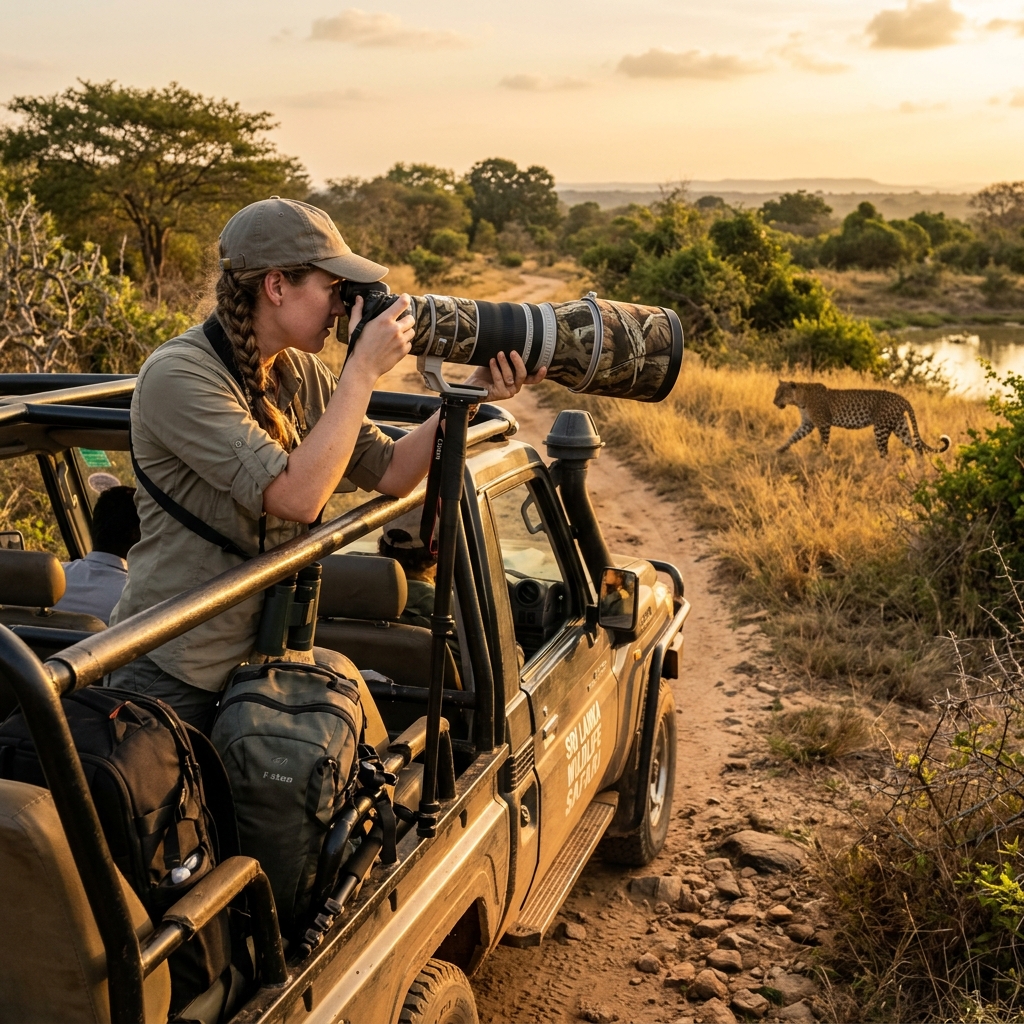
To capture detailed plumage textures of shy storks and distant raptors, a telephoto lens with a focal length of 400mm to 600mm is strongly advised (such as a 100-400mm, 200-600mm, or a 500mm prime lens). Full-frame mirrorless cameras with animal eye-detection autofocus make tracking fast-moving kingfishers and diving eagles dramatically easier.
2. Mastering Shutter Speeds & Camera Calibration
Water birds exhibit sudden, lightning-fast movements. When photographing kingfishers diving or terns hawking for insects, keep your shutter speed at a minimum of 1/2500s to 1/3200s to freeze wing motion crisply. For perched birds or pelicans paddling calmly across glassy reflections, lower your shutter speed to 1/800s to reduce ISO noise and capture maximum dynamic range.
3. Utilizing Golden Hour Sidelight
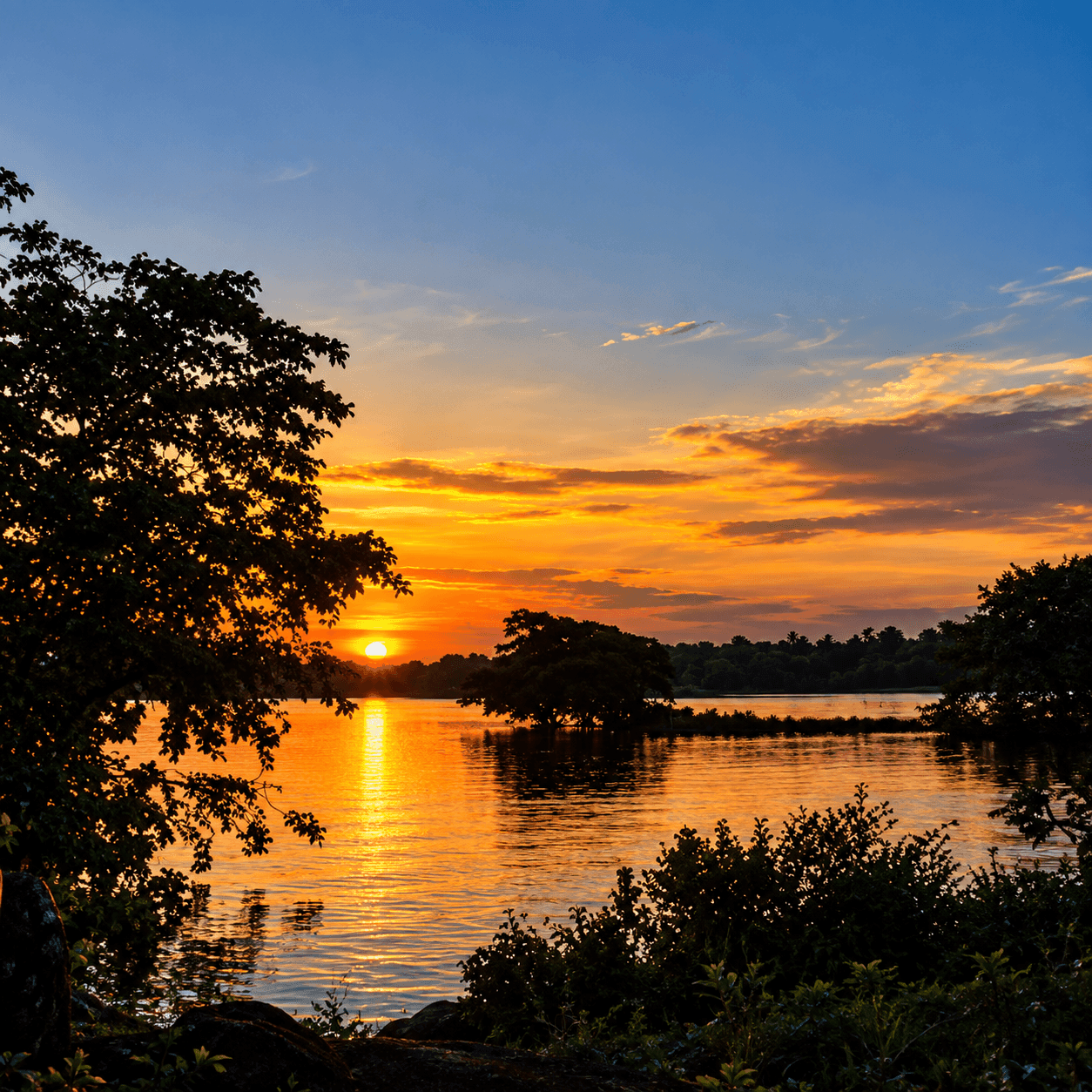
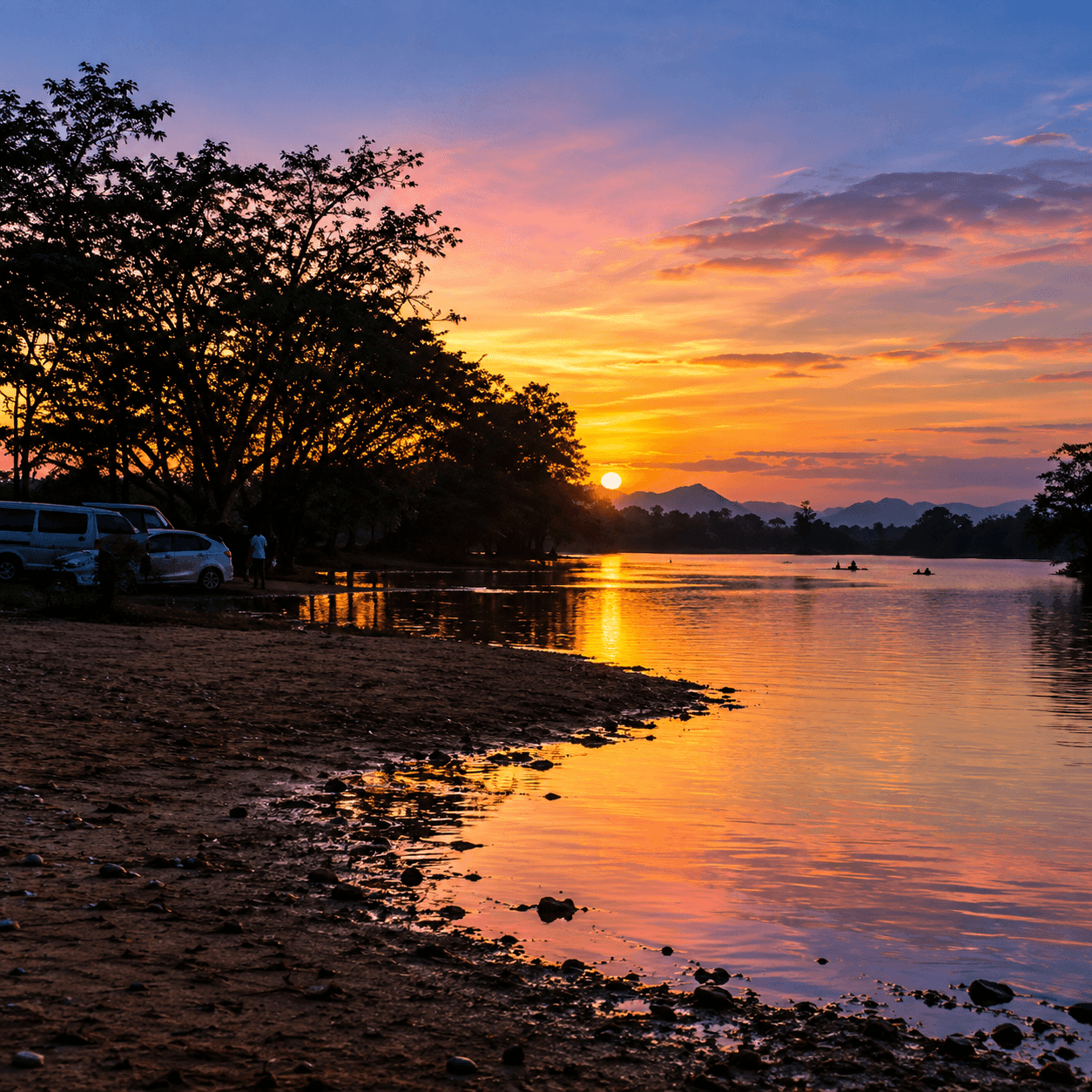
The main earthen bund of Katupila Wewa runs north-to-south, which provides ideal lateral lighting conditions. Early in the morning, the rising sun illuminates birds foraging along the western shorelines with warm, golden light without creating harsh top-down shadows. In the evening, the setting sun casts long, amber reflections across the water, creating dreamlike rim-lighting on the feathers of roosting egrets and storks.
4. Low-Angle Composition & Clean Backgrounds
Whenever safe and accessible, position yourself low to the water's edge rather than shooting down from the high embankment. A low shooting angle creates an intimate, eye-level connection with the subject and throws the distant opposite shore into creamy, out-of-focus background blur (*bokeh*), isolating the bird beautifully in the frame.
Chapter 8: Traditional Fishing Communities & Artisanal Livelihoods
Katupila Wewa is an active communal lifeline that sustains several rural agrarian hamlets. The lake's artisanal fishery is managed with deep ecological respect by the local village fisheries society (*Dheevara Samithiya*):
Fishing is strictly limited to non-motorized wooden canoes and traditional hand nets, preventing oil pollution and preserving water clarity. Local fishermen venture out onto the water at 4:30 AM before sunrise, laying out lightweight gill nets designed to catch mature tilapia (*Korali*) and snakehead fish (*Lula*) while allowing juvenile fish to pass through untouched. By 7:30 AM, their morning catch is brought to the village shore, where fresh fish is sold to local families or transported to morning vegetable markets in nearby Embilipitiya.
Because the fishermen spend decades intimately observing the lake, they possess encyclopedic knowledge of wildlife movements, seasonal water levels, and nesting sites. Striking up a respectful conversation with an elder boatman on the bund will often lead to incredible tips on where a rare Black Bittern or fishing eagle is currently nesting.
Chapter 9: Combining Katupila Wewa with an Udawalawe Safari Day
Integrating Katupila Wewa into your southern Sri Lanka travel schedule provides the ultimate harmony between high-energy game drives and peaceful nature walking:
- 5:30 AM to 9:30 AM – Morning Safari in Udawalawe National Park: Focus on tracking wild elephant herds, leopards, sloth bears, and raptors during the active dawn safari window.
- 9:30 AM to 11:30 AM – Return to Hotel, Brunch & Midday Rest: Freshen up, enjoy a hearty tropical breakfast, relax by the resort pool, and edit morning safari photos.
- 3:30 PM to 4:00 PM – Scenic Countryside Drive to Katupila: Journey through the picturesque village roads of Embilipitiya, enjoying views of terraced rice paddies and irrigation canals.
- 4:00 PM to 6:00 PM – Golden Hour Birdwatching Walk at Katupila: Stroll along the shaded earthen bund, photograph roosting pelicans and storks, and watch the sun dip beneath the water in fiery crimson tones.
- 6:00 PM to 6:30 PM – Twilight Elephant Watch: Scan the quiet eastern forest shores for wild elephants emerging to drink in the twilight before heading back to your resort.
- 7:30 PM – Traditional Village Dinner: Celebrate a memorable day of wildlife discovery with an authentic Sri Lankan rice-and-curry feast under the stars.
Chapter 10: Ethical Birdwatching Protocols & Environmental Etiquette
To preserve the pristine tranquility of Katupila Wewa and protect nesting waterfowl from stress, visitors should adhere to international ethical birding guidelines:
- Maintain Respectful Distances: Use binoculars and telephoto lenses rather than approaching nesting or roosting birds on foot. If a bird stretches its neck, stops feeding, or looks agitated, you are too close—take two steps back immediately.
- Never Use Audio Playback (Call Tapes): Playing recorded bird calls to lure shy species out of reedbeds causes acute territorial stress and distracts parent birds from feeding hungry chicks.
- Zero Littering Policy: Plastic water bottles, snack packaging, and discarded fishing lines pose lethal entanglement hazards for water birds and turtles. Carry all trash back to your hotel for proper disposal.
- Wear Muted Earth-Tone Clothing: Bright fluorescent colors, pure white, and high-visibility jackets alarm birds instantly. Wear muted khaki, olive green, brown, or beige clothing to blend naturally into the foliage.
- Avoid Using Flash Photography: Never use flash photography on resting owls, nightjars, or roosting waterfowl at dusk, as sudden bright light can cause temporary blindness and disorientation.
Chapter 11: Wetland Botany: Water Lilies, Reeds & Aquatic Macrophytes
The remarkable concentration of birdlife at Katupila Wewa is intimately underpinned by the botanical architecture of its wetland plant communities. Rooted in the submerged alluvial silt of the lake bottom, aquatic macrophytes create a vibrant underwater forest that produces oxygen, traps suspended sediments, and provides critical food and shelter for the aquatic food web.
Dominating the sheltered bays is the Sacred Pink Lotus (Nelumbo nucifera), whose broad circular leaves rise majestically above the water on thick thorny petioles. Unlike water lilies whose leaves rest flat upon the surface, lotus leaves possess remarkable superhydrophobic properties—the famous "lotus effect"—where droplets of dew or rain ball up into gleaming spheres of mercury, rolling across the leaf to wash away dust particles. Beneath these floating canopies, schools of juvenile fingerlings find refuge from predatory cormorants, while dragonflies and damselflies deposit their eggs on submerged stems.
Fringing the northern shoreline are dense stands of Narrow-leaved Cattail (Typha angustifolia) and giant wetland sedges (Cyperus species). These thick reedbeds act as living bio-filters, absorbing agricultural runoff from adjacent paddy fields while stabilizing the shoreline against wave erosion. Within the impenetrable interior of these reed stands, shy and secretive water birds—such as the Yellow Bittern (Ixobrychus sinensis), Cinnamon Bittern, and the elusive White-breasted Waterhen (*Korawakka*)—build their well-concealed floating nests, safely out of reach of land predators like monitor lizards and stray dogs.
Interspersed among the lotus fields are extensive mats of the Blue Water Lily (Nymphaea nouchali), whose starry violet-blue blossoms open at first daylight and close tightly by midday. These delicate floating gardens provide essential resting platforms for dragonflies such as the Crimson Dropwing and Pied Parasol, while tiny freshwater crabs scuttle beneath their buoyant pads, providing continuous hunting opportunities for stalking pond herons.
Chapter 12: Frequently Asked Questions (FAQ)
Q1: Is there an entrance fee for visiting Katupila Wewa?
No, Katupila Wewa is an open natural public wetland with completely free access for bird watching, peaceful strolls, and countryside photography.
Q2: How far is Katupila Wewa from Udawalawe National Park entrance?
Katupila Wewa is situated roughly 18 kilometers southeast of the main Udawalawe park gate, requiring an easy 25-minute drive through charming village roads and paddy lands.
Q3: What are the best hours for bird photography at Katupila Wewa?
The optimal light and peak bird activity occur from 6:00 AM to 8:30 AM in the morning and from 4:30 PM to 6:15 PM in the evening, when soft golden sidelight illuminates water birds against glassy reflections.
Q4: What bird species can visitors expect to see at Katupila Wewa?
Key species include Spot-billed Pelicans, Painted Storks, Asian Openbills, Grey Herons, Purple Herons, Black-headed Ibis, Oriental Darters, White-bellied Sea Eagles, Grey-headed Fish Eagles, and Pheasant-tailed Jacanas.
Q5: Are there wild elephants at Katupila Wewa?
Yes, during the dry season and late afternoon hours, solitary wild bull elephants or small family herds occasionally emerge from bordering scrub forests to drink and bathe along the quiet eastern shores.
Q6: Can we walk around the entire lake perimeter?
The main earthen bund (*Vekanda*) offers a broad, flat, panoramic walking path roughly 1.5 kilometers long. Exploring the marshy eastern boundary requires sturdy footwear and local trail guidance.
Q7: What camera gear is recommended for birding at Katupila Wewa?
A telephoto zoom lens of at least 300mm to 600mm focal length is ideal for capturing tight portraits of waders and raptors without causing disturbance. A sturdy monopod or tripod is helpful for evening flight shots.
Q8: Are there boat or canoe rides available at Katupila Wewa?
Unlike larger commercial lakes, Katupila Wewa does not have motorized boat tours. However, local artisanal fishermen can occasionally be engaged for gentle outrigger canoe rides with prior arrangement.
Q9: Is Katupila Wewa visited by migratory birds?
Yes! During the northern winter migratory season from October to April, Katupila Wewa hosts thousands of migratory waders, including Wood Sandpipers, Common Greenshanks, Garganey ducks, and Blue-tailed Bee-eaters.
Q10: Can Katupila Wewa be combined with an Udawalawe safari?
Yes, Katupila Wewa is an ideal midday or sunset stopover after a morning safari, providing a peaceful, unhurried contrast where visitors can sit quietly by the water without the confines of a safari jeep.


.png)