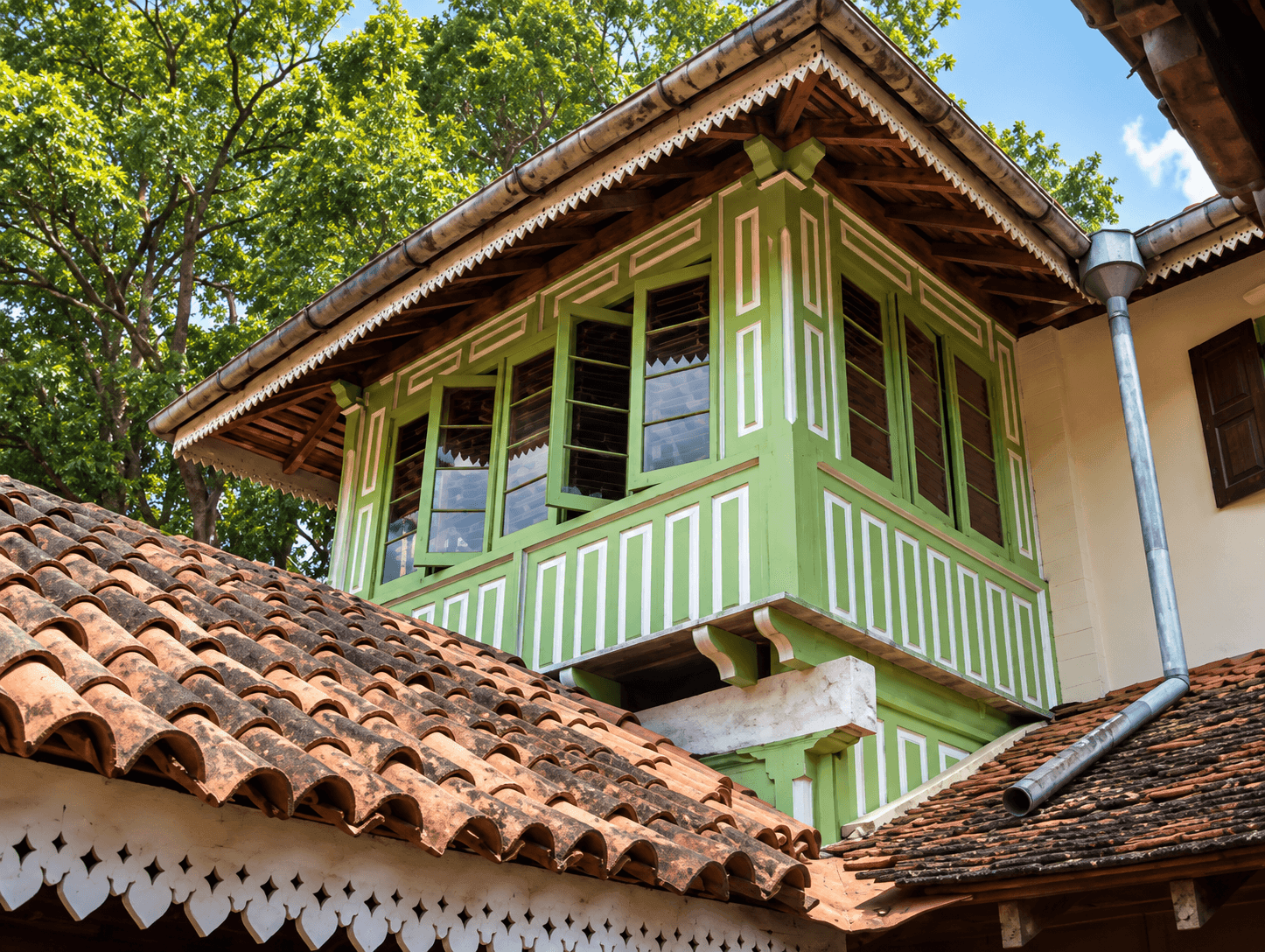
Chapter 1: The Aristocratic Grandeur of Maduwanwela Walawwa
Nestled amidst the serene rural valleys of Kolonne, roughly thirty-eight kilometers northwest of Udawalawe National Park, stands one of the most enigmatic, storied, and architecturally dazzling ancestral estates in Sri Lanka: Maduwanwela Walawwa. Known popularly as the "Little Palace of Sabaragamuwa," this sprawling historical manor house was the seat of power for one of the island's most legendary, fiercely independent feudal chieftains, James William Maduwanwela Maha Disawa (1844–1930). At its zenith in the late nineteenth century, this architectural behemoth encompassed an astounding 121 rooms, 21 open-air inner courtyards (*Medamidula*), and was guarded by armed personal sentries.
Stepping through the towering wooden gates of Maduwanwela Walawwa is like entering a time machine back into the twilight of the feudal Kandyan and colonial eras. Far removed from the dusty safari trails of Udawalawe, the manor radiates an atmosphere of aristocratic silence, intricate wooden craftsmanship, and deep political defiance. It is a monument that encapsulates the pride, wealth, and unyielding resistance of a Sinhalese aristocrat who refused to bow to the British Empire while living in unparalleled luxury on his 82,000-acre ancestral estate.
For visitors exploring southern Sri Lanka, a half-day excursion to Maduwanwela Walawwa provides a vital cultural complement to wildlife safaris. Here, travelers unravel stories of elephant kraals, ancient land grants inscribed on royal copper plates, courtly intrigues, and ingenious architectural climatology that kept interior rooms cool and ventilated centuries before the advent of electricity. The manor stands today as a protected monument under the Sri Lanka Department of Archaeology, offering an extraordinary window into an era of feudal power that has vanished forever.
Chapter 2: The Legend of Maduwanwela Maha Disawa – The Black Prince
To understand the grandeur of the Walawwa, one must understand the man who created it in its present form. James William Maduwanwela, revered and feared throughout Sabaragamuwa as the "Maduwanwela Maha Disawa" and referred to by admiring British colonial officials as "The Black Prince of the Southern Hills," was an extraordinary figure of immense charisma, intelligence, and stubborn pride.
The Disawa was born into high nobility in 1844, inheriting vast landholdings and hereditary chieftain titles that commanded unquestioned loyalty from thousands of tenant farmers (*Karuwo*) and artisans across the Kolonne Korale. Despite being educated under British systems, Maduwanwela harbored a fierce, burning pride in his Sinhalese ancestral heritage. While regional kings had succumbed to British dominion following the Kandyan Convention of 1815, Maduwanwela conducted himself within his private valley as an independent sovereign ruler.
He maintained a personal guard of uniformed riflemen, held civil and criminal courts with absolute judicial authority, and entertained British governors with lavish royal hospitality while subtly mocking their imperial pretensions. British governors who journeyed to his estate were stunned by his refined manners, his fluency in classical literature, his private zoo of leopards and bears, and his stables of magnificent tusker elephants. Yet they were always kept at arm's length, reminded at every turn that in the valleys of Kolonne, the Disawa's word was the only law that mattered.
Chapter 3: The Ancient Sannasa: Royal Land Grant & The Brave Hare Legend
The historical roots of the Maduwanwela dynasty stretch far back into the seventeenth century during the reign of King Rajasinha II of the Kingdom of Kandy (1635–1687). Historical palm-leaf manuscripts (*Ola leaves*) and copper charters (*Tamba Sannasa*) preserve the romantic founding legend of the estate:
According to royal chronicles, King Rajasinha II was traversing the dense, uncharted wilderness of the Kolonne valley during a royal hunting expedition. Suddenly, the royal hunting hounds and a predatory jackal (*nariya*) cornered a small wild hare (*hava*) near a bubbling natural freshwater spring. Instead of fleeing in terror, the tiny hare turned fiercely upon the jackal, baring its teeth and aggressively chasing the larger predator away across the forest clearing.
The king was captivated by the scene. In ancient Sinhalese statecraft, an animal exhibiting such unnatural courage was seen as an infallible omen that the underlying ground possessed invincible spiritual energy (*Jaya Bhumi* or Victory Soil). The king declared that any fortress or dynasty established upon this brave earth would never be conquered by foreign foes. On the spot, King Rajasinha II granted the surrounding territory—stretching as far as an elephant's trumpet could be heard in all four directions—to his loyal military chieftain Maduwanwela, inscribing the royal gift upon a sacred copper plate that is still preserved in historical archives.
Chapter 4: Architectural Mastery – 121 Rooms & 21 Inner Courtyards
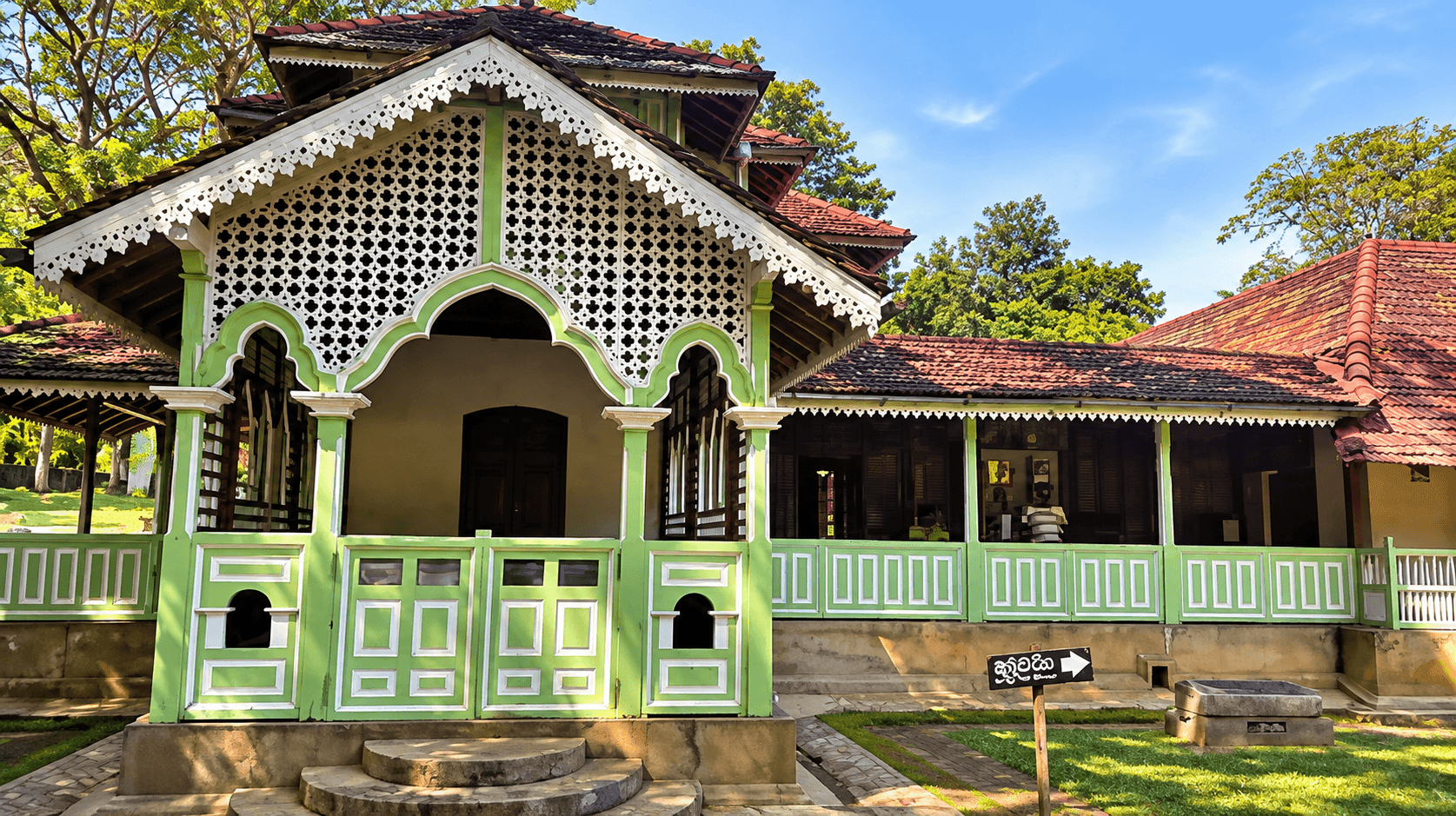
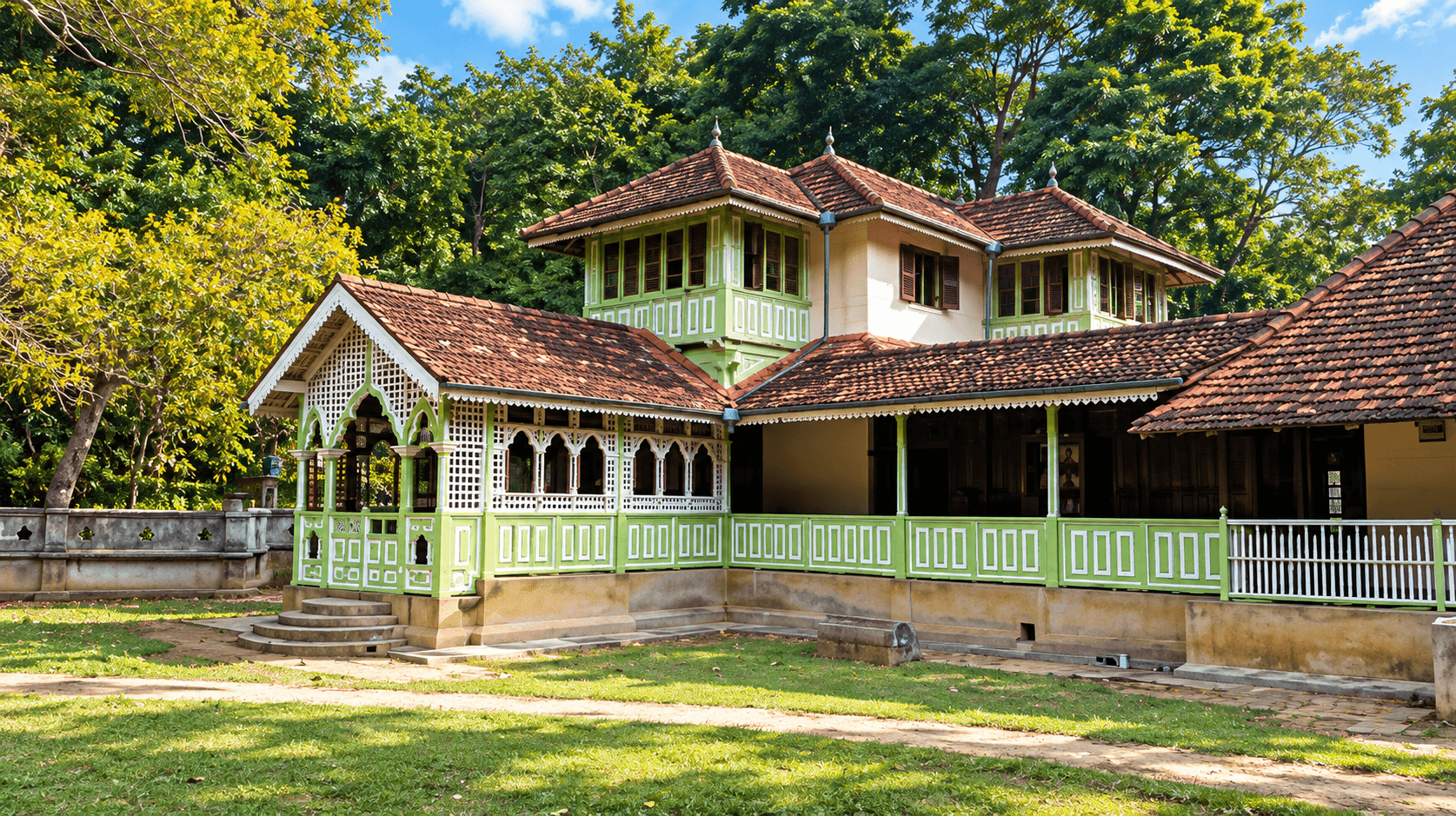
The architecture of Maduwanwela Walawwa is a breathtaking synthesis of traditional Kandyan feudal architecture (*Walawwa Sampradaya*), Dutch colonial masonry, and Victorian decorative artistry. The manor was designed and expanded over several construction phases, with major expansions completed between 1877 and 1905:
1. The Inner Courtyard System (*Medamidula*)
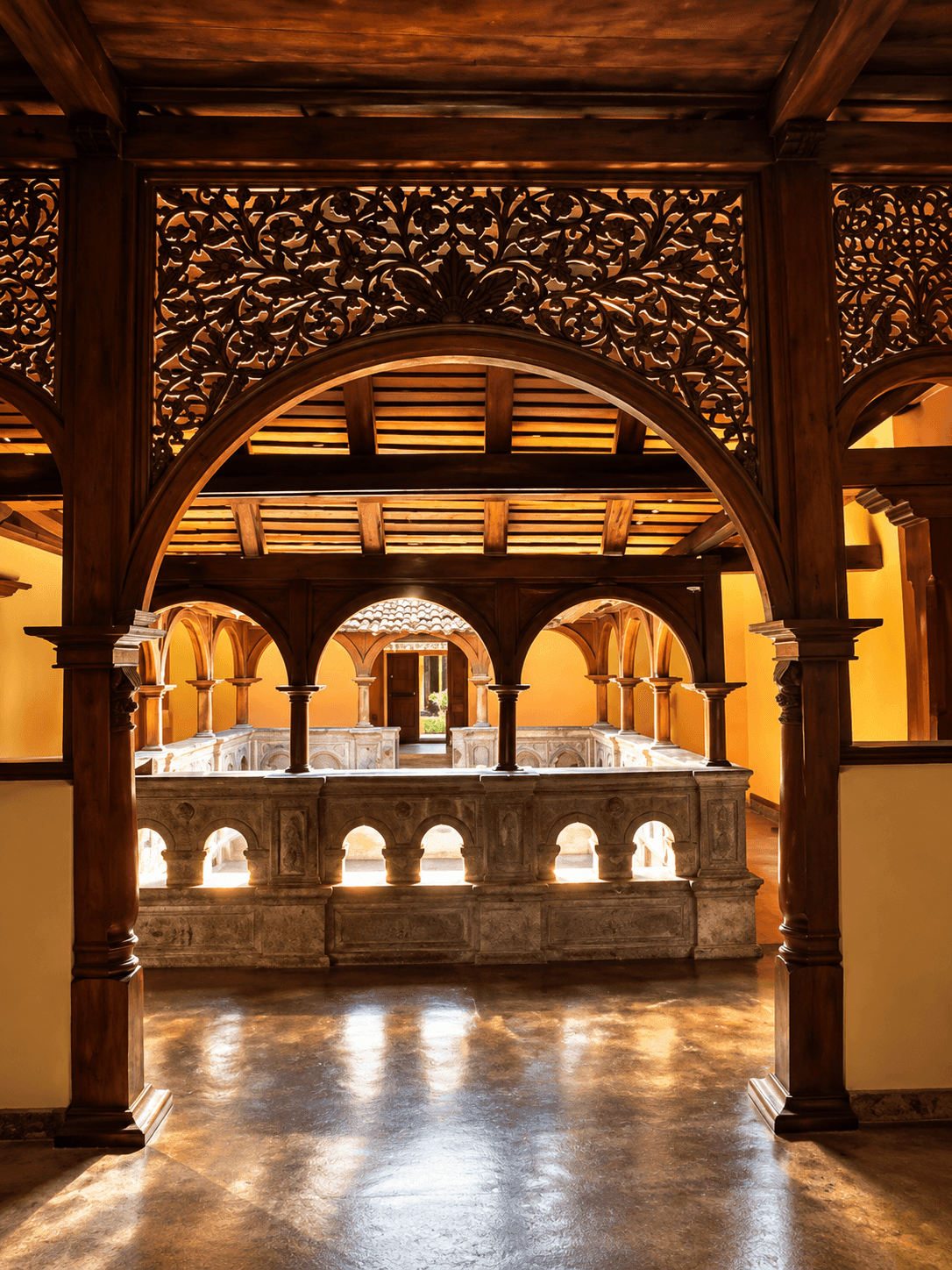
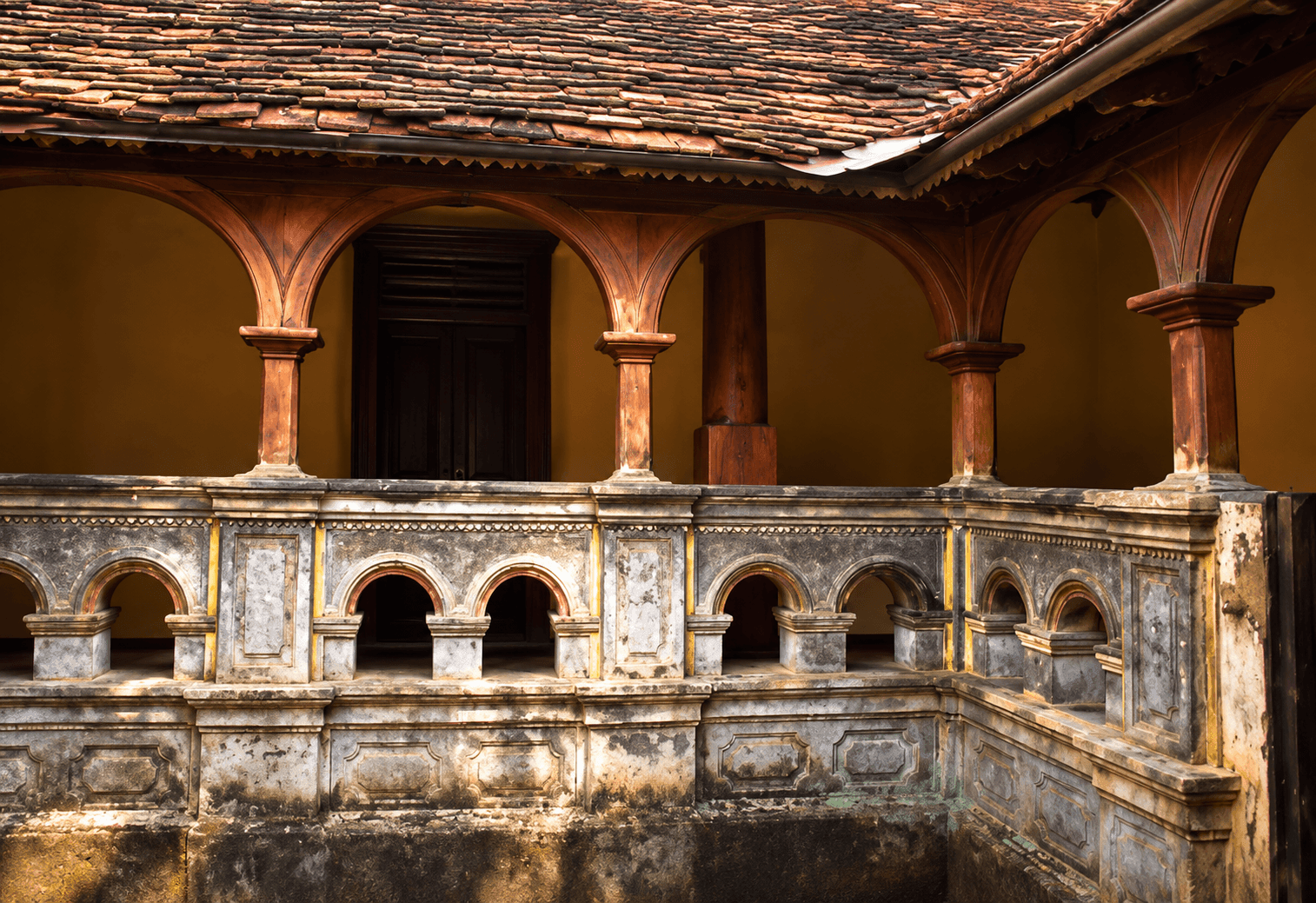
The defining structural brilliance of Maduwanwela is its network of open-air inner courtyards. Originally featuring 21 distinct *Medamidulas*, each courtyard was paved with terracotta tiles or river stone and surrounded by carved timber colonnades. These courtyards functioned as natural thermodynamic cooling towers: as hot air rose through the open roofs, cool breezes were drawn through shaded perimeter verandas, maintaining an interior temperature several degrees lower than the tropical exterior. Rainwater falling into the courtyards was swiftly channeled away through subterranean terracotta drainage conduits that still function perfectly today.
2. The Three Concentric Security Enclosures
The layout of the estate reflected the Disawa's security consciousness. The compound was protected by three concentric security perimeters. The outermost perimeter consisted of a massive stone and wooden fence with watchtowers; the second was an arched gatehouse (*Thorana*) guarded by personal guards; and the innermost was the family residential sanctum, accessible only through narrow, low-lintel wooden doorways designed to force any potential intruder to stoop low, making surprise attacks impossible.
3. Woodworking & Intricate Carvings
The structural pillars, ceiling beams, and doorframes of Maduwanwela are masterworks of traditional woodcarving. Carved from solid heartwood of Jackfruit (Kos), Nedun (Pericopsis mooniana), and Teak, the pillars display intricate motifs of the mythical lion (*Simha*), sacred swans (*Hansa Putuwa*), lotus rosettes, and scrolling floral vines (*Liyavel*). Remarkable wooden locks and secret sliding latch mechanisms, crafted entirely without metal nails, remain intact in several private residential chambers.
Chapter 5: Traditional Building Materials & Structural Science
The enduring physical preservation of Maduwanwela Walawwa across centuries is a testament to the sophisticated materials science practiced by traditional Sinhalese master craftsmen (*Vaddaruwo*):
1. Lime, Egg-White & Bee Honey Mortar
The thick masonry walls were not constructed with modern Portland cement. Instead, builders employed a traditional mortar concoction known as *Vajralepa*. This ancient composite mixed slaked coral lime, fine river sand, filtered egg whites from village ducks, natural bee honey, and boiled plant extracts from the *Beli* fruit (Aegle marmelos). This organic binder cured into an extraordinarily durable, breathable substance that allowed moisture to escape without cracking the masonry, preventing dampness and mold in the humid tropical climate.
2. Murungakal Stone Foundations
The massive perimeter foundations and exterior gateways were carved from dense volcanic basalt and granitic gneiss (*Murungakal*). Quarried from surrounding mountain ravines, these giant blocks were hand-chiseled with interlocking mortise-and-tenon joints, creating earthquake-resistant foundation walls that have remained completely plumb and level for over two hundred years.
3. Timber Seasoning & Termite Immunity
To protect the colossal timber pillars and roof trusses from termites (*Kumbiyo*) and wood-boring beetles, the heartwood logs were submerged in local mud pits for up to six months before carving. This anaerobic immersion dissolved all natural tree sugars and sap that attract insects. The carved timbers were then coated with natural oils extracted from the *Dummala* tree (copal resin) and margosa (neem) oil, creating a permanent, glossy, insect-proof barrier that smells faintly sweet even today.
Chapter 6: The Defiant Floor Mosaics – Stepping on the British Monarch
The most famous and audacious artifact within Maduwanwela Walawwa is found on the floor of the main reception veranda (*Portico*) and inner courthouse. It was here that the Disawa engineered a stunning act of political satire and anti-colonial defiance:
When the British colonial administration attempted to assert political dominance over his ancestral territory, Maduwanwela ordered the construction of a magnificent mosaic floor. He imported thousands of high-quality porcelain and ceramic tiles, including Dutch Delftware and British Victorian tableware. At the very center of the entryway threshold—the exact spot where every visiting British dignitary, magistrate, and governor had to step when entering the manor—Maduwanwela embedded glazed ceramic tiles bearing the formal royal portrait of Queen Victoria, the British Royal Coat of Arms, and British sterling silver coins!
By forcing British officials to walk directly on the portrait of their own reigning monarch in order to meet him, Maduwanwela asserted his psychological sovereignty. When British officials protested, the Disawa politely retorted that he honored the Queen so deeply that he wanted her portrait embedded into the very fabric of his beloved home! Today, visitors can still gaze upon these intact Victorian portraits gleaming from the cool mosaic floor—a testament to one man's unyielding wit and defiance.
Surrounding the royal portraits are intricate geometric patterns crafted from broken shards of antique Dutch cobalt-blue ceramic plates and Chinese porcelain saucers. This artistic technique—creating high art out of discarded foreign tableware—symbolized the Disawa's philosophical worldview: that colonial powers and foreign empires were merely fragmented shards on the enduring soil of his ancestral homeland.
Chapter 7: The Feudal Courthouse & The Disawa’s Justice
During the colonial era, the Maduwanwela Disawa was invested with regional magisterial authority over the Kolonne Korale. Within the Walawwa, he maintained his own formal courthouse (*Nadu Saalawa*), where he settled land disputes, resolved agricultural grievances, and punished local criminals:
| Chamber / Feature | Historical Function | Architectural Highlight |
|---|---|---|
| The Magisterial Courtroom | Dispensing civil and criminal justice across the Kolonne region | Elevated ebony throne chair, antique brass scale of justice |
| The Holding Dungeon (*Hire Geya*) | Detaining offenders awaiting trial or serving short prison sentences | Massive iron-reinforced timber door with antique sliding padlock |
| The Weaponry Armory | Storage of gunpowder muskets, antique swords, and ivory daggers | Carved Teak gun racks, ceremonial Kastane swords |
| The Banquet Hall | Hosting lavish feasts for regional aristocrats and visiting governors | Long banquet table seating 40 guests, Belgian crystal chandeliers |
| The Disawa's Bedchamber | Private sleeping quarters of James William Maduwanwela | Dutch four-poster ebony bed with hand-carved floral headboard |
The Disawa's judicial decisions were swift and legendarily fair. Village elders recount that he detested dishonesty above all else. When thieves were caught stealing cattle or grain, they were often sentenced to labor on the communal reservoir bunds or plant coconut groves for the benefit of the village temple, transforming punitive justice into productive civic restoration.
Chapter 8: British Governor Visits & Royal Hospitality
Despite his anti-colonial stance, Maduwanwela was a master statesman who understood the power of grandeur. When British governors—such as Sir Arthur Hamilton-Gordon and Sir Joseph West Ridgeway—toured the Southern and Sabaragamuwa provinces, an official visit to Maduwanwela Walawwa was the centerpiece of the itinerary.
For these state visits, the Disawa orchestrated lavish spectacles. Hundred-man torchlit processions (*Danduveta*) guided the governor's horse carriages through the forest passes. The banquet hall was illuminated by imported Belgian crystal chandeliers powered by brass kerosene lamps. European governors were served elaborate multi-course dinners featuring roast wild boar, venison curries, and European wines served in imported silver chalices. Yet, before the meal, every governor was required to wash their hands in fragrant jasmine water poured from an antique silver kettle by the Disawa's personal attendants, reinforcing the aristocratic dignity of Sinhalese courtly etiquette.
Chapter 9: The Pana Muruwa Elephant Kraal Connection
Beyond his architectural prowess, Maduwanwela Maha Disawa was celebrated as the ultimate master of the traditional elephant kraal (*Ali Gala*). In the dense jungles of Pana Muruwa, situated just a few miles from the Walawwa, the Disawa organized and directed colossal elephant captures that drew international attention.
A kraal was a mammoth logistical undertaking requiring hundreds of local beaters to drive wild elephant herds across dozens of miles of jungle into a massive triangular stockade constructed from giant timber tree trunks lashed with jungle vines. Once trapped inside the stockade, experienced *Mahouts* riding trained domestic tusker elephants (*Ettun*) would enter the kraal to lasso the wild elephants around their hind legs with heavy coir ropes. Maduwanwela personally captured hundreds of wild elephants, gifting magnificent tuskers to sacred Buddhist temples (including the Temple of the Tooth in Kandy) and maintaining a private herd of domestic elephants that were stabled on the grounds of the Walawwa.
Chapter 10: Rare Artifacts & The Manor Museum Collection
Today, several rooms of the Walawwa have been curated as an archaeological museum, safeguarding precious historical relics that belonged to the Maduwanwela dynasty:
- Ceremonial Kastane Swords: Exquisitely crafted curved swords featuring dragon-head (*Makara*) pommels inlaid with pure silver, gold wire, and rubies, presented to the Disawa by regional rulers.
- Ivory Walking Sticks & Palanquins: The Disawa's private travel collection, including an intricately carved ivory-inlaid wooden palanquin (*Doliya*) in which noble ladies of the household were carried by bearers.
- Antique Dutch Clocks & Brassware: Grandfather clocks imported from Amsterdam in the 1780s, massive brass spittoons (*Padikkam*), and colossal copper cooking cauldrons capable of cooking rice for five hundred people during estate feasts.
- Colonial Hunting Rifles: Heavy double-barreled black-powder hunting rifles manufactured in London and Birmingham, used during nineteenth-century wild game expeditions.
Chapter 11: The Decline, Legacy & Archaeological Conservation
With the death of James William Maduwanwela in 1930 at the age of eighty-six, an entire feudal epoch drew to a close. Because the Disawa had no surviving male heirs, his vast estate passed through complex family successions. Over the subsequent decades, changing political structures, land reform acts of the 1970s, and the gradual disintegration of the feudal economy led to the physical neglect of the outer estate compounds.
Recognizing the irreplaceable cultural value of the manor, the Sri Lanka Department of Archaeology stepped in to declare Maduwanwela Walawwa a protected National Archaeological Monument. Extensive structural conservation work was undertaken to stabilize the roof timbers, restore the terracotta courtyards, and preserve the iconic floor mosaics. While the outer wings of the original 121 rooms gradually yielded to time, the core central palace encompassing 43 magnificent rooms and multiple courtyards stands proudly preserved today, welcoming travelers from around the world to marvel at this pinnacle of indigenous architectural heritage.
Chapter 12: Folklore, Ghost Legends & Mystical Talismans of Kolonne
As with all ancient feudal estates steeped in centuries of drama and intense personal emotion, Maduwanwela Walawwa is wrapped in an aura of captivating folklore and supernatural legend. Local villagers in Kolonne speak in hushed, reverent tones of the mystical protection rites that the Disawa performed to safeguard his family and his immense wealth from rival chieftains and foreign invaders.
According to persistent local belief, before the foundations of the central residential wing were laid, Buddhist monks and traditional master astrologers consecrated a set of sacred *Yantra* copper talismans inscribed with ancient protective incantations. These talismans, along with nine auspicious precious gemstones (*Navaratna*), were reportedly buried deep beneath the central granite flagstone of the primary *Medamidula* courtyard. Elders believe that this spiritual grounding gave the manor its enduring aura of impregnable serenity, protecting the house from lightning strikes, structural collapse, and destructive pestilence for over two centuries.
Ghost legends also cling poetically to the quiet, moonlit verandas. Villagers occasionally whisper of hearing the faint, rhythmic footsteps of the Disawa pacing the long western corridor late at night, his ivory walking stick tapping softly against the cool mosaic tiles as he inspects his beloved courtyards beneath the stars. Far from being feared as a malevolent spirit, the lingering memory of the Disawa is revered throughout the valley as an eternal guardian watching over the heritage, honor, and prosperity of Kolonne.
Chapter 13: Practical Travel Logistics & Visitor Information
Plan your cultural day trip to Maduwanwela Walawwa with this comprehensive field guidance:
| Logistical Element | Field Detail | Travel Tip |
|---|---|---|
| Driving Distance & Route | 38 km from Udawalawe; 50 minutes via Embilipitiya and Kolonne | Paved provincial road suitable for all vehicles; scenic paddy views |
| Operating Hours | Open daily from 8:30 AM to 5:00 PM (including public holidays) | Arrive between 9:00 AM and 11:00 AM for quiet, uncrowded exploration |
| Admission Fees | LKR 50 (Local adults) / LKR 500 – 1,000 (Foreign travelers) | Cash payments only at the Department of Archaeology ticket office |
| Tour Duration | 1.5 to 2 hours for a complete guided exploration of the grounds | Engage an on-site archaeological guide for fascinating folklore stories |
| Visitor Amenities | Restrooms, shaded parking area, small local tea and snack stalls | Wear slip-on shoes as shoes must be removed when entering specific shrines |
Chapter 13: Frequently Asked Questions (FAQ)
Q1: What are the opening hours for Maduwanwela Walawwa?
The manor museum is open daily to the public from 8:30 AM to 5:00 PM. Guided tours are conducted by knowledgeable Archaeology Department caretakers who walk visitors through the historical rooms.
Q2: How far is Maduwanwela Walawwa from Udawalawe?
Maduwanwela Walawwa is located in Kolonne, approximately 38 kilometers northwest of Udawalawe National Park, taking roughly 50 minutes by private vehicle via Embilipitiya through scenic agrarian landscapes.
Q3: Who was Maduwanwela Maha Disawa?
James William Maduwanwela (1844–1930) was a legendary, wealthy feudal chieftain (*Maha Disawa*) renowned for his fierce anti-colonial independence, aristocratic pride, and control over vast elephant kraals across Sabaragamuwa.
Q4: Why did Maduwanwela embed Queen Victoria's face on the floor?
In a daring display of defiance against British colonial rule, the Disawa embedded glazed ceramic tiles bearing the portrait of Queen Victoria directly into the floor threshold, ensuring every visitor trod upon the British monarch's image before entering his home.
Q5: How many rooms are left in Maduwanwela Walawwa today?
While the original estate compound boasted 121 rooms and 21 courtyards, today approximately 43 well-preserved rooms and several courtyards remain under the care of the Sri Lanka Department of Archaeology, following twentieth-century structural rationalization.
Q6: Is there an entrance fee to visit Maduwanwela Walawwa?
Yes, a modest archaeological conservation admission fee (around LKR 50 for local visitors and LKR 500-1000 for foreign travelers) is collected at the ticket counter to maintain the historical monument and grounds.
Q7: What is an elephant kraal and what was Maduwanwela's connection?
An elephant kraal (*Gala*) was a massive colonial-era stockade operation where wild elephant herds were captured and tamed. Maduwanwela operated the famous Pana Muruwa Kraal, capturing hundreds of wild elephants on his ancestral lands.
Q8: Can photography be taken inside the manor house?
Yes, photography of the courtyards, architecture, and historical exterior is permitted. However, flash photography inside specific sensitive archive and artifact rooms may have restrictions to protect antique textiles and finishes.
Q9: What makes the architecture of Maduwanwela Walawwa unique?
The manor combines traditional Kandyan timber architecture with Dutch arches, Romanesque columns, and Victorian mosaic tiles, featuring intricate open courtyards that naturally cool the interior rooms.
Q10: Is Maduwanwela Walawwa suitable for children and families?
Yes, it is an extraordinary educational and cultural excursion for families, offering children a vivid glimpse into Sri Lanka's aristocratic feudal past, antique weaponry, and ancient stone architecture.




.png)