Chapter 1: The Visual Thrill of Photographing Udawalawe's Wildlife
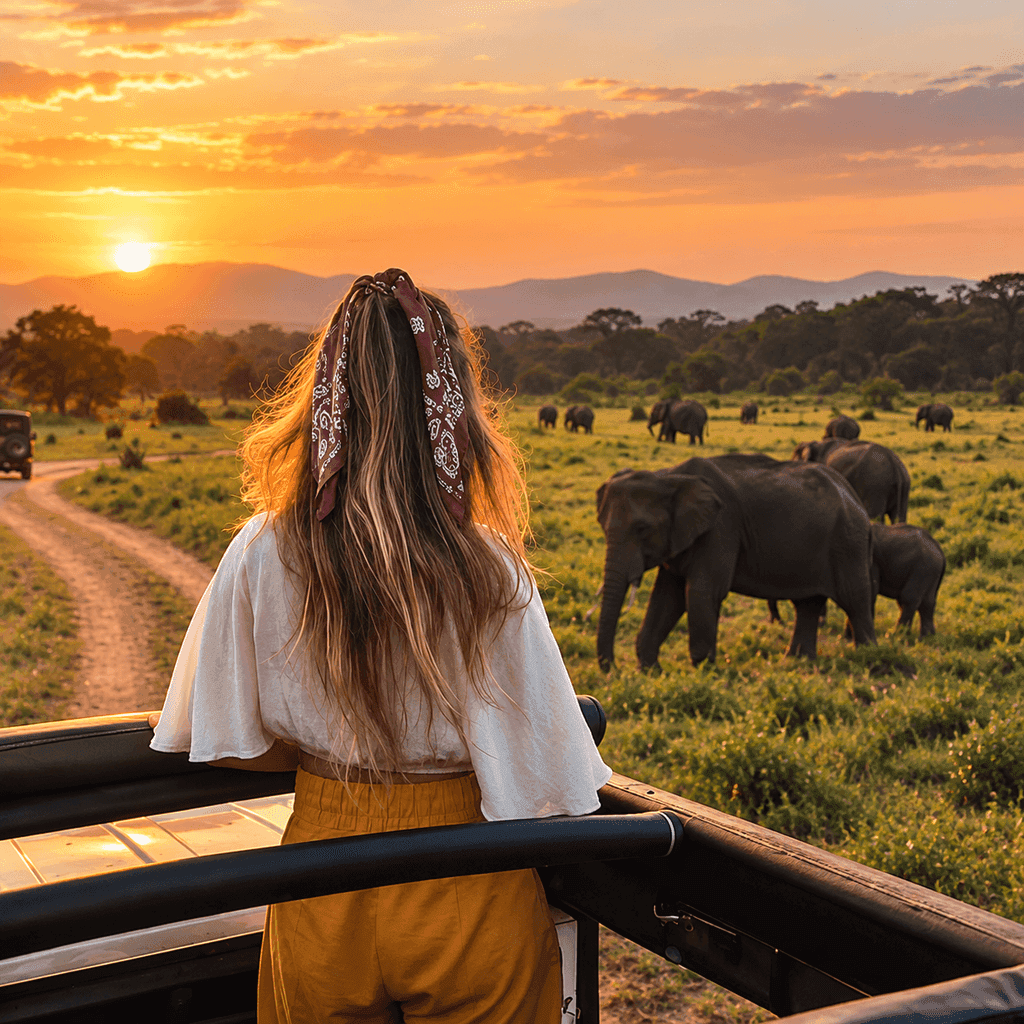
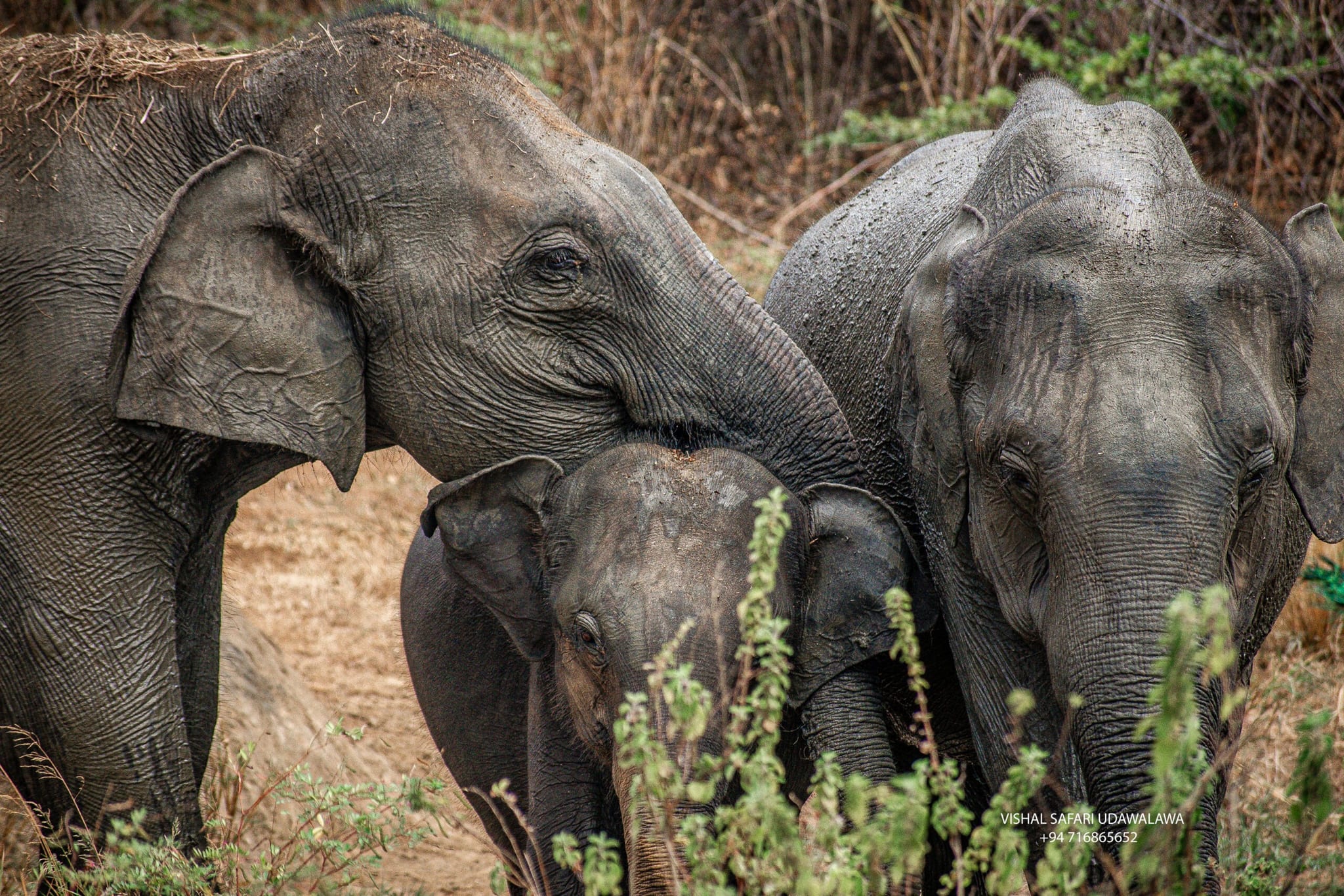
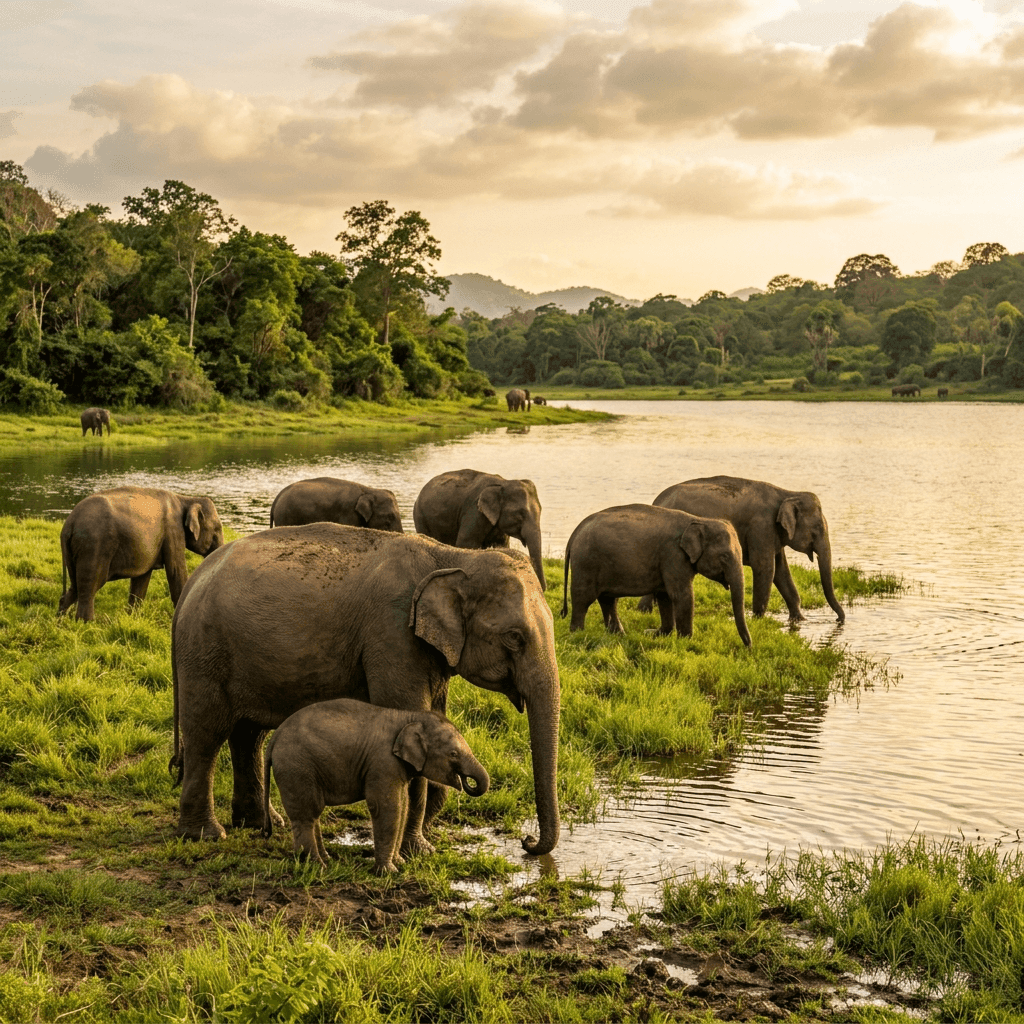
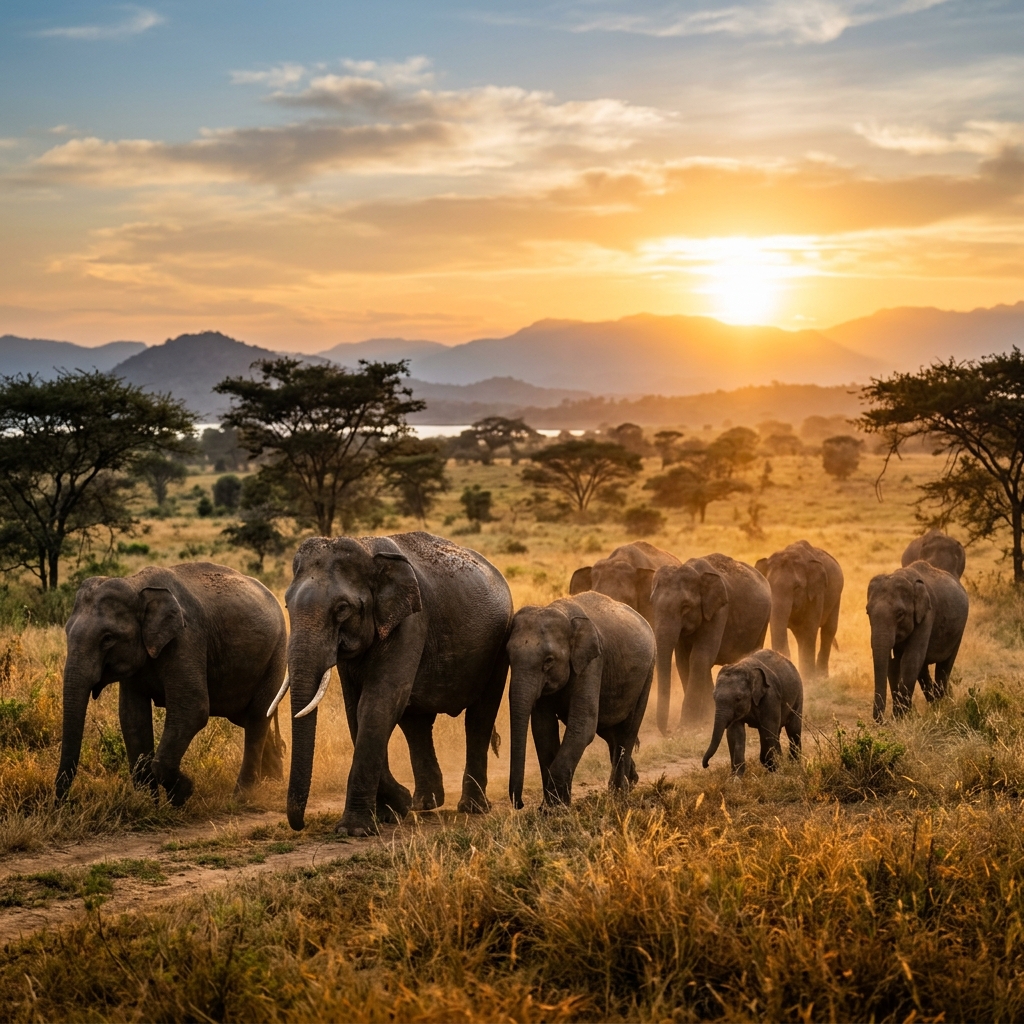
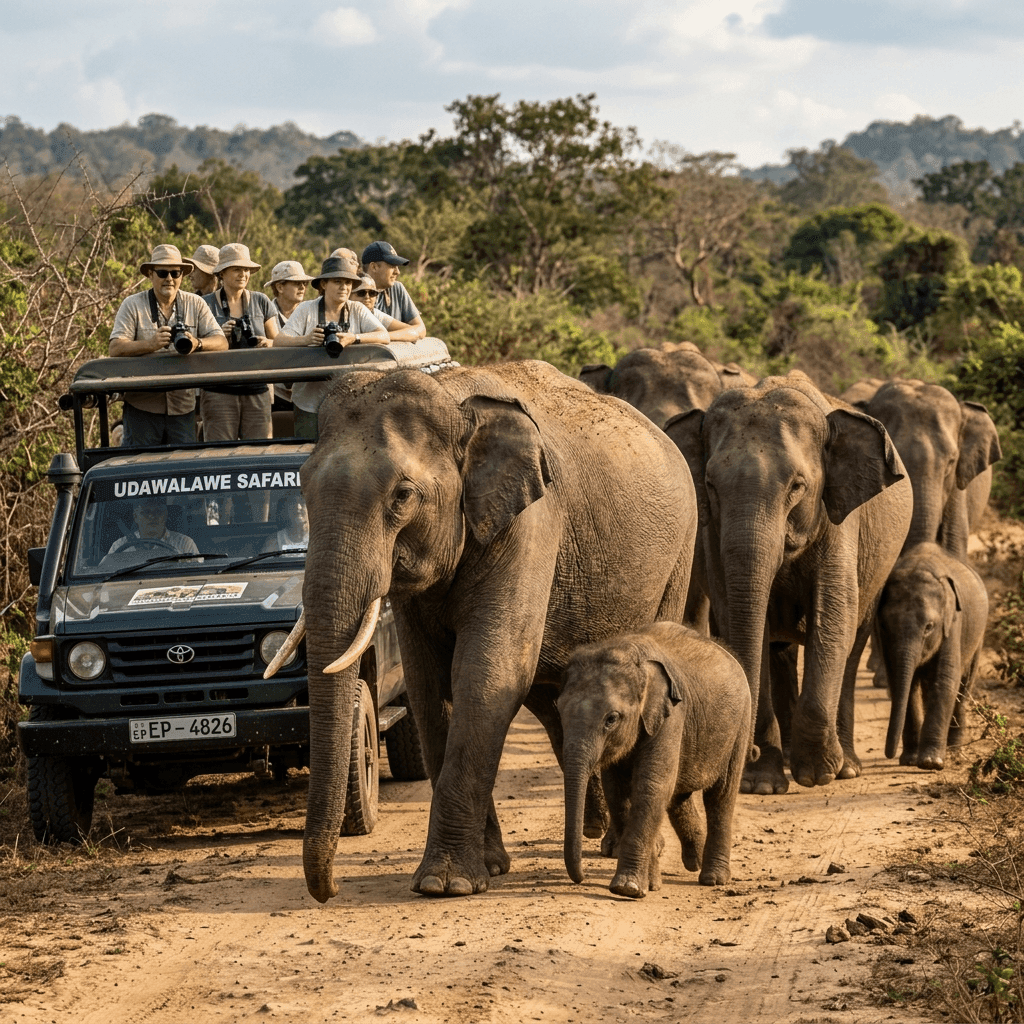
There are few experiences in global nature travel as electrifying as standing on the elevated bench seat of an open-sided four-wheel-drive safari jeep in Udawalawe National Park, pressing a high-performance telephoto lens to your eye as an ancient matriarch Asian elephant leads her family herd across a dew-drenched golden savanna. Unlike the enclosed safari vans typical of East Africa or the dense, impenetrable foliage of central Indian tiger reserves, Udawalawe is a photographer’s paradise of open vistas, expansive skylines, and dramatic mountain backdrops. The open scrub and Guinea grass savannas provide uninterrupted sightlines that allow creative photographers to capture full environmental portraits, dramatic action sequences, and intimate behavioral moments.
However, photographing wildlife from an open jeep in a tropical dry zone reserve presents intense optical and technical challenges. You are operating from an elevated, vibrating metal platform subjected to engine rumble and the shifting weight of fellow passengers. The lighting conditions fluctuate wildly from the dim, ethereal pre-dawn twilight at 6:00 AM to harsh, unforgiving overhead equatorial sun at noon, and back to intense, high-contrast golden backlighting at sunset. Furthermore, pervasive, microscopic red clay dust generated by unpaved gravel tracks constantly threatens delicate camera sensors and lens zoom mechanisms. Mastering wildlife photography in Udawalawe requires a disciplined synthesis of optical gear selection, specialized camera configurations, artistic compositional intent, and profound biological intuition.
This masterclass guide provides aspiring wildlife photographers, seasoned hobbyists, and professional nature documentarians with an exhaustive, battle-tested field handbook. Drawing upon decades of combined experience from professional naturalists and master safari guides, we explore every facet of capturing world-class imagery across Udawalawe’s unique ecological terrain.
Chapter 2: Essential Photographic Equipment & Optical Strategy
Selecting the appropriate photographic equipment before entering the reserve is the single most critical factor determining your optical success. In wildlife photography, missed opportunities cannot be replayed; having the right tool mounted and ready is paramount.
1. Camera Body Considerations: Full-Frame vs. APS-C Sensor Bodies
Modern mirrorless camera systems from manufacturers such as Sony, Canon, Nikon, and Fujifilm have revolutionized wildlife capture through deep-learning artificial intelligence autofocus systems capable of real-time animal eye and bird eye tracking. When choosing between full-frame and crop-sensor (APS-C) bodies, each offers distinct strategic advantages:
- Full-Frame Bodies (e.g., Sony A1 / A7R V, Canon R5 / R6 II, Nikon Z8 / Z9): Offer superior dynamic range, exceptional high-ISO noise control in dim dawn and twilight conditions, and immense resolution that allows substantial cropping in post-production.
- APS-C Crop Bodies (e.g., Canon R7, Sony A6700, Fujifilm X-T5): Provide an inherent 1.5x or 1.6x focal length crop factor. A 400mm lens mounted on an APS-C body delivers an effective field of view equivalent to a 600mm or 640mm super-telephoto, granting incredible optical reach for distant raptors and shy waterfowl without the exorbitant cost or immense physical weight of massive prime lenses.
2. Telephoto Zoom Lenses vs. Super-Telephoto Primes
In a dynamic savanna reserve like Udawalawe, flexibility is vastly superior to fixed focal lengths. While a 600mm f/4 prime lens delivers unmatched sharpness, it can prove fatally unwieldy when a family herd of elephants unexpectedly approaches within fifteen feet of your jeep. A premium super-telephoto zoom lens—specifically a 100-400mm f/4.5-5.6 or 150-600mm / 200-600mm f/5.6-6.3—represents the gold standard for safari work. The ability to instantly zoom out from 400mm to 100mm allows you to transition smoothly from a tight, detailed portrait of an elephant’s eye wrinkles to an expansive environmental landscape showing the entire herd framed against the distant mountain escarpment.
3. The Critical Two-Body Strategy
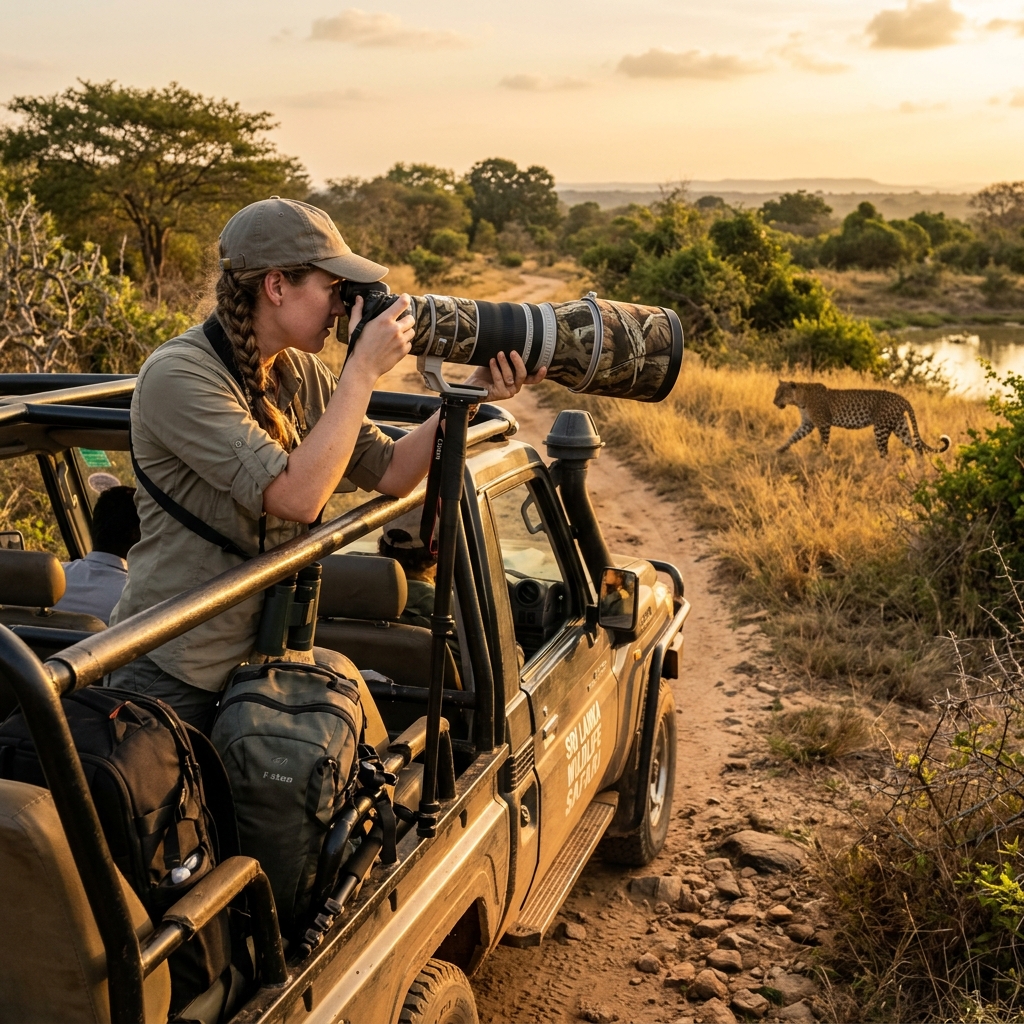
Never change lenses inside an active safari jeep in Udawalawe. As vehicles traverse dry dirt tracks, fine pulverized red clay dust hangs suspended in the air. Removing a lens exposes your digital camera’s bare sensor to microscopic abrasive dust particles that will permanently speckle every subsequent image and require expensive professional cleaning. The professional standard is to operate with two camera bodies simultaneously: Body A mounted with your primary super-telephoto zoom (e.g., 200-600mm) for distant wildlife and birds, and Body B mounted with a versatile standard zoom (e.g., 24-70mm f/2.8 or 70-200mm f/2.8) resting safely on your lap for close-range elephant encounters and panoramic sunset vistas.
Chapter 3: Camera Configurations for Wildlife Action
Configuring your camera settings prior to passing through the park gates ensures you never fumble with menus when animal action erupts unexpectedly.
1. Shutter Speed Rules for Handheld Jeep Shooting
Motion blur is the premier destroyer of safari imagery. The human eye cannot detect the micro-vibrations transmitted through an idling diesel engine or the hand tremors caused by holding a heavy three-kilogram lens assembly, but a 45-megapixel sensor will render them as devastating softness. Adhere strictly to these shutter speed baselines:
- Static Elephants & Large Mammals: Minimum 1/500th of a second. Even when standing still, an elephant continuously twitches its ears, swings its trunk, and shifts its weight.
- Walking / Bathing Wildlife: Minimum 1/1000th to 1/1250th of a second to freeze moving legs, swinging tails, and splashing water droplets.
- Perched Birds of Prey: Minimum 1/1000th of a second to ensure needle-sharp feather detail.
- Birds in Flight (BIF) & Running Animals: Minimum 1/2000th to 1/3200th of a second to cleanly freeze rapid wingbeats of kingfishers, egrets, and sea eagles.
2. Mastering Auto ISO with Minimum Shutter Speed Thresholds
Operate your camera in Manual Mode (M) paired with Auto ISO. Set your desired aperture (typically wide open at f/4, f/5.6, or f/6.3 for maximum light gathering and pleasing background blur) and your mandatory minimum shutter speed. Allow the camera’s computer to automatically modulate the ISO to achieve perfect exposure. Modern digital sensors handle ISO 1600, 3200, and 6400 with remarkable fidelity. Never compromise on shutter speed to keep your ISO low; a slightly noisy photograph can be effortlessly cleaned using modern AI noise reduction tools, but a blurry image is ruined forever.
3. Autofocus Modes & Animal Eye Tracking
Set your autofocus to Continuous AF (AF-C on Sony/Nikon, AI Servo on Canon). Utilize Back-Button Focusing (BBF) to decouple focus activation from the shutter release button, granting you instantaneous control between tracking moving subjects and locking focus. Enable Animal Eye Detection / Bird Eye Detection, which automatically identifies and locks razor-sharp focus onto the subject's iris even when the animal is partially obscured by tall Guinea grass.
Chapter 4: Stabilization, Beanbags & Jeep Etiquette
Traditional photography tripods are completely useless and actively hazardous inside a safari jeep; their splayed legs trip passengers and their rigid heads transmit engine vibrations directly to your camera. Implement these specialized field stabilization methods:
1. The Heavy Safari Beanbag
The single most effective stabilization tool for safari photography is a durable canvas or Cordura beanbag. Filled with three to four kilograms of dried lentils, beans, or buckwheat husks, the beanbag molds securely over the tubular steel railings of the open jeep. Resting your long telephoto lens directly upon the beanbag absorbs virtually all mechanical vibration, provides a rock-solid platform for smooth panning, and eliminates the arm and shoulder fatigue of holding heavy lenses for four consecutive hours.
2. Engine Vibration Protocol & Driver Communication
Establish a polite, collaborative rapport with your safari driver at the start of your tour. Experienced wildlife drivers understand photography and will instinctively position the vehicle with the sun at your back and cut the diesel engine the instant the jeep stops beside an animal. If your driver forgets, a gentle, courteous request—*"Engine off please, thank you"*—ensures that subtle motor vibrations do not blur your shots during critical low-light moments.
Chapter 5: Compositional Artistry: Elevating Snapshots to Fine Art
Technical sharpness is merely the baseline of wildlife photography; artistic composition is what elevates a basic animal record into an award-winning, emotionally resonant photograph.
1. The Power of Eye-Level Perspectives
The most common error in safari photography is shooting downward from high bench seats, which renders animals looking small, compressed, and visually detached from their environment. Whenever safe and practical, crouch down low on the floor of the jeep or rest your beanbag on the lowest available railing to achieve an eye-level perspective with your subject. Eye-level imagery establishes profound psychological intimacy, drawing the viewer directly into the wild animal's emotional world.
2. Environmental Storytelling vs. Tight Headshots
While extreme close-ups filling the frame with an elephant's trunk or tusks are visually arresting, environmental portraits often tell a far richer narrative. Zoom out to 70mm or 100mm to incorporate the broader ecological theater: frame the elephant family marching across golden grasslands with the jagged purple silhouette of the mountain ranges towering behind them, or compose a solitary perched sea eagle against the vast, shimmering expanse of the reservoir.
3. The Rule of Space & Direction of Movement
Always compose your frame with "active space" ahead of the animal. If an elephant herd is walking from right to left, place the animals on the right third of the frame, leaving open grassland on the left side of the frame for the animals to "walk into." Composing an animal facing directly into the edge of the frame creates an uncomfortable, cramped tension that subconscious viewers find visually jarring.
Chapter 6: Comprehensive Camera Settings Quick Reference Table
| Shooting Scenario | Camera Mode | Shutter Speed | Aperture | ISO Strategy | AF Focus Mode |
|---|---|---|---|---|---|
| Sunrise Savanna Elephants | Manual (M) | 1/800s - 1/1000s | f/4 - f/5.6 | Auto ISO (800 - 3200) | Continuous AF + Animal Eye |
| Perched Raptors / Eagles | Manual (M) | 1/1250s - 1/1600s | f/5.6 - f/8 | Auto ISO (200 - 800) | Single Point / Bird Eye AF |
| Birds in Flight (BIF) | Manual (M) | 1/2500s - 1/3200s | f/5.6 - f/6.3 | Auto ISO (400 - 1600) | Wide Zone Tracking AF |
| Mud Wallowing & Water Splashes | Manual (M) | 1/1600s - 1/2000s | f/5.6 | Auto ISO (400 - 1000) | High-Speed Burst (10-20 fps) |
| Sunset Silhouettes | Manual (M) | 1/500s - 1/800s | f/8 - f/11 | ISO 100 - 400 (Manual) | Single Point AF on Horizon |
Chapter 7: Post-Processing & RAW Workflow for Safari Imagery
Capturing images in uncompressed RAW format is non-negotiable for serious wildlife photography. The dynamic range of tropical sunlight in Udawalawe exceeds the processing capabilities of standard 8-bit JPEG files. Once back at your lodge, implement this professional digital editing workflow:
1. Highlight Recovery & Shadow Management: In programs such as Adobe Lightroom or Capture One, pull back highlights by -20 to -40 to recover delicate cloud textures and bright sky patches. Concurrently, lift shadows by +15 to +30 to reveal the intricate wrinkles, coarse hairs, and amber eye tones hidden in the dark recesses of an elephant's skin.
2. Color Grading the Golden Hour: Avoid artificially over-saturating images with global saturation sliders. Instead, utilize localized HSL (Hue, Saturation, Luminance) controls to enhance warm yellow and orange tones in the dry grass while desaturating harsh distracting greens. Warm up the overall white balance slightly (to 6200K - 6800K) to faithfully replicate the nostalgic warmth of an equatorial sunset.
3. Advanced AI Denoising: For photographs captured at dawn or dusk at ISO 3200 or 6400, apply targeted AI noise reduction (such as Lightroom Denoise AI or Topaz DeNoise). These algorithms cleanly strip high-ISO chromatic and luminance grain from flat sky and out-of-focus background areas while perfectly preserving the razor-sharp tactile details of whiskers, eyelashes, and skin wrinkles.
Chapter 8: Anticipating Animal Behavior: The Secret to Decisive Moments
In wildlife photography, the difference between an ordinary animal portrait and an iconic, viral, award-winning photograph lies not in the price of your camera body, but in your ability to anticipate animal behavior before it occurs. If you wait until an elephant calf begins to trumpet and charge playfully at an egret to raise your camera to your eye, you have already missed the peak of the action. Professional safari photographers operate with heightened biological anticipation, closely reading the subtle micro-signals that wild animals telegraph moments prior to significant action.
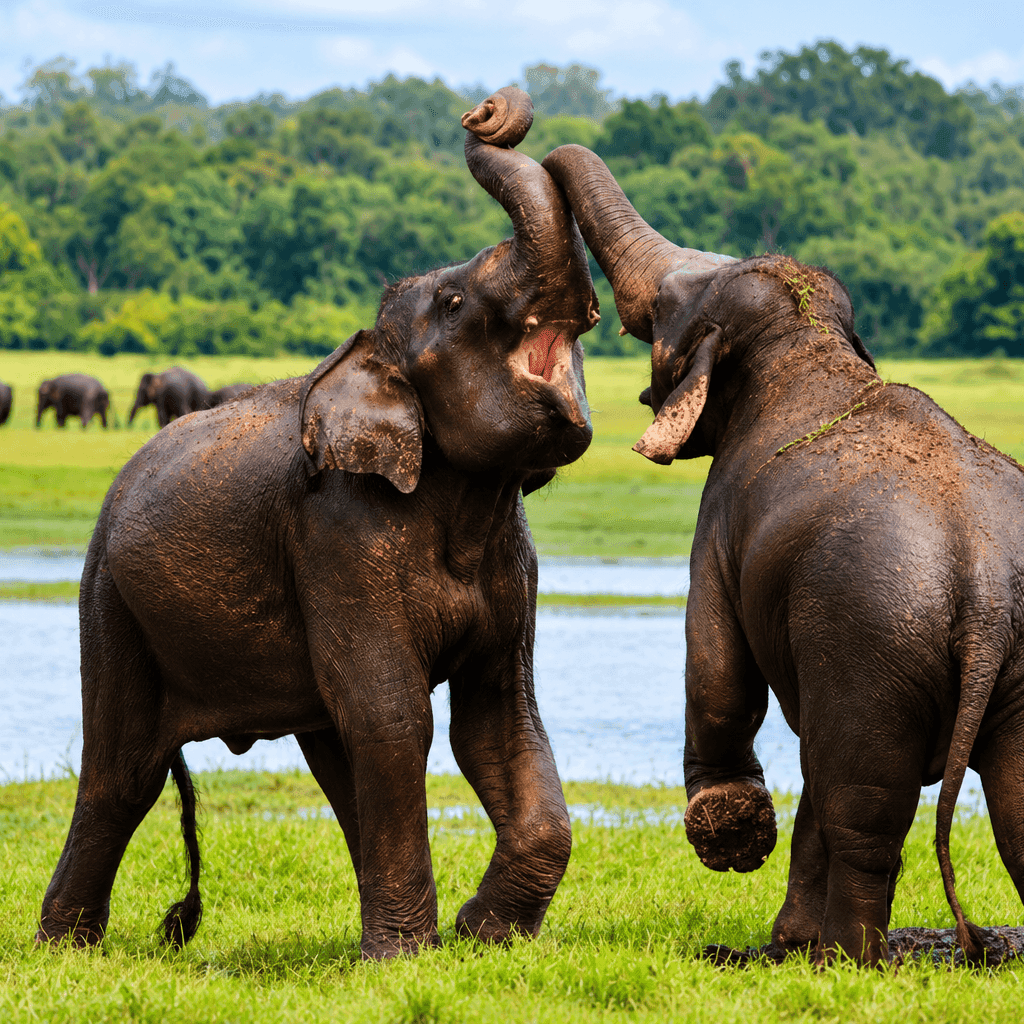
Consider the feeding ritual of the Asian elephant. When an elephant curls its prehensile trunk around a clump of Guinea grass, watch for the rhythmic upward swing. The moment the roots tear free, the elephant will execute two or three rapid, rhythmic slaps against its knee or the soil to dislodge the earth. By tracking the preparatory tug with continuous autofocus pre-focused on the eye, you can unleash a high-speed burst of ten to twenty frames per second precisely as the dust cloud erupts around the animal's front foot, freezing every suspended airborne particle in crystalline detail.
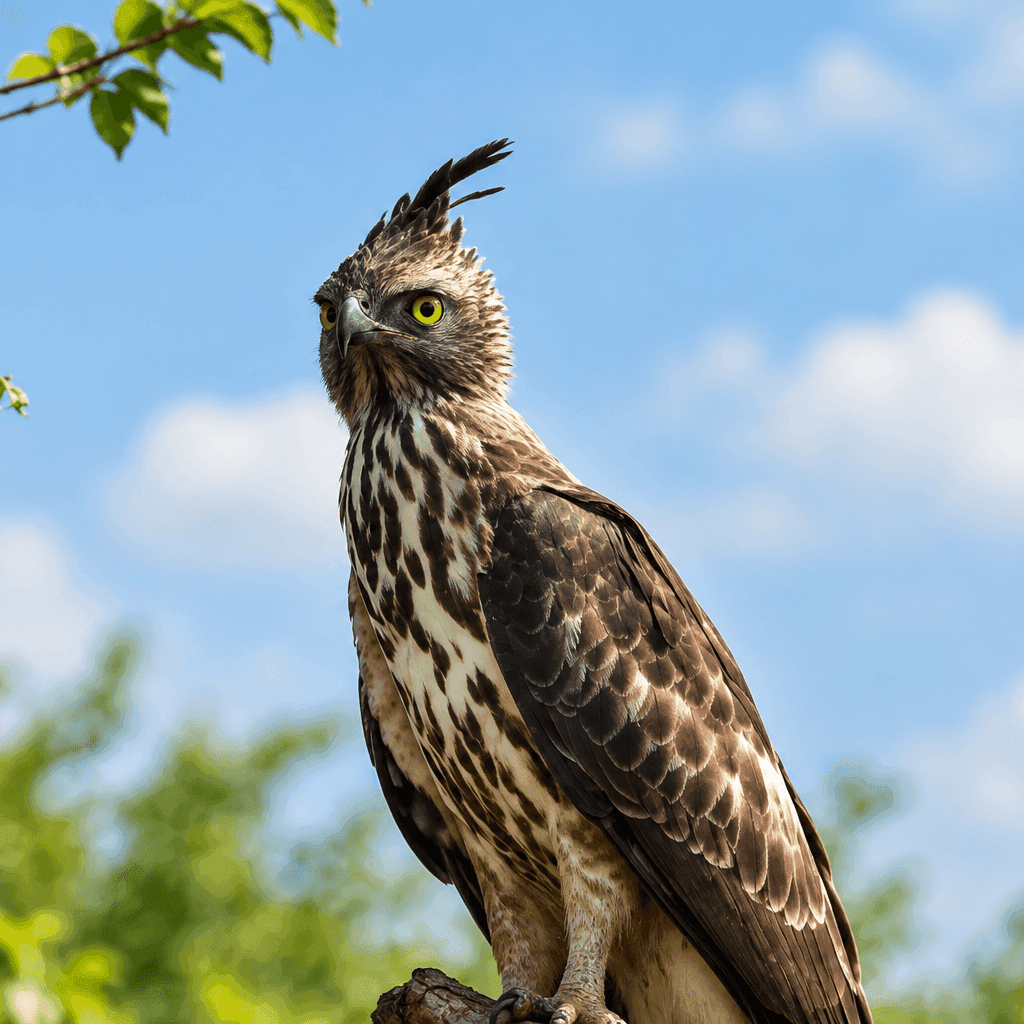
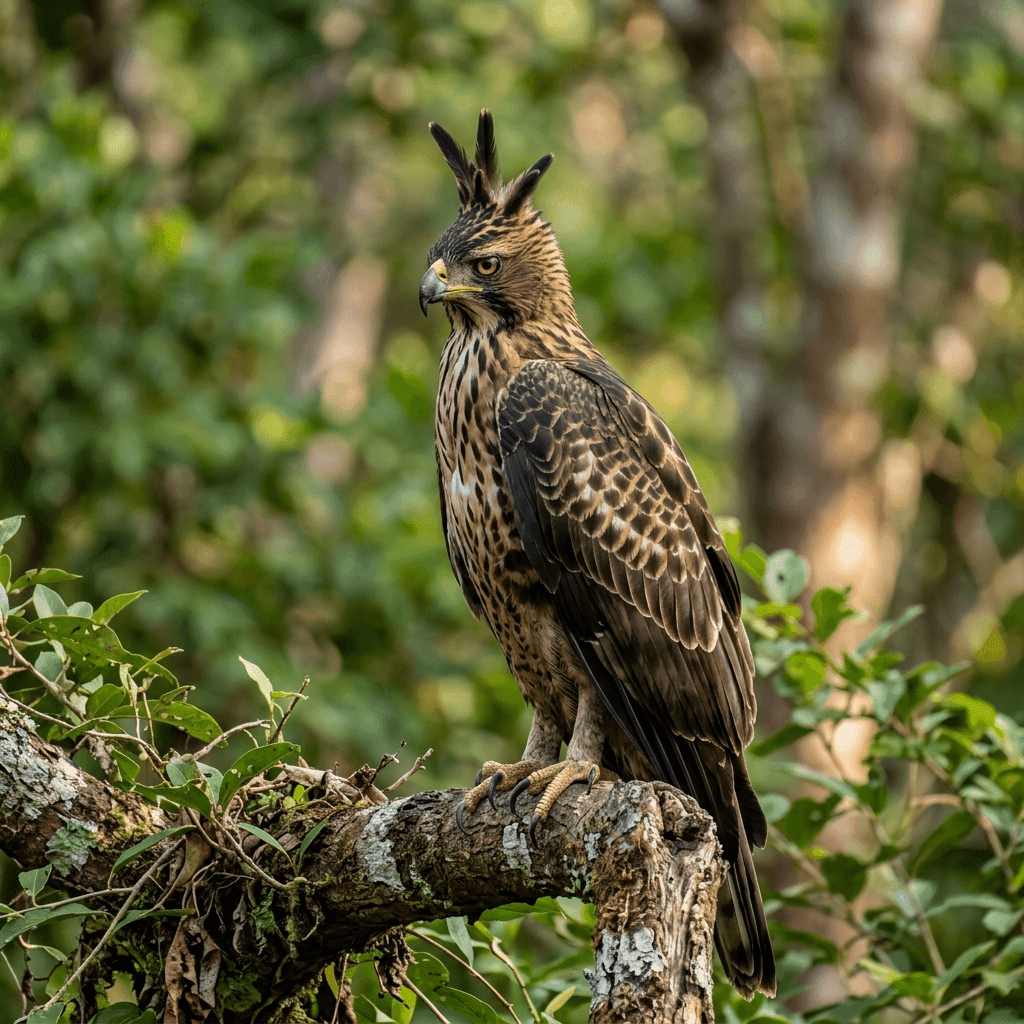
Similarly, observing birds of prey requires careful behavioral monitoring. A Crested Serpent Eagle or White-bellied Sea Eagle perched on a dead tree snag rarely takes off without giving clear physiological cues. Moments prior to flight, the raptor will typically defecate (a biological lightening of bodily payload), lean its torso forward, orient its beak directly into the prevailing wind, and compress its feather plumage. The instant you detect this postural shift, press your shutter release halfway to engage continuous subject tracking; as the massive wings unfurl into the first downward power stroke, your camera buffer will capture the dramatic leap from the branch with needle-sharp focus across the eye and outstretched primary flight feathers.
Chapter 9: Ethical Wildlife Photography & Animal Welfare Guidelines
Exceptional wildlife photography is fundamentally ethical photography. No photograph is worth causing psychological stress, physiological distress, or physical disruption to a wild animal. In Udawalawe National Park, ethical wildlife photography requires unwavering adherence to conservation principles:
1. Respecting Critical Flight Distances: Every wild animal maintains an invisible psychological boundary known as its "flight distance." When a vehicle breaches this perimeter, the animal transitions from calm, natural behaviors into defensive stress states. Signs of stress in elephants include nervous ear-cocking, sudden cessation of feeding, tense trunk-curling, head-tossing, and distress rumbles. If an elephant displays these signals, instruct your driver to back away smoothly and quietly to restore the animal's peace.
2. Absolute Rejection of Animal Manipulation: Never attempt to attract an animal's attention by whistling, shouting, clapping hands, or banging on the jeep bodywork to make the animal "look at the camera." Artificially provoked animals exhibit anxious, unnatural expressions. The most compelling, emotionally moving photographs are those depicting wild creatures entirely absorbed in their natural daily routines, oblivious to or unthreatened by the presence of respectful human observers.
3. Strict Flash Bans and Acoustic Decorum: As emphasized throughout park regulations, electronic flash photography is completely forbidden across all Sri Lankan reserves. Maintain whispering decibels inside the vehicle; sudden loud laughter or celebratory high-fives after capturing a great shot can startle nearby calves and prompt protective charges from defensive mothers.
Chapter 10: Complete Field Camera Maintenance & Emergency Cleaning Kit
Safeguarding your high-value optical investment against the harsh realities of the southern dry zone demands a proactive field maintenance kit. Always carry these essential cleaning tools in a sealed, waterproof dry bag inside your daypack:
- Manual Rubber Air Blower (e.g., Giottos Rocket Blower): The single most important tool. Never use your breath to blow dust off camera glass; oral moisture leaves stubborn mineral spots. Always use a high-pressure rubber bulb blower to blast away abrasive red clay grit before touching any surface with a cloth.
- Horsehair Lens Brush: Gently sweeps away stubborn sand particles from the moving zoom barrels and rubber grip rings of telephoto lenses.
- Individually Wrapped Pre-Moistened Lens Wipes: High-grade optical wipes containing pure isopropyl alcohol quickly dissolve skin oils, sweat smudges, and rain mist without scratching anti-reflective lens coatings.
- Microfiber Cleaning Cloths (Multiple): Store in sealed Ziploc bags so they remain entirely free of airborne grit. Dedicate one cloth exclusively to camera bodies and a separate cloth exclusively to optical front elements.
- Lenspen Optical Cleaning Pen: Features a dry carbon cleaning tip that effortlessly removes stubborn fingerprints and oily smudges from filter glass without requiring liquid solvents.
Chapter 11: Frequently Asked Questions (FAQ)
Q1: What is the single best all-around lens for an Udawalawe safari?
A 100-400mm f/4.5-5.6 zoom lens on a full-frame body (or 70-350mm on APS-C) is the single most versatile optical tool. It offers ample telephoto reach for 90% of bird and mammal sightings while remaining wide enough at 100mm to capture full elephant family herds when they approach close to the jeep.
Q2: How do I protect my expensive camera gear from red safari dust?
Keep your cameras inside padded, zippered dust covers or clean pillowcases whenever the jeep is in transit between sightings. Never change lenses inside the open vehicle; mount your lenses in your hotel room prior to departure. Clean the exterior of your lenses with a soft brush and microfiber cloth only after blowing off loose grit with a manual rubber rocket blower.
Q3: Is a monopod useful inside a safari jeep?
A monopod can be moderately helpful if you are operating an exceptionally heavy 500mm or 600mm f/4 prime lens that cannot be rested easily on a railing. However, for 95% of photographers using modern lightweight zoom lenses (such as 100-400mm or 200-600mm), a canvas safari beanbag rested over the vehicle's safety railing is vastly superior, faster to position, and significantly more stable.
Q4: How do I avoid camera shake from other passengers moving in the jeep?
Communicate politely with your safari companions. Request everyone to remain seated and still during critical photographic sightings. When shooting, lean slightly away from vehicle bodywork that touches moving passengers, maintain high shutter speeds (1/1000s minimum), and utilize burst mode (shooting in short 3-to-5 frame bursts increases the statistical probability of capturing perfectly sharp frames between movement oscillations).
Q5: Can I charge my camera batteries onboard the safari jeep?
Many premium, modified private safari jeeps feature 12V auxiliary sockets or USB charging ports, but voltage can be variable. The safest and most professional strategy is to carry three fully charged genuine OEM camera batteries in your bag, which will easily sustain twelve hours of continuous shooting without needing external power.
Q6: Are drones permitted for aerial wildlife photography?
No. Unmanned aerial vehicles (drones) are strictly prohibited inside all national parks in Sri Lanka under civil aviation and wildlife conservation laws. Flying drones provokes extreme distress and aggressive panic in wild elephant herds, disrupting essential natural behaviors and incurring heavy legal penalties.
Q7: What memory card capacity should I bring for a full day?
Because wildlife photography relies on continuous high-speed burst shooting (often 10 to 20 frames per second on modern mirrorless cameras), file volumes accumulate rapidly. Bring a minimum of 128GB to 256GB of high-speed UHS-II SD cards or CFexpress Type A/B cards capable of sustained high write speeds (200MB/s+) to prevent camera buffer lockup during fast-action sequences.
Q8: Should I use a circular polarizer filter on my telephoto lens?
A circular polarizer (CPL) is fantastic for mid-morning wetland photography to cut water surface reflections and enrich blue skies, but it costs you 1.5 to 2 full stops of precious light. Avoid using polarizers during early dawn (6:00 AM – 7:30 AM) and late evening (5:00 PM – 6:00 PM) when maximizing light transmission to maintain fast shutter speeds is paramount.
Q9: How do I achieve dramatic sunset silhouettes of elephants?
Position your subject directly between your camera and the low setting sun. Manually expose for the bright sky just beside the sun, locking your shutter speed and aperture to prevent overexposure. This intentionally underexposes the elephant into a deep, solid black silhouette while preserving full, rich color saturation across the sky.
Q10: Can smartphone cameras take good safari photos in Udawalawe?
Modern smartphones with dedicated 3x or 5x optical telephoto lenses can capture surprisingly beautiful imagery when elephants are within 10 to 15 meters of the vehicle, particularly during bright morning light or sunset landscape compositions. However, for distant wildlife, perched raptors, and flying birds, a dedicated digital camera with a 300mm+ optical telephoto lens remains indispensable.
.png)