Chapter 1: The Magic of First Light in Udawalawe National Park
There is an extraordinary stillness that envelops the southern dry zone of Sri Lanka during the final moments before dawn. As your open-top four-wheel-drive safari jeep idles outside the main ticket pavilion of Udawalawe National Park at 5:45 AM, the air carries a crisp, fragrant coolness rarely experienced during the tropical midday. The distant silhouettes of the Rakwana mountain range and the iconic bell-shaped monolith of Sankapala begin to emerge from charcoal shadows into soft shades of indigo, lilac, and pale amber. Beneath your wheels, the damp clay tracks hold the footprints of nocturnal prowlers from the preceding night—golden jackals, Indian civets, and roaming elephants that traversed the road under the protection of darkness.
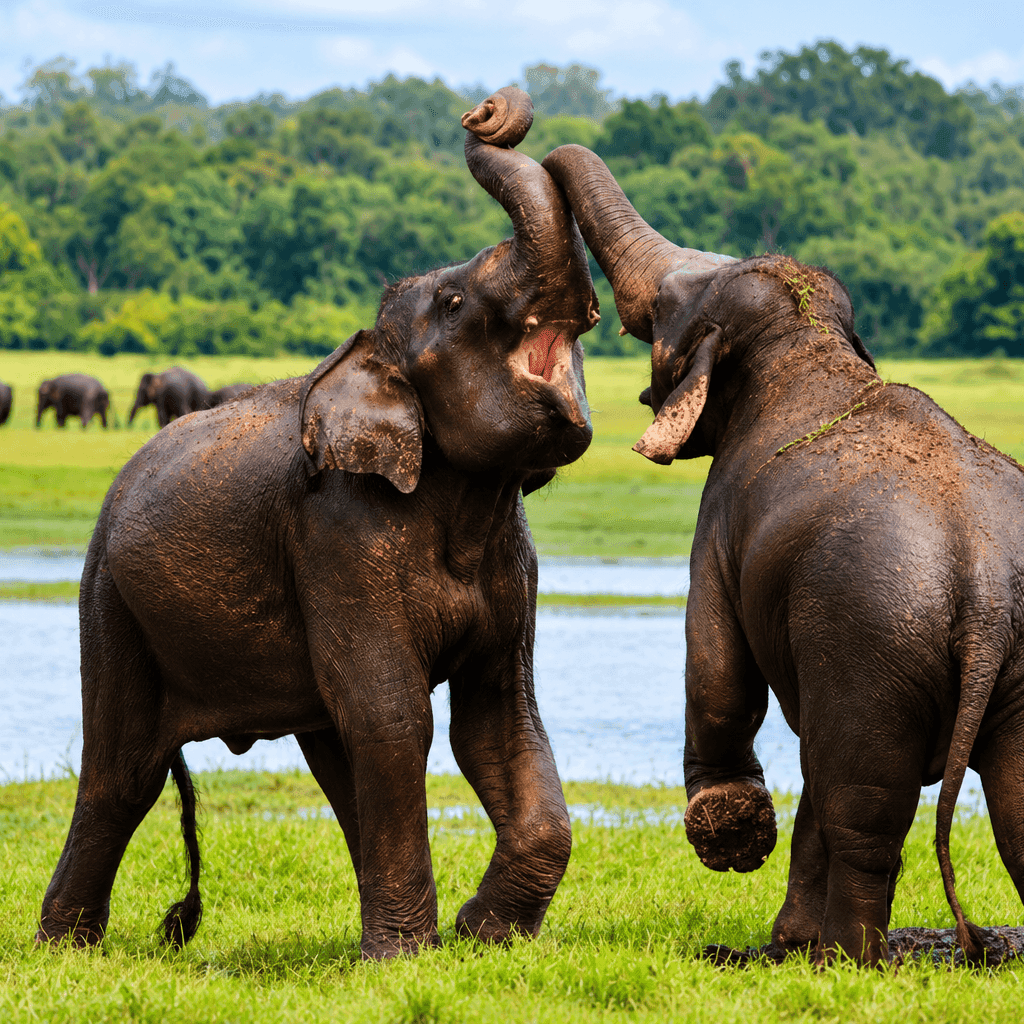
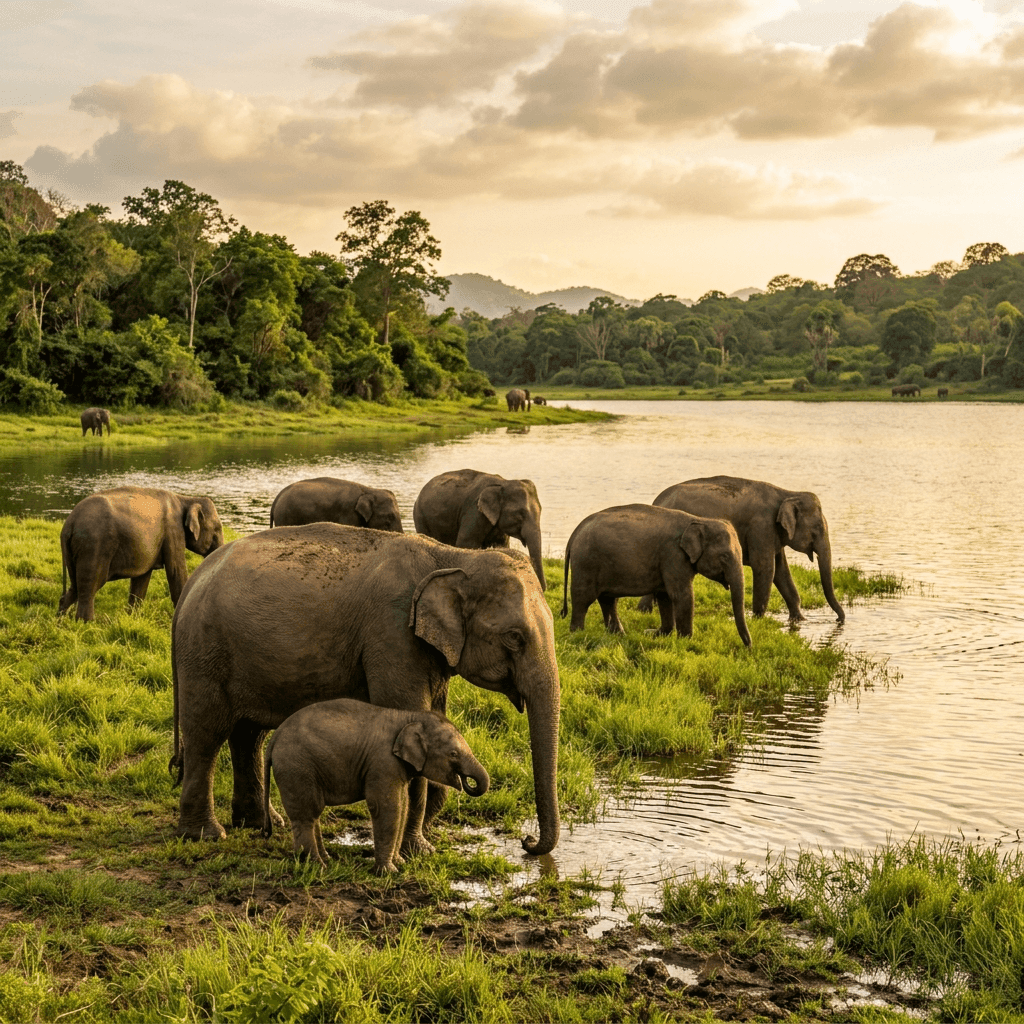
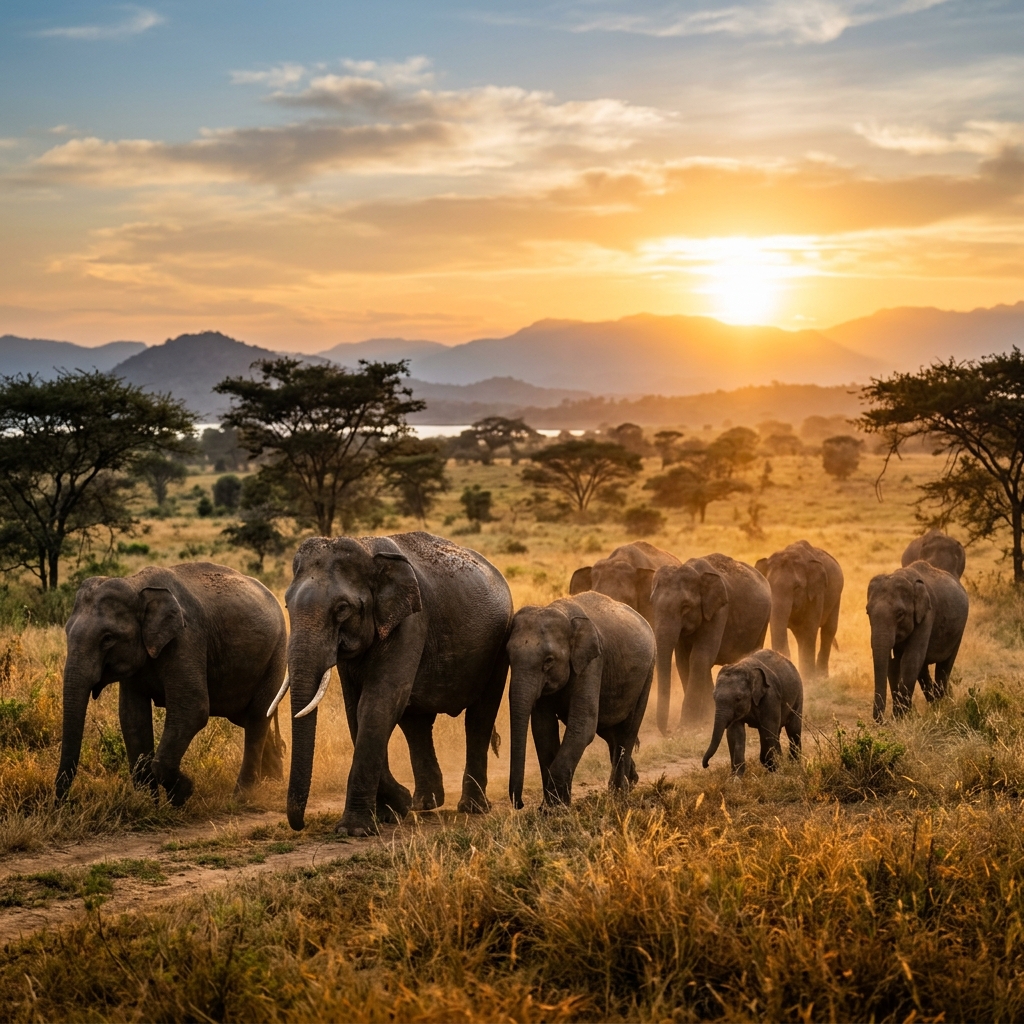
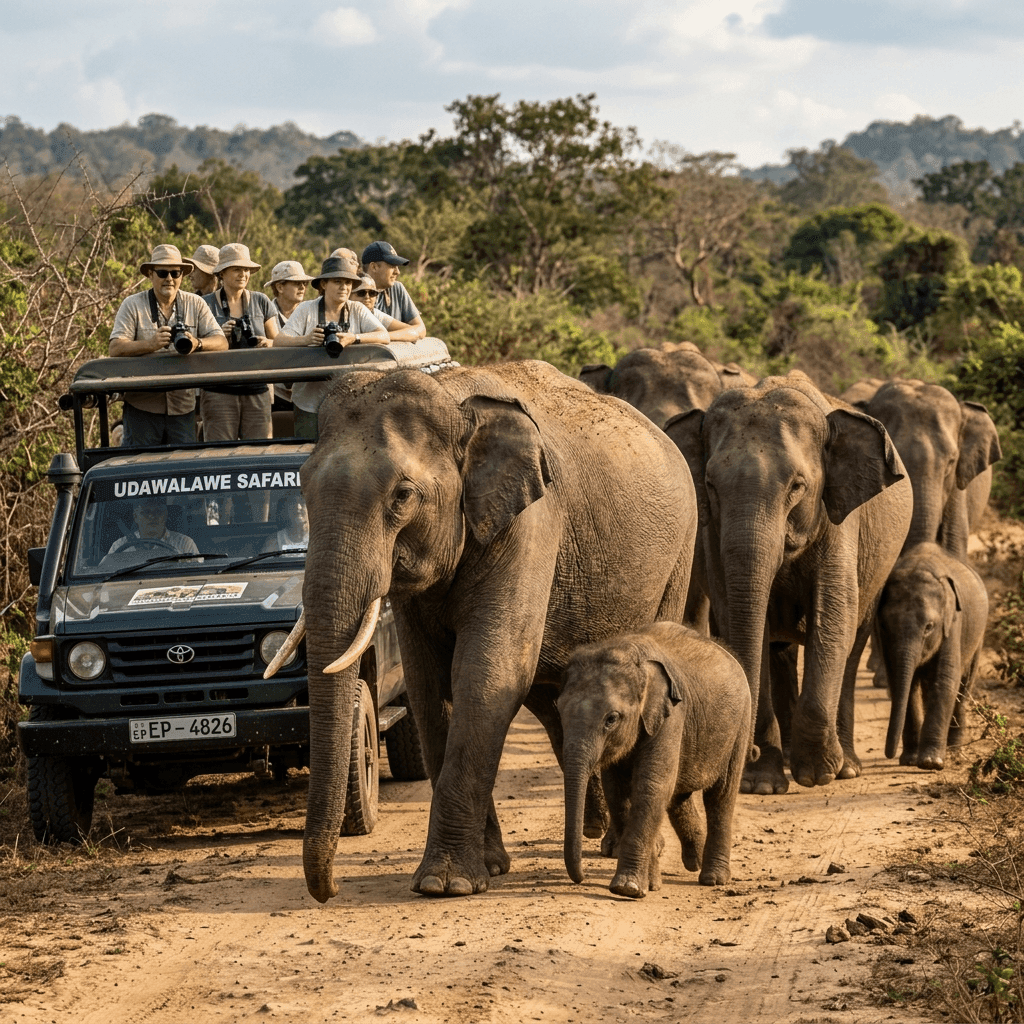
When the park gate swings open punctually at 6:00 AM, you are among the privileged few entering an untouched ecological theater at its most dynamic operational peak. Covering 30,821 hectares (119 square miles), Udawalawe was formally gazetted on June 30, 1972, under the Fauna and Flora Protection Ordinance to provide a permanent, inviolable sanctuary for wildlife displaced by the construction of the colossal Udawalawe Reservoir on the Walawe River. While many wildlife reserves across Asia require days of patient tracking to secure fleeting glimpses of elusive fauna, Udawalawe presents an almost immediate, breathtaking abundance. Within five to ten minutes of navigating the primary gravel artery, the dense scrub gives way to sweeping Guinea grass savanna, where family herds of Asian elephants (Elephas maximus maximus) are already grazing peacefully in the golden morning radiance.
The dawn atmosphere is defined not only by visual splendor but by an acoustic crescendo. The morning air acts as a crisp conductor of sound, carrying the deep, resonant infrasonic rumbles of elephant matriarchs across several kilometers of undulating grassland. Dew glistens upon the leaves of thorn scrub (Acacia and Ziziphus species), while wisps of evaporation rise from the placid bays of the reservoir like ethereal smoke. For wildlife lovers, naturalists, and photographers alike, the morning safari—spanning from 6:00 AM until 10:00 AM—represents the undisputed golden window of wildlife observation, offering the most comfortable ambient temperatures, the softest directional lighting, and the highest concentration of active animal behaviors of the entire day.
Chapter 2: The Biology of the Morning Elephant Awakening
Asian elephants are non-ruminant herbivores with digestive systems that operate on continuous throughput. Because they digest only roughly 40 to 45 percent of the fibrous vegetation they ingest, adult wild elephants must feed for sixteen to eighteen hours each day, consuming between 150 and 200 kilograms of forage. By the time dawn breaks over Udawalawe, elephant herds have already concluded their brief, four-hour nocturnal sleep cycle and are intensely hungry. Morning safari travelers witness this ravenous yet gentle morning feast in full, intimate display.
Udawalawe’s park flora is characterized by an abundance of Guinea grass (Megathyrsus maximus), wild sugarcane (Saccharum spontaneum), and low-growing shrubs. Observe closely how a feeding elephant approaches a clump of morning grass. The animal does not merely bite the vegetation; it curls the prehensile fingers of its trunk around the base of the grass stalks, braces its foreleg against the earth, and delivers a measured tug that uproots the entire clump. Before placing the forage into its mouth, the elephant executes a rhythmic, rhythmic slap against its front knee or the ground to shake off damp soil, pebbles, and debris clinging to the root systems. This learned behavioral ritual protects the elephant's high-crowned molar teeth from premature abrasion—a critical survival mechanism, as an elephant possesses only six sets of molars throughout its lifespan.
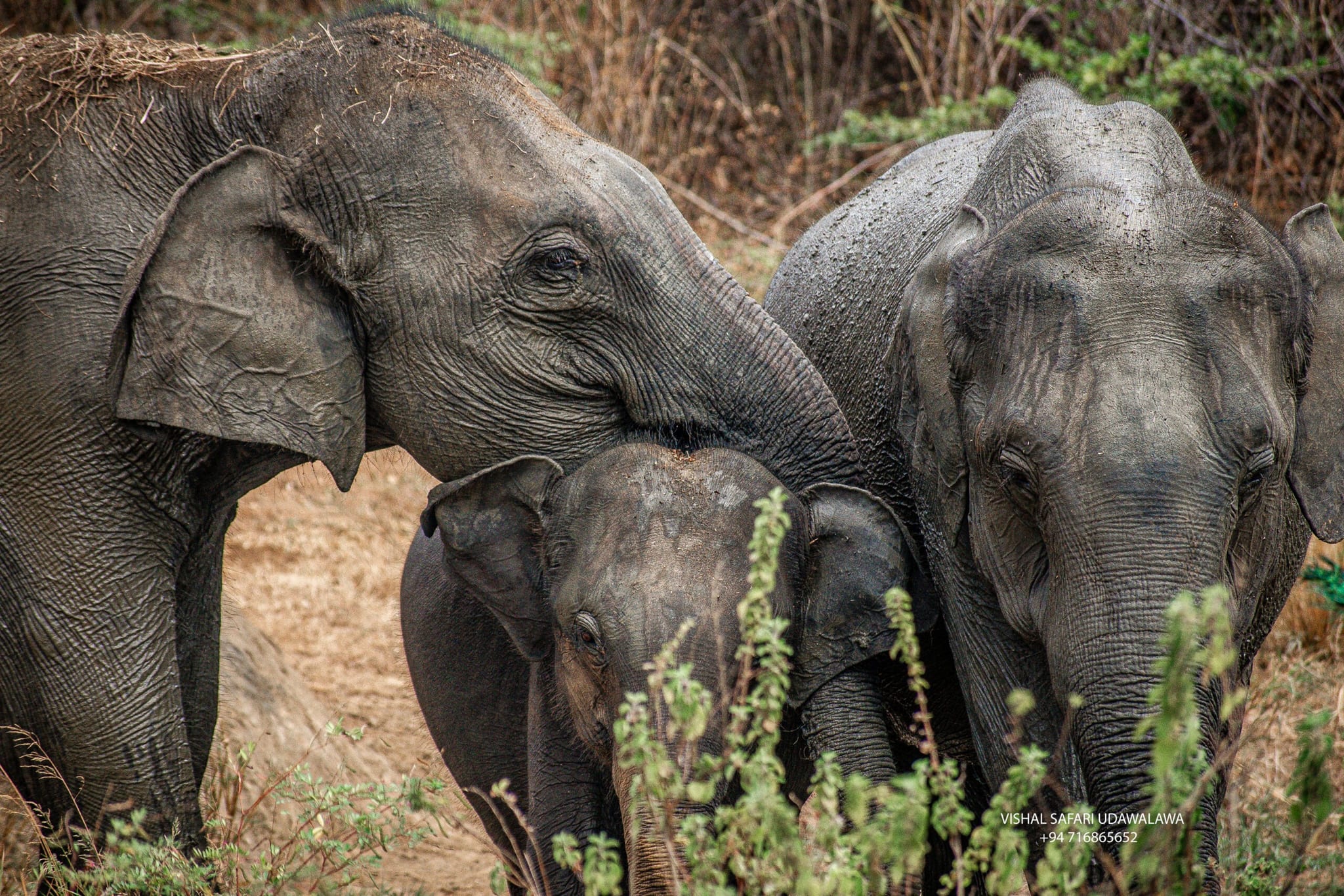
In addition to active feeding, the early hours provide vital insight into matriarchal herd cohesion. Elephant family units in Udawalawe typically consist of six to twelve related individuals: the dominant matriarch—often an experienced female in her forties or fifties—her adult daughters, sub-adult sisters, and dependent calves of varying ages. At dawn, family members greet one another with tactile affection. Trunks are gently entwined, temporal glands are investigated, and low rumbles vibrate through the earth, felt by human passengers as subtle reverberations in the chest. Newborn and juvenile calves, often smaller than a jeep's wheel rim and covered in reddish-brown natal down, trot playfully between the towering legs of their mothers and nurse aunts. During the cool morning hours, calves exhibit high-energy exuberance, charging at fluttering peafowl, rolling in dew-damp grass, and practicing the clumsy coordination of their trunks before the midday sun enforces calm.
Adult bull elephants, by contrast, lead predominantly solitary lives or form transient, loose bachelor coalitions. Morning safaris frequently encounter these massive solitary bulls traversing open firebreaks or grazing in solitary majesty near the margins of the forest. Occasionally, visitors encounter a bull in musth—a biological state characterized by elevated testosterone levels up to sixty times higher than normal, accompanied by continuous temporal gland drainage down the sides of the face and a distinctive, pungent musky odor. Experienced safari drivers maintain a strictly respectful, enlarged safety perimeter around musth bulls, allowing guests to observe these impressive titans without causing stress or territorial provocation.
Chapter 3: Avian Symphony at Sunrise
While the elephants are universally renowned, Udawalawe is equally an ornithological paradise of global significance, harboring over 184 recorded avian species. The early morning hours represent the prime time for bird activity, as avian species actively forage before the thermal heat forces them to seek shelter in the dense canopy. From the moment the first rays of sunlight pierce the mist, the park resounds with a complex auditory tapestry.
The dawn chorus is anchored by Sri Lanka’s national bird, the Ceylon Junglefowl (Gallus lafayettii). Early morning safari drives along the sandy boundary tracks almost invariably encounter these flamboyant male junglefowl strutting proudly along the road edges. With vibrant reddish-orange and gold plumage, a purple-centered comb, and iridescent black sickle tail feathers, the male junglefowl scratches for seeds and insects in the morning dew, repeatedly issuing its unmistakable, territorial crow: a sharp, two-syllable "chok-choyik!" that echoes through the scrub.
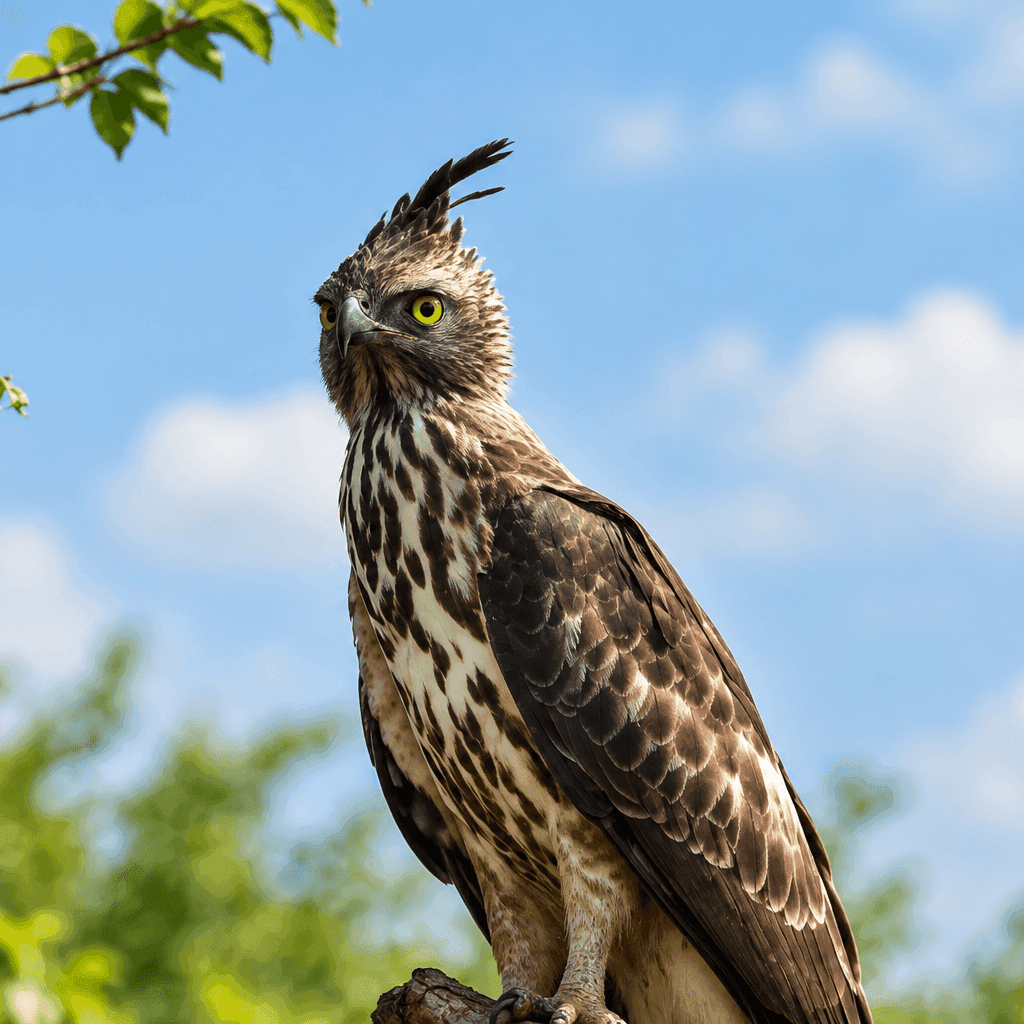
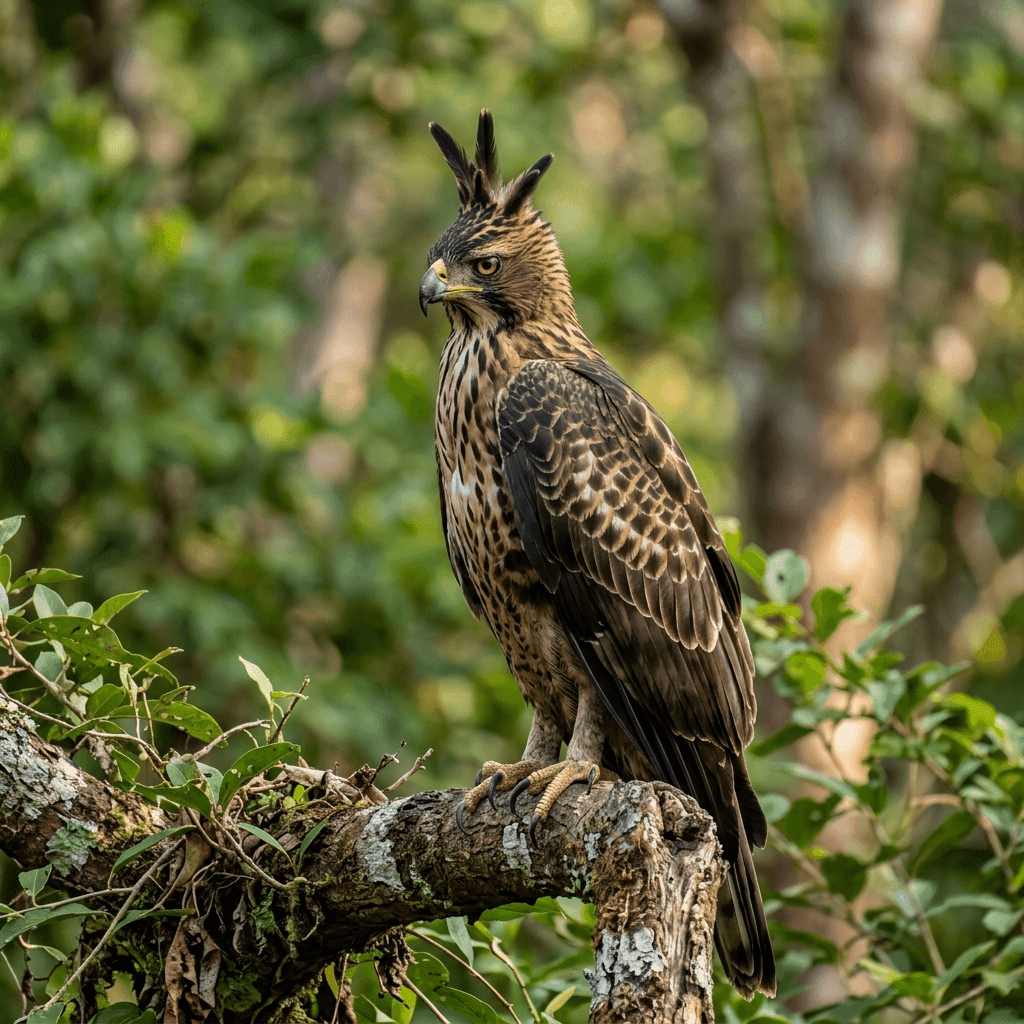
Concurrently, apex raptors take to the morning sky. As the solar warmth begins to generate the day's first gentle updrafts, majestic Crested Serpent Eagles (Spilornis cheela) perch prominently upon dead snags and the bare branches of Terminalia arjuna (Kumbuk) trees lining the riverbanks. With piercing yellow eyes and distinctive black-and-white banded crests raised against the breeze, they survey the grassy savannas below for garden lizards, calotes, and venomous pit vipers. Over the vast waters of the reservoir, White-bellied Sea Eagles (Haliaeetus leucogaster)—with magnificent two-meter wingspans—circle in graceful thermal spirals, periodically stooping in high-speed dives to snatch tilapia and catfish from the water's surface with their powerful talons.
Along the muddy shorelines and marshy depressions, the morning feeding frenzy of wading waterfowl reaches its zenith. Flocks of Painted Storks (Mycteria leucocephala), displaying delicate pink tertial plumes and yellow decurved bills, wade shoulder-to-shoulder with Asian Openbills (Anastomus oscitans), Spot-billed Pelicans (Pelecanus philippensis), and elegant Eurasian Spoonbills (Platalea leucorodia). In the dead tree skeletons rising like ghostly monuments from the flooded sections of the reservoir, Oriental Darters (Anhinga melanogaster)—often termed "snakebirds" due to their serpentine necks—spread their sodden wings toward the morning sun to dry their non-waterproof plumage after early-morning underwater fishing excursions.
Chapter 4: Best Morning Safari Routes & Waterholes
An exceptional safari experience is fundamentally dictated by your driver’s tactical navigational route and intimate knowledge of micro-habitats. The landscape of Udawalawe is not homogeneous; it is a rich mosaic of teak plantations, open savanna grasslands, riparian gallery forests, dry scrub, and extensive marshlands. A masterfully executed morning safari navigates through these diverse zones according to an intuitive biological schedule.
1. The Veheragolla Savanna Sector
Immediately after entering the southern gate, taking the fork toward Veheragolla leads across sweeping open grasslands reminiscent of the East African Serengeti. Because the grass is short and visibility extends for hundreds of meters in all directions, this is the premier sector for capturing wide-angle environmental portraits of elephant family herds with the sun rising directly behind them. Flocks of Indian Peafowl (Pavo cristatus) graze openly here, and small family groups of Spotted Deer (Axis axis) graze skittishly along the forest ecotone before retreating into deep shade by 8:00 AM.
2. The Sinuggala Waterhole & Central Tracks
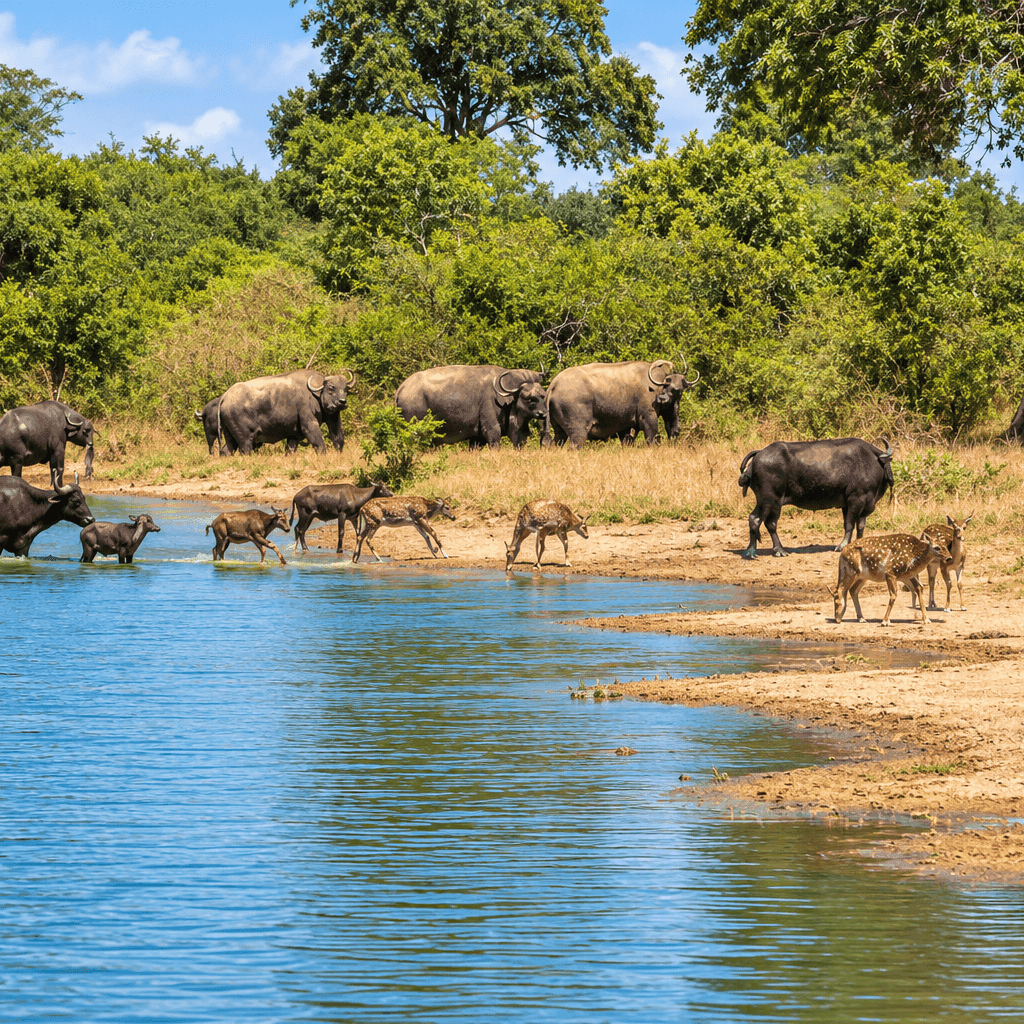
Located in the heart of the southern park plateau, Sinuggala is a historic gathering hub. The track passes through dense, overarching scrub forest dominated by thorny shrubs, where shy species such as the Indian Crested Porcupine (Hystrix indica), the Ruddy Mongoose (Urva smithii), and the occasional Leopard (Panthera pardus kotiya) are occasionally glimpsed during the first hour of light. The Sinuggala waterhole itself frequently hosts large mud-wallowing sessions as the morning warms up, with wild water buffalo (Bubalus arnee) submerging themselves up to their nostrils alongside herds of playful elephant calves.
3. The Walawe River Riparian Gallery Forest
The eastern sector of the park borders the perennial flow of the Walawe River. Here, ancient riverine giants—specifically massive Kumbuk trees with buttressed root networks—create an entirely different microclimate. The temperature drops noticeably under the thick canopy. This is the prime sector for observing arboreal primates, including the Tufted Gray Langur (Semnopithecus priam) and the endemic Toque Macaque (Macaca sinica), as well as elusive bird species like the Stork-billed Kingfisher (Pelargopsis capensis) and the rare Fish Owl. Elephants often visit the riverbank to drink fresh flowing water and browse on water-rich bamboo shoots.
4. The Mau Ara Spillway & Wetland Bay
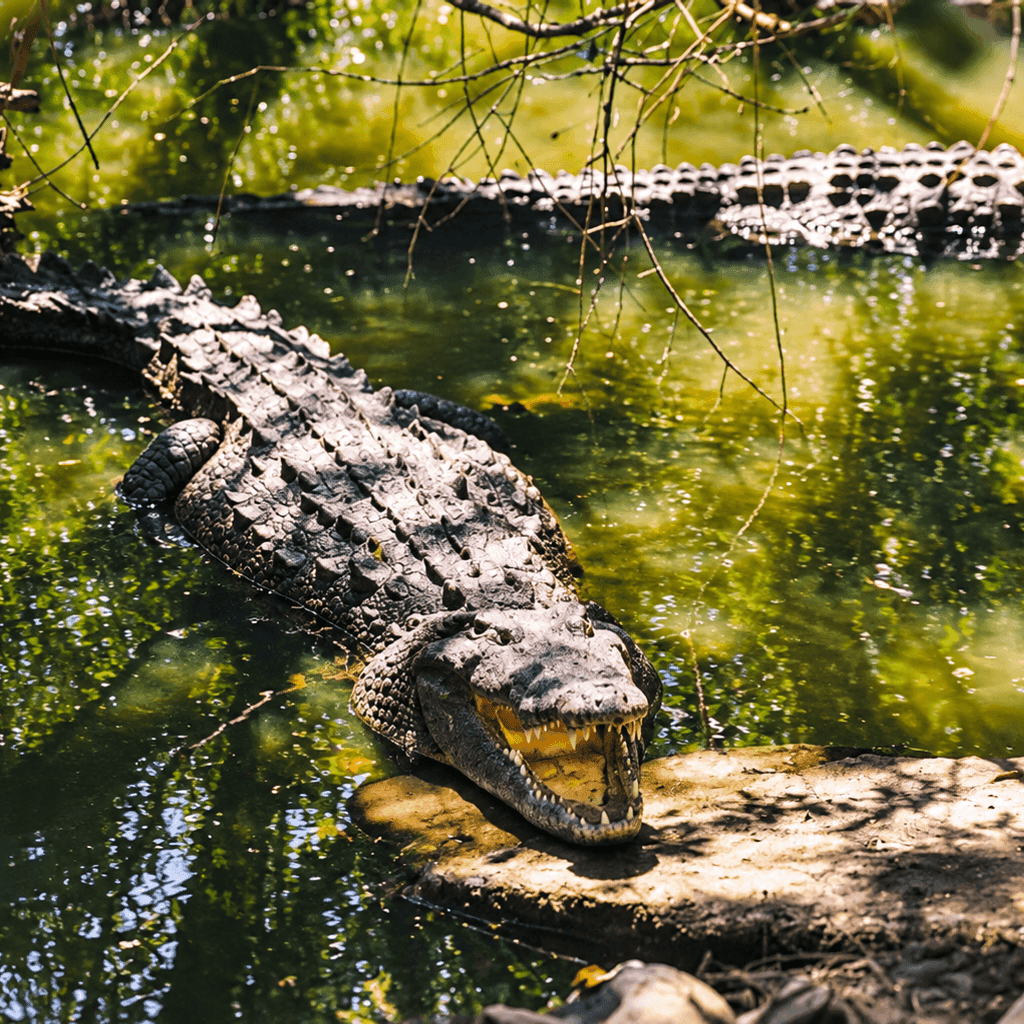
Toward the northeastern quadrant, the Mau Ara feeder canal flows into the reservoir, forming expansive, shallow wetlands choked with sedges and water lilies. In the morning light, this bay offers unparalleled birdwatching. Hundreds of Little Cormorants, Great Egrets, Intermediate Egrets, and Black-winged Stilts feed in the shallows. Mugger Crocodiles (Crocodylus palustris), which have spent the chilly night in the water, crawl onto the sandy mudbanks between 7:30 AM and 8:30 AM to orient their broad bodies perpendicular to the sun, absorbing radiant heat to elevate their core metabolic temperature.
Chapter 5: Complete Hour-by-Hour Timeline for Morning Safari Visitors
To maximize your morning adventure, structure your day around this battle-tested operational itinerary developed by seasoned Udawalawe naturalists:
- 5:15 AM – Hotel Departure & Morning Rendezvous: Your private 4x4 safari jeep arrives at your accommodation in Udawalawe, Embilipitiya, or surrounding rural villages. Layer your clothing with a light fleece or windbreaker, as the open-sided vehicle creates a brisk morning chill while traveling down provincial roads at highway speed.
- 5:40 AM – Arrival at National Park Gate & Permit Issuance: Arriving 20 minutes prior to gate opening ensures your driver is near the front of the entry queue. While the driver processes Department of Wildlife Conservation (DWC) permits and ranger paperwork, take a moment to admire the starry dawn sky and listen to the waking calls of nocturnal geckos and nightjars.
- 6:00 AM – Gate Opening & First Light Entry: The barrier lifts. As your vehicle enters the park, camera settings should already be calibrated for low-light dawn shooting. Keep speaking volumes low to allow your senses to detect the snapping of branches or the low rumbles of nearby elephant herds.
- 6:15 AM to 7:45 AM – Prime Savanna Wildlife Encounter: The golden 90 minutes. Wildlife is actively mobile across all sectors. Herds of elephants feed directly along the road edges, spotted deer forage in open clearings, and raptors perch on illuminated dead trees. This is your premier window for photographic brilliance.
- 7:45 AM to 8:30 AM – Waterhole Gathering & Reptilian Basking: As the sun climbs higher, temperatures rise into the comfortable mid-20s Celsius. Animals begin congregating around the primary reservoirs and waterholes to drink. Large mugger crocodiles haul out onto mudbanks, and herds of wild water buffalo immerse themselves in the shallows.
- 8:30 AM to 9:15 AM – Bush Breakfast at Designated Park Rest Site: Drivers navigate to authorized, secure resting locations such as the riverbank rest area. Here, under the protective shade of ancient trees, you may disembark from the jeep, stretch your legs, use clean restroom facilities, and enjoy your packed breakfast of fresh tropical fruits, warm sandwiches, and Ceylon tea while watching kingfishers hunt over the water.
- 9:15 AM to 10:00 AM – Forest Canopy Exploration & Shaded Tracks: During the final hour, the jeep explores shaded deep-forest tracks and riverine galleries where elephants retreat to escape the building heat, feeding quietly in dense bamboo groves.
- 10:15 AM to 10:30 AM – Park Exit & Return Transfer: Exiting through the main gates, your driver transfers you back to your hotel in time for a refreshing midday swim, a traditional Sri Lankan rice and curry lunch, or an onward transfer to the Elephant Transit Home for the 12:00 PM feeding.
Chapter 6: Morning Wildlife Photography Masterclass
Photographing wildlife from a moving four-wheel-drive vehicle in early morning tropical light presents unique optical challenges. The following field-tested technical principles will ensure your images display professional sharpness, compelling composition, and rich tonal depth:
1. Lens Selection and Focal Length Strategy
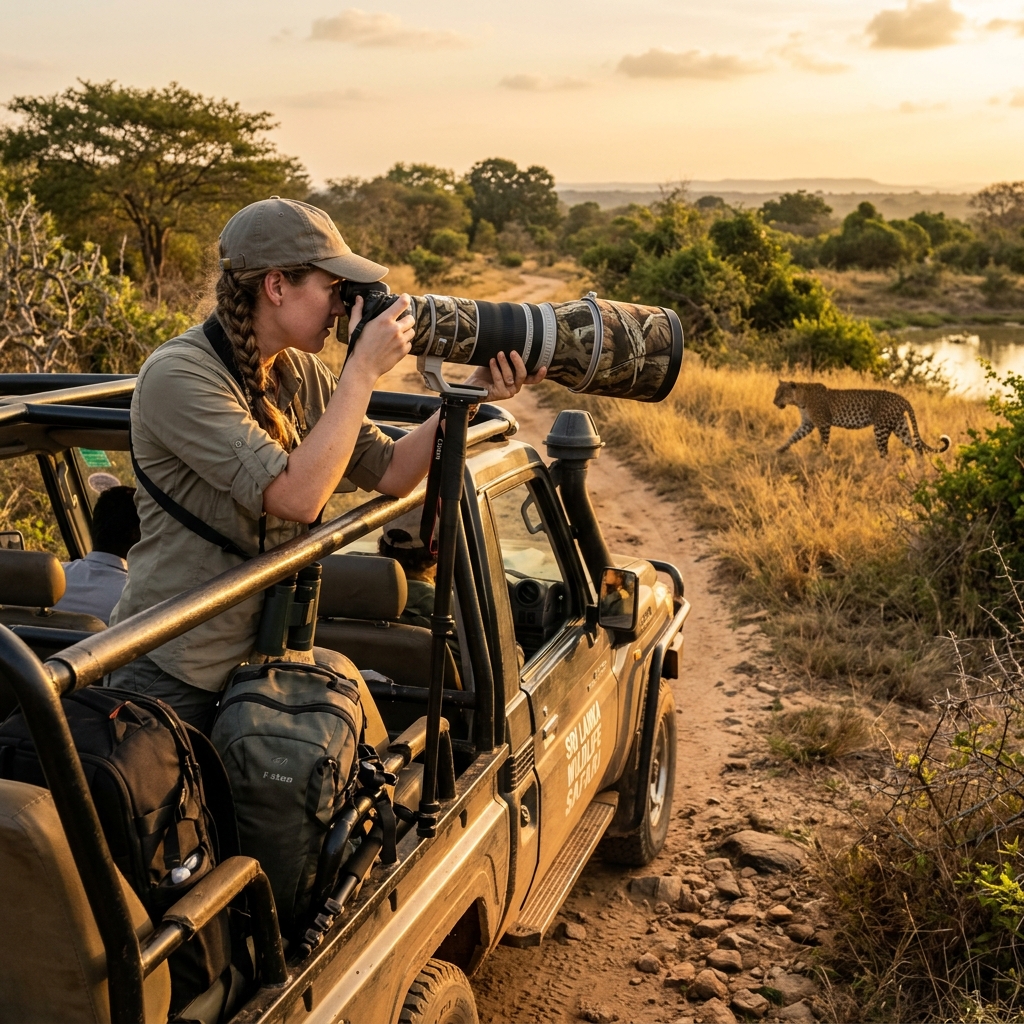
Udawalawe’s open terrain affords wider perspectives than the dense jungles of Yala or Wilpattu. A telephoto zoom lens covering 100-400mm or 150-600mm mounted on a full-frame or APS-C camera body is the ideal weapon of choice. While 400mm+ is indispensable for isolating perched eagles, bee-eaters, and distant elephant calves, elephants often stroll within 10 to 15 meters of the vehicle. For this reason, having a secondary camera body with a standard 24-70mm or 70-200mm lens allows you to instantly capture dramatic environmental portraits framing an entire family herd against the majestic mountain backdrop.
2. Shutter Speed Priority in Low Dawn Light
Between 6:00 AM and 6:45 AM, light levels are relatively dim. The primary cause of ruined safari photographs is motion blur caused by hand tremor, engine vibration, or moving animals. Never shoot below 1/500th of a second for static elephants, and maintain a minimum of 1/1250th to 1/2000th of a second for active bird behavior, flapping ears, or walking animals. Do not hesitate to raise your ISO to 1600, 3200, or even 6400 on modern sensor bodies; contemporary noise-reduction software easily cleans high-ISO grain, but no software can rescue a motion-blurred subject.
3. Managing High Dynamic Range at Sunrise
When the sun bursts over the horizon, shooting toward the east creates extreme contrast: an intensely bright sky paired with deeply shadowed elephant hides. To master sunrise photography, employ exposure compensation. Metering for the golden sky will silhouette the elephants in dramatic, razor-sharp outlines showing the texture of their ears, tusks, and arched spines. Conversely, to capture the rich textural detail of an elephant's skin wrinkles and amber eye color, meter for the shadows or utilize spot metering on the subject’s face.
4. Camera Stabilization Without Tripods
Full-size tripods are unwieldy and dangerous inside the tight confines of a safari jeep. Instead, bring a durable canvas beanbag filled with lentils, beans, or rice. Resting your heavy telephoto lens upon a beanbag placed directly over the padded safety rail of the jeep dampens engine vibration and provides butter-smooth panning for tracking moving wildlife. Request your driver to switch off the diesel engine whenever stopping beside a significant sighting to eliminate micro-vibrations.
Chapter 7: Essential Preparation & Packing Checklist
Proper preparation turns an ordinary safari into an effortless, five-star expedition. Pack the following essentials the evening prior to your morning departure:
| Essential Item | Recommended Specification | Field Purpose |
|---|---|---|
| Clothing Layers | Neutral tones (khaki, olive, beige, grey); windbreaker + light cotton tee | Prevents startling wildlife; protects against morning chill followed by 28°C sun |
| Optics | Binoculars with 8x42 or 10x42 magnification and waterproof coating | Essential for identifying raptors, crocodile textures, and distant elephant behavior |
| Sun Protection | Wide-brimmed safari hat with chin cord, polarized sunglasses, SPF 50+ mineral sunscreen | Shields against intense ultraviolet radiation reflected off open water and plains |
| Camera Protection | Silica gel packs, microfiber lens cloths, weather-sealed dust bag or rain cover | Shields sensitive sensors and glass from pervasive red clay road dust |
| Hydration & Sustenance | Insulated stainless steel water bottle (1.5L minimum), electrolyte tablets, fresh fruit | Maintains core hydration and cognitive focus through four hours in an open vehicle |
| Personal First Aid | Antihistamines, insect repellent (DEET or lemon eucalyptus), wet wipes, lip balm | Relieves wind-chapped lips, dust irritation, and occasional insect encounters |
Chapter 8: Ethical Wildlife Observation Guidelines & Park Regulations
Udawalawe is a protected biodiversity stronghold, not a commercial zoo. The Department of Wildlife Conservation enforces strict statutory regulations designed to safeguard the ecological integrity of the reserve and the psychological wellbeing of its wild inhabitants. Responsible safari travelers must adhere strictly to these non-negotiable ethical codes:
1. Strict Vehicle Proximity Limits: Never pressure your safari driver to chase, crowd, or cut off moving elephant herds. A minimum buffer zone of twenty meters should be observed at all times. When a herd chooses to cross the track in front of your vehicle, the jeep must halt completely, keep the engine idling or turned off, and allow the matriarch and her calves to pass unhindered at their own unhurried pace.
2. Noise Discipline and Auditory Respect: Loud voices, celebratory shouting, music, or whistling to attract an animal's gaze are strictly prohibited. Loud noises disorient herd communication, elevate cortisol stress hormones in nursing mothers, and cause skittish calves to panic. Maintain conversation at a respectful whisper.
3. Absolute Prohibition of Flash Photography: Electronic flash units are strictly banned inside all national parks in Sri Lanka. The sudden burst of intense artificial light can permanently damage the night-adapted vision of animals and has historically provoked defensive, aggressive charges from protective mother elephants.
4. Zero Litter and Plastic Discipline: Never discard any waste—including organic fruit rinds or paper napkins—inside the reserve. Discarded plastic is a mortal hazard to wildlife; elephants regularly ingest plastic waste in human-adjacent areas with fatal gastrointestinal consequences. Pack out every scrap of rubbish you bring in.
5. Remaining Inside the Vehicle: Under no circumstances may passengers alight from the safari jeep outside of the designated, ranger-supervised rest sites. Stepping onto the ground places you in mortal danger from hidden venomous snakes, camouflaged crocodiles, and unpredictable wildlife charges, and constitutes an immediate violation resulting in driver permit revocation.
Chapter 9: Frequently Asked Questions (FAQ)
Q1: Is the morning safari genuinely better than the afternoon sunset safari?
Both shifts offer unique charms, but the morning safari holds decisive advantages for first-time visitors, families, and photographers. Wildlife is significantly more active at dawn following the cool night, temperatures are vastly more comfortable (22°C to 26°C versus 33°C in the afternoon), and the lighting conditions are softer with less atmospheric heat shimmer across the grassland plains. Furthermore, bird activity peaks dramatically between 6:00 AM and 8:30 AM.
Q2: What is the probability of seeing wild elephants on a morning safari?
In Udawalawe National Park, the likelihood of encountering wild elephants on a morning safari exceeds 99 percent. The park supports a stable, thriving population of between 600 and 800 resident elephants across a relatively compact 308-square-kilometer basin. It is virtually impossible to complete a 4-hour morning drive without encountering multiple family herds, solitary bulls, and nursing calves.
Q3: What time should I book my pickup from my hotel?
If you are staying in Udawalawe town or along the river corridor, schedule your jeep pickup for 5:30 AM to 5:40 AM. If you are staying in Embilipitiya (approx. 20 km away), arrange pickup for 5:15 AM. Arriving at the park gate by 5:45 AM ensures your driver can finalize gate registration and position the vehicle near the front of the departure line when gates unlock at 6:00 AM.
Q4: Are morning safaris suitable for young children and elderly travelers?
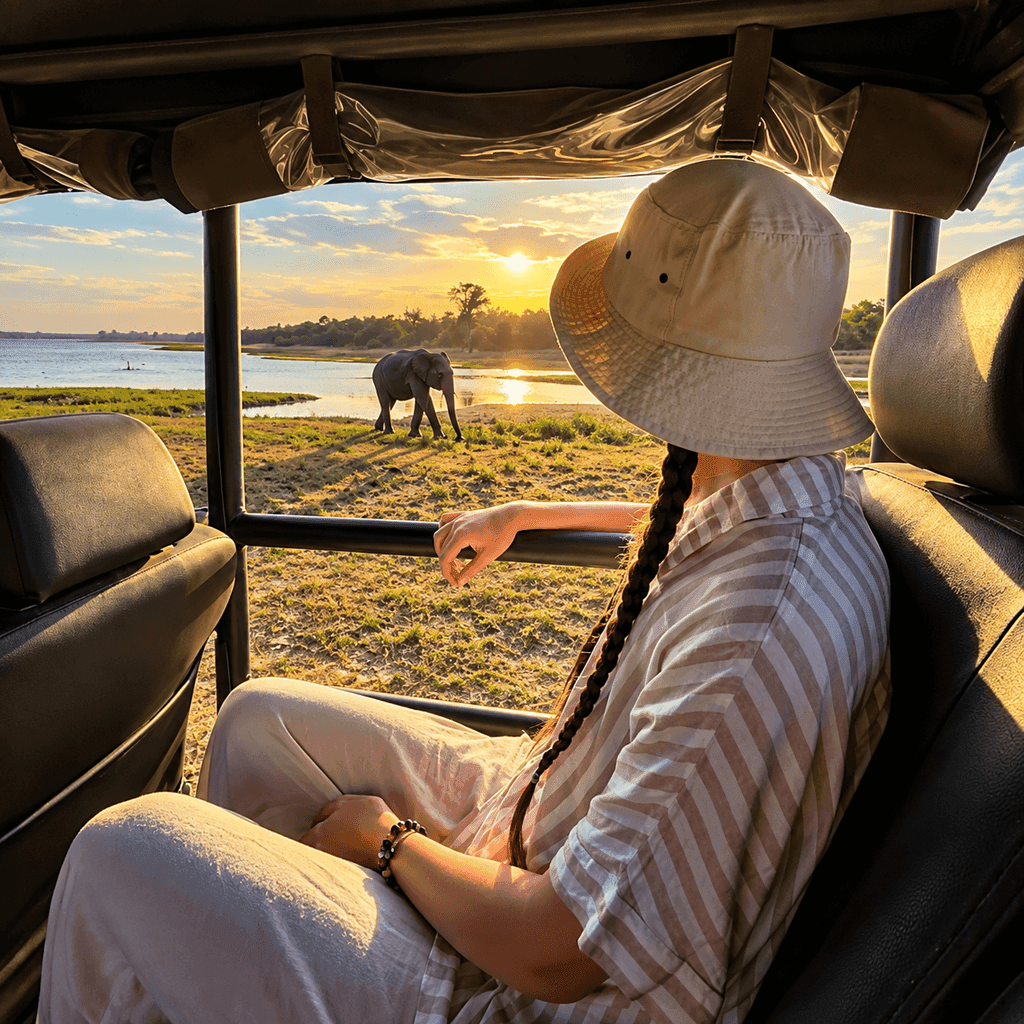
Yes, absolutely. The morning hours are the safest and most comfortable for children and seniors because the weather is pleasantly cool, minimizing the risk of heat exhaustion, dehydration, or sunstroke. Modern safari jeeps feature cushioned tiered seating, safety grab handles, and protective canvas roofs that shield passengers from morning dew and direct sun. Pack a warm fleece for the early ride, and bring binoculars to keep children engaged.
Q5: Can we see leopards or sloth bears during the morning safari?
While leopards (Panthera pardus kotiya) and sloth bears (Melursus ursinus) are biologically present within Udawalawe, they are exceedingly rare sightings compared to Yala or Wilpattu. Udawalawe’s open grasslands and tall scrub favor grazers and wetland fauna rather than dense forest carnivores. You should approach Udawalawe with the expectation of world-class elephant, raptor, crocodile, and deer sightings; any leopard encounter should be considered an extraordinary, once-in-a-lifetime bonus.
Q6: What happens if it rains during our morning safari?
All private safari jeeps operated by professional services are equipped with heavy-duty roll-down transparent weather curtains that protect passengers and expensive camera gear from rain. Furthermore, rain often triggers high wildlife activity: elephants relish rain showers, bathing enthusiastically in fresh mud pools, and the surrounding flora takes on an intensely vibrant emerald hue. Safaris operate regardless of rain unless extreme weather warnings are issued by park authorities.
Q7: How do park entrance fees and private jeep hire work?
A safari comprises two distinct costs: the private 4x4 modified safari jeep (with a professional driver-guide) and the Department of Wildlife Conservation (DWC) official entrance permits. Park permits are calculated per passenger based on nationality (foreign adult, foreign child, or local citizen), plus a nominal vehicle entry fee and standard VAT/service taxes. Reputable safari operators handle all permit procurement seamlessly on your behalf on the morning of your tour.
Q8: Can we combine the morning safari with a visit to the Elephant Transit Home?
Yes, this is the single most popular and rewarding combination in the region. A morning safari finishes between 9:45 AM and 10:00 AM. You can return to your hotel for a brief rest, shower, and snack, and then proceed to the Udawalawe Elephant Transit Home (ETH)—located just 10 minutes from the park gate—in time for the public 12:00 PM milk feeding session, where over forty rescued orphan calves are bottle-fed by dedicated wildlife rangers.
Q9: What should I wear on a morning safari?
Dress in comfortable, breathable clothing in neutral earthy colors such as khaki, beige, tan, olive green, or soft grey. Avoid wearing bright fluorescent colors (such as neon pink, bright red, or electric yellow), which can startle skittish wildlife. Wear closed-toe shoes or sturdy walking sneakers, bring a lightweight fleece or windbreaker for the 5:30 AM highway transit, and pack a wide-brimmed hat with a chin strap.
Q10: Are there toilet facilities inside the national park during the morning safari?
Yes. The Department of Wildlife Conservation maintains well-maintained, clean public restroom facilities at designated riverbank rest sites inside the park, where vehicles make their scheduled 20-minute breakfast and stretching stop. Outside of these designated areas, alighting from the vehicle is strictly forbidden for safety reasons.
.png)