Chapter 1: The Sacred Mountain Hermitage of Sankapala
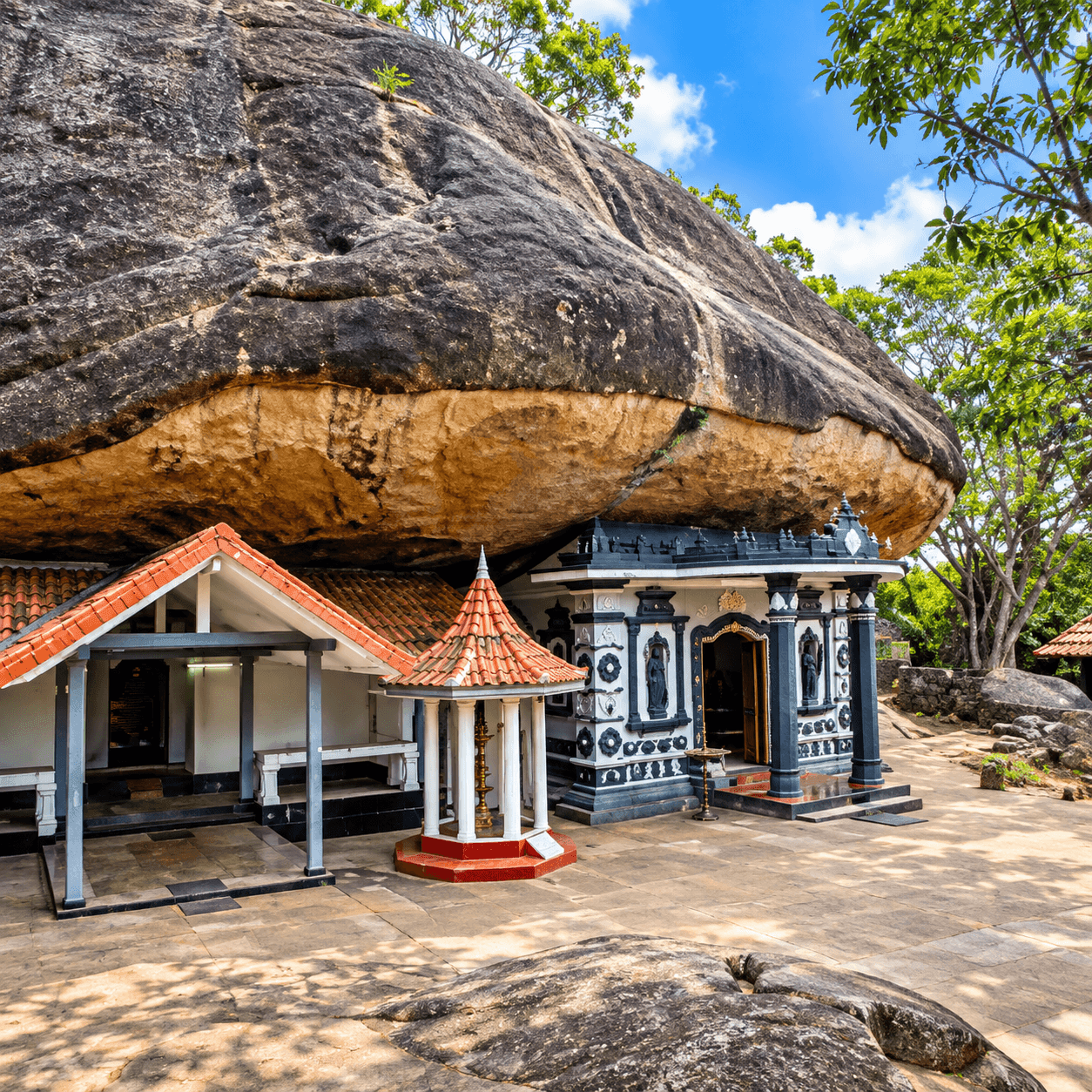
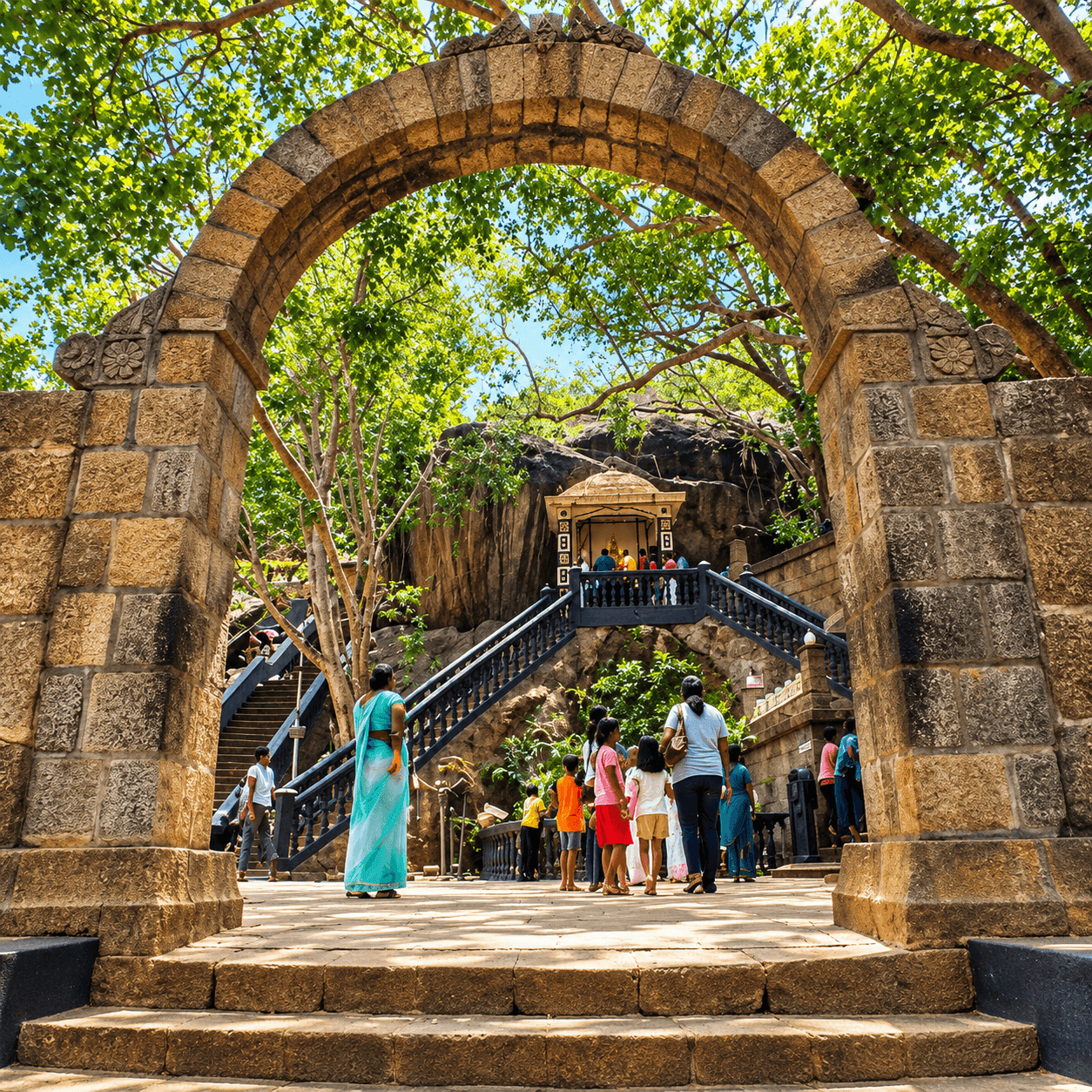
Rising like a colossal granitic fortress from the undulating agricultural plains of Pallebedda along the Pelmadulla-Embilipitiya highway, roughly twenty-four kilometers north of Udawalawe National Park, stands Sankapala Raja Maha Viharaya (*Sankapala Ancient Cave Temple*). Anchored against a dramatic sheer rock mountain face shrouded in tropical forest, this sacred archaeological complex dates back more than 2,200 years to the heroic second century BC. It is an extraordinary sanctuary where epic martial legends, ancient lithic inscriptions, serene rock-cut cave hermitages, and vibrant Buddhist iconography converge in breathtaking harmony.
For travelers exploring the southern safari circuit, a pilgrimage to Sankapala offers a profound cultural and historical counterweight to the wildlife adventures of Udawalawe. Stepping out of your vehicle at the base of the sacred rock, the immediate sensation is one of deep antiquity and spiritual stillness. Scented frangipani blossoms (*Araliya*) carpet the stone steps, the chanting of Buddhist stanzas drifts faintly from the monastery pavilions, and troops of wild langurs leap gracefully between the boughs of ancient sacred Bo trees. Towering high above the monastic complex is the gleaming white summit stupa, perched precariously on the topmost granite crag like a celestial crown overlooking the vast southern plains.
Beyond its visual drama, Sankapala holds an esteemed place in the classical national chronicle of Sri Lanka—the *Mahavamsa* (Great Chronicle). It was here that one of the island's most revered warrior giants, having achieved glorious military triumph on the battlefields of ancient Lanka, laid down his weapons of war, shaved his head, and donned the saffron robes of a Buddhist monk to pursue the ultimate victory of spiritual enlightenment.
Chapter 2: The Epic of King Dutugemunu & The Ten Giant Warriors
To appreciate the historical gravity of Sankapala, one must understand the legendary epoch of King Dutugemunu (reigned 161–137 BC), the celebrated monarch who unified the island of Sri Lanka under a single sovereign banner. During this turbulent period, the king gathered an elite brotherhood of ten legendary commanders renowned for superhuman strength, courage, and martial prowess, celebrated in history as the *Dasa Maha Yodhayo* (Ten Giant Warriors).
Among these ten titans of ancient warfare was Phussadeva, an archer and military strategist of peerless renown. Born in the rural province of Ruhuna, Phussadeva was celebrated from youth for his supernatural acoustic lungs and uncanny marksmanship. Historical texts record that he could loose an arrow guided solely by the sound of a distant footstep (*Saddavedhi*), striking targets in pitch-black darkness, and could split a single horse hair suspended across a canyon from hundreds of paces away.
Phussadeva's primary ceremonial and tactical role in King Dutugemunu's royal army, however, was as the Chief Royal Conch Blower. During major military engagements—culminating in the legendary twenty-year campaign and the decisive siege of the fortified city of Vijithapura—Phussadeva blew the king's sacred victory conch shell, known as the *Jaya Sankha*. The sound of Phussadeva's conch blast was so deafening and acoustically powerful that ancient chronicles poetically compare it to a sudden roll of thunder across the heavens (*Asani Ghosa*), striking terror into the hearts of opposing armies while rallying the royal troops to overwhelming victory.
Chapter 3: The Conch Shell Legend (*Jaya Sankha*) & Spiritual Renunciation
Following the triumph of King Dutugemunu and the historic unification of Anuradhapura, the monarch held a grand royal assembly to lavish honors, titles, and vast territorial estates upon his heroic commanders. When the turn came for Phussadeva to receive his royal reward, the warrior delivered a response that stunned the royal court.
Having witnessed the horrors of war, the loss of thousands of brave lives, and the impermanence of mortal power and physical strength, Phussadeva felt a profound spiritual disillusionment with worldly glory (*Samvega*). He requested no gold, no jewels, and no political office. Instead, he asked the king for a single boon: permission to renounce worldly life, donate his ancestral lands to the Buddhist monastic order (*Sangha*), and enter the monastic brotherhood as a solitary forest meditation monk.
Deeply moved by his general's spiritual awakening, King Dutugemunu granted Phussadeva the sacred rocky mountain of Pallebedda. According to local historical lore, Phussadeva ascended the mountain, placed his famed royal victory conch shell (*Jaya Sankha*) upon the highest granite peak, and constructed a sacred stupa directly over it to permanently seal away the instrument of war as a monument to eternal peace. The temple came to be known as *Sankhapala*—literally translated from Sanskrit and Pali as "The Guardian of the Conch Shell"—a sanctuary where the weapons of martial violence were forever transformed into instruments of spiritual liberation.
Chapter 4: Early Brahmi Cave Inscriptions (*Kataram Lekhana*)
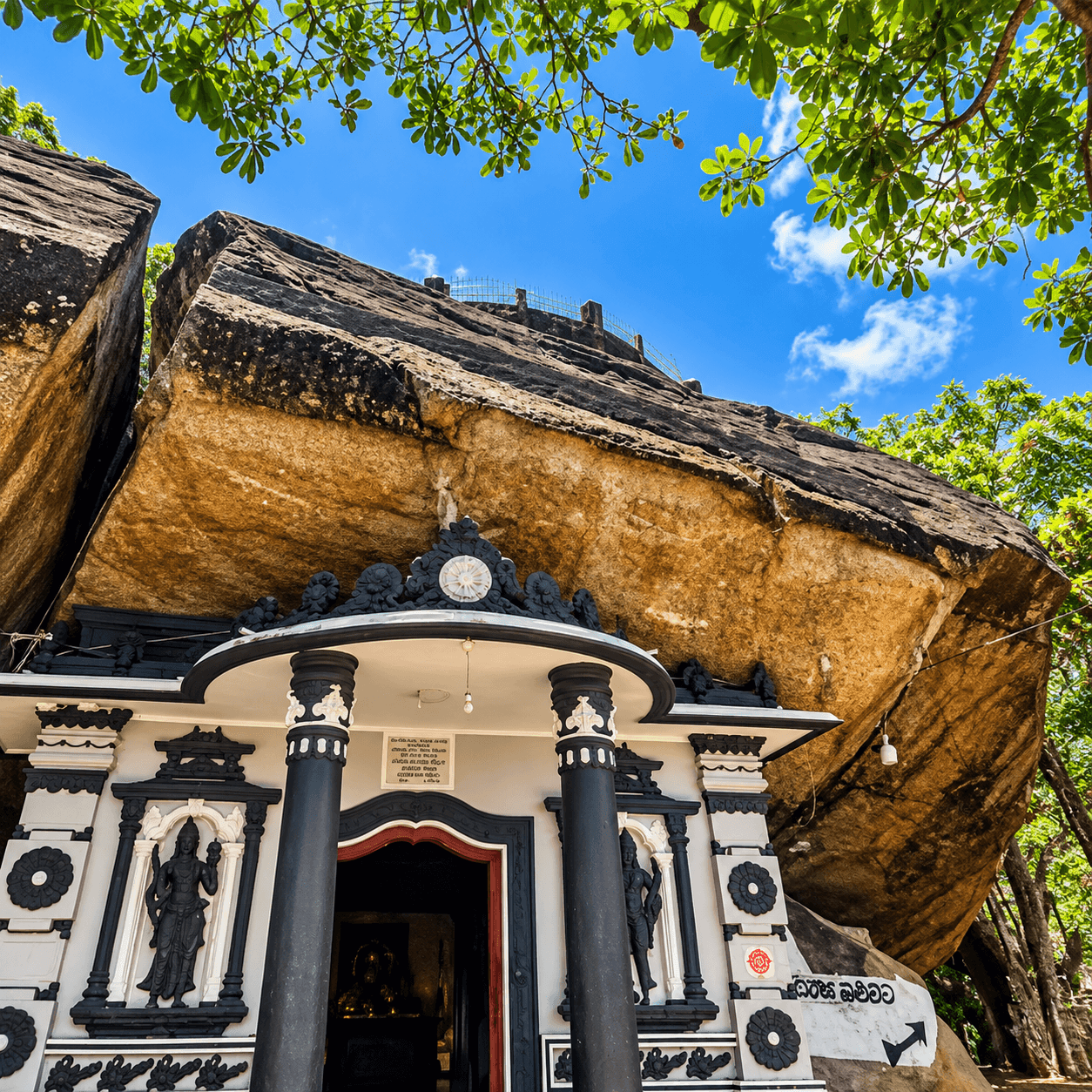
For archaeologists and epigraphists, Sankapala is an invaluable open-air archive of ancient Sri Lankan palaeography. Chiseled into the rock faces beneath the drip-ledges of the natural caves are numerous Early Brahmi inscriptions dating between the 2nd Century BC and the 1st Century AD, verifying the authentic historical antiquity of the site:
1. Epigraphical Decipherment
The primary rock inscription chiseled beneath the main cave overhang was documented and translated by pioneering archaeological commissioner Dr. Senarath Paranavitana. Written in ancient Prakrit script, the inscription reads:
"Parumaka Pusadevasa lene sagasa dine..."
Translation: "The cave of the Chieftain Phussadeva is gifted to the Sangha (the Buddhist monastic community of the four quarters, present and absent)."
This precious epigraph confirms beyond archaeological doubt that a high-ranking nobleman (*Parumaka*) named Phussadeva indeed dedicated these mountain rock shelters as Buddhist hermitages during the pre-Christian era, establishing a direct historical bridge between the mythological narratives of the *Mahavamsa* and concrete lithic evidence.
2. The Science of the Drip-Ledge (*Kataram*)
Running continuously along the upper lip of the cave openings is a meticulously chiseled groove known as a *Kataram* or drip-ledge. Ancient stonecutters suspended themselves from the cliff face on wooden scaffolding to carve these deep stone channels. During violent monsoonal downpours, rainwater cascading down the rock mountain hits the drip-ledge and falls cleanly away to the ground in a free-falling curtain, preventing a single drop of moisture from trickling into the cave interior. This ingenious ancient civil engineering has kept the cave shrines and their delicate wall plaster bone-dry for over twenty-two centuries.
Chapter 5: The Fourteen Meditation Caves & Forest Monk Traditions
The archaeological sanctuary of Sankapala encompasses fourteen distinct natural rock cave shelters (*Len*) scattered across various elevation tiers of the mountain. In antiquity, these caves served as secluded hermitages for forest meditation monks belonging to the strict *Pansukulika* (rag-wearing) tradition:
| Cave Feature | Historical Function | Architectural / Artistic Highlight |
|---|---|---|
| Cave 1: The Main Shrine Cave (*Maha Viharaya*) | Primary congregational and worship hall | Colossal 12-meter reclining Buddha statue; Kandyan fresco ceiling |
| Cave 2: The Phussadeva Hermitage Cave | Traditional meditation quarters of Phussadeva | Original Early Brahmi rock inscription; carved stone meditation slab |
| Cave 3: The Devalaya Shrine Cave | Shrine dedicated to regional guardian deities | Carved timber doorway; shrines to Kataragama and Vishnu deities |
| Cave 4: The Upper Forest Shelter | Solitary intensive meditation (*Kuti*) | Perched high on the rock face; panoramic acoustic isolation |
| Caves 5 through 14: Monastic Cells | Residential quarters for visiting forest ascetics | Natural stone niches, rock water-collection channels |
Living in these cliffside caves, the ancient ascetics practiced intensive mindfulness and breath meditation (*Anapanasati*), surrounded only by the wild jungle canopy, soaring eagles, and the nocturnal calls of leopards and bears. Walking among these silent stone corridors today, visitors can still feel the profound meditative energy that has permeated this rock for millennia.
Chapter 6: The Summit Stupa & The Panoramic Stairway Ascent
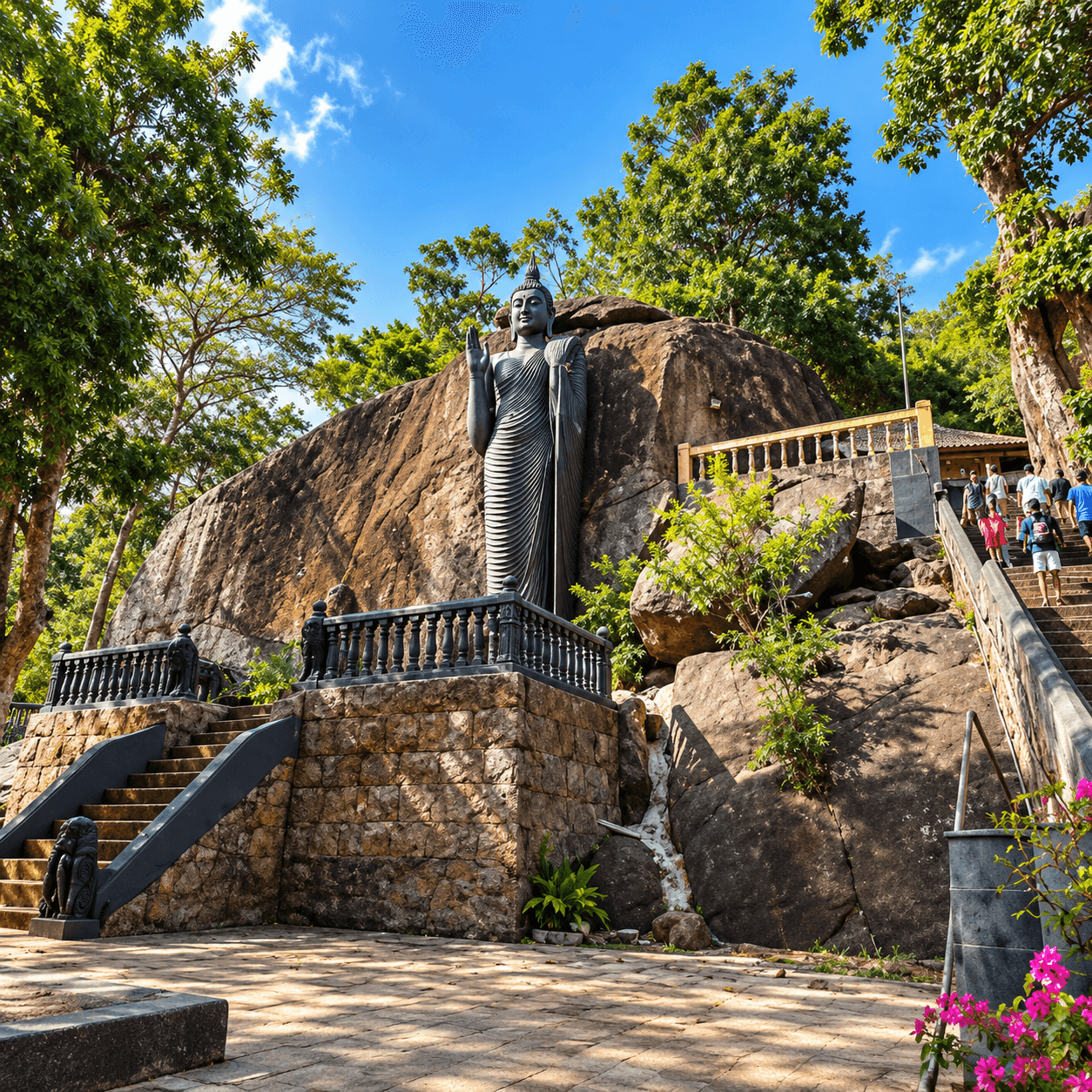
For visitors with moderate physical fitness, the climb to the summit stupa of Sankapala is the undisputed crowning highlight of the pilgrimage. A well-maintained stairway comprising approximately four hundred stone steps winds upward through granite fissures, shaded forest canopies, and narrow rock passes to the summit precipice:
1. The Ascent Experience
The climb begins gently from behind the main shrine cave, flanked by fragrant temple trees and rocky outcroppings. As you ascend higher, the stairway steepens, protected by sturdy steel safety railings. Halfway up the rock face, a natural stone resting pavilion offers a welcome breeze and your first breathtaking vista over the surrounding agricultural valleys. Listen closely as you climb: the breeze whistling through rock fissures creates natural acoustic flute-like tones, reminiscent of the warrior's conch shell.
2. The Summit Stupa & 360-Degree Panorama
Reaching the summit terrace is an exhilarating physical and spiritual reward. Perched upon the rounded granite summit is the pristine white stupa (*Dagoba*), traditionally believed to enshrine the sacred victory conch shell of Phussadeva. Surrounding the stupa is an open stone terrace offering an unobstructed 360-degree panorama across southern Sri Lanka:
- To the North: The jagged emerald wall of the Rakwana-Balangoda mountain escarpment rises majestically into the clouds.
- To the South & East: The vast, sun-drenched plains of Udawalawe stretch toward the horizon, with the silver waters of Chandrika Wewa and Udawalawe Reservoir gleaming in the distance.
- To the West: Rolling green hills of rubber plantations and terraced rice paddies sweep toward the Gem City of Ratnapura.
Standing on this wind-kissed summit at sunrise or late afternoon, as Buddhist prayer flags flutter against the endless blue sky, is a transcendent wilderness and spiritual experience that stays with travelers forever.
Chapter 7: Frescoes & Iconography of the Shrine Caves
Inside the dimly lit interior of the main shrine cave, visitors are immersed in a dazzling gallery of sacred Buddhist art spanning multiple historical epochs:
1. The Colossal Reclining Buddha
Dominating the main cave chamber is a magnificent twelve-meter reclining Buddha statue depicting the *Parinirvana* (the Buddha's final passing into ultimate peace). Sculpted from brick masonry and coated with fine traditional lime plaster, the statue radiates serenity. The master sculptor imbued the statue with subtle classical features: the right hand gently supporting the head, the slightly recessed left foot indicating the moment of departure, and delicately carved robes cascading in rhythmic folds.
2. Kandyan Era Wall Paintings
During the 18th-century revival of Buddhism under King Kirti Sri Rajasinha of Kandy, the walls and ceiling of the shrine cave were adorned with vibrant narrative frescoes painted by artists of the renowned *Sithuvam* tradition. Using natural mineral pigments derived from cinnabar (vermilion red), yellow orpiment, crushed lapis lazuli (blue), and carbon lampblack, the painters depicted scenes from the 550 *Jataka* tales (previous lives of the Buddha), the life of King Dutugemunu, and portraits of Phussadeva in his warrior and monk forms.
3. Celestial Ceilings & Lotus Rosettes
The natural undulating rock ceiling of the cave is painted to resemble a magnificent canopy of heaven. Dozens of concentric lotus rosettes (*Nelum Mal*) are framed by intricate scrollwork of mythical vines (*Liyavel*), while protective deities (*Devas*) and celestial nymphs float gracefully across the rock face, showering painted blossoms upon the reclining Buddha below.
Chapter 8: The Sacred Bodhi Tree & Monastic Compound
At the base of the mountain rock rests the lower monastic compound (*Vihara Maluwa*), centered around a majestic and ancient Bodhi tree (Ficus religiosa). According to temple records, this sacred tree was grown from an early sapling of the Anuradhapura Jaya Sri Maha Bodhi, planted over two thousand years ago.
The Bodhi tree is encircled by a gilded golden fence (*Ran Veta*) and four stone flower altars (*Asana*). Throughout the day, local villagers from Pallebedda and pilgrims from across Sri Lanka come to circumambulate the tree, lighting terracotta oil lamps filled with fragrant coconut oil, offering purple water lily blossoms, and pouring water over the sacred roots while chanting blessings for good health and protection. Sitting on a stone bench beneath the whispering, heart-shaped leaves of the Bodhi tree provides a moment of meditative calm that settles the mind after long travels.
Chapter 9: Temple Etiquette, Modest Dress & Pilgrim Protocols
Sankapala Raja Maha Viharaya is an active, deeply revered place of worship, not merely an archaeological site. Visitors should adhere to these important cultural respect guidelines:
- Modest Attire: Both men and women must wear clothing that respectfully covers the shoulders and knees. White or light-colored clothing is culturally preferred and highly appreciated by the monastic community.
- Remove Footwear & Headgear: Before stepping onto the sand terraces of the shrine caves, the Bodhi tree compound, or the summit stupa terrace, you must remove your shoes, sandals, hats, and sunglasses. Carry a pair of socks if visiting during sunny midday hours, as the stone terrace can become hot.
- Respectful Photography: Photography is generally permitted inside the cave shrines, but never pose with your back turned directly against a Buddha statue, as this is considered culturally disrespectful. Flash photography should be avoided to protect antique natural pigments on the wall paintings.
- Quiet Contemplation: Keep voices low and mobile phones on silent mode throughout the temple grounds to preserve the peaceful meditation ambiance for resident monks and pilgrims.
- Voluntary Donations: Entrance is completely free; if you wish to support the preservation of this ancient heritage monument, place a modest cash donation into the padlocked temple donation boxes (*Panduru Petti*).
Chapter 10: Combining Sankapala Temple with an Udawalawe Day Trip
Sankapala Temple is located directly along the main A18 arterial highway, making it an extraordinarily convenient and enriching addition to any southern Sri Lanka itinerary:
- Option A: En-Route Stopover from Colombo / Ratnapura: If traveling from Colombo or the gem-mining city of Ratnapura toward Udawalawe, Sankapala is perfectly positioned at the 2-hour driving mark. Stop for 1 to 1.5 hours to explore the caves, climb the steps, and stretch your legs before arriving at your safari hotel in time for lunch.
- Option B: Cultural Afternoon Tour: Following an early morning 5:30 AM safari inside Udawalawe National Park, rest during the heat of midday. At 3:00 PM, take a short 25-minute drive to Sankapala. Explore the shaded cave shrines and climb to the summit stupa just in time to watch the sunset paint the southern plains in breathtaking amber tones.
- Option C: Tri-Cultural Heritage Loop: Pair Sankapala Temple with a visit to the historic Maduwanwela Walawwa manor house (located just 15 km away via Kolonne) and the Elephant Transit Home for a comprehensive full-day cultural and conservation circuit.
Chapter 11: Geological Architecture of the Pallebedda Inselberg
Geologically, the colossal rocky outcrop of Sankapala is classified by geomorphologists as an "inselberg"—an isolated residual hill of resistant metamorphic bedrock rising steeply above the surrounding weathered plain. Formed during the late Precambrian period over 600 million years ago, the rock consists of dense charnockitic gneiss rich in quartz and feldspar.
Because charnockite is extraordinarily resistant to chemical weathering and erosion compared to softer surrounding schists and marbles, millions of years of monsoonal rains stripped away the softer surface strata, leaving the colossal monolithic towers of Sankapala standing tall. The natural cave shelters were sculpted through spheroidal exfoliation and mechanical fracturing along tectonic joint lines, creating the sweeping overhanging rock ceilings that ancient monks recognized as ideal hermitage dwellings.
Chapter 12: Epigraphical Evolution: From Early Brahmi to Medieval Sinhala
In addition to the primary 2nd Century BC dedication inscription of Phussadeva, the rocky crags of Sankapala preserve fascinating evidence of the linguistic and epigraphical evolution of the Sinhala language across two millennia. Epigraphists studying the various rock faces have identified short inscriptions, stone mason marks, and donor graffiti dating from the Late Brahmi (3rd–5th Century AD) and Medieval Sinhala (8th–12th Century AD) epochs.
These sequential inscriptions demonstrate how the angular, geometric Early Brahmi characters gradually evolved into the fluid, rounded, circular letterforms characteristic of classical Sinhala script—an evolution driven largely by the transition from chiseling on hard granite to writing with iron styluses (*Panhinda*) on delicate palm-leaf manuscripts (*Ola*). Several medieval donor records document gifts of paddy fields, coconut groves, and sesamum oil to the temple by regional chieftains during the reign of King Parakramabahu I of Polonnaruwa, proving that Sankapala remained an active, thriving monastic pilgrimage center continuously for well over a thousand years.
Archaeological surveys conducted by the Department of Archaeology have also documented ancient masonry cisterns and terracotta water storage vessels embedded near the higher caves, revealing how ancient ascetics harvested and purified rainwater during dry periods to sustain their solitary meditation retreats high on the mountain cliff.
Chapter 13: Frequently Asked Questions (FAQ)
Q1: What is the historical significance of Sankapala Cave Temple?
Sankapala dates back over 2,200 years to the 2nd Century BC. It was gifted to Phussadeva, one of the ten legendary warrior giants (*Dasa Maha Yodhayo*) of King Dutugemunu, who renounced warfare to become an enlightened Buddhist monk.
Q2: How far is Sankapala Temple from Udawalawe National Park?
Sankapala is located in Pallebedda along the A18 highway, approximately 24 kilometers north of Udawalawe, taking around 30 minutes by private car, taxi, or local bus.
Q3: What is the dress code for visiting Sankapala Cave Temple?
Visitors must dress respectfully in modest clothing covering shoulders and knees (preferably white or light colors). Shoes, hats, and sunglasses must be removed before entering sacred cave shrines and the stupa terrace.
Q4: Is there an entrance fee to visit Sankapala Temple?
No, entrance to the temple is completely free. However, voluntary donations into temple collection boxes (*Panduru Petti*) to support temple maintenance and resident monk welfare are welcomed.
Q5: How many rock caves are there at Sankapala?
Archaeologists have identified fourteen distinct natural rock cave shelters (*Len*) carved with drip-ledges (*Kataram*), several of which feature ancient Early Brahmi inscriptions dating to the 2nd–1st Century BC.
Q6: Can visitors climb to the summit stupa of Sankapala rock?
Yes, a well-constructed stone stairway with handrails leads visitors up the rocky crag to the summit stupa, offering panoramic 360-degree views stretching across Sabaragamuwa and the southern plains.
Q7: What is the story of Phussadeva's conch shell?
According to ancient chronicles, Phussadeva blew the sacred victory conch shell (*Jaya Sankha*) during King Dutugemunu's triumphant campaign. After becoming a monk, he enshrined the conch shell inside the summit stupa atop the rock, giving the temple its name: 'Sankhapala' (Guardian of the Conch).
Q8: What kind of artwork is found inside the shrine caves?
The inner shrine caves feature colossal reclining Buddha statues and intricate wall frescoes from both the ancient Anuradhapura and 18th-century Kandyan revival periods, painted with natural mineral pigments.
Q9: Are monkeys common around the temple premises?
Yes, troops of endemic Toque Macaques and Grey Langurs inhabit the sacred rock trees. Keep food items and flower offerings securely held or stored inside bags.
Q10: Can Sankapala be visited as part of an Udawalawe day trip?
Yes, it is a very convenient and rewarding cultural stopover located directly on the main highway, easily visited on the way to or from Udawalawe or combined with an afternoon safari.

.png)