Chapter 1: Introduction to Udawalawe National Park
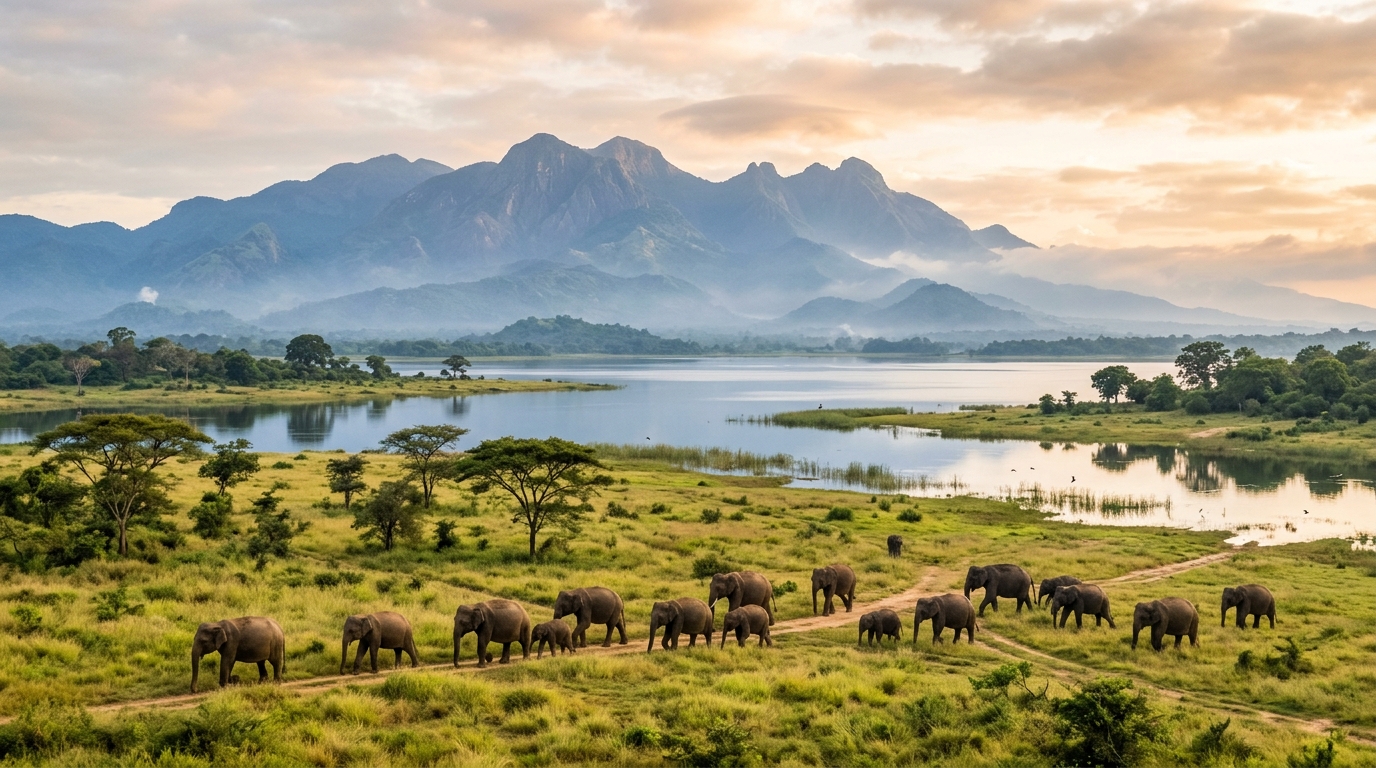
Nestled across the boundary dividing Sri Lanka's Sabaragamuwa and Uva Provinces, Udawalawe National Park stands undisputed as one of the premier terrestrial wildlife sanctuaries in all of South Asia. Spanning an expansive 30,821 hectares (76,160 acres or 308 square kilometers), this extraordinary protected ecological basin was formally designated as a National Park on June 30, 1972, under the stewardship of the Department of Wildlife Conservation (DWC). Its creation served a vital dual purpose: first, to safeguard the critical catchment area of the colossal Udawalawe Reservoir formed by damming the perennial Walawe River, and second, to establish an inviolable, permanent sanctuary for hundreds of wild Asian elephants (*Elephas maximus maximus*) displaced by extensive agricultural development in the surrounding lowlands.
Geographically situated approximately 165 kilometers southeast of Colombo, Udawalawe lies in the southern dry zone of the island, characterized by an average annual rainfall of approximately 1,500 millimeters and mean ambient temperatures hovering consistently between 27°C and 32°C. Yet, unlike the arid, densely thorny scrublands of southeastern Yala or the dense northwestern monsoon forests of Wilpattu, Udawalawe exhibits an open, undulating topography reminiscent of the vast East African savannas. Broad plains of tall Guinea grass (*Megathyrsus maximus*), scattered teak plantations, dry deciduous scrub, and sweeping freshwater wetlands framed by the dramatic, misty silhouettes of the Horton Plains and Rakwana mountain ranges create a landscape of breathtaking visual grandeur.
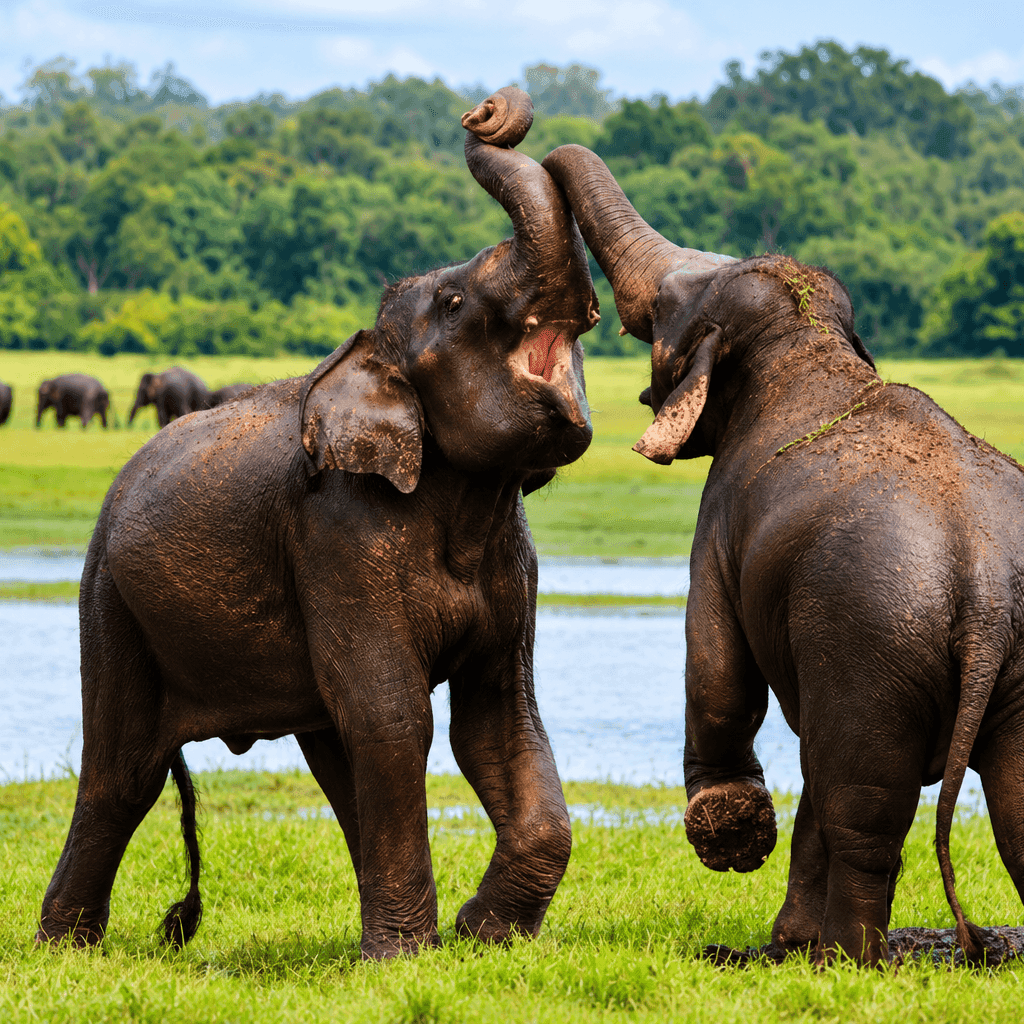
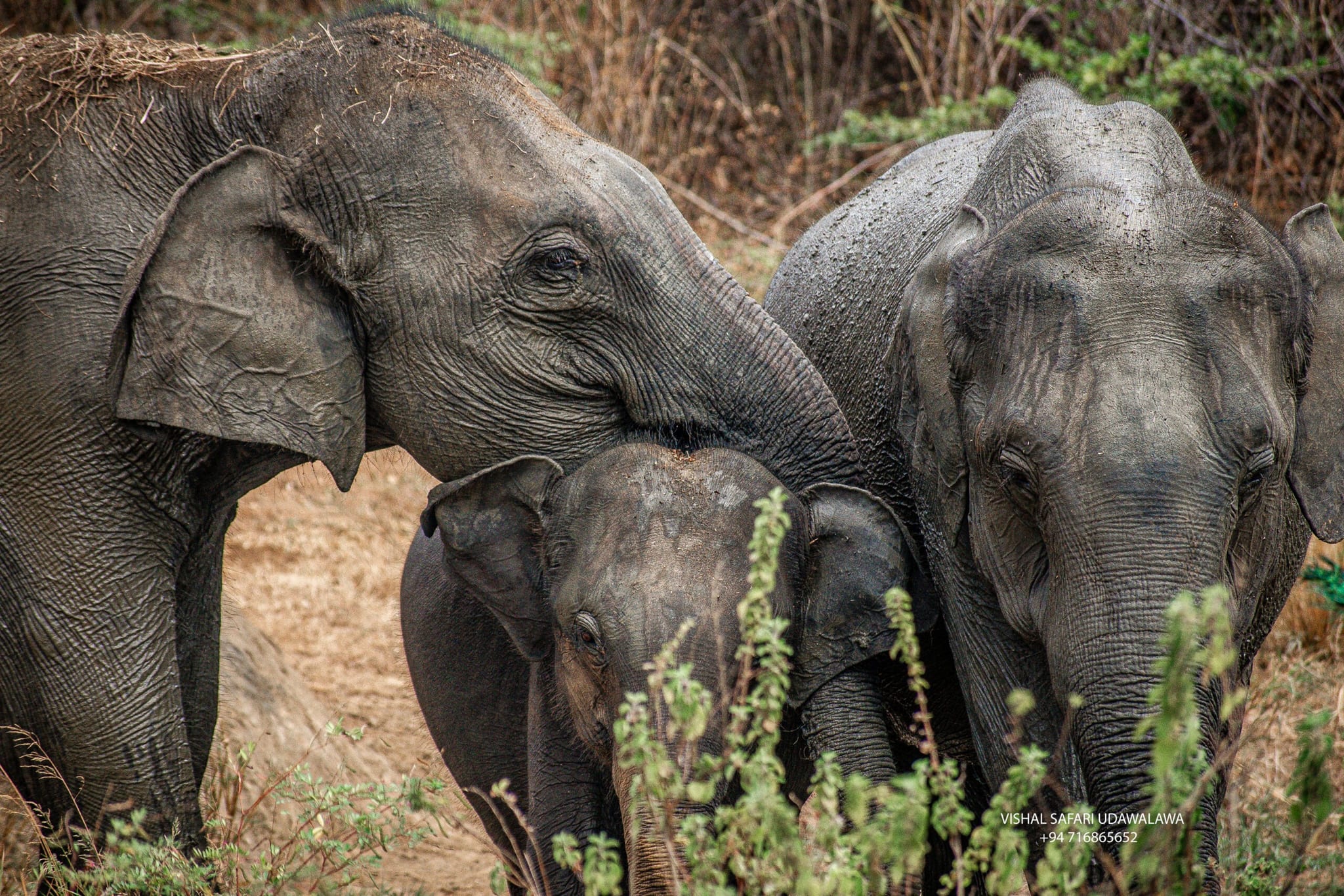
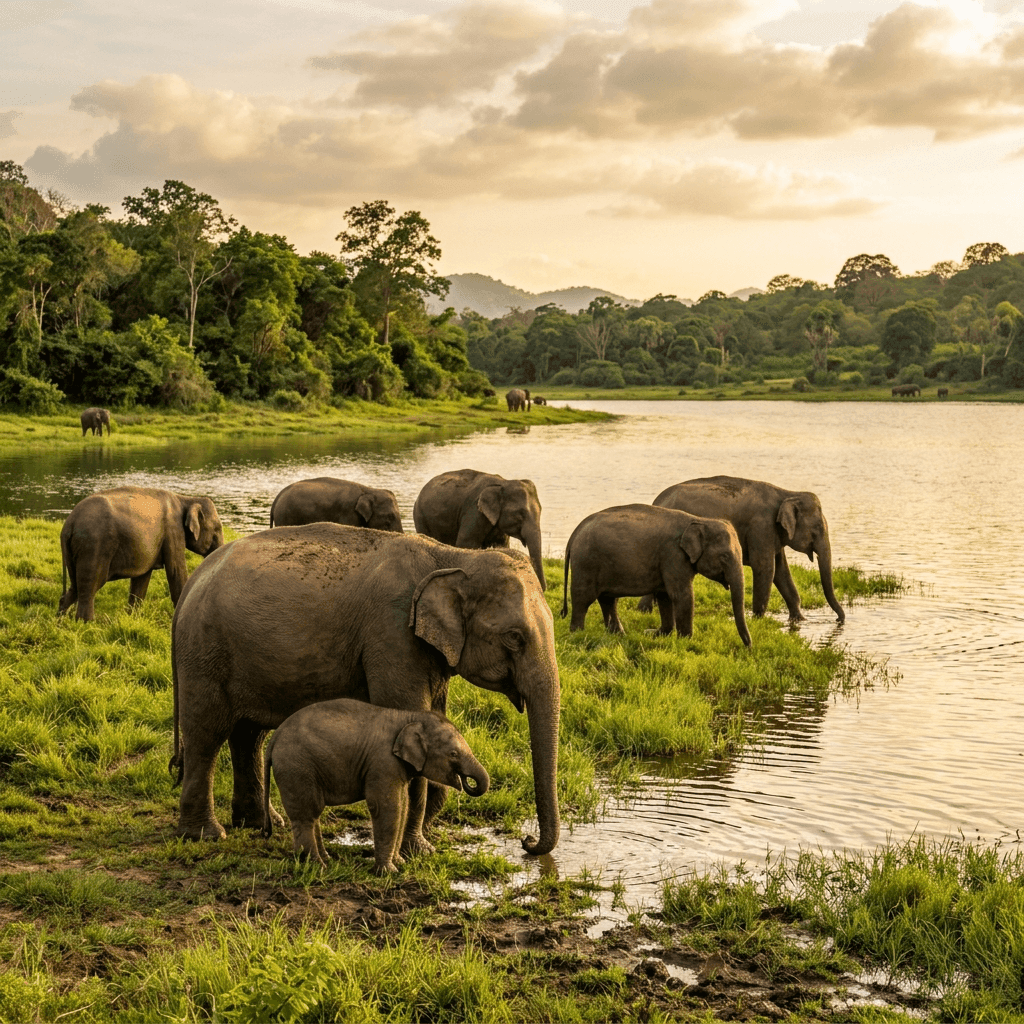
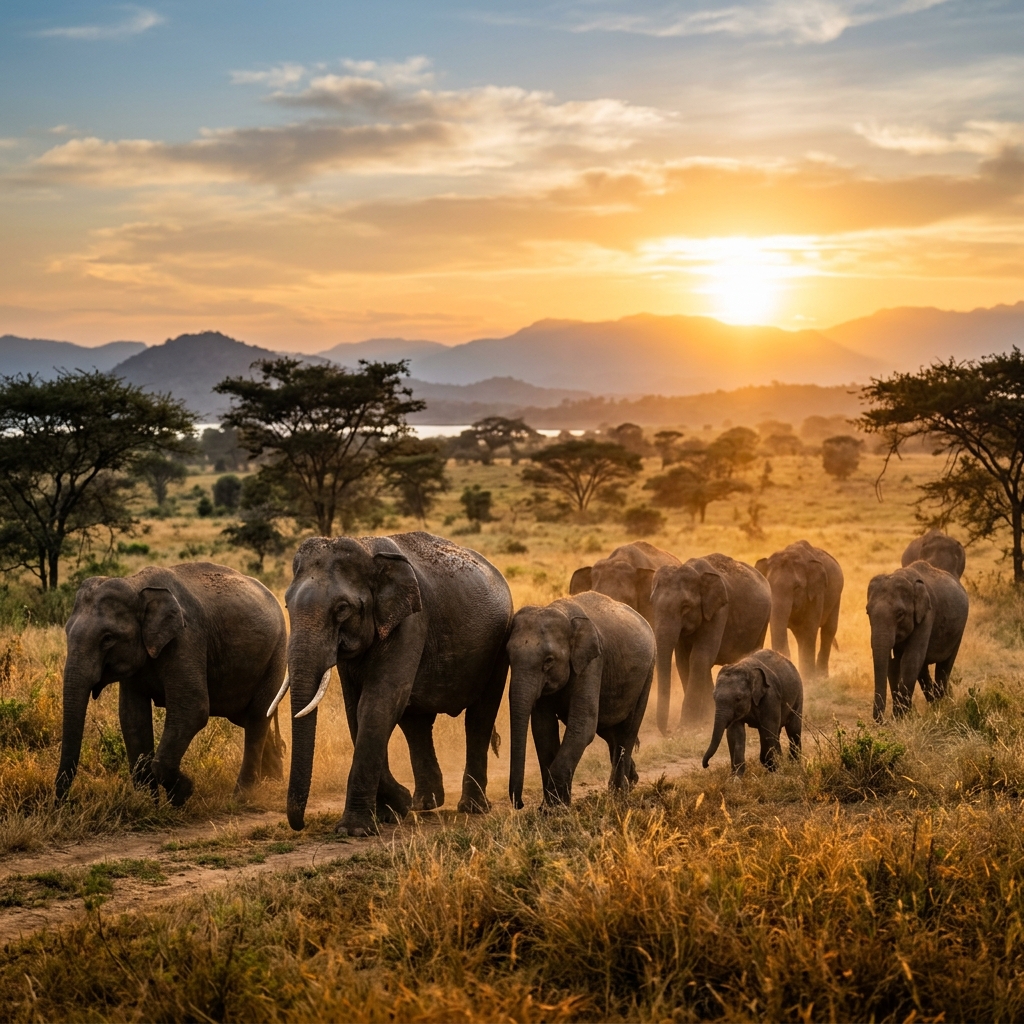
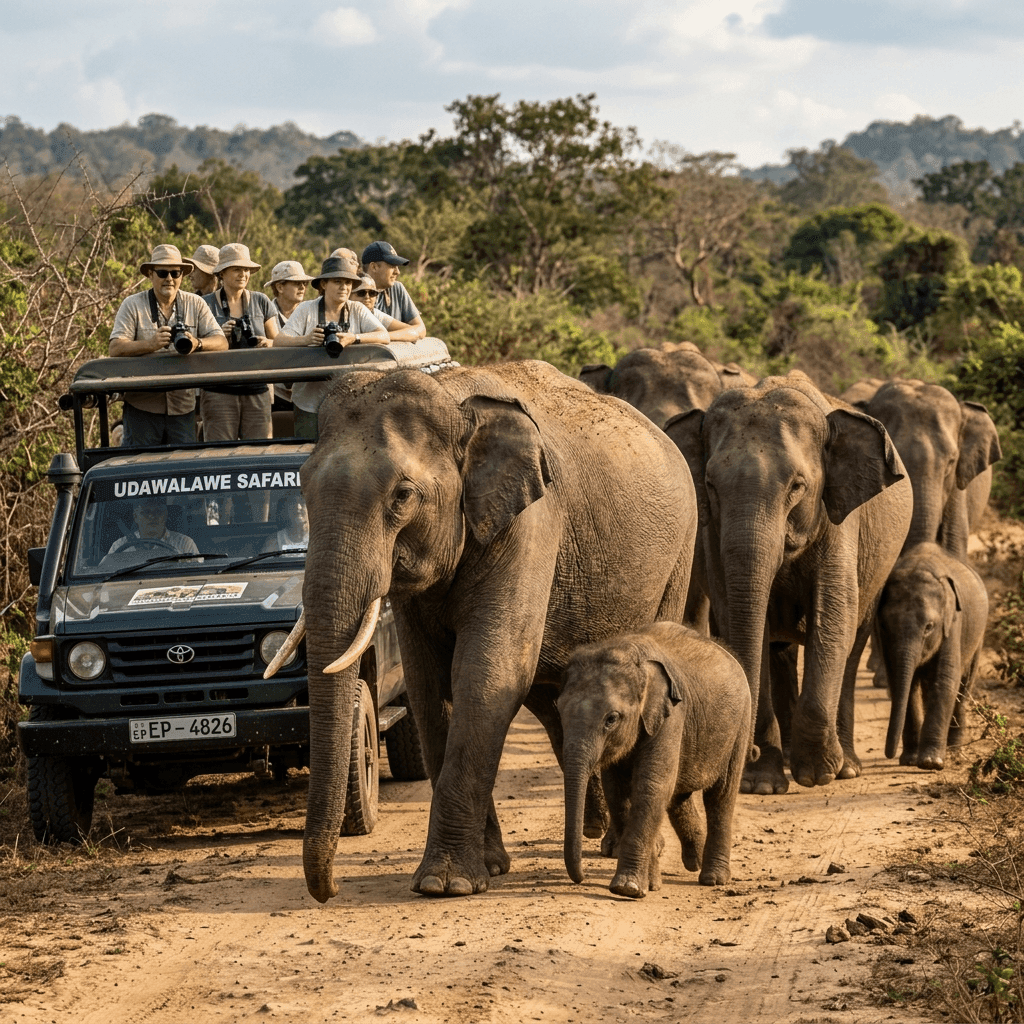
What elevates Udawalawe above all other national parks in Sri Lanka—and arguably across the entire continent—is the absolute consistency and intimacy of its wildlife encounters. In many renowned parks worldwide, observing wild elephants requires days of arduous tracking through dense thickets with no guarantee of success. In Udawalawe, an estimated 600 to 800 wild elephants reside permanently within the park borders, representing one of the highest densities of wild pachyderms anywhere on Earth. For international travelers and local adventurers alike, a safari in Udawalawe does not merely offer a chance of seeing an elephant; it delivers a near 100 percent certainty of encountering multiple generations of family herds, playful calves, and majestic solitary bulls at remarkably close quarters.
Chapter 2: Comparing Udawalawe with Yala, Wilpattu & Minneriya
Travelers planning a wildlife holiday in Sri Lanka frequently face a classic dilemma: which national park should they choose? Each of the island's primary wildlife reserves possesses distinct ecological personalities, terrain features, and animal specialties. Understanding these contrasts ensures your travel expectations match reality:
1. Udawalawe vs. Yala National Park
Yala (Ruhuna) National Park is internationally famous as the world’s premier destination for observing the Sri Lankan Leopard (Panthera pardus kotiya). However, Yala’s fame comes at a significant cost: heavy vehicular congestion, strict route restrictions, and dense thorny scrub that frequently obscures animal viewing. Furthermore, elephant herds in Yala are generally smaller and more skittish. Udawalawe, by contrast, offers far wider visibility across open grasslands, significantly less vehicular crowding, and vastly superior elephant viewing. If your heart is set on witnessing large elephant family herds interacting peacefully without dozen-jeep traffic jams, Udawalawe is decisively the superior destination.
2. Udawalawe vs. Wilpattu National Park
Wilpattu is Sri Lanka’s largest and oldest national park, renowned for its picturesque natural sand-rimmed water basins known as *villus* and thriving populations of both leopards and Sloth Bears (Melursus ursinus). However, Wilpattu’s dense dry monsoon forest vegetation means that wildlife encounters require extensive driving across hours of thick foliage, and elephant sightings are sporadic and seasonal. Udawalawe’s open savanna delivers immediate, continuous, and reliable animal encounters within minutes of passing through the gate, making it vastly more rewarding for families with young children and travelers with tight itineraries.
3. Udawalawe vs. Minneriya / Kaudulla National Park
Minneriya is internationally celebrated for "The Gathering," an extraordinary seasonal wildlife event where hundreds of elephants congregate along the receding shores of the ancient Minneriya tank between July and October. However, outside this specific dry-season window, elephant numbers in Minneriya fluctuate dramatically, as herds migrate freely through forest corridors between Kaudulla and Hurulu Eco Park. In stark contrast, Udawalawe boasts a stable, resident, non-migratory population that remains inside the park perimeter 365 days a year. Whether you visit in January, May, August, or November, elephant sightings in Udawalawe remain phenomenally consistent.
Chapter 3: Complete Fauna & Flora Inventory
While Asian elephants are undeniably the crown jewel of Udawalawe, the park is a rich biodiversity stronghold harboring dozens of mammal species, remarkable reptilian predators, and a globally celebrated avian population:
1. Mammalian Biodiversity
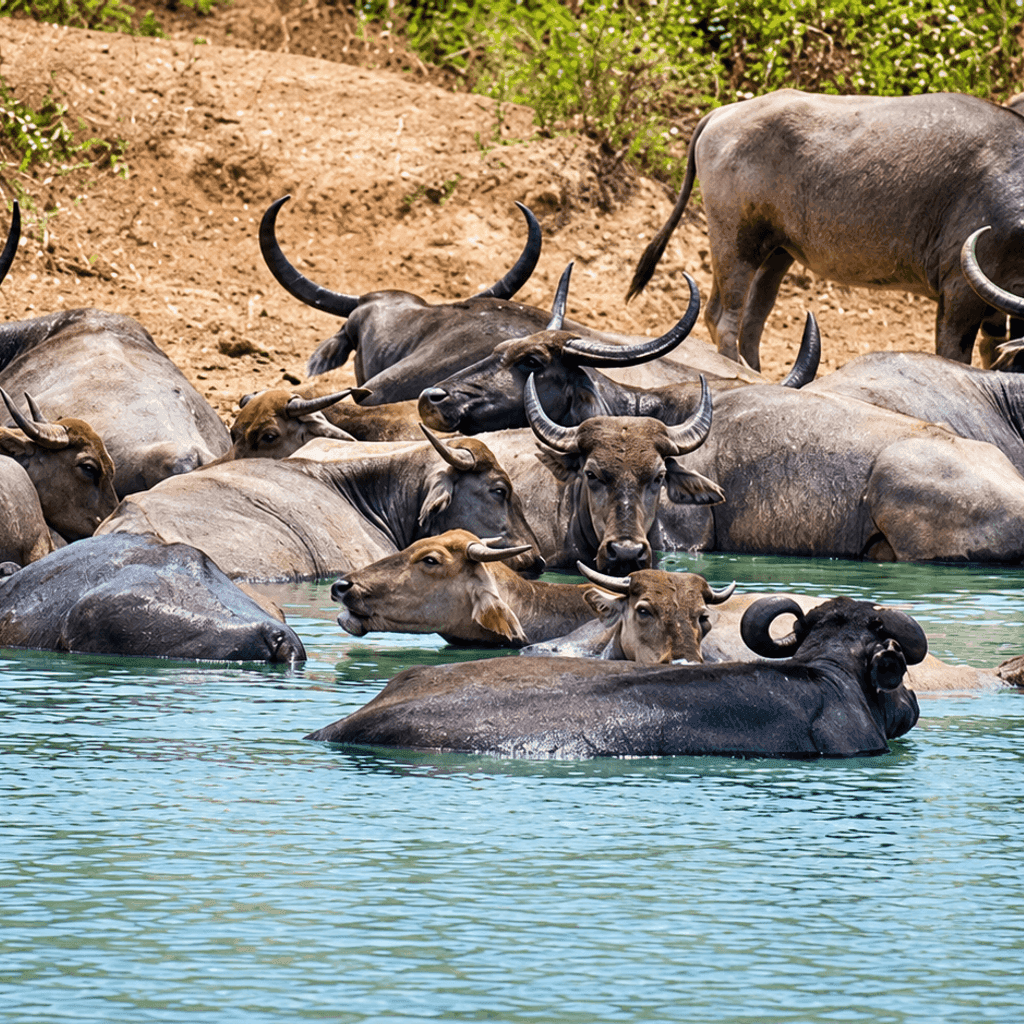
Beyond elephants, the open plains are grazed by thousands of Spotted Deer (Axis axis), which congregate in large nursery herds near forest edges. Massive Wild Water Buffalo (Bubalus arnee)—including both genetically wild individuals and feral domestic crosses—spend the hot daylight hours submerged in muddy lagoons with only their sweeping horns and nostrils visible. Sounders of Wild Boar (Sus scrofa) root vigorously through the soil, while golden jackals (Canis aureus) hunt in pairs across open clearings. Small, shy nocturnal mammals include the Indian Pangolin (Manis crassicaudata), Indian Porcupine (Hystrix indica), Ruddy Mongoose (Urva smithii), and three distinct species of wildcat: the Jungle Cat (Felis chaus), the Rusty-spotted Cat (Prionailurus rubiginosus), and the endangered Fishing Cat (Prionailurus viverrinus).
2. Avian Splendor (184+ Species)
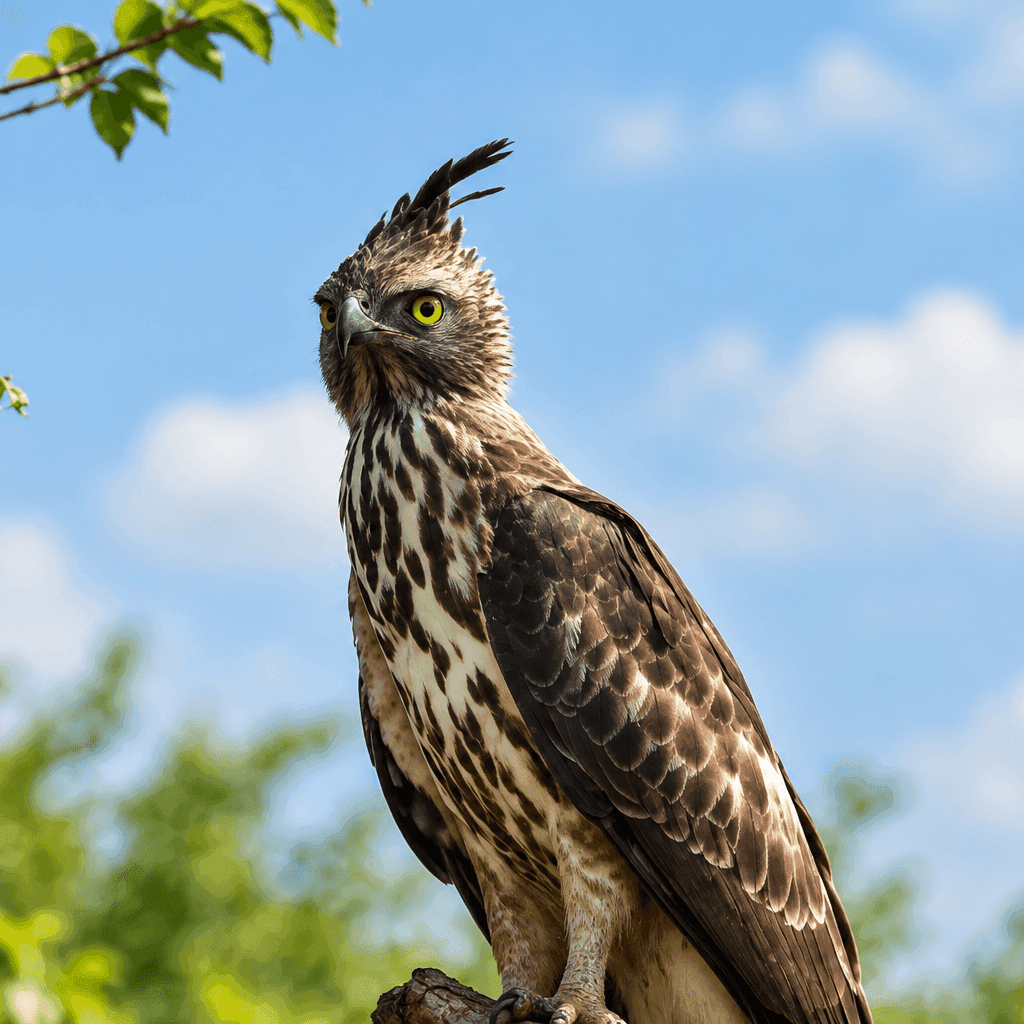
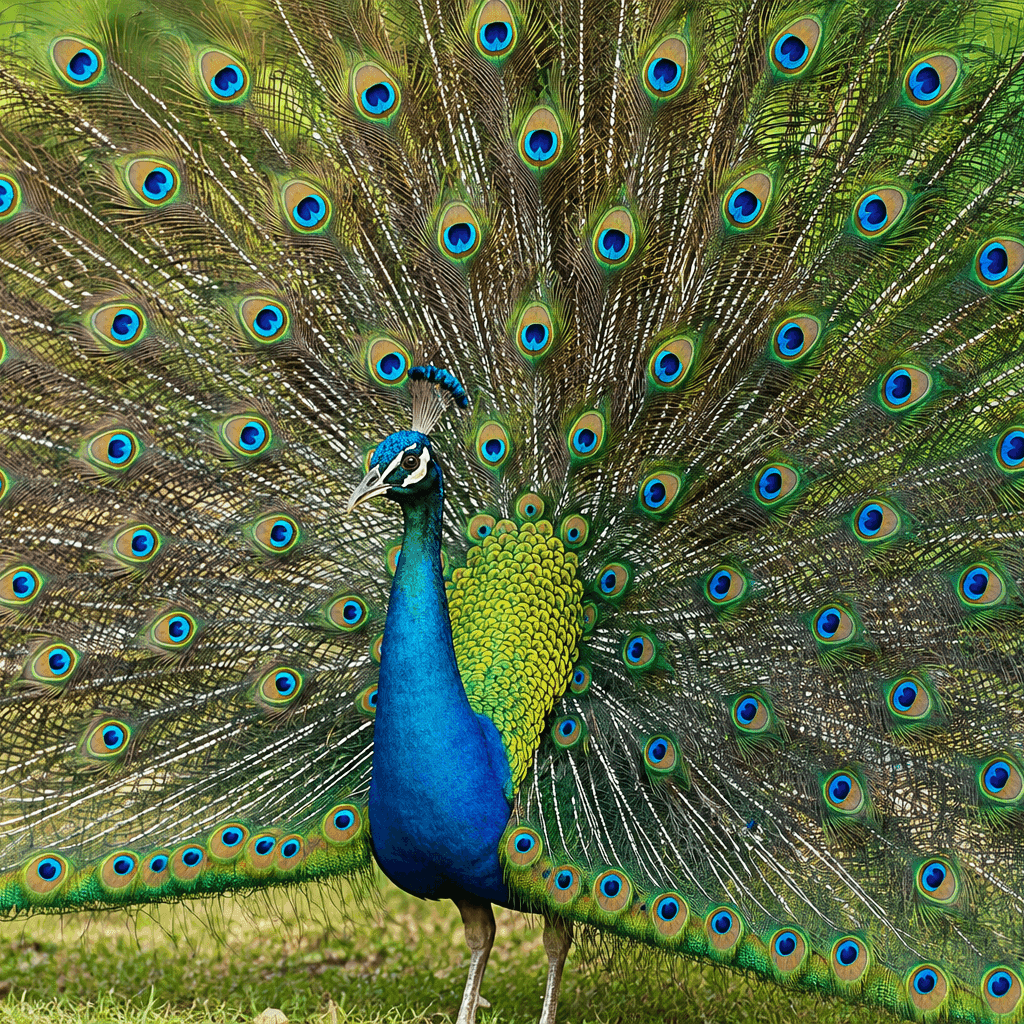
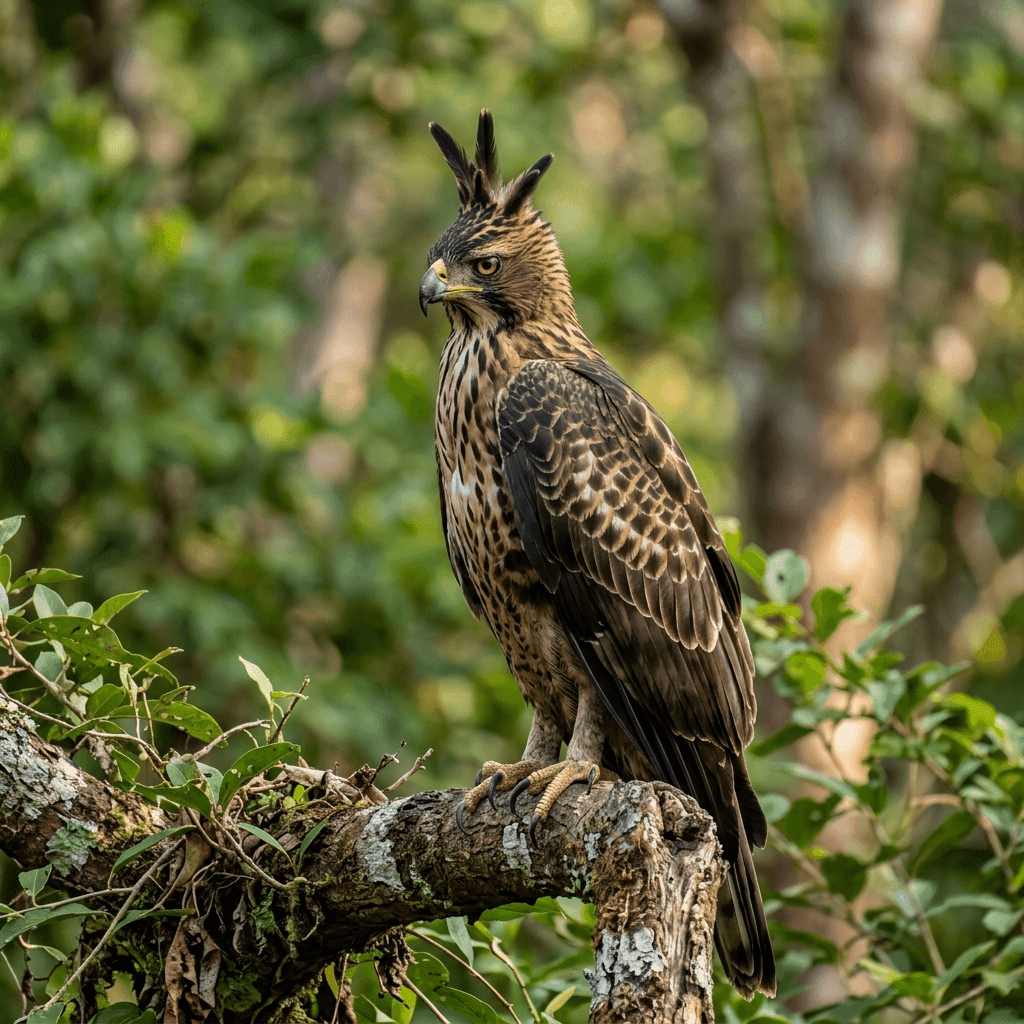
Udawalawe is an Important Bird Area (IBA) recognized by BirdLife International. The massive reservoir and intersecting river courses create a wetland paradise that attracts over 184 species of resident and migratory birds. Apex raptors dominate the skies: Crested Serpent Eagles, Changeable Hawk-Eagles, White-bellied Sea Eagles, and Grey-headed Fish Eagles perch proudly on exposed branches. Along the wetlands, one encounters large colonies of Painted Storks, Asian Openbills, Black-headed Ibises, Eurasian Spoonbills, and Spot-billed Pelicans. The dry scrub resounds with the calls of four distinct species of colorful Kingfishers (Common, Pied, White-throated, and Stork-billed), flocks of Orange-breasted Green Pigeons, Indian Rollers, and the endemic Sri Lanka Grey Hornbill.
3. Reptilian and Amphibian Inhabitants
The waterways of Udawalawe support dense populations of Mugger Crocodiles (Crocodylus palustris), which grow to lengths exceeding four meters. During sunny mornings, dozens of these prehistoric apex predators can be seen basking simultaneously along the muddy banks of the reservoir. The park is also home to the Asian Water Monitor (Varanus salvator), Land Monitor (Varanus bengalensis), Indian Star Tortoise (Geochelone elegans), and numerous serpent species, including the Indian Rock Python (Python molurus) and the venomous Russell’s Viper (Daboia russelii).
4. Botanical Architecture
The park’s plant community features majestic Kumbuk trees (Terminalia arjuna) whose massive root systems stabilize the banks of the Walawe River. The dry deciduous interior hosts commercially valuable timber species such as Satinwood (Chloroxylon swietenia), Halmilla (Berrya cordifolia), and Ebony (Diospyros ebenum), interspersed with medicinal shrubs including Cassia fistula (Golden Shower tree) and vast fields of perennial grasses that provide the endless biomass required to sustain hundreds of grazing pachyderms.
Chapter 4: Seasons, Weather & When to Visit Month-by-Month
Udawalawe is a true year-round destination, but understanding seasonal nuances helps align your visit with specific wildlife and photographic preferences:
| Season | Months | Weather & Temperature | Wildlife Viewing Highlights |
|---|---|---|---|
| Dry Season Peak | May to September | Hot, dry, windy; 31°C to 35°C; minimal rainfall | Spectacular waterhole gatherings; thinned vegetation yields maximum visibility; active elephant bathing |
| Inter-Monsoon Green | October to November | Afternoon showers; 26°C to 30°C; lush green scenery | Lush emerald landscapes; newborn elephant calves; dramatic cloud formations for photography |
| Migratory Bird Peak | December to February | Pleasantly warm; 24°C to 29°C; cool early mornings | Arrival of thousands of European & Asian migratory birds; peak tourist season; optimal morning safari weather |
| Early Summer Dry | March to April | Warm, clear skies; 28°C to 33°C; low humidity | Excellent photography conditions; raptor nesting activity; low tourist numbers for serene drives |
Chapter 5: Safari Packages Explained: 3-Hour, Morning, Evening & Full-Day
To cater to varying budgets, time constraints, and travel styles, professional safari operators offer four primary tour structures:
1. The 3-Hour Budget Express Safari
Designed for travelers passing through between southern beach towns (Galle, Mirissa) and the central highlands (Ella), this tour covers the primary southern game loops. While brief, it reliably delivers multiple elephant family encounters and essential park landscapes at minimal cost.
2. The Morning Sunrise Safari (6:00 AM – 10:00 AM)
The definitive choice for first-time visitors and families. Entering at gate opening guarantees the coolest temperatures of the day, active feeding herds, vocal avian activity, and the softest directional light for photography.
3. The Evening Sunset Safari (3:00 PM – 6:00 PM)
Focused on catching the golden hour and twilight resurgence. This shift showcases dramatic elephant water-wallowing and swimming behaviors in the reservoir, with spectacular sunset silhouette photo opportunities.
4. The 12-Hour Full-Day Wilderness Expedition (6:00 AM – 6:00 PM)
The connoisseur's choice. Includes exploration of remote northern hinterlands (Mau Ara, teak forests), deep interior tracks where no other jeeps venture, and a relaxing midday riverside bush lunch under Kumbuk trees.
Chapter 6: Park Permits, Entry Rules & Ticketing Guide
Entering Udawalawe National Park requires official statutory documentation issued by the Department of Wildlife Conservation (DWC). Understanding the fee structure prevents confusion at the gate:
1. Permit Components: The official park entrance fee consists of four statutory charges: (a) Individual passenger entrance ticket (differentiated between foreign adults, foreign children aged 6-12, and local Sri Lankan citizens); (b) Official vehicle entry permit fee per safari jeep; (c) Departmental service charge per vehicle; and (d) Mandatory Government Value Added Tax (VAT) and nation-building levies.
2. How to Purchase: Permits can be purchased on the morning of entry directly at the park’s main gate ticket office using local Sri Lankan Rupees (LKR) or international credit cards (Visa / Mastercard). Reputable safari operators handle the entire permit procurement process on your behalf, pre-calculating the exact fees so you avoid waiting in ticket lines.
3. Children Under 6: Children under six years of age receive complimentary entrance to the national park, though they must still be registered on the master party permit.
4. Compulsory Ranger Policy: Whenever available, the DWC assigns a certified wildlife tracker or ranger to accompany safari jeeps. These rangers possess extraordinary eyesight and tracking skills, assisting your driver in locating camouflaged wildlife. While their service is technically included in the entrance fee, offering a modest gratuity (LKR 2,000 – 3,000) for excellent service is customary and deeply appreciated.
Chapter 7: How to Reach Udawalawe: Comprehensive Transport Guide
Udawalawe’s strategic geographical position in south-central Sri Lanka makes it an effortless, logical hub connecting the southern coast with the central tea hill country:
- From Ella / Central Highlands (2.0 to 2.5 Hours): Descend via the scenic Wellawaya road (A23 / A2), passing Rawana Ella waterfall, and connect onto the Thanamalwila-Udawalawe highway. Private taxi transfers or local buses run regularly.
- From Galle / Mirissa / Matara (2.0 to 2.5 Hours): Travel east via the Southern Expressway (E01) exiting at Barawakumbuka or Godakawela, or follow the coastal highway through Tangalle and Ambalantota, heading north on the Nonagama-Embilipitiya highway (A18).
- From Colombo / BIA Airport (3.5 to 4.0 Hours): Take the Southern Expressway (E01) to the Barawakumbuka interchange, followed by a smooth 35-kilometer drive north through Embilipitiya directly into Udawalawe town.
- From Yala / Tissamaharama / Hambantota (1.5 to 2.0 Hours): Travel west via the Ridiyagama-Embilipitiya corridor or the Tissamaharama-Thanamalwila road, making cross-park transfers between Yala and Udawalawe remarkably convenient.
Chapter 8: Accommodations & Where to Stay
Udawalawe offers an eclectic, welcoming spectrum of lodging choices tailored to every travel budget:
1. Luxury Glamping & Wilderness Lodges
High-end eco-resorts located along the river perimeter feature luxurious, air-conditioned canvas safari tents mounted on elevated wooden decks, private plunge pools, five-star outdoor dining, and naturalists who accompany private game drives.
2. Riverside Mid-Range Resorts
Charming, beautifully landscaped hotels situated along the banks of the Walawe River or near the town center. These properties offer spacious family rooms, swimming pools, lush gardens teeming with birds, and on-site restaurants serving delicious authentic Sri Lankan curries and Western breakfast spreads.
3. Intimate Eco-Homestays & Budget Guesthouses
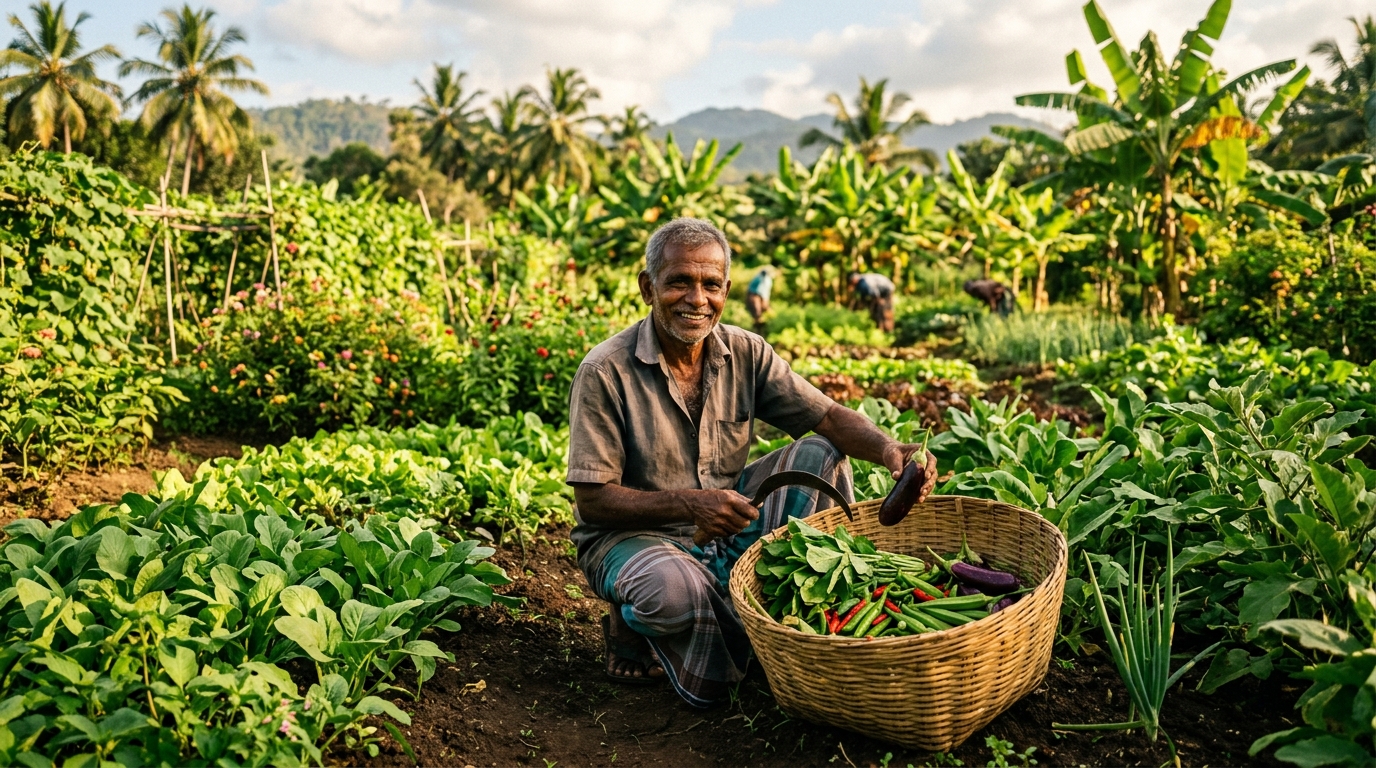
Run by warm, hospitable local families, these cozy homestays provide clean, comfortable air-conditioned rooms, bicycle rentals, and home-cooked meals prepared with organic vegetables harvested from nearby chena farms. Staying at a local homestay directly empowers rural community economies.
Chapter 9: Scientific Research, GPS Satellite Collaring & Asian Elephant Ecology
Udawalawe National Park is not merely a premier tourist attraction; it is one of the most critical living laboratories for Asian elephant behavioral ecology on the planet. For over three decades, international wildlife biologists, local universities, and the Department of Wildlife Conservation (DWC) have conducted ground-breaking demographic and genetic research within this 308-square-kilometer sanctuary. Renowned projects such as the Udawalawe Elephant Research Project (UERP)—one of the longest-running individual-based scientific studies of Asian elephants in existence—have compiled extensive photographic identification catalogues documenting more than 1,000 individual elephants that have utilized the reserve over successive generations.
Every elephant in Udawalawe possesses a unique physical fingerprint. Field biologists identify individual elephants through a combination of ear characteristics: the unique pattern of tears, notches, and holes along the ear margins; the degree of ear fold along the top rim; and the distinctive configuration of pinkish depigmentation freckles on the ears and trunk. Furthermore, tail characteristics—such as the length and brush density of the tail hair, or traumatic tail loss from crocodile encounters—provide immediate secondary identification. By cataloguing these physical markers, scientists track reproductive rates, calf survival metrics, inter-herd alliances, and life expectancies spanning several decades.
In recent years, the DWC has implemented high-tech satellite GPS collaring initiatives on key matriarchs and wide-ranging solitary bulls. These specialized GPS collars transmit real-time geospatial telemetry coordinates via satellite networks to conservation headquarters in Colombo. The resulting data maps reveal vital seasonal movement corridors, identifying the exact agricultural boundaries where elephants are most prone to fence breaching. This real-time spatial intelligence allows rapid-response wildlife ranger teams to intercept wandering herds and herd them gently back into the park before conflict with rural farming communities can occur.
Chapter 10: Conservation & Community Coexistence in the Greater Udawalawe Landscape
While Udawalawe represents a triumphant conservation success story, it exists within a delicate, contested ecological landscape. Across southern Sri Lanka, expanding agricultural settlements, commercial sugarcane plantations, and infrastructure developments have historically fragmented traditional elephant migratory routes, resulting in Human-Elephant Conflict (HEC).
To mitigate this conflict, the Department of Wildlife Conservation, with support from conservation NGOs and local community councils, has ring-fenced the perimeter of Udawalawe with over 150 kilometers of high-voltage solar-powered electric fencing. These fences do not harm the elephants; they deliver a safe, momentary psychological shock that deters them from wandering into neighboring farmlands where crops could be destroyed and retaliation might occur. Continuous maintenance of these fence lines is essential, as resourceful elephants have occasionally learned to drop large non-conductive dead tree logs across the electric wires to flatten them and cross into adjacent chena farmlands.
Community-based safari tourism plays a transformative role in conservation. By booking ethical safaris with local drivers, dining at local family restaurants, and hiring community guides, your tourism expenditure provides direct financial livelihoods to thousands of rural households. When local communities directly benefit economically from live wild elephants, their cultural commitment to protecting these magnificent animals remains steadfast and strong. Safari tourism effectively converts what was once perceived by local farmers as an agricultural pest into a cherished, economically valuable living natural treasure.
Chapter 11: Comprehensive Travel Logistics, Distance Matrix & Regional Gateways
Navigating through southern Sri Lanka is made seamless by modern expressways and well-maintained provincial highways. Review this official transport distance and travel time matrix to coordinate your journey:
| Origin Location | Distance (km) | Average Driving Time | Recommended Travel Route |
|---|---|---|---|
| Bandaranaike International Airport (CMB) | 190 km | 3.5 to 4.0 Hours | Southern Expressway (E01) via Barawakumbuka Exit to Embilipitiya / A18 |
| Colombo City Center | 165 km | 3.5 Hours | Southern Expressway (E01) to Barawakumbuka, then northward on A18 |
| Galle Fort | 125 km | 2.0 to 2.5 Hours | Southern Expressway (E01) via Barawakumbuka or Godakawela Interchange |
| Mirissa / Weligama Beach | 105 km | 2.0 Hours | Southern Expressway (E01) from Kokmaduwa Interchange to Barawakumbuka |
| Tangalle Beach | 60 km | 1.25 Hours | Direct provincial highway A18 via Ranna and Embilipitiya |
| Ella Town (Hill Country) | 85 km | 2.0 Hours | A23 / A2 Highway descending via Wellawaya and Thanamalwila |
| Kandy Cultural Capital | 180 km | 4.5 Hours | Scenic mountain descent through Nuwara Eliya, Ella gap, and Wellawaya |
| Yala National Park (Tissamaharama) | 85 km | 1.5 to 2.0 Hours | Southern highway via Hambantota and Ridiyagama corridor |
Chapter 12: Frequently Asked Questions (FAQ)
Q1: How many days should I spend in Udawalawe?
Most travelers spend one to two nights in Udawalawe. This allows you to complete a premier 4-hour morning safari, visit the Elephant Transit Home for the feeding session, and either take an afternoon drive or relax at your riverside resort before continuing your journey to Ella or the southern beaches.
Q2: Can I visit Udawalawe as a day-trip from the southern beach coast?
Yes. Because the Southern Expressway provides swift, modern highway access, day-trips from Tangalle, Mirissa, Weligama, and Galle are very popular. A morning safari pickup from Mirissa departs around 4:00 AM, arriving at the park gate by 6:00 AM, and returns you to your beach resort in time for an afternoon swim by 1:30 PM.
Q3: Are wild elephants dangerous to passengers inside safari jeeps?
When guided by professional, respectful drivers, safaris are extraordinarily safe. Udawalawe elephants have coexisted alongside open safari jeeps for decades and view the vehicles as non-threatening neutral objects. Provided passengers remain seated inside the vehicle, do not shout, avoid sudden gestures, and never use flash photography, elephants remain completely calm and unfazed.
Q4: What should I bring with me on safari?
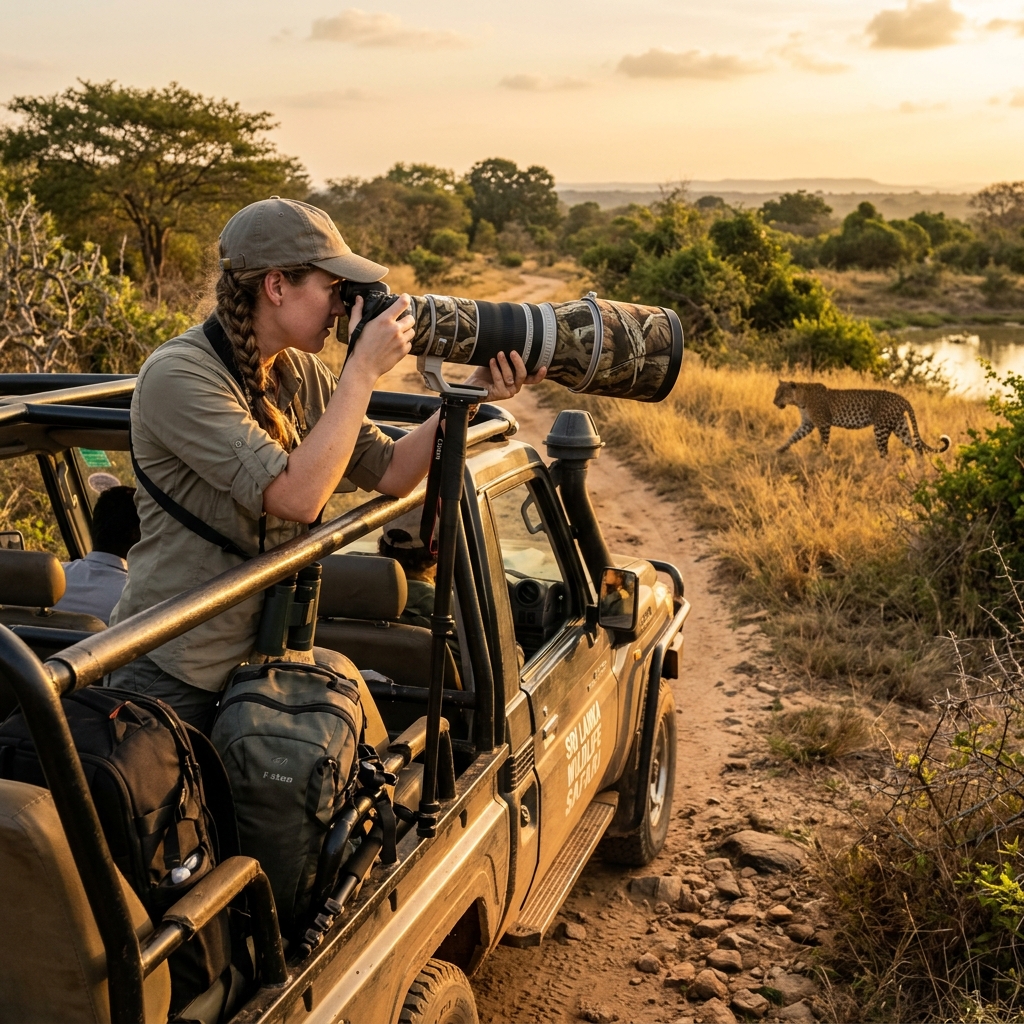
Bring your passport (required for park permit issuance), camera gear with a telephoto lens, binoculars, sunglasses, a wide-brimmed safari hat, sunscreen, insect repellent, and an insulated water bottle. Dress in light, breathable clothing in neutral earthy colors.
Q5: Is Udawalawe ethical compared to elephant riding camps in Thailand?
Udawalawe is 100 percent ethical and non-exploitative. There is absolutely no riding, bathing, touching, or chained confinement of elephants. The animals you observe are completely wild, free-roaming, and protected within a vast national park where human presence is strictly confined to designated gravel vehicle tracks.
Q6: Are drones permitted inside the national park?
No. Unmanned Aerial Vehicles (drones) are strictly prohibited inside all national parks in Sri Lanka under civil aviation and wildlife protection laws. Drones emit high-frequency motor noise that causes severe panic and distress to wild elephant herds.
Q7: Can we hire a jeep directly at the park gate without prior booking?
While freelance jeeps are often parked outside the gate, booking in advance through a reputable, licensed safari company is strongly advised. Pre-booking guarantees a modern, well-maintained vehicle with cushioned tiered seating, an experienced English-speaking driver, and transparent, fixed pricing with no hidden gate surcharges.
Q8: What currency is required for park tickets?
The Department of Wildlife Conservation accepts payments in Sri Lankan Rupees (LKR) or major credit cards (Visa and Mastercard). If paying by card, a small bank processing surcharge may apply. Having sufficient local cash on hand is always recommended as a backup.
Q9: Are malaria medications necessary for Udawalawe?
No. Sri Lanka was officially certified as malaria-free by the World Health Organization (WHO) in 2016. Standard mosquito repellent is sufficient to protect against occasional evening insect bites.
Q10: Is there cellular phone reception inside the park?
Cellular reception (Dialog, Mobitel) is generally strong near the entrance gate and along primary southern tracks, but becomes weak or non-existent in the deep northern hinterlands and river canyons. We recommend using your safari as an opportunity for digital detox and total immersion in the wilderness.
.png)